

All About Fire Hazard Signs: How to Identify Them
Why Fire Hazard Signs Are Critical for Australian Workplaces
A fire hazard sign is a safety warning that alerts people to potential fire risks in the workplace. These signs use standardised colours and symbols to communicate danger levels and required actions to prevent fire incidents.
Key Fire Hazard Sign Types:
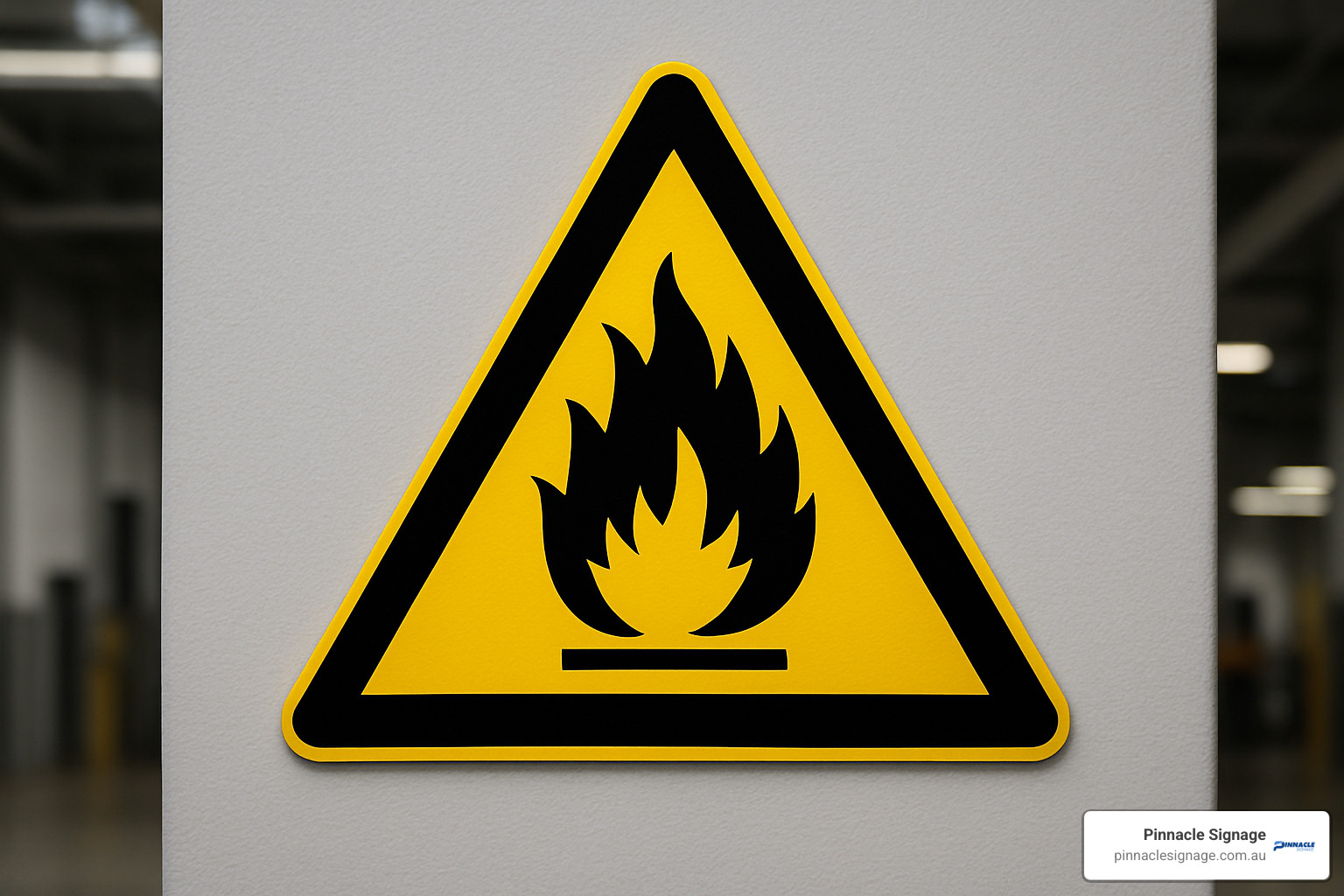
- Yellow triangle with black border - General fire warning
- Red rectangle - Fire equipment or emergency information
- Flame symbol - Flammable materials present
- NFPA diamond - Chemical hazard rating system
- No smoking/open flame - Prohibition signs
According to the National Fire Protection Association, proper signage and labelling can reduce workplace fire incidents by up to 20%. In Australian workplaces, fire hazard signs aren't just good practice - they're often a legal requirement under Work Health and Safety legislation.
Fire hazard signs are mandatory in Australian workplaces when:
- Storing flammable chemicals or gases
- Conducting hot work like welding or cutting
- Operating equipment that generates heat or sparks
- Marking fire equipment locations
- Designating emergency evacuation routes
I'm Doug Lindqvist, General Manager of Pinnacle Signage, and I've spent years helping Australian businesses steer safety compliance challenges across industries from mining to hospitality.
Related content about fire hazard sign:
What is a Fire Hazard Sign?
A fire hazard sign is your workplace's silent guardian - always on duty, constantly communicating vital safety information to everyone who enters your space. These visual warning systems use standardised symbols, colours, and text to communicate fire risks and required safety actions.
The effectiveness of fire hazard signage lies in its simplicity. Whether someone speaks English as their first language or not, these signs communicate universal messages through internationally recognised symbols. A flame symbol means flammable materials are present. A red circle with a diagonal line through a cigarette means no smoking.
Under Australian Work Health and Safety legislation, you have a legal duty of care to provide a safe working environment. This means identifying hazards, implementing control measures, and clearly communicating risks to workers and visitors. Fire hazard signs are crucial for fulfilling this obligation.
Key Functions of a Fire Hazard Sign
Every fire hazard sign serves three essential purposes:
Alert everyone to fire risks - Whether it's flammable chemicals in storage, hot work areas, or spark-generating equipment, these signs create immediate awareness. They're like having a safety officer standing guard 24/7.
Restrict dangerous actions - Many fire hazard signs include prohibition elements that prevent actions which could trigger incidents. "No Smoking", "No Open Flames", or "No Matches" signs actively stop dangerous behaviours. Research shows facilities with clear fire hazard signage experience significantly fewer fire-related injuries.
Guide emergency response - Signs indicate the type of fire risk present, helping emergency services choose appropriate firefighting methods. Water shouldn't be used on electrical fires, and certain chemicals require specialised suppression systems.
When Does a Fire Hazard Sign Become Mandatory?
Fire hazard signs become mandatory in Australian workplaces under several circumstances, governed by the Work Health and Safety Act and AS 1319:1994 standards.
Hazardous chemicals create the most common need for fire hazard signage. Any area storing or using flammable chemicals requires appropriate signage - from cleaning solvents in retail stores to industrial chemicals in manufacturing facilities.
Hot work areas always need clear signage. Welding, cutting, grinding, or any activity generating heat, sparks, or open flames requires both warning signs and prohibition signs restricting smoking or open flames.
Storage zones for flammable materials must be clearly marked. This includes paint storage on construction sites, gas cylinder storage in healthcare facilities, or cleaning supply cupboards in office buildings.
AS 1319 requirements mandate uniform design for workplace safety signs across Australia, ensuring consistency across different workplaces and industries.
Decoding Symbols & Colours
The fire hazard sign symbols and colours you see in Australian workplaces aren't random design choices - they're a carefully crafted visual language that can literally save lives. Understanding this language is essential for anyone responsible for workplace safety.
Fire hazard signage serves as universal communication that transcends language barriers. The yellow triangle with black border signals "caution" in any language, while the red rectangle immediately indicates fire equipment or emergency information.
The Globally Harmonised System (GHS) has standardised many fire hazard symbols internationally, ensuring consistency. The NFPA diamond system provides detailed chemical hazard ratings for specific materials.
Common symbols include the flame symbol for flammable materials, crossed-out cigarettes for no smoking areas, and explosion symbols for reactive chemicals. Each symbol has been tested for maximum recognition, even in high-stress emergency situations.
For comprehensive information about different sign types, our detailed guide on fire and safety sign types covers everything you need to know. Research from the Virtual College shows that symbol recognition effectiveness varies significantly based on design quality and placement.
Common Colour Codes on a Fire Hazard Sign
The colour system used in Australian fire hazard signage triggers specific emotional and behavioural responses that help people react appropriately to fire risks.
Red equipment signs mark fire extinguishers, hoses, alarm points, and emergency stops. Red also appears on prohibition signs forbidding dangerous actions like smoking near flammable materials. Red naturally increases heart rate and creates urgency, making it perfect for emergency equipment identification.
Yellow warning signs serve as the workplace's early warning system. These triangular signs with black borders alert you to fire hazards without creating panic. Yellow is highly visible in both bright and dim lighting conditions.
Blue mandatory signs tell you what you must do to maintain safety. These circular signs might instruct "Keep Fire Door Shut" or "Wear Fire Retardant Clothing." Blue creates calm authority, ideal for conveying mandatory actions without causing alarm.
Green safe exit signs provide reassurance in emergencies. These rectangular signs show emergency exits, assembly points, and safe directions. Green is psychologically associated with safety and "go" - the opposite of red's "stop" message.
Reading the NFPA & GHS Fire Hazard Sign Panels
The NFPA 704 diamond system uses four coloured sections to communicate different hazard levels. The red section indicates flammability on a scale from 0 to 4. A rating of 0 means the material won't burn under normal conditions. A rating of 4 means highly flammable materials like petrol.
Other sections show health hazards (blue), reactivity (yellow), and special warnings (white) like "W" for water-reactive materials that could be dangerous if you try to fight fires with water.
GHS labels use standardised pictograms increasingly common in Australian workplaces. The flame symbol indicates flammable materials, while the exploding bomb warns of explosives. These labels include written hazard statements and precautionary statements for comprehensive safety information.
Standards & Legal Requirements in Australia
Getting your fire hazard sign compliance right creates a workplace where everyone goes home safely. Australian fire hazard signage operates under a structured framework combining workplace safety laws, design standards, and chemical handling requirements.
The Work Health and Safety Act forms the foundation. As an employer or site manager, you have a duty of care beyond just installing signs. You must identify fire hazards, implement control measures, and ensure everyone understands what those fire hazard signs mean.
AS 1319:1994 is the Australian Standard specifying exactly what your signs should look like, what colours to use, and where to place them. This standardisation ensures a worker understanding fire hazard signs in Perth will immediately recognise them in Brisbane.
When dealing with dangerous goods, the Australian Dangerous Goods Code applies. This code aligns with the Globally Harmonised System (GHS), making your Australian fire hazard signs consistent with international standards.
Training duties are often overlooked. Simply installing fire hazard signs isn't enough. You must ensure workers understand what each sign means and know how to respond appropriately. The latest research on fire safety facts shows proper signage combined with training significantly reduces workplace fire incidents.
Fire Hazard Sign vs Flammable Material Sign
While often used interchangeably, understanding the difference helps you choose the right signage for your situation.
A fire hazard sign warns of any situation where fire risk is present - hot work zones, areas with ignition sources, or anywhere fire could start or spread rapidly. These signs focus on general fire prevention and often include prohibition elements like "No Smoking".
Flammable material signs are more specific, identifying particular flammable substances and providing detailed information about those materials. They typically include chemical names, hazard classifications, and specific handling requirements.
Visually, fire hazard signs use flame symbols in yellow warning triangles focusing on general fire prevention behaviour, while flammable material signs use GHS flame pictograms with detailed hazard information.
Industry-Specific Obligations for a Fire Hazard Sign
Construction sites present constantly changing fire hazards requiring fire hazard signs for welding areas, fuel storage, and hot work permits. The challenge is mobility - signage needs to move with work progress.
Healthcare facilities need specialised fire hazard signs for oxygen storage areas, medical gas systems, and flammable cleaning agents, balancing safety with professional appearance.
Retail environments must balance safety requirements with customer experience, using effective signage for storage areas and loading docks without alarming customers.
Remote sites face unique challenges with weather exposure and limited maintenance access, requiring more durable materials and larger sign sizes for greater viewing distances.
Placement, Size & Material Choices for Your Fire Hazard Sign
Getting your fire hazard sign placement right ensures people see and understand warnings before walking into danger. Position signs at eye level where possible - typically between 1.5 and 2.5 metres above floor level - ensuring they're not hidden behind equipment or storage materials.
Visibility distance is crucial for fire safety. People need time to change behaviour before entering hazard zones. For most Australian workplaces, your fire hazard sign should be clearly readable from at least 10 metres away. Larger facilities might need signs visible from 25 metres or more.
The choice between reflective and non-reflective materials depends on lighting conditions. Areas with poor natural light or emergency lighting benefit from reflective or photoluminescent materials, especially during power outages.
Aluminium signs work best for outdoor applications, handling Australia's harsh weather conditions beautifully. For indoor use, self-adhesive vinyl offers excellent value and easy installation. Match the material to your specific environment and expected lifespan.
Choosing the Right Fire Hazard Sign Size
Size matters for fire safety signage. Your sign must be large enough to read clearly from the furthest distance someone might approach the hazard.
Line-of-sight considerations account for partial obstructions like equipment or vehicles that might block part of your sign. In busy work environments, people have limited time to spot and read safety information.
Viewing distance requirements follow practical guidelines. A sign read from 10 metres requires different sizing than one viewed from 25 metres. AS 1319:1994 provides specific guidance, but the key principle is ensuring signs remain "clearly visible and legible" under normal workplace conditions.
Multi-storey sites present unique challenges. Consider all angles from which people might approach your hazard area. When in doubt, go slightly larger - it's better to over-communicate a fire hazard than risk someone missing the warning.
Material Comparison for Australian Conditions
Australia's climate demands materials that handle intense sun, coastal salt air, and extreme temperature variations.
UV exposure is the biggest enemy of outdoor signage. Quality UV-resistant inks and substrates maintain colour integrity for 10+ years under harsh Australian conditions, while cheaper alternatives fade within months.
Coastal corrosion affects businesses near oceans. Salt air compromises adhesive performance and causes unexpected failures. Marine-grade aluminium or specially treated materials are necessary for these environments.
Indoor clean rooms and healthcare facilities require signs withstanding regular cleaning with harsh chemicals. Non-porous materials with chemical-resistant inks ensure fire safety signage remains visible after repeated cleaning cycles.
The cost-benefit analysis often favours premium materials. High-quality materials require larger initial investment but provide better long-term value through extended service life and reduced replacement frequency.
Installation & Maintenance Best Practices
Getting your fire hazard sign installed properly is just the beginning - maintaining effectiveness requires ongoing attention. Surface preparation makes the difference between signs lasting years and ones falling off in the first strong wind. The mounting surface needs to be completely clean and dry before installation.
For outdoor installations, secure fixings are essential. Stainless steel fixings won't rust or corrode, keeping signs securely in place through Australian weather extremes.
Regular inspections should become part of routine safety checks. Monthly walk-throughs checking for fading, damage, or obstructions take minimal time but prevent major problems. Signs that are no longer clearly visible create dangerous false security.
For comprehensive guidance on selecting appropriate signs, our detailed guide on exit & fire signs covers everything from placement to compliance requirements.
Keeping Your Fire Hazard Sign Visible During Renovations
Renovation work creates tricky situations - you need to maintain safety signage while construction activities happen around it.
Temporary barriers often block permanent signs from view, but this doesn't mean skipping safety warnings. Temporary signage must replace any obscured permanent signs with equivalent visibility and clarity.
Sometimes you can protect existing signs rather than replace them. Protective film works well for signs that might be damaged by construction dust or paint overspray but remain visible throughout work.
When original locations become inaccessible, alternate signage locations must provide equivalent or better visibility, possibly requiring multiple temporary signs to ensure coverage from all approach angles.
Record-Keeping & Audit Tips
Maintaining proper records demonstrates due diligence and ensures ongoing compliance. Inspection logs should document each sign's condition, required maintenance, and actions taken, creating clear paper trails showing ongoing safety commitment.
Photo records provide visual evidence valuable during audits or incident investigations. Digital photos help track changes over time and provide clear compliance evidence.
WHS audits often focus on signage compliance as an indicator of overall safety management quality. Well-maintained records combined with clearly visible, compliant signage demonstrate systematic safety approaches that auditors recognise and appreciate.
Frequently Asked Questions about Fire Hazard Signs
How often should a fire hazard sign be replaced?
The life of your fire hazard sign depends on installation location and materials. Outdoor signs in harsh Australian conditions need replacement every 2-3 years for basic materials, while premium UV-resistant signs can last over a decade.
Indoor signs typically last 8-10 years or more, protected from weather and UV exposure. However, areas with chemical exposure or frequent harsh cleaning can accelerate wear.
Regular inspection matters more than rigid schedules. Check signs every six months outdoors and annually indoors. Look for fading colours, cracked surfaces, or damaged text making signs hard to read. A faded sign is worse than no sign - it gives false security that safety measures are in place.
Can I design my own fire hazard sign and still be compliant?
You can create custom fire hazard signs, but they must meet AS 1319:1994 requirements for legal compliance. This means using correct colours, symbols, fonts, and sizing - there's no flexibility on these standards.
Compliance requirements are quite technical. The shade of yellow, exact symbol proportions, and font weights are specified. Getting details wrong leaves you non-compliant, even if signs look professional.
Custom designs work best for specific hazards not covered by standard signs. For unique chemical processes or equipment-specific fire risks, custom signs provide more relevant safety information while meeting all regulatory requirements.
Where should I download the latest SDS for chemicals referenced on a fire hazard sign?
Safety Data Sheets (SDS) should always come directly from your chemical supplier or manufacturer - never download from generic websites or use outdated versions. The SDS provides detailed information complementing what's shown on your fire hazard sign.
Each chemical product requires its own specific SDS, even if they seem similar. Manufacturers are legally required to provide current SDS documents with their products.
In Australian workplaces, these documents must be readily accessible to anyone who might be exposed to the chemical, usually meaning physical copies in work areas where workers know exactly where to find them during emergencies.
Conclusion
Getting your fire hazard sign strategy right isn't just about ticking compliance boxes - it's about creating a workplace where everyone goes home safely each day. Throughout this guide, we've explored how these critical safety tools work, from the instantly recognisable yellow warning triangles to the detailed information packed into NFPA diamond systems.
The fundamentals are straightforward: fire hazard signs must be visible, compliant with AS 1319:1994, and properly maintained. But the real impact comes from understanding how these signs fit into your broader safety culture. When your team knows what each symbol means and how to respond, you've moved beyond compliance into genuine protection.
Your workplace fire safety depends on getting these essentials right: ensuring all fire hazard areas are clearly marked with appropriate signage, using colours and symbols that meet Australian standards, establishing regular inspection routines, and training your team to recognise and respond to different warnings. Don't forget that current Safety Data Sheets must be accessible for all hazardous chemicals, and signs need to stay visible and unobstructed at all times.
The investment in quality fire hazard sign solutions pays dividends in reduced incidents, smoother safety audits, and most importantly, protected lives. Whether you're managing a construction site with welding operations, a retail store with chemical storage, or a healthcare facility with oxygen systems, the right signage communicates critical information when it matters most.
At Pinnacle Signage, we understand that every Australian workplace faces unique challenges. Our durable, custom fire hazard signs are designed to withstand everything from coastal salt spray to the harsh outback sun, while meeting all compliance requirements. We've helped businesses across the country create signage solutions that work in real-world conditions.
Ready to strengthen your fire safety approach? Browse our comprehensive fire signage collection to find exactly what your workplace needs. When lives and property are on the line, choosing the right signage partner makes all the difference - and that's where we come in.