

High-Visibility Emergency Signs – Fast Shipping Australia-Wide
Why Emergency Signage is Crucial for a Safe and Effective Response
In case of emergency signage serves as your silent guardian, providing critical guidance when panic sets in and visibility drops. Here's what qualifies as essential emergency signage for Australian workplaces:
- Fire Safety Signs - Mark locations of extinguishers, hose reels, and fire blankets
- Evacuation Signs - Show exit routes, assembly points, and safe pathways
- First Aid Signs - Direct people to medical equipment, AEDs, and emergency showers
- Emergency Contact Signs - Display critical phone numbers and emergency procedures
- High-Visibility Features - Photoluminescent materials, clear symbols, and durable construction
During an emergency, confusion is the enemy and clarity is the solution. Every second matters when fires break out, medical incidents occur, or evacuations become necessary. In these critical moments, your signage system becomes the difference between an organised response and dangerous chaos. For Australian businesses, construction sites, and public facilities, having compliant, high-visibility emergency signage isn't just about meeting regulations—it's about protecting lives and fulfilling your duty of care when people need guidance most.
Pinnacle Signage was founded to address the need for reliable, high-quality in case of emergency signage in Australia. After seeing the consequences of delays and poor-quality products from other suppliers, our mission is to provide Australian businesses with the fast, compliant signage they need to keep their people safe.
In case of emergency signage terms to know:
What is 'In Case of Emergency Signage'? A Practical Guide
Think of effective emergency signage as your workplace's silent safety network—a comprehensive system of visual cues that springs into action when chaos threatens. It's far more sophisticated than slapping up a basic "Emergency" label and hoping for the best. We're talking about a coordinated collection of signs that direct actions, pinpoint life-saving equipment, and map out the safest routes to get everyone home safely.
Understanding the different types of signs and what makes them truly effective is your foundation for creating a workplace where people feel genuinely protected.
Essential Types of Emergency Signs for Every Workplace
When we discuss in case of emergency signage, we're covering four distinct categories that work together like a well-orchestrated safety team. Each type serves a specific, critical purpose that could mean the difference between confusion and confident action during a crisis.
Fire Safety Signs are absolutely non-negotiable for any facility. These bright red guardians mark the exact locations of fire extinguishers, fire blankets, hose reels, and alarm systems. When seconds count and smoke is building, these signs ensure vital firefighting equipment can be found without hesitation. The bold red colour with white symbols creates instant recognition that transcends language barriers—everyone knows what red means in an emergency.
You can dive deeper into fire safety requirements in our Essential Guide To Fire And Safety Signs Types Meanings.
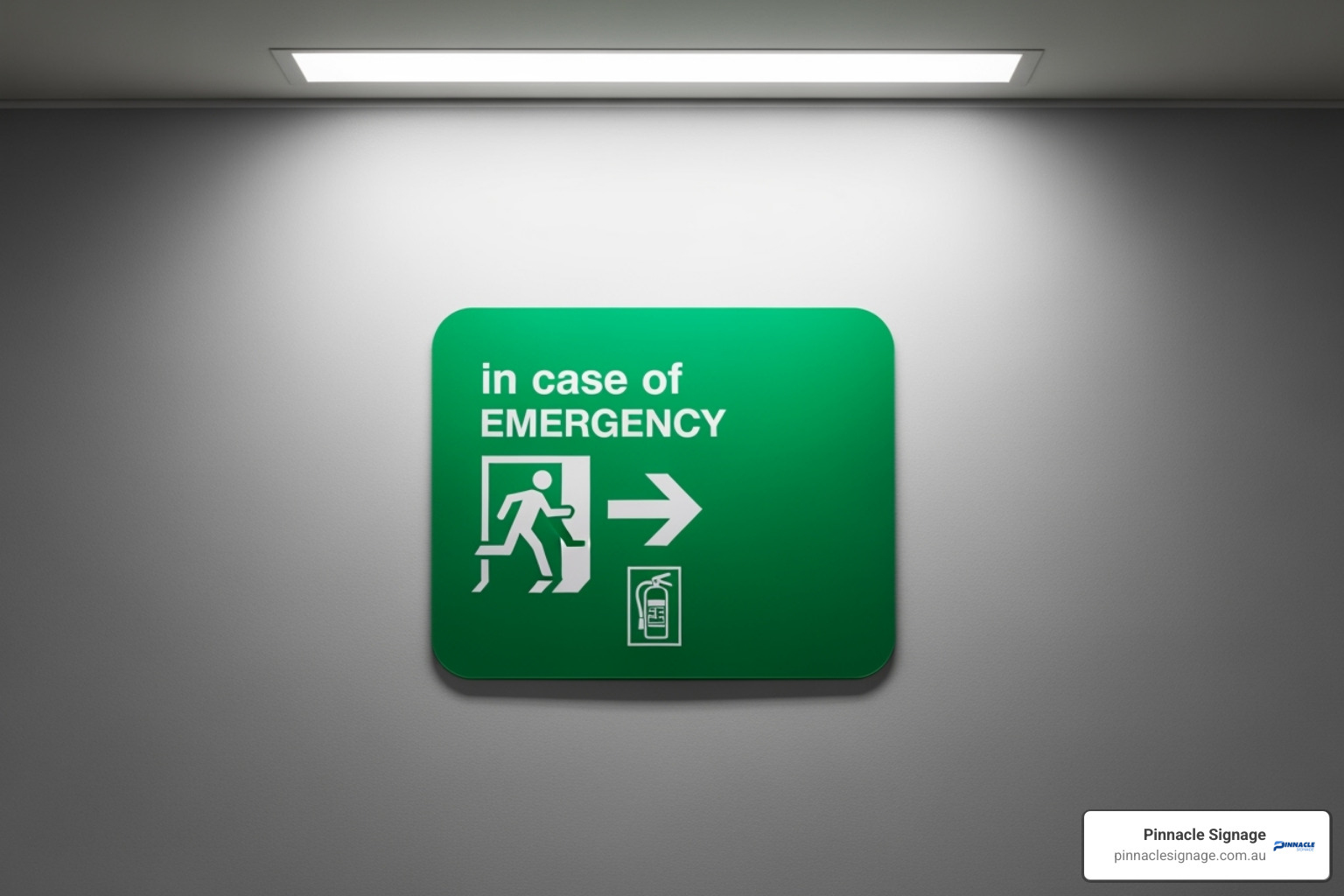
Evacuation Signs become your lifeline during an emergency evacuation. This category includes those reassuring illuminated exit signs, directional arrows pointing to the nearest safe exit, detailed evacuation diagrams, and markers leading to designated outdoor assembly areas. The green colour scheme with white symbols signals safety and safe passage—exactly what panicked people need to see. Those evacuation maps, typically mounted in protective frames, display the crucial pathways that could save lives when every second matters.
For more detail on assembly points, check out our guide on Muster Points Explained Keeping Your Team Safe In Emergencies.
First Aid and Safety Equipment Signs guide people to medical assistance when injuries occur. These signs, featuring the universally recognised white cross on a green background, direct people to first aid kits, automated external defibrillators (AEDs), emergency showers, and eyewash stations. The instant recognition factor is crucial—when someone's hurt, there's no time to hunt around for medical supplies.
Our Essential Guide To Choosing The Right First Aid Signage covers everything you need to know about medical signage requirements.
Emergency Contact and Information Signs provide the specific instructions and contact details that keep communication flowing during a crisis. These might display "In Case of Emergency, Call 000," or list contact numbers for site wardens and emergency services. They're designed to be bold, highly visible, and easy to read under stress. Many can be customised with your facility's specific information, ensuring your emergency response procedures are crystal clear to both employees and visitors.
Key Features That Make a Sign Effective
The difference between in case of emergency signage that saves lives and signage that fails when needed most comes down to three critical features that ensure they're seen, understood, and acted upon during a crisis.
High-Visibility Colours and Symbols are essential for signs to work effectively in a crisis. The colour system is simple and intuitive: green is used to indicate safety equipment and safe conditions (like exits and first aid stations), while red is used for fire-related equipment. These universal colours work alongside clear pictograms—like the familiar running person symbol for exits or the white cross for first aid. This combination ensures the message gets through to everyone, regardless of their English proficiency or stress levels during an emergency.
Durable, Long-Lasting Materials ensure your signs perform when lives depend on them. We use robust materials like rigid AL-Plus 3-mm aluminium composite, which maintains its clarity and visibility for 10 years outdoors. For general indoor use, our semi-rigid 1mm PVC plastic provides excellent durability. When flexibility is needed, we offer vinyl label stock with permanent adhesive or heavy-duty magnetic backing. All our signs feature UV-stable ink and are built to resist UV damage, chemicals, abrasion, and moisture. They're designed to perform reliably in service temperatures from -40 to +180°F, whether installed indoors or facing harsh Australian outdoor conditions.
Photoluminescence (Glow-in-the-Dark) technology becomes absolutely critical when traditional lighting fails. During power outages or in smoke-filled environments, standard signs become invisible exactly when they're needed most. Photoluminescent signs solve this problem by absorbing energy from ambient light and then glowing brightly in darkness. This ensures that exit paths, emergency equipment locations, and crucial safety information remain visible when visibility drops to dangerous levels. Our photoluminescent options include Glow Vinyl with 5 years outdoor durability and Glow Aluminium with 2+ years outdoor durability, providing that crucial visibility when conventional lighting systems fail.
The Core Benefits of Compliant and Clear Emergency Signage
When you invest in high-quality, compliant in case of emergency signage, you're not just buying signs—you're building a foundation for workplace safety that protects everyone who walks through your doors. The benefits ripple through every aspect of your business, from daily operations to crisis response.
Faster, safer emergency responses become possible when panic meets clarity. Think about it—in a medical emergency, those crucial first minutes can determine the outcome. Clear signage eliminates the frantic searching and confusion that wastes precious time. Instead of someone running around asking "Where's the first aid kit?" they can spot the green cross immediately and get to work. The same principle applies to fire emergencies, where knowing exactly where the nearest extinguisher sits can prevent a small incident from becoming a major disaster.
Your workplace health and safety compliance gets a significant boost with proper signage in place. While we won't dive deep into technical standards, having compliant in case of emergency signage demonstrates your commitment to safety during audits and inspections. It shows that you've thought ahead, planned for emergencies, and taken concrete steps to protect people. For more detailed workplace safety guidance, the official Safe Work Australia website provides comprehensive resources.
Everyone on your site benefits—and that's a bigger group than you might think. Your regular staff know the building layout, but what about the new contractor, the delivery driver, or the client visiting for the first time? Clear emergency signage ensures that everyone, regardless of their familiarity with your facility, can find their way to safety or locate emergency equipment when needed. This comprehensive protection fulfils your duty of care obligations and creates a genuinely safer environment for all.
Emergency services work more effectively when they arrive at a well-signed facility. First responders don't have time to figure out your building's quirks or hunt for critical equipment. When they can quickly spot emergency shut-off valves, fire suppression systems, or electrical panels through clear signage, they can focus on resolving the emergency rather than navigating your space. This faster response often translates to better outcomes and reduced property damage.
The durability factor shouldn't be overlooked either. Quality in case of emergency signage made from materials like rigid aluminium composite or UV-resistant vinyl means your investment keeps working year after year. These signs maintain their visibility and effectiveness through harsh Australian conditions, from scorching summer heat to coastal salt spray, ensuring your safety system remains reliable when you need it most.
Common Mistakes to Avoid with Your Emergency Signage Strategy
Even the most well-intentioned in case of emergency signage strategy can fall flat if you make some surprisingly common mistakes. Over the years, we've seen countless facilities struggle with signage that looks good on paper but fails when it matters most. The key is understanding that effective emergency signage isn't just about having signs—it's about having the right signs in the right places, maintained properly and designed for real-world emergencies.
Placement and Visibility Errors
The most beautiful, compliant sign in the world becomes completely useless if nobody can see it when panic strikes. Poor placement is hands-down the most frequent mistake we encounter. You'd be amazed how often we find emergency signs tucked behind filing cabinets, obscured by hanging equipment, or positioned where opening doors block the view. Signs need to be installed at proper eye-level height in prominent, well-lit locations where they're visible from multiple angles.
This is where our 3D projecting signs really shine—they're designed to extend outward from walls and are printed on both sides, making them impossible to miss from either direction in hallways and high-traffic areas.
Ignoring environmental conditions is another costly oversight. We regularly see facilities that have installed basic indoor vinyl signs in harsh outdoor environments or industrial areas with heavy machinery traffic. Within months, these signs are faded, peeling, or completely illegible. That's why we manufacture our signs using materials like AL-Plus 3mm aluminium composite for outdoor durability (lasting 10 years) and industrial-strength PVC plastic for demanding indoor environments.
The lighting issue catches many facilities off-guard. Standard signs become invisible in power outages, while photoluminescent signs need adequate ambient light to charge their glow-in-the-dark properties. If your emergency signs aren't properly illuminated—either by existing lighting or dedicated fixtures—they can't guide people to safety when visibility drops.
Information and Compliance Gaps in 'in case of emergency signage'
Even perfectly visible signs can become dangerous if their information is wrong or unclear. Outdated information is a silent killer in emergency planning. Facilities change constantly—first aid stations get relocated, evacuation routes are modified, emergency contact numbers update, and site wardens change roles. When your signage doesn't reflect these changes, you're actually creating a more dangerous situation than having no signs at all.
Imagine someone following an old evacuation map to an exit that's now blocked, or calling an emergency contact number that's been disconnected. We recommend incorporating signage updates into your regular safety audits to catch these gaps before they become critical.
Overly complex design defeats the entire purpose of emergency signage. During a crisis, people are stressed, visibility may be compromised, and seconds count. Signs cluttered with company jargon, lengthy explanations, or confusing symbols simply don't work. The most effective in case of emergency signage uses universally recognised pictograms, clear colour coding (green for safety, red for fire equipment), and minimal, direct text that anyone can understand instantly.
Forgetting maintenance is perhaps the most dangerous oversight of all. Emergency signage isn't a "set and forget" investment—it requires regular inspection and upkeep. Faded text, damaged mounting, accumulated grime, or weather damage can render even the best signs useless. While our industrial-strength materials are built for longevity, they still need periodic cleaning and eventual replacement to maintain their life-saving effectiveness.
The bottom line? Your emergency signage strategy is only as strong as its weakest link. One poorly placed, outdated, or damaged sign can compromise the safety of everyone in your facility.
Frequently Asked Questions about in case of emergency signage
When it comes to in case of emergency signage, we hear the same questions time and again from Australian business owners and facility managers. These concerns are completely understandable—after all, getting your emergency signage right isn't just about compliance; it's about protecting the people who rely on your workplace being safe.
How often should emergency signs be checked?
Your in case of emergency signage should become part of your regular workplace safety routine, not something you think about once and forget. We recommend incorporating sign inspections into your quarterly or bi-annual workplace safety checks—this keeps everything fresh in your mind and ensures your signs are always ready when needed.
During these inspections, you'll want to look for the obvious culprits: fading from UV exposure, physical damage like cracks or peeling, and obstructions from new equipment or furniture that might have crept into view over time. It's surprising how often a new filing cabinet or piece of machinery ends up blocking a critical exit sign.
The real key is staying responsive to change. Whenever you relocate a first aid station, update emergency contact numbers, or modify evacuation routes, your signage needs updating immediately. An outdated evacuation map pointing people toward a blocked exit isn't just useless—it's genuinely dangerous.
What is the difference between photoluminescent and standard signs?
This is where the magic of modern emergency signage really shines—literally. Standard signs depend entirely on your facility's lighting to be visible. When the power goes out or smoke fills a corridor, these signs become invisible right when people need them most.
Photoluminescent signs work completely differently. They're made with special pigments that act like tiny energy storage units, absorbing light from any source—whether that's natural daylight streaming through windows or your overhead fluorescent lights. When darkness hits, they release this stored energy as a bright, sustained glow that can last for hours.
Picture this: during a fire, the power cuts out and smoke is reducing visibility to almost zero. While standard signs disappear into the darkness, photoluminescent signs continue glowing, creating a clear pathway to safety. It's this continuous visibility during low-light emergencies that makes them essential for critical applications like exit routes and emergency equipment markers.
Can I create custom emergency signs for my facility?
Absolutely, and we'd actually encourage it for many situations. While standardised signs like basic exit markers and fire extinguisher labels work perfectly for general applications, most Australian facilities need some level of customisation to be truly effective.
Your facility is unique, and your in case of emergency signage should reflect that. This might mean creating custom evacuation maps that show your exact building layout and designated assembly points, or emergency contact signs featuring your specific site wardens and security numbers. Perhaps you have unique machinery that requires special shutdown procedures, or hazards that need site-specific instructions.
We've made customisation straightforward with our design tools and templates. You can add your own text, choose materials suited to your environment, and tailor the design to match your emergency response procedures perfectly. The goal is ensuring that when someone reads your custom emergency sign, they get exactly the information they need for your specific workplace—no guessing, no confusion, just clear direction when it matters most.
Don't Leave Safety to Chance
When disaster strikes, there's no time for second-guessing or scrambling to find the right equipment. A comprehensive in case of emergency signage system acts as your silent guardian, standing ready to provide direction and clarity at a moment's notice. It's the difference between organised response and dangerous confusion when lives are on the line.
Waiting for an incident to reveal gaps in your safety plan is a risk no Australian business can afford to take. Every day you delay updating that faded exit sign or installing that missing evacuation map is another day your workplace remains vulnerable. The reality is harsh but simple: even one missing sign can compromise the safety of everyone on your premises and leave you exposed during compliance audits.
By being proactive and ensuring your signage is clear, compliant, and correctly placed, you're not just ticking boxes—you're building a safer environment for everyone who walks through your doors. Whether it's a staff member rushing to find a fire extinguisher, a visitor looking for the nearest exit, or emergency services needing to locate your main shut-off valve, your signage system becomes their lifeline.
Pinnacle Signage is your trusted Australian partner in this critical safety mission. We understand the unique challenges of Australian workplaces, from scorching outback construction sites to busy Melbourne office towers. Our premium, durable signage solutions are built to withstand whatever our harsh climate throws at them, while our fast shipping Australia-wide ensures you don't have to wait weeks to get your workplace properly protected.
Our commitment runs deeper than just manufacturing signs. We're about quality that lasts, compliance you can trust, and customer-first solutions that make sense for your specific needs. When Australian businesses need signage that truly understands local regulations and environments, they turn to us—and we deliver every time.
Don't gamble with safety. Your people deserve better, and your business requires it.
Explore our complete range of compliant, high-visibility signs by browsing our collection today.