

Restricted Means Restricted – Top Picks for Area Safety Signs
Why Restricted Area Safety Signs Are Critical for Australian Workplaces
Restricted area safety signs are essential tools for controlling access to hazardous, sensitive, or staff-only areas in Australian workplaces. Here's what you need to know:
Key Types of Restricted Area Safety Signs:
- Authorised Personnel Only: Controls access to staff-only areas, server rooms, and laboratories.
- Danger Signs: Warns of life-threatening hazards like high voltage or chemical storage.
- Warning Signs: Indicates hazards that could cause serious injury.
- No Entry/No Trespassing: Prohibits general access to private property or restricted zones.
Material Options:
- Aluminium: 7-10 year lifespan, best for outdoor use.
- HDPE Plastic: 2-3 year lifespan, cost-effective for construction sites.
- Adhesive Vinyl: 2-3 year lifespan, versatile for smooth surfaces.
Every Australian workplace must control access to potentially dangerous or sensitive areas. From electrical hazards and chemical storage to machinery zones, clear signage isn't just good practice—it's often a legal requirement under Work Health and Safety (WHS) legislation.
The right restricted area safety signs do more than just warn people away. They protect workers, safeguard property and sensitive information, and demonstrate a commitment to workplace safety. However, with different sign types, materials, and compliance requirements, choosing the right signage can feel overwhelming.
With years of experience in the safety and industrial supply space, Pinnacle Signage understands the critical role that restricted area safety signs play in comprehensive safety management. We've seen how the right signage prevents accidents, protects businesses from liability, and fosters a culture of safety.
Restricted area safety signs helpful reading:
- authorised personnel only signage
- personal protective equipment signage
- hard hat area signage
Why Clear Signage is Non-Negotiable for Restricted Areas
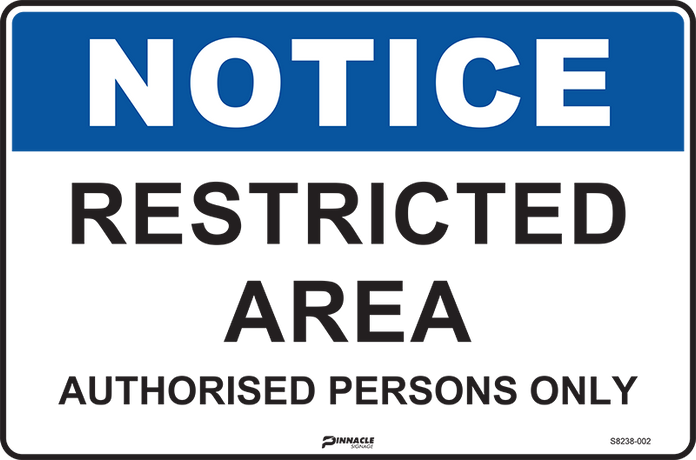
In any Australian business, restricted area safety signs are not just additions to your workplace—they are essential. Whether on a busy construction site or in a high-tech laboratory, these signs form the backbone of a strong safety management system.
Their most important job is enhancing workplace safety by preventing accidents. A clear sign acts as an immediate warning, stopping unauthorised people from entering zones with electrical risks, chemical exposure, or operating machinery. This proactive approach reduces injuries, saves lives, and helps foster a genuine safety culture.
Beyond safety, these signs are powerful tools for protecting assets and boosting security. They deter unauthorised entry, safeguard sensitive data in server rooms, protect valuable equipment, and help maintain visitor access control. This level of security is critical for operational integrity.
From a legal compliance perspective, clear signage is non-negotiable under Australian Work Health and Safety (WHS) legislation. Employers have a duty of care to provide a safe environment, which includes risk assessment and implementing controls like safety signs to meet WHS obligations. Inadequate signage can lead to hefty fines, increased accidents, and even invalidated insurance coverage.
More info about workplace hazard signs
Protecting People from Hazards
Without proper signage, a contractor or visitor could unknowingly step into a danger zone. Restricted area safety signs act as immediate visual barriers to prevent this.
- Electrical risks: High voltage areas can be life-threatening without proper training.
- Chemical exposure: These zones require specialised knowledge and personal protective equipment.
- Operating machinery, confined spaces, and construction zones: All demand that only trained personnel enter.
By clearly marking hazardous areas, you prevent serious injuries and limit your liability. These signs create a legal boundary, demonstrating you have taken reasonable steps to warn people of potential dangers.
Securing Your Property and Information
Securing property and information is as crucial as protecting personnel. Restricted area safety signs are a first line of defence against unwanted intrusions.
"Authorised Personnel Only" or "No Trespassing" signs deter unauthorised entry into sensitive areas like server rooms or data centres. This helps safeguard sensitive data, intellectual property, and valuable equipment from theft or damage.
These signs are also invaluable for controlling visitor access. They guide visitors to designated areas and keep them away from restricted zones, helping to maintain security and prevent theft. Well-placed signage works 24/7 to protect what matters most to your business.
Choosing the Right Type of Restricted Area Safety Signs
When it comes to restricted area safety signs, the type you choose must match the specific message, level of restriction, and nature of any hazards. Different situations call for different signs, from a server room in an office to a chemical storage facility. Here is a guide to the main types of restricted area safety signs and their effective use.
More info about construction signage
"Authorised Personnel Only" Signs
These are the most versatile restricted area safety signs, useful in any situation where access must be limited to specific people.
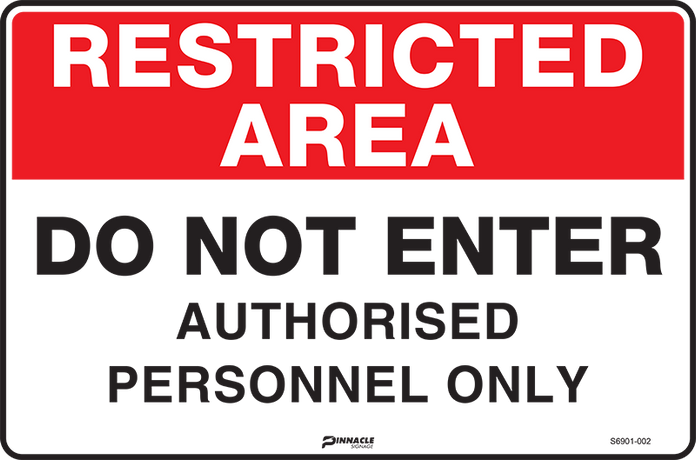
Common applications include:
- Staff-only areas: To keep the public out of stockrooms or back-of-house areas.
- Server rooms: To protect critical IT infrastructure from untrained personnel.
- Laboratories: To maintain safety standards and prevent contamination in sterile zones.
- Securing VIP zones: To control access at events or in corporate environments.
"Authorised Personnel Only" signs deliver a clear, professional message that redirects people without causing alarm.
Top Authorised Personnel Only Signs: Upgrade Your VIP Access Zones Today
"Danger" and "Warning" Signs for Hazardous Zones
For potentially life-threatening situations, you need signage that commands immediate attention.
"Danger" signs are reserved for situations with life-threatening hazards. Following a specific format—the word "DANGER" in white on a red oval within a black rectangle—they are used for high voltage areas, chemical storage facilities with toxic substances, and some work in progress zones with risks like falls from height.
"Warning" signs indicate hazards that could cause serious injury but are not immediately life-threatening. They typically feature a black triangle with an exclamation mark on a yellow background. You'll see them near moving machinery, on slippery surfaces, or in zones requiring personal protective equipment.
Essential Danger Signs for Work in Progress Areas Caution vs. Danger vs. Warning: What's the Difference?
"No Entry" & "No Trespassing" Signs
These signs are general prohibition tools that clearly communicate boundaries to the public and unauthorised personnel.
"No Entry" signs use the classic circular design with a red border and are perfect for specific access points, like doors to restricted building sections.
"No Trespassing" signs carry more legal weight and are essential for private property protection. Used on perimeter fencing around industrial sites, construction zones, and private land, these signs serve as a legal deterrence, warning that trespassers may face prosecution. They help prevent theft, vandalism, and unauthorised access, which is critical for protecting assets and ensuring public safety.
More info about entry and exit signs
Material and Durability: Selecting a Sign That Lasts
Choosing the right material for restricted area safety signs is about ensuring they remain effective, legible, and compliant for years. In Australia's harsh climate, durable materials are critical to prevent signs from fading or cracking. The right choice depends on the environment, required lifespan, mounting surface, and budget.
Metal Signs (Aluminium)
For professional, long-lasting restricted area safety signs, aluminium is a top recommendation. It communicates permanence and authority.
Our aluminium signs are rigid, rust-proof, and have a professional finish, making them ideal for any environment, including coastal areas. For intense UV exposure, we recommend UV lamination, which extends the sign's life to 7-10 years outdoors. Aluminium is also 100% recyclable.
Plastic Signs (HDPE & Polypropylene)
For a durable yet cost-effective and lightweight solution, High-Density Polyethylene (HDPE) and polypropylene signs are excellent choices. They are popular for construction sites and businesses needing quality on a budget.
These signs are robust, weather-resistant, and suitable for both indoor and outdoor use. With a typical 2-3 year lifespan, they offer great value, especially for temporary applications like construction sites. HDPE is also 100% recyclable.
Adhesive Vinyl Decals and Labels
For versatile application on smooth or curved surfaces, adhesive vinyl decals and labels are the answer. They are ideal for machinery labels, door signs, or application on equipment and vehicles.
The thin profile and easy peel-and-stick installation allow for quick updates without tools. Quality vinyl is durable, resisting chemicals, abrasion, and temperatures from -20°C to 80°C. With a 2-3 year outdoor lifespan, they provide a reliable and flexible signage solution.
Placement and Compliance for Your Restricted Area Safety Signs
A sign's effectiveness depends on its placement and compliance with Australian standards. Poor placement can render a sign useless, while non-compliance creates legal risks. Following best practices ensures your signage investment delivers maximum protection.
More info on Australian standards
Best Practices for Placing your restricted area safety signs
For a sign to be effective, people must see it at the right time.
- Line of sight: The sign must be immediately visible to anyone approaching the area, free from obstructions.
- Good lighting: Ensure the sign is well-lit, using artificial light or reflective materials if necessary.
- Proximity to hazard: Place the sign as close as possible to the point of entry or danger.
- Eye-level placement: Position signs at a natural reading height for pedestrians.
- Avoid sign clutter: Too many signs in one area can reduce the impact of important messages.
- Regular inspection: As part of safety audits, check that signs are visible, legible, and undamaged. Replace faded or broken signs immediately.
Understanding Australian Compliance for restricted area safety signs
Australian Work Health and Safety (WHS) legislation places a clear duty of care on employers to provide a safe environment. Restricted area safety signs are a vital part of meeting these obligations.
Compliance starts with risk assessment to identify hazards and implement controls. Safety signs are often a critical control measure. The AS 1319 standard governs the design, colour, and layout of safety signs, ensuring they are consistent and universally understood across Australia.
Following these standards ensures clear communication, turning your signs into part of a universal safety language. For comprehensive information on WHS obligations, always consult the official guidance from Safe Work Australia.
Official guidance from Safe Work Australia
Frequently Asked Questions about Restricted Area Signs
Here are answers to common questions about restricted area safety signs for Australian workplaces.
What's the difference between a "Danger" and a "Warning" sign in Australia?
Understanding this distinction is critical for hazardous areas.
- A "Danger" sign indicates a hazard that is likely to be life-threatening. It uses the word DANGER in a red oval on a black rectangle. These are for high-risk situations like high voltage areas or toxic chemical storage.
- A "Warning" sign indicates a hazard that could cause serious injury, but is not necessarily life-threatening. It typically uses a black symbol in a yellow triangle. Examples include slippery floors or areas with moving machinery.
Using the correct sign ensures people respond appropriately to the level of risk.
Do I need custom signs for my workplace?
While standard signs cover many situations, custom signs are ideal when you need to:
- Communicate specific instructions not covered by standard signs (e.g., "Level 3 Security Clearance Required").
- Reinforce company branding by including a logo or corporate colours while still meeting safety standards.
- Address unique site hazards or protocols with precise messaging, leaving no room for confusion.
How often should I inspect or replace my safety signs?
Regular maintenance is crucial for safety and compliance.
Signs should be inspected regularly as part of your safety audits and whenever workplace conditions change. They must be replaced immediately if they are faded, damaged, or illegible, or if the hazard has changed. A damaged sign compromises safety and legal compliance.
A sign's lifespan depends on its material and environment. For example, our UV-laminated aluminium signs last 7-10 years outdoors, while adhesive vinyl may last 2-3 years in direct sun. Regular checks ensure your signs remain effective safety tools.
Conclusion
Restricted area safety signs are a fundamental investment in protecting your people, property, and information. They are essential for safeguarding against hazards like high voltage and dangerous chemicals and controlling access to sensitive zones.
Choosing the right sign—from "Authorised Personnel Only" to "Danger" and "No Trespassing"—is the first step. Selecting a durable material like aluminium, plastic, or adhesive vinyl ensures your signs withstand Australian conditions and last for years.
Most importantly, proper placement and compliance with Australian standards like AS 1319 are non-negotiable for ensuring visibility and meeting WHS obligations.
At Pinnacle Signage, we provide high-quality, durable, and customisable signage solutions to meet the unique requirements of your workplace. Our expertise in materials, compliance, and practical application ensures your investment delivers lasting value and protection.
Remember: a restricted area must be clearly marked to be effectively managed. These signs are your first line of defence.