

The Mystery of the Black Circle: Unraveling Speed Limit Sign Meanings
Understanding Road Signage and Australian Colour Codes
Black and white speed limit signs are rectangular regulatory signs that display the maximum permitted speed on private roads, car parks, and industrial sites. These signs feature black numerals on a white background and are legally enforceable where displayed.
Quick Reference: Black and White Speed Limit Signs
- Purpose: Display maximum speed limits in kilometres per hour
- Design: Black text on white background, rectangular shape
- Locations: Private roads, car parks, industrial sites, construction zones
- Legal Status: Regulatory and enforceable where installed
- Note: Official Australian road speed limit signs feature black numbers on white backgrounds within red circles
Australian road signs use a standardised colour system for intuitive navigation and safety. Black and white indicates regulatory requirements (what you must or must not do), yellow and black warns of hazards, green provides directional guidance, and blue indicates services like hospitals or rest areas. Understanding these codes is key to responding correctly to traffic situations.
Confusion often arises because Australia uses two main types of speed limit signs. True black and white speed limit signs are rectangular and used on private property like car parks and construction sites. In contrast, the official signs on public roads feature black numbers on a white background inside a red circle, making them technically red, white, and black.
With years of experience in the safety and industrial supply space, we've helped countless businesses understand the importance of proper black and white speed limit sign placement. For workplace safety and regulatory compliance, the right signage is crucial to prevent accidents and ensure smooth operations across various Australian industries.
What is the primary purpose of a black and white speed limit sign?
The primary purpose of a black and white speed limit sign is to convey a mandatory regulation: the maximum speed permitted in a specific area. As a direct command, it tells drivers what they must do, which is to adhere to the posted speed in kilometres per hour under ideal conditions.
These signs are critical for safety and traffic management in places where specific site rules are needed, such as car parks, industrial complexes, or private roads. In these environments, precise speed control is vital to protect pedestrians and prevent accidents. By clearly posting the speed limit, property managers curb excessive speed and reduce ambiguity, ensuring drivers understand their legal obligation.
How do black and white signs differ from other colours?
The colour of a road sign immediately communicates its purpose. This universal language helps drivers quickly understand what to expect.
- Black and White (Regulatory): These signs are the law, telling you what you can and cannot do. A rectangular black and white speed limit sign, a "STOP" sign, or a "NO PARKING" sign all communicate rules that must be obeyed, with legal penalties for non-compliance.
- Yellow and Black (Warning): These signs advise caution by alerting drivers to potential hazards ahead, such as sharp curves or slippery roads. They prompt drivers to be prepared, though they are not strict regulatory commands.
- Green and Blue (Guide): These are navigational aids. Green signs provide directional information like destinations and distances, while blue signs point to services such as petrol stations, hospitals, or rest areas.
- Orange (Temporary Work Zones): Orange signals temporary changes for construction or maintenance zones. These signs warn of dangers, lane closures, or workers ahead, and often include reduced speed limits that must be strictly followed.
Understanding this colour code is essential for safe driving. For a more comprehensive overview, explore our Beginners Guide to Road and Safety Signs.
Understanding the Black and White Speed Limit Sign and Its Variations
Speed limit signage might seem straightforward, but understanding the different designs and their purposes is key to ensuring safety and compliance, whether you're managing a workplace or driving on public roads.
Decoding the standard black and white speed limit sign
A true black and white speed limit sign is a rectangular sign with black numerals on a white background. These regulatory signs display the maximum permitted speed in kilometres per hour and are legally enforceable where installed.
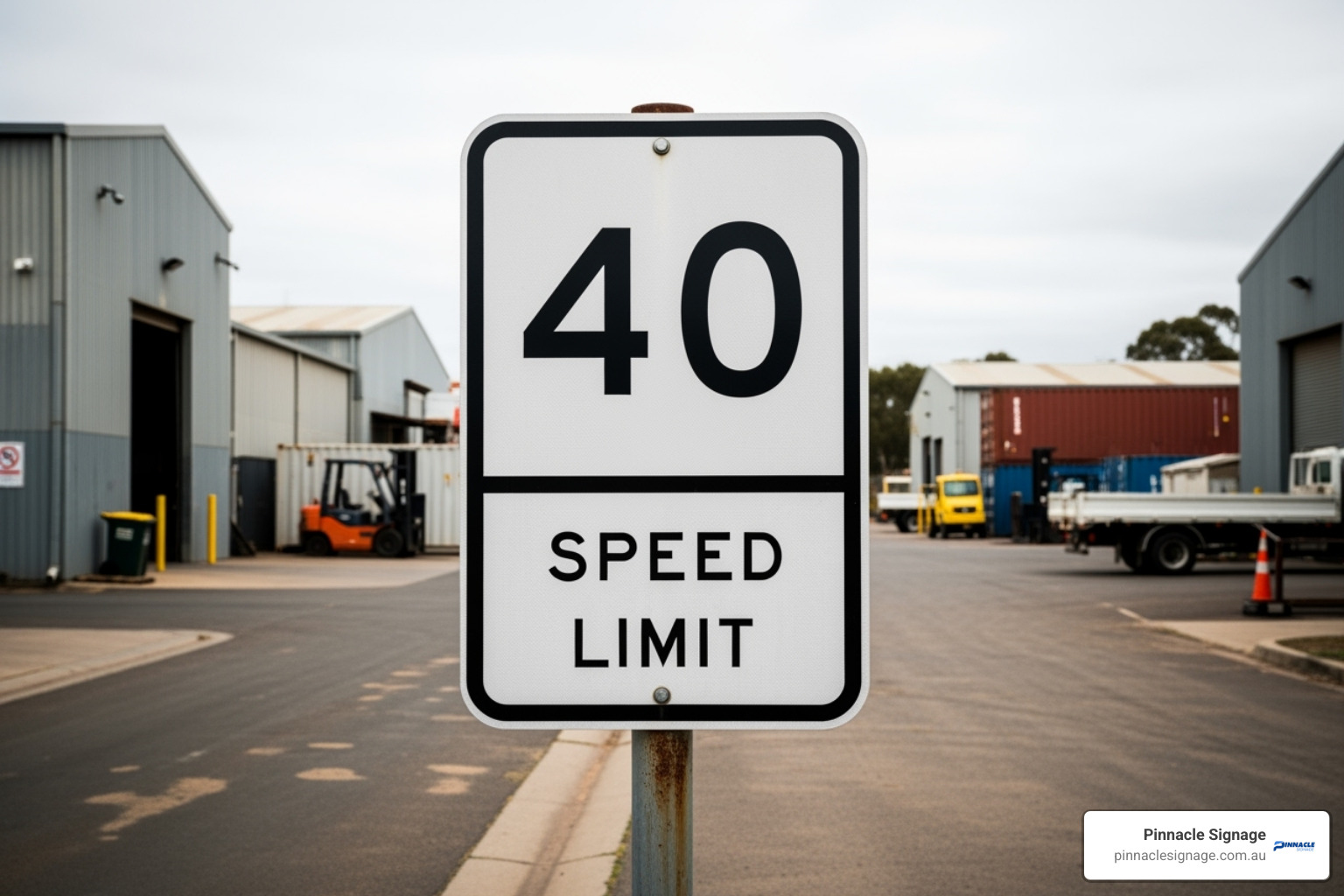
You'll find these signs in environments where property owners set their own speed regulations, including:
- Private roads in commercial or residential estates.
- Car parks at shopping centres, airports, and offices, where they protect pedestrians.
- Industrial sites like factories and warehouses, where heavy machinery and personnel share space.
- Construction zones to enforce temporary speed limits for site vehicles.
These signs establish clear, unambiguous expectations for drivers in controlled environments. For more insights on identifying road hazards, our Road Hazard Signs Explained: Know Before You Go guide provides additional context.
Australian Speed Limit Signs: The Red Circle Rule
While many people call them black and white speed limit signs, Australia's official signs on public roads are technically red, white, and black. These signs feature black numerals on a white background enclosed within a prominent red circle.
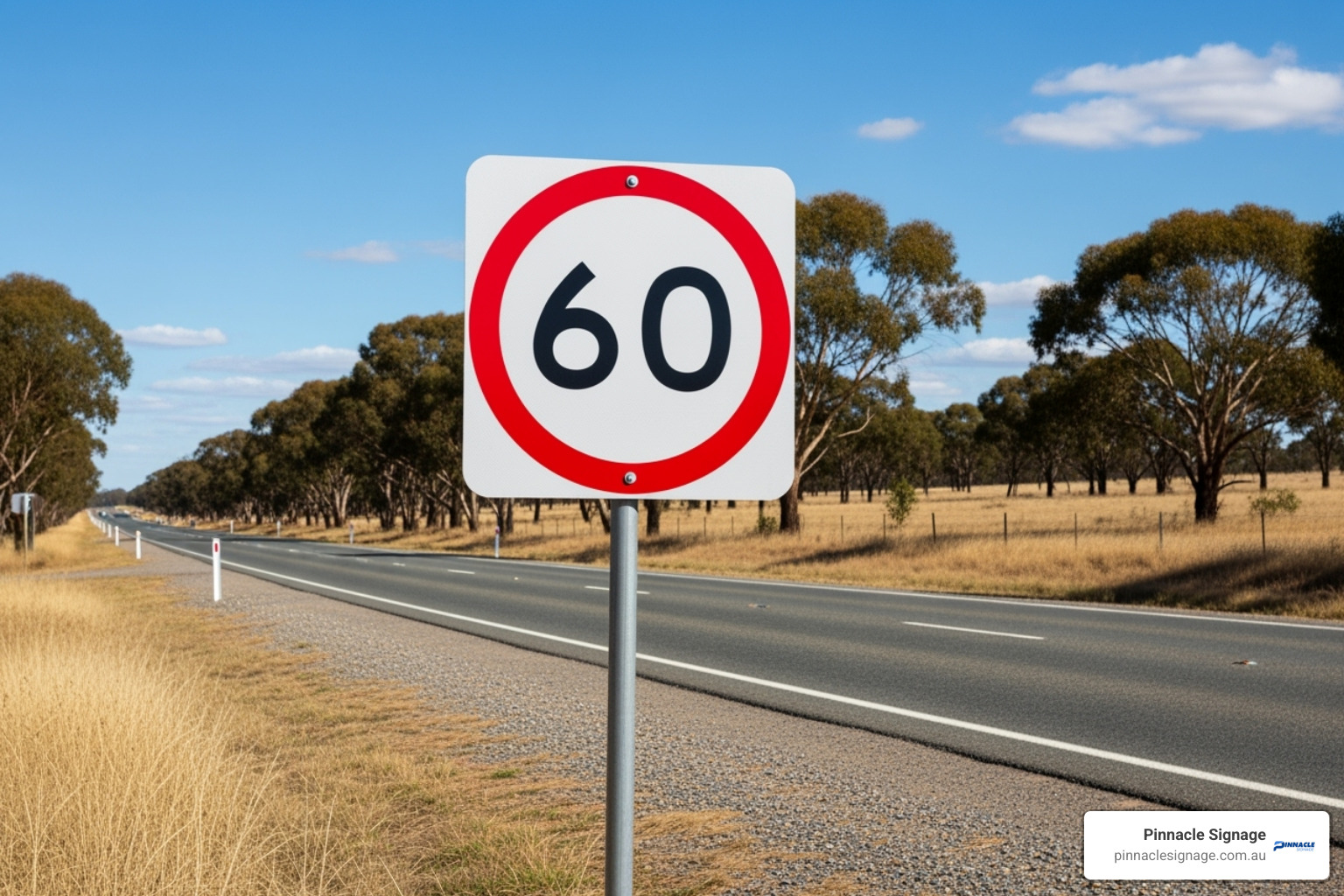
The red circle is a widely recognised symbol for a mandatory rule, immediately signalling a legal speed limit. This design is mandated by Australian Standards to ensure consistency on public roads.
It's also important to distinguish these from advisory speed signs. These yellow and black signs suggest a safe speed for conditions like a sharp curve but are not legally binding limits.
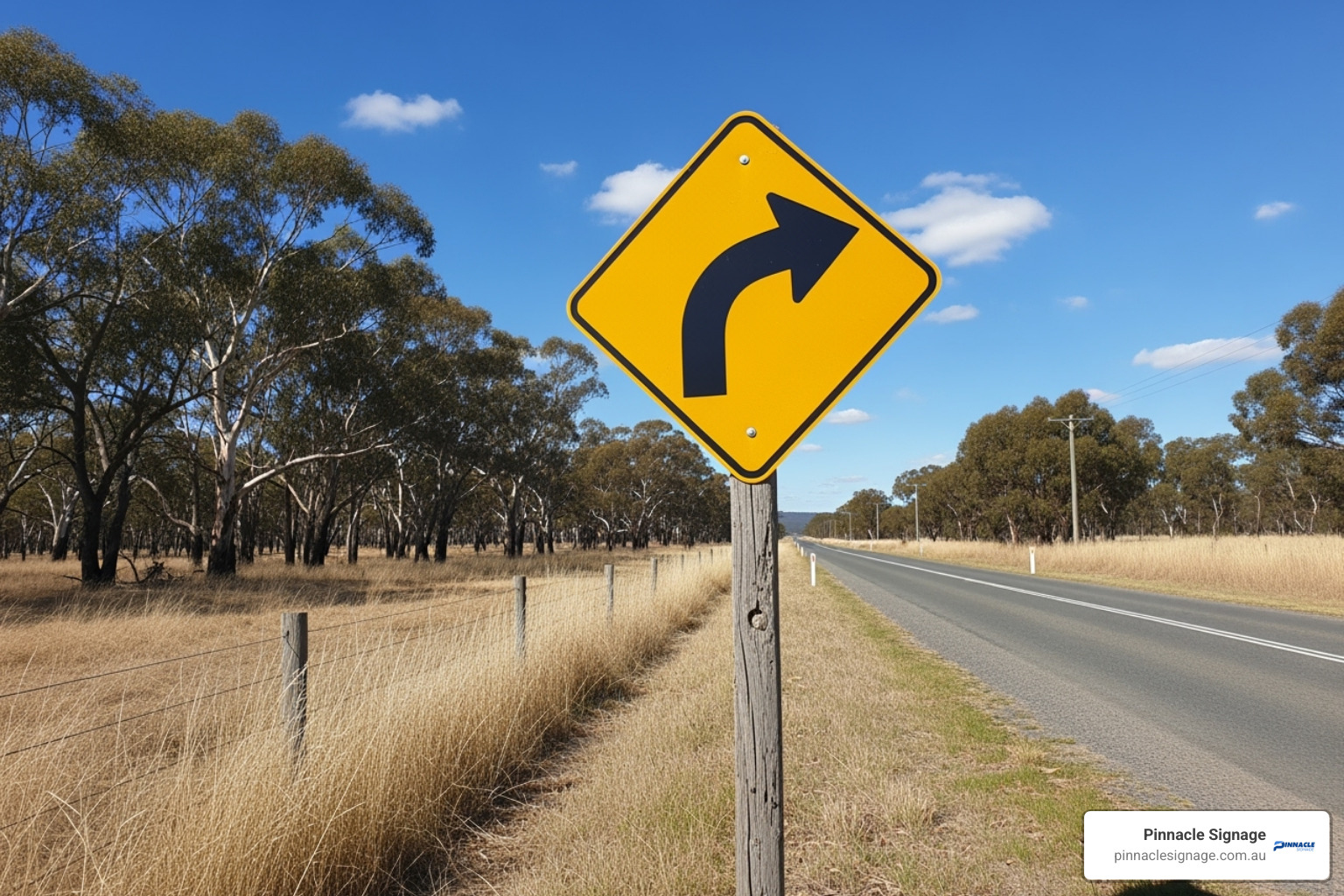
Understanding these differences is key: rectangular black and white signs for private property, red-circled signs for public roads, and yellow signs for public roads.
Legal Implications and Installation Best Practices
Ignoring any speed limit sign, whether on private or public roads, has serious consequences, including fines, demerit points, and increased insurance premiums. More importantly, speeding dramatically increases accident risk. For property managers, proper sign installation is a key part of fulfilling your duty of care.
To ensure signs are effective, follow these best practices:
- Strategic Placement: Position signs so they are clearly visible to approaching drivers, free from obstructions like trees or buildings.
- Appropriate Height and Reflectivity: Install signs at a height that is easily readable from a vehicle. Use reflective materials for visibility in low-light conditions.
- Durability and Maintenance: Choose weather-resistant materials like aluminium that withstand harsh Australian conditions. Regularly inspect signs for damage or fading and replace them promptly.
- Compliance with Standards: Ensure your signage adheres to relevant Australian Standards for traffic signs, where applicable.
Following these practices ensures your signs communicate effectively and contribute to a safer environment. For more on temporary traffic management, see our guide on Road Construction Traffic Signs Explained Without Driving You Crazy.
Ensuring Compliance and Safety with the Right Signage
Correct signage is about creating a safe environment, not just ticking a box. In Australia, strict standards for road and workplace safety protect everyone from accidents and legal issues. For anyone managing a car park, industrial site, or private road, compliant signage is a legal and practical necessity. The quality of a black and white speed limit sign can be the difference between smooth traffic flow and a costly accident, which is why choosing the right signage partner is crucial.
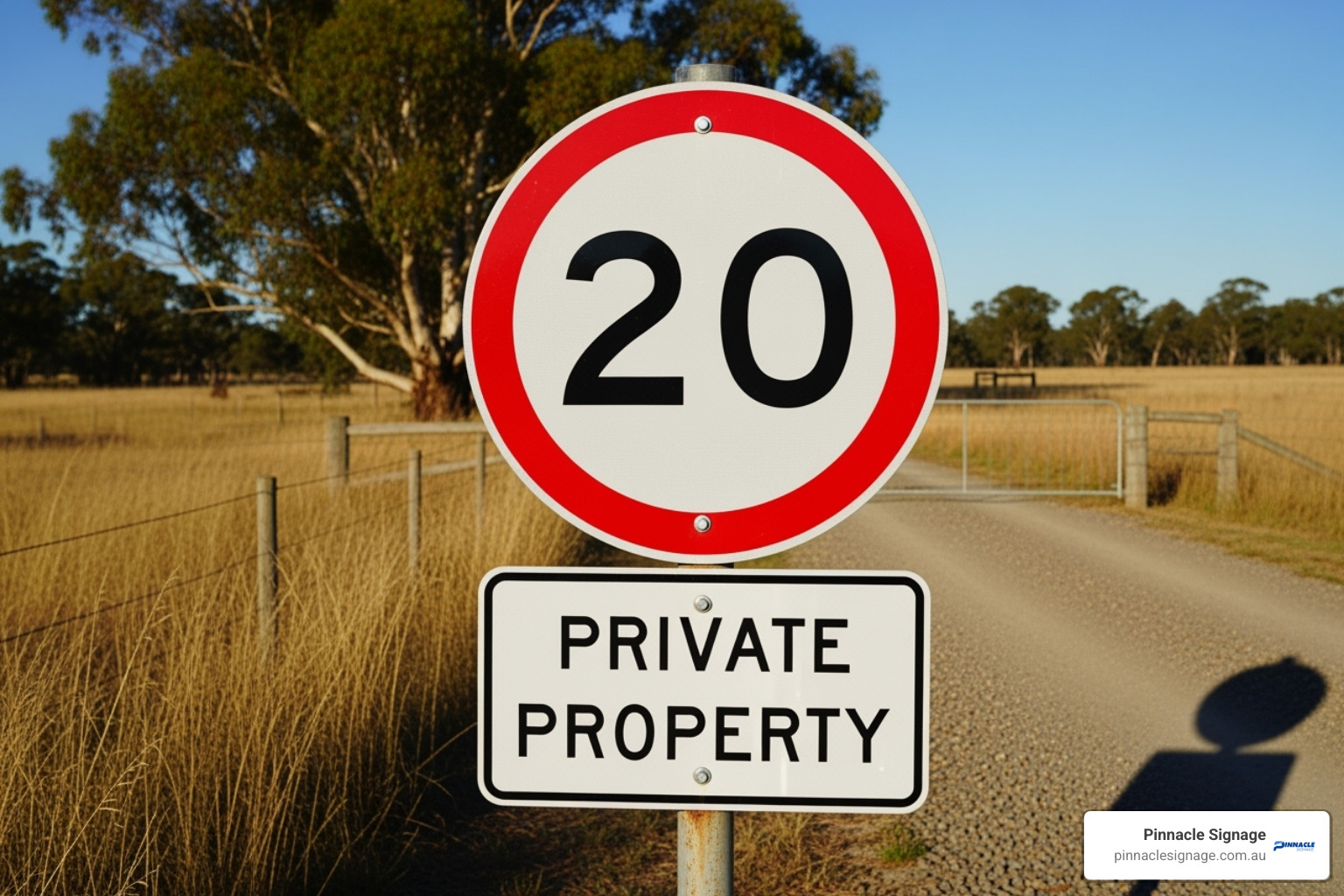
Your Partner for Compliant Road Signage
At Pinnacle Signage, we understand what Australian businesses need for safety and regulatory compliance. When you order a black and white speed limit sign, you need it to be durable, compliant, and delivered reliably. As a 100% Australian-made and owned company based in East Wagga Wagga, NSW, we manufacture signs built to withstand our harsh climate using high-quality aluminium and metal.
Our range includes:
- Warning & Regulatory Signage: From black and white speed limit signs to a full spectrum of regulatory signs, our products meet Australian standards for visibility and durability.
- Road Work Signs: Designed according to state road authority guidelines, these signs are ideal for temporary traffic management on active worksites.
- Custom Safety Signs: For unique requirements, we can design and manufacture signs that communicate your specific message, from custom speed limits to hazard warnings.
Our local knowledge and manufacturing expertise ensure you get solutions that are effective and compliant. If you're ready to improve safety with reliable signage, we can help. Contact us for custom signage solutions custom to your needs.
Getting Your Signs Delivered
We make getting your signage straightforward. For most deliveries across Australia, we use reliable couriers. Please provide a valid daytime delivery address, as couriers cannot deliver to PO Boxes and a signature is required. Re-delivery charges will apply if you are not available to accept the delivery. For items over 50kg, tailgate delivery service is included for residential addresses, or you can opt for depot pickup.
Free Shipping Benefits
Orders over $100 qualify for free shipping Australia-wide on most items. For some bulky items delivered to WA, North QLD, NT, TAS, and island areas, additional shipping costs may apply. Our staff will contact you if these charges are relevant to your order.
Production and Delivery Times
Most items are ready for dispatch or pickup within 2-4 business days. After dispatch, estimated delivery times are:
- 1-2 days: Sydney, ACT, Melbourne, Brisbane, Gold Coast
- 2-4 days: Rest of NSW, Rest of VIC
- 3-6 days: SA, North QLD, Perth
- 5-9 days: TAS, NT, WA
Warehouse Pickup Option
If you prefer to collect your signs, pickup is available at our warehouse at Unit 4/28 Nagle Street, East Wagga Wagga NSW. We are open 8am to 5pm, Monday to Friday (closed on weekends and public holidays).