

Workplace Safety Made Easy: How to Implement Fire Safety Signs
Why Fire Safety Signs Are Essential for Australian Workplaces
Fire safety signs in the workplace are a critical component of emergency preparedness that can mean the difference between a safe evacuation and a dangerous situation. These visual communication tools provide immediate guidance during emergencies, helping occupants locate exits, fire-fighting equipment, and assembly points when every second counts.
Essential fire safety signs for Australian workplaces include:
- Fire Exit Signs - Green rectangular signs marking emergency evacuation routes
- Fire Equipment Signs - Red rectangular signs identifying extinguishers, hose reels, and blankets
- Prohibition Signs - Red circular signs preventing fire hazards (e.g., 'No Smoking')
- Mandatory Signs - Blue circular signs requiring specific actions (e.g., 'Keep Fire Door Closed')
- Warning Signs - Yellow triangular signs alerting to fire risks and flammable materials
In a fire emergency, panic can displace rational decision-making, making highly visible signage crucial for guiding people to safety. Beyond legal compliance under Australian Work Health and Safety laws, effective fire safety signage serves as your first line of defence in protecting lives and property.
As someone who spent years in the safety and industrial supply space, I witnessed how poor signage quality and unreliable delivery created genuine safety risks for Australian businesses. This experience drove me to establish Pinnacle Signage, where we focus on delivering compliant fire safety signs in the workplace that meet the urgent needs of facility managers and construction supervisors across the country.
Why Your Workplace Can't Ignore Fire Safety Signage
When it comes to workplace safety, fire safety signs in the workplace aren't just another item on your compliance checklist—they're your first line of defence in protecting lives and property. These visual guides create a comprehensive communication system that transforms potentially chaotic emergency situations into organised, safe evacuations.
Think about it this way: in a fire emergency, people's natural instincts can work against them. They might head toward familiar exits that are blocked by smoke, or waste precious time searching for fire extinguishers. Proper signage cuts through the confusion, providing clear direction when rational thinking becomes difficult.
Beyond just ticking a box, effective fire safety signage serves multiple critical functions. It reduces panic by giving people clear instructions, guides occupants along the safest evacuation routes, and provides critical information to emergency services when they arrive on scene. Those external signs that firefighters rely on—like fire department connection markers—can be the difference between a quick response and costly delays.
The Legal and Moral Imperative
Under Australian Work Health and Safety laws, businesses carry a strict duty of care to protect workers, visitors, and anyone else who might be affected by their operations. The Person Conducting a Business or Undertaking (PCBU) holds primary responsibility for ensuring workplace safety, which includes implementing effective fire safety signage as a key control measure to manage fire risks.
This duty extends well beyond simply purchasing signs and sticking them on walls. You must ensure they're clearly visible and unobstructed, properly maintained and replaced when damaged, positioned where they can be easily understood, and compliant with Australian Standards for design and placement.
The reality is that protecting lives isn't just about legal compliance—it's about creating a workplace where everyone can respond effectively during an emergency. When emergency services arrive, clear signage helps them quickly locate essential equipment and understand your building's layout, potentially saving both time and lives. For comprehensive guidance on managing workplace risks, visit SafeWork Australia.
The Cost of Non-Compliance
Let's be honest about what's at stake here. The consequences of inadequate fire safety signage can be severe and far-reaching, affecting your business long after any immediate incident.
Financial penalties under WHS legislation can reach hundreds of thousands of dollars, particularly if non-compliance contributes to injury or death. But the immediate fines are often just the beginning of your troubles.
Legal liability becomes a serious concern if inadequate signage is found to have contributed to an incident. Courts take a dim view of businesses that fail to provide proper safety guidance, especially when the solutions are straightforward and readily available.
Perhaps most damaging is the reputational impact. Construction projects may face delays while safety issues are addressed. Retail businesses might lose customer confidence. Any workplace could struggle to attract and retain quality staff once word spreads about safety shortcomings.
Even your insurance coverage may be affected if investigators determine that inadequate signage contributed to losses or injuries. Insurance companies expect businesses to meet basic safety standards, and failing to do so can complicate claims and increase premiums.
The good news? All of these risks are entirely preventable with proper planning and quality signage that meets Australian standards.
Decoding the Language of Fire Safety Signs
Understanding the visual language of fire safety signs is crucial for quick comprehension during an emergency. Australian safety signs follow a consistent system of colours, shapes, and symbols designed to convey specific instructions at a glance, even in the most stressful situations.
This standardised approach means that anyone entering your workplace—whether they're your regular team members, contractors, or first-time visitors—can immediately understand what each sign means. The system is based on colour psychology and universal symbols that work across language barriers, making it particularly valuable in Australia's diverse workplace environments.
When you understand this visual language, you can make informed decisions about where to place each type of sign for maximum effectiveness. Let's break down each category so you can implement fire safety signs in the workplace with confidence.
Red Signs: Prohibition and Fire Equipment
Red serves two distinct purposes in fire safety signage, and understanding the difference is crucial for proper implementation. The shape tells you everything you need to know at a glance.
Prohibition signs use a red circle with a black symbol crossed by a red diagonal line. These signs prevent fire hazards by clearly showing what's forbidden. You'll commonly see 'No Smoking' signs in areas with flammable materials, 'No Naked Flames' signs near chemical storage, and 'No Entry' signs for areas with specific fire risks.
Fire equipment signs take a completely different approach, using red rectangles with white text and symbols to help people locate fire-fighting equipment quickly. These include fire extinguisher signs showing the specific type and class, fire hose reel signs indicating connection points, and fire blanket signs for kitchen and workshop areas. You'll also see fire alarm call point signs and fire department connection (FDC) signs for external building access.
The key distinction is simple: circles mean "don't do this," rectangles mean "fire equipment here." This visual difference allows for instant recognition even when visibility is compromised by smoke or poor lighting.
Green Signs: Your Path to Safety
Green signs are your lifeline during an emergency—they always indicate safety, whether that's safe conditions, directions to safety, or the location of safety equipment. In fire situations, these signs guide people away from danger and towards help.
Emergency exit signs with the familiar running figure pictogram and directional arrows are the most critical green signs in any workplace. Fire assembly point signs show where everyone should gather after evacuation, whilst refuge point signs indicate areas where people can wait safely for rescue assistance.
You'll also find first aid signs indicating medical assistance locations and emergency telephone signs for communication during incidents. For critical applications like emergency exits, these signs should include photoluminescent materials that continue to glow when power fails or smoke reduces visibility.
Blue Signs: Actions You Must Take
Blue circular signs with white symbols indicate mandatory actions—specific things people must do to maintain safety. In fire safety contexts, these signs often relate to maintaining the integrity of fire protection systems that are built into your building.
'Keep Fire Door Closed' signs on self-closing fire doors ensure these critical barriers function as designed. 'Fire Door - Do Not Obstruct' signs keep access clear, whilst 'Authorised Personnel Only' signs protect fire equipment areas from interference.
You might also see 'Report to Fire Warden' signs in designated assembly areas. These signs are essential because they ensure that passive fire protection systems continue to work properly when they're needed most.
Yellow Signs: Be Aware of Hazards
Yellow triangular signs with black borders and symbols warn of specific hazards that may not be immediately obvious to people unfamiliar with your workplace. In fire safety, these warning signs help prevent incidents before they start.
Flammable liquid warning signs for storage areas, oxidising substance signs for chemicals that increase fire risk, and electrical hazard signs where water-based extinguishers shouldn't be used are all common examples. Hot surface warnings for equipment that could ignite materials are particularly important in manufacturing environments.
These warning signs become particularly crucial in industrial settings where multiple fire hazards may be present. They help people make informed decisions about their actions and the equipment they might use in an emergency. For more detailed information on flammable warning signs, see our guide on Why Flammable Warning Signs Are Critical for Workplace Safety.
A Practical Guide to Installing Fire Safety Signs in the Workplace
Getting fire safety signs in the workplace right isn't just about buying signs and sticking them up wherever seems convenient. It's about creating a comprehensive safety system that will actually work when people need it most—during a real emergency.
The difference between effective signage and wasted money often comes down to proper planning and understanding what's actually required under Australian law.
Who is Responsible? WHS Duties for Business Owners
If you're running a business, the buck stops with you. The Person Conducting a Business or Undertaking (PCBU) carries the ultimate responsibility for workplace safety, including making sure your fire safety signage is properly installed and maintained.
Now, you don't have to personally install every sign yourself, but you can't just delegate the responsibility and forget about it. Even when you assign tasks to others, you remain accountable for ensuring the work gets done properly.
In most workplaces, this responsibility gets shared across several key roles. Site managers typically handle the day-to-day stuff—making sure signs stay clean and visible, coordinating replacements when needed. Building owners or landlords often take care of common areas and building infrastructure, while fire wardens keep an eye on whether signs are getting blocked by equipment or storage. Facility managers usually coordinate the regular inspections and organise replacements.
The key is making sure everyone knows exactly what they're responsible for. Clear documentation prevents important tasks from falling through the cracks, especially during busy periods when safety checks might otherwise get overlooked.
A Step-by-Step Placement Guide for Fire Safety Signs in the Workplace
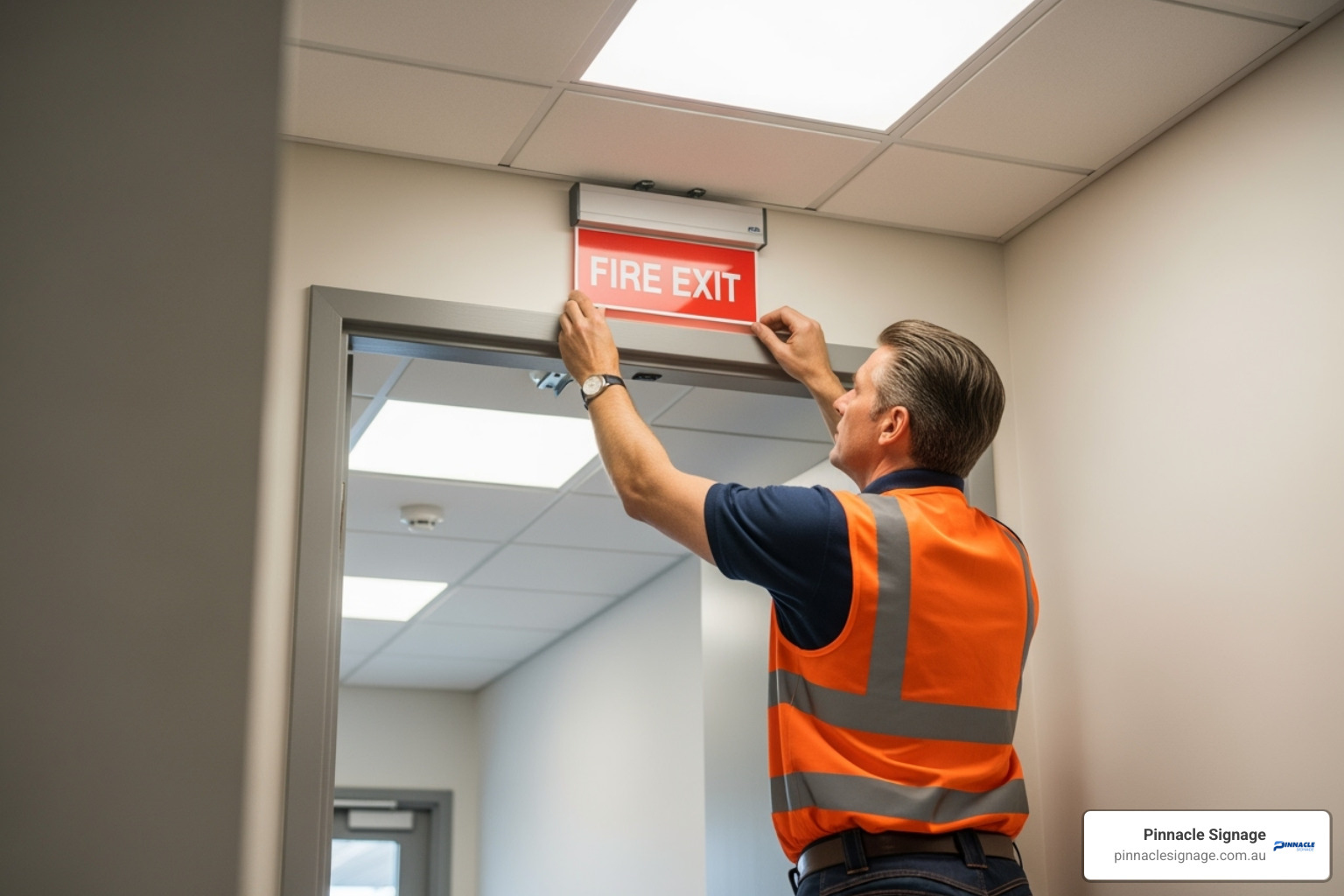
Effective sign placement follows human behaviour during emergencies—when people are stressed, they need clear, obvious guidance that doesn't require any guesswork.
Start with a thorough signage audit by walking through your entire workplace with fresh eyes. Look for every location where someone might need guidance during an emergency. This includes every emergency exit and the routes leading to them, all fire-fighting equipment locations, areas where fire hazards are present, and any points where people might become confused about which way to go.
Consider viewing distance and line of sight carefully. Signs that are too small for their viewing distance become useless when you need them most. As a general rule, pictograms should be at least 15mm per metre of viewing distance, while text should be at least 5mm per metre for uppercase letters. If you're dealing with areas that have poor lighting, increase these sizes by 50%.
Proper illumination is absolutely critical for signs like emergency exits. They must remain visible even during power failures, so photoluminescent materials that glow in the dark are essential. Emergency lighting should illuminate key signs, and you need to avoid placing signs where they'll be shadowed by structural elements like beams or columns.
Avoiding obstructions requires thinking about how your workplace actually operates. Don't place signs where they can be blocked by equipment or storage—and remember that what's clear today might be blocked tomorrow. Make sure doors, when open, don't obscure important signage, and consider seasonal changes that might affect visibility.
For more specific guidance on particular sign types, our article on Workplace Safety Made Simple: Muster Point Signs and Symbols covers the details you'll need.
Enhancing Visibility: Photoluminescent and Illuminated Signs
Photoluminescent signs represent one of the most important advances in emergency signage technology. These clever signs absorb ambient light during normal conditions and then emit a bright glow for hours during power outages or smoke-filled conditions.
The benefits are significant: they remain visible when electrical systems fail, don't require batteries or electrical connections, provide consistent illumination for several hours, and are particularly effective in stairwells and corridors during evacuation. This makes them invaluable when traditional lighting systems are compromised.
You should use photoluminescent signs for all emergency exit signs, signs marking changes in direction along evacuation routes, fire equipment signs in areas without emergency lighting, and assembly point signs for outdoor areas.
Photoluminescent signs supplement rather than replace emergency lighting systems. Both work together to ensure maximum visibility during emergencies, creating multiple layers of guidance when people need it most.
Meeting Australian Requirements for Fire Safety Signs in the Workplace
Australian fire safety signs in the workplace must comply with relevant standards and regulations, though these can vary depending on your location and industry. Understanding the key framework helps ensure you're meeting your obligations.
Australian Standard AS 1319 provides the foundation for safety sign design, covering colours and their meanings, symbol design and recognition, size requirements based on viewing distance, and material specifications for durability.
Work Health and Safety Regulations in each state and territory specify when and where signs must be installed. These regulations require signs to be clearly visible and legible, positioned where they can be easily seen, maintained in good condition, and appropriate for the specific hazards present in your workplace.
Building Code of Australia (BCA) requirements may apply to certain types of buildings, particularly those with complex evacuation requirements or high occupancy levels.
The key is ensuring your signage meets these requirements while actually serving its purpose during an emergency. Compliance isn't just about avoiding penalties—it's about creating a system that will genuinely help people get to safety when they need it most.
For detailed information on Australian Standards for safety signs, visit our comprehensive guide on Understanding Australian Standards for Safety Signs.
Frequently Asked Questions about Workplace Fire Safety Signs
How many fire safety signs does my workplace need?
If you're wondering about the right number of signs for your workplace, you're asking the right question—but there's no magic number that applies to every business. The answer depends entirely on what's happening in your specific workplace and how people move through it.
The key factors that determine your signage needs include the size and complexity of your building layout. A simple single-level workshop will need far fewer signs than a multi-storey office building with multiple wings. Similarly, the nature of your work matters enormously—a warehouse storing flammable materials will require different warning signage compared to a standard office environment.
Your occupancy levels also play a crucial role. A workplace with 200 employees needs much clearer evacuation guidance than one with 20 people. Think about it from a practical perspective: during an emergency, will people know exactly where to go, or might they become confused about which exit to use?
Every workplace must have certain minimum signage regardless of size. This includes a fire exit sign for every emergency exit, directional signs at every point where someone might be unsure which way to go during an evacuation, and clear identification of all fire-fighting equipment. You'll also need warning signs wherever significant fire hazards are present and assembly point signs for your designated muster areas.
The best approach is to walk through your workplace and imagine you're a visitor who's never been there before. During a fire emergency, would the signage guide you safely outside? If you're unsure at any point, that's where additional fire safety signs in the workplace are needed.
What is the difference between a 'Fire Exit' and a regular 'Exit' sign?
This is one of the most important distinctions in workplace safety signage, and getting it wrong can have serious consequences. The difference isn't just about the words on the sign—it's about where those routes actually lead and how they're designed to protect people.
A 'Fire Exit' sign marks a route that's specifically designed for emergency evacuation and leads directly to safety outside the building. These routes must meet strict requirements: they stay clear and unobstructed at all times, they're protected from fire and smoke spread through proper construction, and they're wide enough to handle the number of people who might need to use them during an emergency.
Regular 'Exit' signs, on the other hand, might simply show the way out of a room or area into another part of the building. These could lead to other rooms, corridors that aren't part of the fire evacuation system, or areas that might actually become unsafe during a fire emergency.
The distinction matters because during a fire, you need to know that following a 'Fire Exit' sign will actually get you to safety. A regular exit might lead you deeper into danger or to a dead end. This is why Australian Standards require all designated fire escape routes to use official 'Fire Exit' signage that meets specific design and placement requirements.
If you're unsure about which signs you need where, it's worth getting professional advice. For detailed guidance on choosing the right exit signage, check out our Ultimate Guide to Exit Fire Signs.
How often should I check my fire safety signs?
Regular inspection of your fire safety signs in the workplace is absolutely essential—a sign that can't be seen or understood is worse than no sign at all because it creates false confidence during an emergency.
Monthly checks should become part of your routine workplace safety activities. Walk through your workplace and verify that all signs are clean and clearly visible. It's amazing how quickly dust, dirt, or even spider webs can make a sign hard to read. Check that signs aren't being obstructed by equipment, storage, or even temporary items like boxes or furniture that someone has moved.
If you have illuminated signs, make sure they're still functioning properly. For photoluminescent signs, confirm they're receiving adequate ambient light during normal operations—these signs need to absorb light to glow in the dark when needed.
Every three months, conduct more detailed inspections. Look closely for any damage, fading, or general wear that might affect visibility. Check that all required signs are still in place—sometimes signs fall down or get removed during maintenance work and aren't replaced. This is also a good time to assess whether changes to your workplace layout require additional signage.
Annual reviews should be comprehensive audits of your entire fire safety signage system. This includes verifying compliance with current standards, assessing whether workplace changes require signage updates, and ideally having a qualified safety professional review your setup.
The golden rule is simple: if you notice any sign that's damaged, faded, or unclear, replace it immediately. During an emergency, people's lives may depend on being able to quickly understand what your signs are telling them.
Conclusion: Make Safety Your Most Visible Asset
Implementing fire safety signs in the workplace is far more than a regulatory requirement—it's a fundamental investment in the people who walk through your doors every day and the long-term success of your business. These visual guardians stand ready to guide, inform, and protect when chaos threatens to overwhelm rational thinking.
The comprehensive approach we've outlined transforms basic compliance into genuine workplace protection. When you understand the language of safety signs, position them strategically, and maintain them properly, you create a communication system that works seamlessly with your other safety measures. This isn't just about avoiding fines—it's about ensuring everyone can find their way to safety when it matters most.
Think of your fire safety signage as part of your workplace's DNA. Just as you wouldn't skimp on quality materials for your core business operations, your safety signs deserve the same attention to detail and durability. Fire safety signs in the workplace that fade, crack, or become obscured aren't just ineffective—they can create dangerous confusion during emergencies.
The reality is that emergencies don't wait for convenient timing. They don't pause while you order replacement signs or give you time to figure out where that fire extinguisher should be located. Your signage needs to be ready today, tomorrow, and years from now.
At Pinnacle Signage, we've seen how the right signage can make the difference between a workplace that's merely compliant and one that's genuinely prepared. Our focus on quality materials, clear design, and reliable delivery means your safety systems are ready when they're needed most.
Don't let another day pass wondering if your fire safety signage is up to the task. Take a walk through your workplace with fresh eyes—are your signs clearly visible, properly positioned, and ready to guide people to safety? If you're not completely confident in your answer, it's time to take action.
Your people deserve to work in an environment where safety is visible, accessible, and reliable. Make safety your most visible asset by exploring our complete range of fire signage and finding how proper signage can transform your workplace's emergency preparedness.