

Sign, Sealed, Delivered: Mounting No Parking Signs on Bollards
Why Bollard No Parking Signs Are Essential for Site Safety
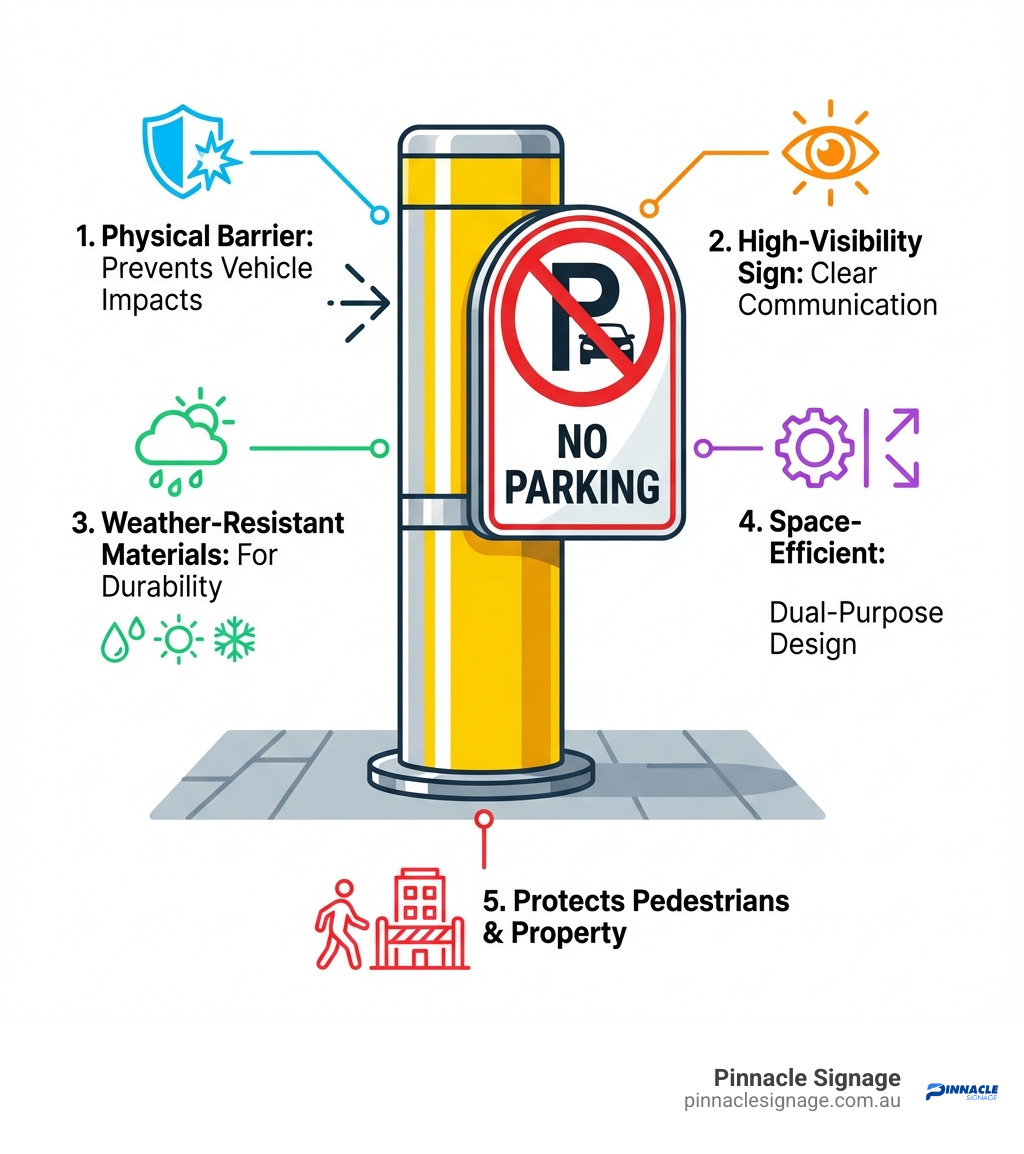
A bollard no parking sign combines physical protection with clear visual messaging, serving as both a barrier against vehicle impacts and a directive for where parking is prohibited. Here's what makes them effective:
Key Benefits:
- Physical barrier - Prevents vehicles from encroaching on restricted areas, buildings, or pedestrian zones
- Clear communication - Highly visible signage ensures drivers understand parking restrictions
- Dual protection - Safeguards both property and people in high-traffic areas
- Durable solution - Weather-resistant materials require minimal maintenance
- Space-efficient - Combines two functions in a single installation
Every year, hundreds of people are killed, and thousands are injured in vehicle-into-building crashes across Australia and globally. Bollards with integrated signage provide a formidable safety barrier while clearly communicating parking restrictions, making them an increasingly popular choice for storefronts, car parks, and commercial properties. The right bollard no parking sign solution can prevent costly property damage and protect pedestrians, helping businesses nationwide manage their sites more effectively.
The Dual Role of a Bollard No Parking Sign: More Than Just a Message
A bollard no parking sign is much more than just a piece of metal or plastic with text on it. It's a critical component in effective traffic management and site safety. Its primary purpose is twofold: to physically deter vehicles from entering or parking in a restricted area and to visually communicate that restriction clearly and unambiguously. This dual functionality sets it apart from traditional signage.
Imagine a busy car park or a storefront. Vehicles are constantly in motion, and pedestrians often share the same space. In such environments, the risk of accidents, property damage, and even serious injury is heightened. This is where the robust presence of a bollard, combined with a clear "no parking" message, becomes invaluable.
The physical barrier aspect of a bollard is formidable. It acts as a sturdy obstacle, capable of withstanding significant impact, protecting vulnerable infrastructure like building facades, utility boxes, or pedestrian walkways. Staggering statistics show that hundreds of people are killed and thousands are injured annually in vehicle-into-building crashes. Bollards are heavily recommended to prevent such incidents because they act as formidable safety barriers for parking lots, storefronts, and buildings. Our bollards provide that crucial line of defence.
Simultaneously, the visual directive provided by the sign mounted on the bollard ensures that drivers are immediately aware of parking prohibitions. This clear communication helps prevent accidental infringements, reduces congestion, and maintains orderly traffic flow. Unlike a standalone signpost, which can be easily overlooked or knocked down, a bollard provides a substantial, highly visible platform for the message.
When we compare bollard no parking signs to traditional parking signs, the benefits in terms of durability and impact resistance are clear. A traditional signpost, if struck by a vehicle, might bend, break, or even collapse, potentially creating a trip hazard for pedestrians. A collapsed signpost could lead to pedestrian injuries. Installing bollards, especially those designed for impact, means that even if a vehicle makes contact, the sign is more likely to remain intact, and the physical barrier continues to protect. This makes them a superior choice for areas requiring both communication and robust protection.
Our bollard signage solutions are designed to be durable, weather-resistant, and highly visible, ensuring long-term performance and minimal maintenance. For a deeper dive into the rules governing parking signs in Australia, you can consult our A-Z Guide to Australian Parking Signs Rules.
Understanding Bollard Signs and Their Applications
When we talk about bollard no parking signs, we're referring to a versatile category of signage that integrates a visual message with a physical structure. This combination creates a highly effective system for managing vehicle movement and enhancing safety in various environments.
Types of Bollard Signs
At Pinnacle Signage, we understand that different situations call for different solutions. That's why we offer a range of bollard sign types to suit diverse needs:
- Standard Bollard Signs: These are typically flat signs mounted directly onto the top or side of a bollard. They are straightforward, highly visible, and effective for conveying messages like "No Parking," "Reserved Parking," or directional arrows. The sign is securely attached to the bollard, benefiting from the bollard's stability and protective qualities.
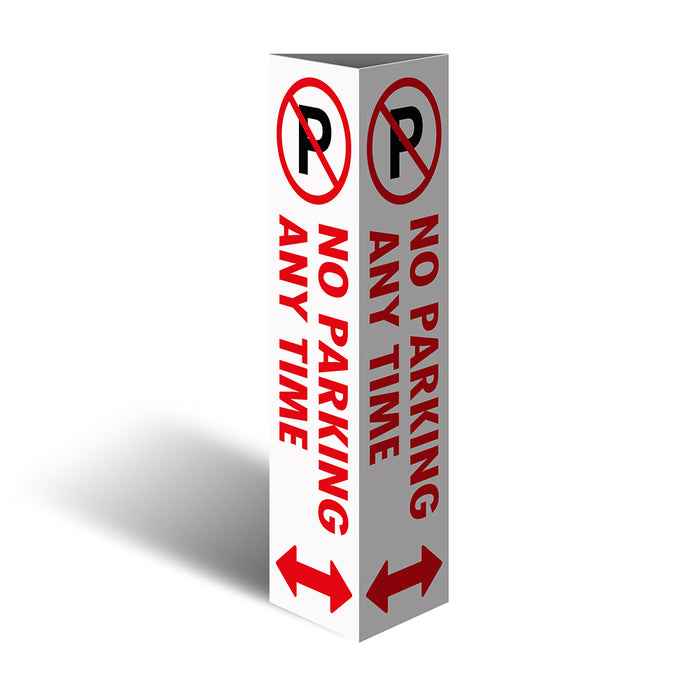
- Bollard Surround Signs: These are innovative, space-efficient signage solutions that wrap around a standard bollard, often featuring multiple sides (e.g., three-sided). This design maximises visibility from different angles without requiring additional ground space. Bollard surround signs are perfect for service stations, forecourts, and high-traffic areas where messaging needs to be seen from various approaches. They grab attention effectively and can be customised with branding or specific safety messages.
Both types offer space-efficient messaging, making the most of existing bollard infrastructure. For a comprehensive overview of these and other options, our Detailed Guide to Bollard Signs provides further insights.
Materials and Their Advantages
The effectiveness and longevity of a bollard no parking sign largely depend on the materials used in its construction. We focus on selecting materials that offer superior durability, weather resistance, and low maintenance, ensuring our signs perform reliably in the demanding Australian climate.
For the bollard itself, robust materials like steel are commonly used, often with protective covers. These covers, made from durable, weather-resistant plastics, provide an outer layer that protects the steel from corrosion and eliminates the need for painting. This means no more chipping paint or rust, just a consistently vibrant and professional appearance.
The signs themselves are crafted from durable, weather-resistant materials designed to withstand harsh outdoor conditions without fading, cracking, or deteriorating. This ensures that the "no parking" message remains clear and legible for years, even under direct sunlight and heavy rain. The advantages of these materials include:
- Durability: Built to endure impacts and environmental stressors.
- Weather Resistance: Capable of performing in extreme heat, cold, rain, and UV exposure.
- Low Maintenance: No need for constant cleaning, repainting, or repairs.
- High Visibility: Materials are chosen to ensure colours remain vibrant and text is sharp.
- Corrosion Resistance: Especially important for metal components exposed to moisture.
Key Features and Specifications
Several key specifications determine the effectiveness of a bollard no parking sign, influencing its visibility, impact resistance, and compliance.
- Height: The height of the bollard and the mounted sign is crucial for visibility. Signs should be positioned at a height that is easily seen by drivers approaching from a distance, as well as by pedestrians. Typically, bollards stand around 900mm to 1200mm above ground, with the sign extending above this to ensure optimal sightlines.
- Size: The dimensions of the sign panel itself need to be appropriate for the message and the viewing distance. Larger signs are necessary for faster traffic areas or where the message needs to be conveyed quickly.
- Visibility: Beyond size and height, visibility is improved by contrasting colours (e.g., a bright yellow bollard cover with a red and white "No Parking" sign), reflective materials for low-light conditions, and clear, concise text and symbols.
- Impact Resistance: The bollard's construction (e.g., heavy-duty steel pipe) determines its ability to absorb impact. If the primary goal is robust protection, a heavy-duty steel bollard is essential.
- Mounting Options: Bollards can be installed in-ground (core-drilled and cemented) for maximum strength or surface-mounted (bolted down) onto existing concrete. The choice depends on the ground type and the level of impact protection required. For signs, attachment brackets are key. These can be simple bolt-on solutions or integrated posts within the bollard structure, providing a secure and stable display for your signage.
Installation and Customisation: Getting it Right
Proper installation is paramount for the effectiveness and longevity of any bollard no parking sign. Not only does it ensure the sign is visible and secure, but it also guarantees the bollard provides its intended physical protection. Beyond installation, customisation allows you to tailor your signage to specific needs and branding.
Key Installation Considerations
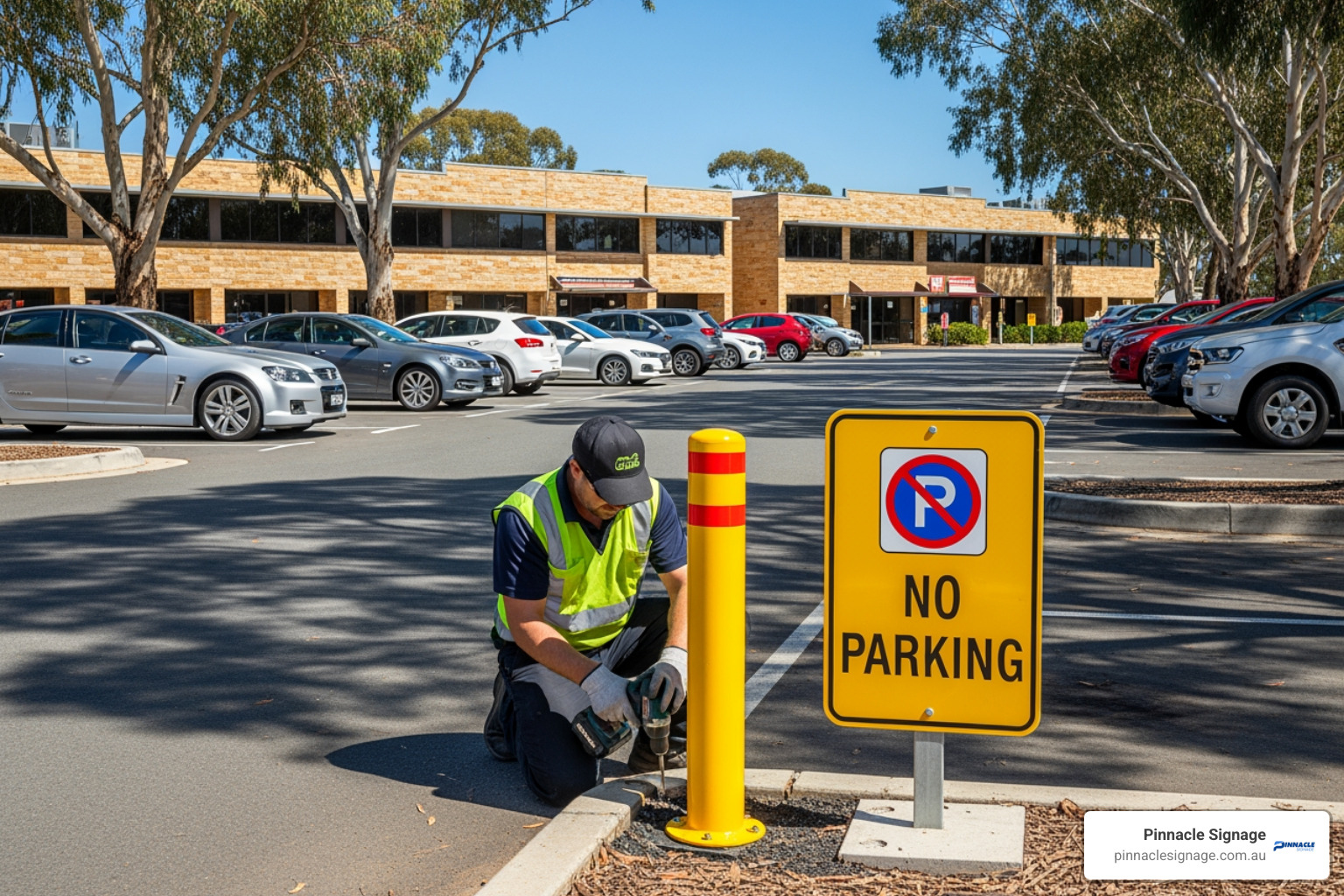
When installing a bollard no parking sign, a thorough site assessment is the first step. Consider the type of ground, potential traffic speeds, and the specific purpose of the bollard.
-
Ground Type:
- Concrete: For existing concrete surfaces, surface mounting is an option, where the bollard's base plate is bolted directly onto the concrete. This method is suitable for good quality concrete.
- Asphalt: For asphalt, or if a higher level of protection is needed, an in-ground installation is often preferred, which may involve core drilling through the asphalt and into a concrete sub-base, or digging a footing and cementing the bollard in place.
- Loose Ground, Block Paving, and Gravel: For these softer surfaces, a spigot-designed version of a bollard might be available, which anchors more securely into the ground.
-
Mounting the Bollard:
- Surface Mounting: The bollard base is secured with heavy-duty anchor bolts. This is quicker but offers less impact resistance than in-ground.
- In-ground Installation: This involves digging a hole or core drilling, placing the bollard, and filling around it with concrete. This method provides maximum stability and impact resistance.
- Placement: Strategic placement is crucial. Ensure the bollard and sign do not obstruct pedestrian pathways or create new hazards. Consider sightlines for drivers and ensure the sign is visible from all necessary approach angles.
- Local Council Regulations: Always check with your local council in areas like East Wagga Wagga NSW for specific regulations regarding bollard placement, height, and signage requirements. This ensures compliance and avoids potential issues.
Once the bollard is securely installed, the sign itself is attached using appropriate sign attachment brackets. These brackets are designed to hold the sign firmly, preventing it from rotating or detaching due to wind or minor impacts. For many of our solutions, the signpost is integrated or sleeved into the bollard, creating a seamless and robust unit.
Customising Your Bollard No Parking Sign
While standard "No Parking" signs are effective, customisation allows businesses to create a bollard no parking sign that perfectly aligns with their specific requirements, branding, and aesthetic preferences. At Pinnacle Signage, we offer extensive customisation options:
- Colours: Beyond standard safety yellow or red, bollard covers and signposts can be matched to your brand colours or chosen to blend with the environment. High-visibility colours like safety yellow are excellent for drawing attention to critical areas.
- Branding: Incorporate your company logos, slogans, or specific branding elements directly onto the bollard cover or the sign panel. This not only reinforces your brand identity but also makes your signage unique and professional.
- Custom Messages: Tailor the text to convey very specific instructions. Examples include "Permit Holders Only," "Loading Zone 15 Mins," "No Parking Emergency Access," or "Staff Parking Only."
- Specific Symbols: Add custom symbols or pictograms relevant to your site's needs.
Our custom designs are available to incorporate specific messages, branding, or regulatory information custom to each site's requirements. Explore our custom signage options to see how we can bring your vision to life.
Adherence to Australian Standards
When deploying any signage for traffic and safety, adhering to Australian Standards is essential for ensuring the sign is effective, universally understood, and legally enforceable. For bollard no parking signs, compliance with standards such as AS 1742 is critical.
These standards govern key elements like sign colour, size, and the use of recognised symbols. For example, "No Parking" signs must use specific designs—such as a red circle with a 'P' symbol and a diagonal line—to ensure immediate driver comprehension. Using compliant designs improves legal standing and minimises potential liabilities.
Our signs are manufactured to meet relevant Australian Standards, providing peace of mind that your site is managed with clear and compliant signage. For more information on compliant signage practices, refer to our guide on Safety Signage Australia: Your Guide to Clear and Compliant Signs.
Common Applications and Considerations
The versatility and effectiveness of a bollard no parking sign make it an ideal solution for a wide array of environments where managing vehicle access and ensuring safety are critical.
Where are Bollard Signs Most Effective?
Our bollard no parking signs prove particularly useful in a variety of commercial, industrial, and public settings:
- Storefronts and Retail Centres: To protect pedestrians entering and exiting shops, prevent vehicles from parking directly in front of entrances, or to designate specific pick-up zones.
- Car Parks: Essential for delineating no-parking zones, fire lanes, accessible parking spots, and vehicle exclusion areas.
- Fire Lanes: Ensuring these critical access routes remain clear for emergency services.
- Accessible Parking: Bollards can protect the crucial signage for accessible parking spaces, preventing damage and ensuring compliance.
- Warehouses and Loading Docks: To keep access ways clear for forklifts and delivery vehicles, ensuring efficient operations and preventing bottlenecks.
- Public Venues and Schools: To manage traffic flow, protect pedestrian zones, and designate specific drop-off or pick-up areas.
These signs are an investment in safety and order, helping to create a more controlled and secure environment for everyone.
Bollard Signs vs. Wheel Stops
It's important to understand the distinct roles of bollard no parking signs and wheel stops (also known as parking stops), as they serve different but often complementary functions in parking management.
- Wheel Stops Function: Wheel stops are primarily rollover barriers. They are designed to prevent vehicles from rolling too far into a parking space, curbing car overhangs, and stopping vehicles from encroaching on opposite spaces or pedestrian walkways. They are effective for slow-moving vehicles and for marking parking stall boundaries. While they offer a degree of protection against minor impacts, their main purpose is positional guidance, not heavy-duty impact absorption.
- Bollard Sign Function: A bollard no parking sign, conversely, serves as a more robust safety barrier. Its primary function is to physically block access and protect against vehicle impacts. While it also conveys a "no parking" message, its physical presence is the key differentiator. Bollards are designed to protect buildings, sensitive installations, and pedestrians from moving vehicles, even at higher speeds. They offer significant impact protection that wheel stops cannot.
In many scenarios, these devices can work together. For instance, a car park might use wheel stops to define parking bays, while bollard no parking signs are strategically placed at entrances, fire lanes, or pedestrian crossings to restrict access and protect critical areas. For more insights into managing parking challenges, our article Parking Predicaments: Why a Park at Your Own Risk Sign is Your Best Bet offers further guidance.
Lifespan and Maintenance
One of the significant advantages of investing in a high-quality bollard no parking sign from Pinnacle Signage is its impressive lifespan and minimal maintenance requirements. We select durable, weather-resistant materials specifically for the demanding Australian environment.
Our bollards, often made from robust steel and covered with protective, UV-stabilised plastic sleeves, are designed for longevity. These covers mean there's no need for repainting, saving you time and money on ongoing maintenance. The signs themselves are crafted from materials that resist fading, cracking, and peeling, ensuring the "no parking" message remains clear and effective for many years.
Routine maintenance is typically limited to occasional cleaning with soap and water to remove dirt and grime, keeping the signs highly visible. This low-maintenance aspect contributes significantly to the long-term value of our bollard no parking signs, making them a cost-effective choice for sustained traffic management and safety.
Our Signage Solutions and Services
Choosing the correct bollard no parking sign is a crucial decision for the safety and efficiency of your property. At Pinnacle Signage, we are dedicated to providing high-quality, durable signage products that meet the diverse needs of Australian businesses, from construction sites and retail centres to industrial facilities and public spaces.
We offer a comprehensive range of bollard signs, including customisable options for colours, branding, and specific messages to perfectly suit your requirements. Whether you need to enforce strict "no parking" zones, protect valuable assets, or improve pedestrian safety, our solutions are designed for long-lasting performance and clear communication. Our Prohibition Signage collection is a great place to start exploring your options.
We understand the importance of convenience and accessibility for our customers. That's why we're proud to announce that Pinnacle Signage products are now available at Bunnings, both in-store and online across Australia. This partnership makes it easier than ever to access our premium signage solutions. You can find our brand page at Pinnacle Signage at Bunnings, with many of our products readily available.
For businesses looking to order in bulk or for specific custom solutions, our team is ready to assist. We pride ourselves on offering scalable solutions and competitive pricing for organisations, groups, and businesses requiring larger volumes of signage.
Don't compromise on safety or clarity. For expert advice, custom designs, or to discuss your specific signage needs, please do not hesitate to contact our team. We're here to help you get your signs sealed and delivered efficiently.
Shipping & Pickup Information
We aim to make acquiring your signage as seamless as possible:
-
Production & Shipping Times: We dispatch most items within 48 hours of receiving your order and payment confirmation. Delivery times are estimated as follows:
- 1 - 2 days: Sydney, ACT, Melbourne, Brisbane, Gold Coast
- 2 - 4 days: Rest of NSW, Rest of VIC
- 3 - 6 days: SA, North QLD, Perth
- 5 - 9 days: TAS, NT, WA
- Delivery Details: For most deliveries within Australia, we use reliable courier services. Please provide a valid daytime delivery address, as couriers cannot deliver to PO Boxes. A signature is required upon receipt to ensure safe delivery; please be available to accept courier deliveries, as re-delivery charges will apply if you are not present. Include a daytime phone number with your shipping details if we need to contact you about your delivery. For items weighing over 50kg, a tailgate delivery is usually required for residential addresses, and this service is included in our standard shipping. Alternatively, you can choose to pick up the item from a nearby depot.
- Free Shipping: Free shipping is available for orders over $100 AU Wide. This applies to most items on our site. However, for some bulky items, additional shipping costs will apply for deliveries to WA, North QLD, NT, TAS, and island areas. Our staff will reach out to you after your order if these charges apply.
- Warehouse Pickup: Pickup is available at our warehouse, located at Unit 4/28 Nagle Street, East Wagga Wagga NSW. The warehouse is open from 8am to 5pm, Monday through Friday, and is closed on weekends and public holidays.