

Detailed Guide to Danger High Voltage Sign Requirements
Why High Voltage Signs are a Non-Negotiable Safety Measure
Danger high voltage signs are essential safety devices that warn of potentially fatal electrical hazards in workplaces across Australia. These signs must be displayed wherever electrical voltage exceeds 600 volts, as mandated by workplace safety regulations, and serve as the critical first line of defence against electrocution and serious injury.
Key Requirements for Danger High Voltage Signs:
- Mandatory placement at any location with voltage over 600 volts
- Specific design elements including a red oval with "DANGER" text on a black background
- Clear hazard messaging such as "High Voltage - Keep Out" or "Authorised Personnel Only"
- Durable materials suitable for indoor and outdoor industrial environments
- Proper sizing for visibility at appropriate distances
- Custom options available for site-specific requirements and multilingual workforces
In any Australian workplace that uses electrical energy, from manufacturing plants to construction sites, the risk of electrocution, burns, and fatal injury is significant. Inadequate signage not only endangers workers but also exposes businesses to legal liability and operational disruptions. Proper high voltage signage is a fundamental safety investment, creating an essential barrier between people and deadly electrical hazards at substations, switchboards, and near power lines.
Understanding and Selecting Danger High Voltage Signs
Choosing the right danger high voltage signs is about creating an effective safety barrier that saves lives, not just ticking a compliance box. The safety of your workers and visitors depends on selecting a sign that clearly communicates the level of risk.
The Critical Difference: Danger vs. Warning and Caution
Australian safety standards outline a clear hierarchy for safety signs, using colour and wording to communicate risk levels for split-second decisions.
Danger Signs: These represent the highest level of threat, where death or serious injury is likely if the hazard is not avoided. For electrical hazards over 600 volts, danger high voltage signs are the only appropriate choice. They feature the word "DANGER" in white letters inside a red oval on a black background, an unmistakable signal to stop.
Warning Signs: These indicate hazards that could cause death or serious injury, but where the risk is less immediate. They use a black triangle on a yellow background with the word "WARNING".
Caution Signs: Used for lower-risk hazards that might cause minor to moderate injuries, such as wet floors. These yellow signs are completely inappropriate for high voltage situations.
Using a caution sign where a danger sign is required sends a dangerously misleading message about the severity of the risk. Our guide on Signs of Trouble: Understanding Danger Labels and Safety Signage explores these differences in more detail.
Essential Components of a Compliant High Voltage Sign
A compliant danger high voltage sign delivers its life-saving message quickly and clearly through several key elements:
- Signal Word: The word "DANGER" in white text within a red oval is the universal signal for the highest level of risk.
- Hazard Message: Direct and unambiguous text like "HIGH VOLTAGE" or "ELECTRICAL SHOCK RISK" leaves no room for misinterpretation.
- Instructions: Clear behavioural guides such as "KEEP OUT" or "AUTHORISED PERSONNEL ONLY" tell people exactly what to do or not do. Specific voltage information (e.g., "4160 VOLTS") can provide extra context for qualified staff.
- Visual Symbols: The universal lightning bolt pictogram is instantly recognisable as an electrical hazard, transcending language barriers.
- Colour Scheme: The combination of red (danger), black (contrast), and white (clarity) follows strict safety protocols to demand immediate attention.
When these elements work together, they create a powerful communication tool. For more on what these visuals mean, see our article on What Does the Danger Electric Shock Risk Sign Actually Mean.
Common Applications for danger high voltage signs
Because high voltage electricity is invisible, danger high voltage signs are a critical first line of defence in many Australian workplaces.
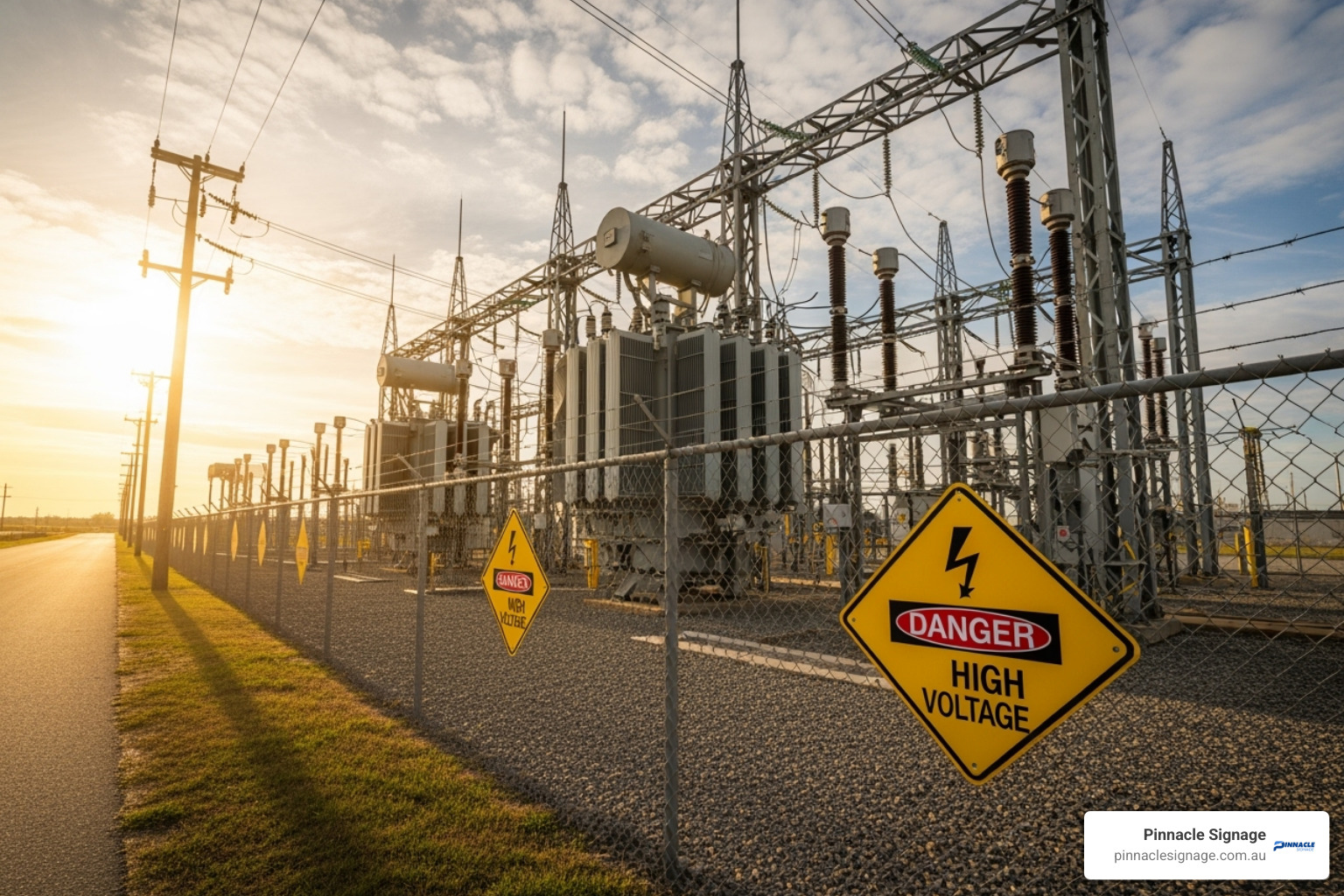
Common locations include:
- Electrical Substations: Signs on perimeter fences and gates prevent unauthorised entry into these extremely high-risk zones.
- Switchboards and Electrical Panels: Warnings on panels in factories and commercial buildings protect maintenance staff, often with instructions like "TURN POWER OFF BEFORE SERVICING".
- Overhead Power Lines: Crucial on construction sites where cranes operate, signs like "HIGH VOLTAGE OVERHEAD" prevent fatal contact.
- Construction and Mining Sites: Robust, visible signage is needed to adapt to dynamic electrical hazards from temporary power systems and underground cables.
- Manufacturing Plants: Motor control centres, large machinery, and electrical rooms all require clear identification of electrical hazards.
- Renewable Energy Facilities: Solar and wind farms require extensive signage on panels, inverters, and infrastructure to protect workers.
- Railway Infrastructure: Signs are needed to protect workers and the public from electrified rail lines.
The goal is always to create an unmistakable warning that prevents accidental contact. Browse our range of high voltage signs to find a solution for your needs.
Choosing the Right Material and Size for Durability
An effective danger high voltage sign must remain legible and intact over time, even in harsh conditions. Your choice of material and size is key to long-term safety.
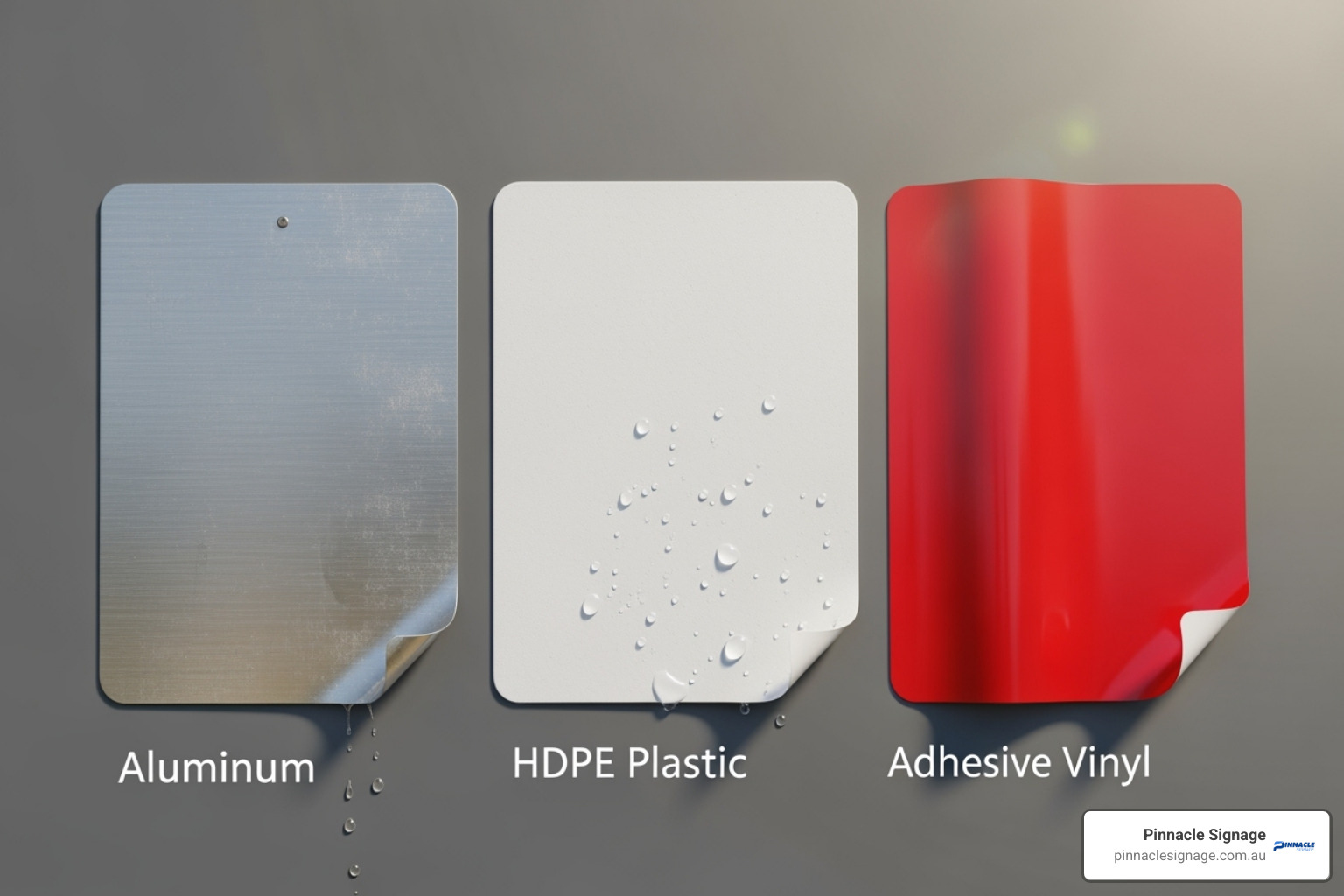
Material Options:
- Aluminium: Resists rust and corrosion, making it ideal for outdoor and industrial settings like substations and perimeter fences.
- HDPE Plastic: A versatile and cost-effective option that resists chemicals, moisture, and impact, suitable for both indoor and outdoor use.
- Adhesive Vinyl Labels: Perfect for applying directly to equipment, panels, and machinery. Our InfiniStick™ labels are exceptionally durable, bonding to smooth and rough surfaces and withstanding extreme temperatures.
Lamination adds a protective layer that resists UV fading, abrasion, and moisture, extending the life of your sign for over a decade.
Size Considerations:
The right size depends on the viewing distance and environment. A sign on a switchboard can be smaller than one marking overhead power lines visible from a road. Consider how far away the sign needs to be read, how quickly people are moving, and how much visual clutter is in the area. In busy or fast-moving environments, larger signs are necessary to ensure the message is seen and understood. When in doubt, choose a larger, more visible sign.
Our team can help you select the right materials and dimensions. Learn more in our guide Stay Safe and Compliant with These High Voltage Safety Signs.
Ensuring Effective Implementation and Compliance
This section covers the practical steps for placement, maintenance, and customisation to maximise safety and meet your obligations.
Best Practices for Placing and Maintaining danger high voltage signs
A sign's effectiveness depends on correct placement and consistent maintenance. These signs are silent guardians that must be positioned and maintained to do their job.
Effective Placement: The primary rule is visibility. A sign that can't be seen can't protect anyone.
- Position signs at eye level where they are impossible to miss and completely unobstructed.
- Install signs at every possible approach to a high voltage hazard, not just the main entrance.
- Place signs directly on or next to the hazardous equipment itself, such as switchgear and transformers.
- Use illuminated or highly reflective signs for areas with poor lighting or for night operations.
Proper Maintenance: Faded, dirty, or damaged signs create a false sense of security and must be addressed.
- Establish a regular inspection schedule to check for fading, damage, dirt, and secure mounting.
- Keep signs clean using agents that won't damage the material or graphics.
- Replace any compromised sign immediately. Keep spares on hand for critical areas to avoid delays.
- Choose materials and lamination suited to your environment, considering factors like chemical exposure, UV rays, and physical impact.
Following these steps creates a robust safety system that actively protects your workforce. For more guidance, refer to Official guidance from Safe Work Australia and our A Quick Start Guide to High Voltage Signage.
Custom and Bilingual Signage for Improved Safety
While standard signs meet basic requirements, custom and bilingual danger high voltage signs can significantly improve safety outcomes by addressing the specific complexities of your worksite.
The Value of Customisation Generic signage may not cover your unique hazards. Custom signs bridge this gap by delivering a precise message for your situation.
- Include site-specific instructions, such as lockout procedures or emergency contact numbers.
- Add company branding to reinforce your commitment to safety and identify official communications.
- Specify custom sizes to fit unique mounting locations without compromising visibility.
Customisation transforms a basic sign into a targeted safety solution for your workplace. Find the possibilities in The Ultimate Guide to Custom Danger Signs.
Breaking Down Communication Barriers In Australia's diverse workforce, language barriers can become serious safety risks. Bilingual danger high voltage signs are a responsible solution.
By presenting warnings in English and other relevant languages (such as Vietnamese, Arabic, or Mandarin), you ensure every team member understands the hazard. This simple step can dramatically reduce accidents, especially in emergencies where quick comprehension is vital.
Bilingual signage also demonstrates your legal and ethical commitment to a safe environment for all employees, improving confidence and efficiency around electrical hazards. We offer fully customisable bilingual danger high voltage signs to ensure your safety message is understood by everyone.
Explore our range of high voltage signs and discuss your specific needs with our expert team.