

The Ultimate Guide to Emergency Muster Points: Safety First!
Beyond the Evacuation: Why What Happens After Matters
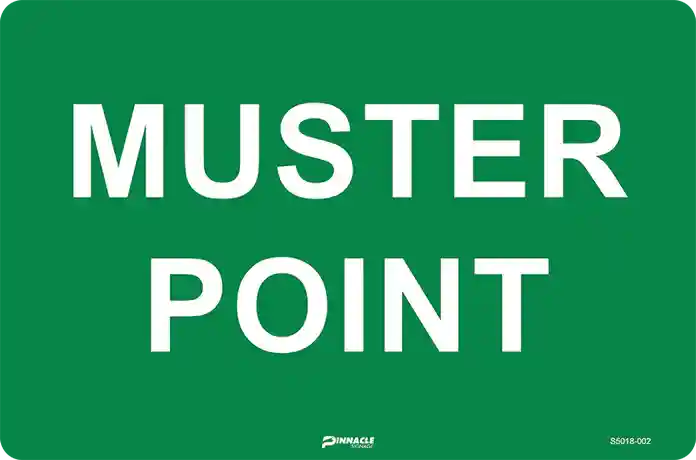
An Emergency muster point is a pre-designated, safe location where all employees, visitors, and contractors must gather after evacuating a building or worksite during an emergency. It serves as the central hub for accountability, ensuring everyone is accounted for and safe, and allows emergency services to respond effectively without obstruction.
Key Functions of an Emergency Muster Point:
- Accountability: Enables quick headcounts to identify missing persons
- Safety: Located at a safe distance from hazards (typically 1.5x the height of the tallest building)
- Communication: Provides a central location for instructions and updates
- Accessibility: Must be easily reachable by all personnel, including those with mobility challenges
- Visibility: Clearly marked with compliant signage for rapid identification during emergencies
Most workplace emergency plans focus heavily on getting people out of a building quickly and safely. That's critical, of course. But what happens after everyone has evacuated? Where do they go? How do you know if everyone made it out? Who communicates with emergency services? This is where the often-overlooked post-evacuation safety phase becomes essential.
Fire and flood are the most common causes of workplace evacuations in Australia, yet many businesses still lack clear, well-managed muster points. Without a designated assembly area, an orderly evacuation can quickly dissolve into chaos. People scatter, supervisors can't account for staff, and emergency responders waste precious time trying to determine if anyone is still inside. An emergency muster point transforms potential confusion into control, providing a safe, organised space for accountability and communication when it matters most. This guide will walk you through everything you need to establish and maintain safe, compliant muster points for your Australian workplace.
What is an Emergency Muster Point and Why is it Essential?
An Emergency muster point is more than just a spot on a map, it's a cornerstone of workplace safety and emergency preparedness. It's the designated area where everyone, from employees to guests and visitors, must assemble in the event of an emergency evacuation. This crucial element of your Emergency Action Plan (EAP) is designed to streamline the evacuation process, reduce panic, and facilitate rapid communication and accountability.

When an alarm sounds and an evacuation is necessary, knowing exactly where to go can make all the difference. Our goal with an Emergency muster point is to ensure that everyone can be accounted for, further instructions can be given, and emergency services can quickly assess the situation without unnecessary delays or risks.
The Primary Purpose of a Muster Point
The core function of an Emergency muster point is to provide a safe, designated place for personnel accountability after an evacuation. Think of it as the ultimate rally point, a place where order can be restored amidst potential chaos. Its primary purpose can be broken down into several key aspects:
- Accountability: This is paramount. Once at the muster point, a designated person, often a fire warden or supervisor, conducts a headcount or roll call. This allows us to quickly identify who is present and, more importantly, who might still be missing or trapped within the affected area. This information is critical for emergency responders. You can learn more about how to keep your team safe in emergencies with our guide on Muster Points Explained: Keeping Your Team Safe in Emergencies.
- Safety: The muster point provides a secure location, far enough away from the immediate danger, to protect evacuees from further harm. This reduces the risk of secondary injuries from falling debris, smoke, or other hazards associated with the emergency.
- Communication Hub: It acts as a central point for disseminating vital information and instructions. Emergency personnel or management can provide updates, give further directions, or coordinate any necessary actions from this single, organised location.
- Preventing Panic: By having a clear, known destination, employees and visitors are less likely to panic or become disoriented during an evacuation. This provides a sense of direction and control, which is invaluable in a stressful situation.
While often used interchangeably, an "assembly point" generally refers to the same concept as a muster point. The goal is always the same: to gather everyone safely and account for them.
Why Muster Points are Crucial for Your Business
Implementing effective Emergency muster points is not just a good idea, it's a crucial component of responsible risk management and fulfilling your duty of care as an employer in Australia. They are fundamental to protecting your people and your business.
- Ensuring Workplace Safety: They are a critical element of your overall workplace safety strategy, providing a structured approach to managing emergencies. This proactive measure significantly improves the safety of everyone on site.
- Streamlining Emergency Response: A well-planned muster point allows for an organised and efficient evacuation. This means emergency services, like fire and ambulance, can focus on the source of the emergency and any missing persons, rather than searching for scattered individuals.
- Assisting First Responders: When emergency crews arrive, quick and accurate information about who is accounted for and who isn't is invaluable. Muster points provide this critical data, enabling first responders to act swiftly and effectively.
- Identifying Missing Persons Quickly: In an emergency, every second counts. A prompt roll call at the muster point can rapidly identify anyone still inside, allowing targeted search and rescue efforts.
- Providing a Calm Environment Post-Evacuation: After the initial stress of an evacuation, the muster point offers a relatively calm and controlled environment. Here, people can regroup, receive support, and await further instructions, helping to minimise distress.
Statistics highlight the importance of being prepared, with fire and flood being the most common causes of evacuations. Having a clear plan, including designated muster points, is essential for any business. For more information on how to prepare for fire emergencies, explore our Fire Signage.
Establishing an Effective Muster Point: Location and Types
Choosing the right location for your Emergency muster point is a critical step that requires careful consideration of your specific site and potential emergencies. It's not just about picking a spot, it's about conducting a thorough site assessment and hazard analysis to ensure optimal safety and accessibility.
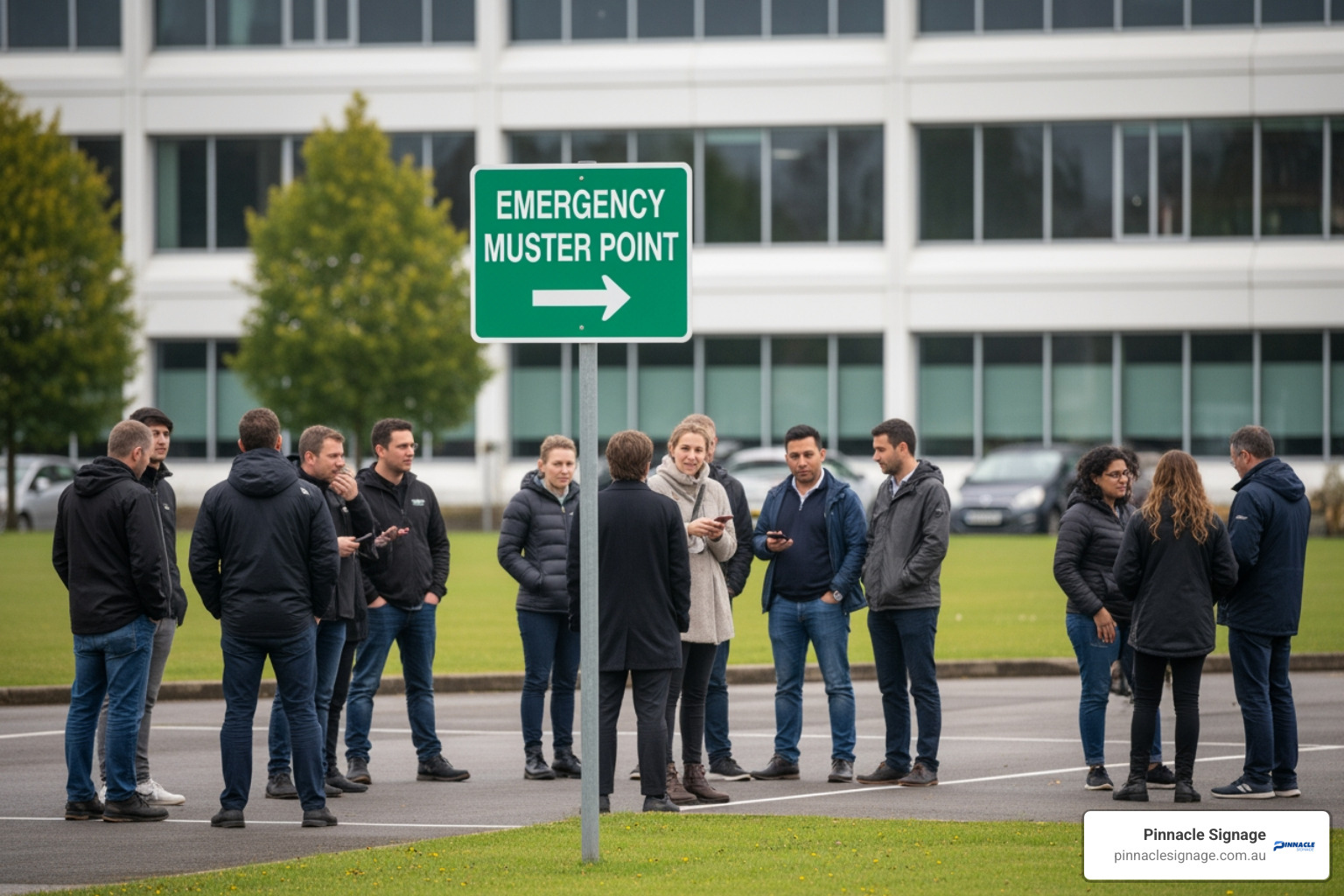
The location chosen must be far enough from the facility to keep evacuees safe from the danger they are fleeing, while also being free of additional hazards.
Key Characteristics of a Safe Location
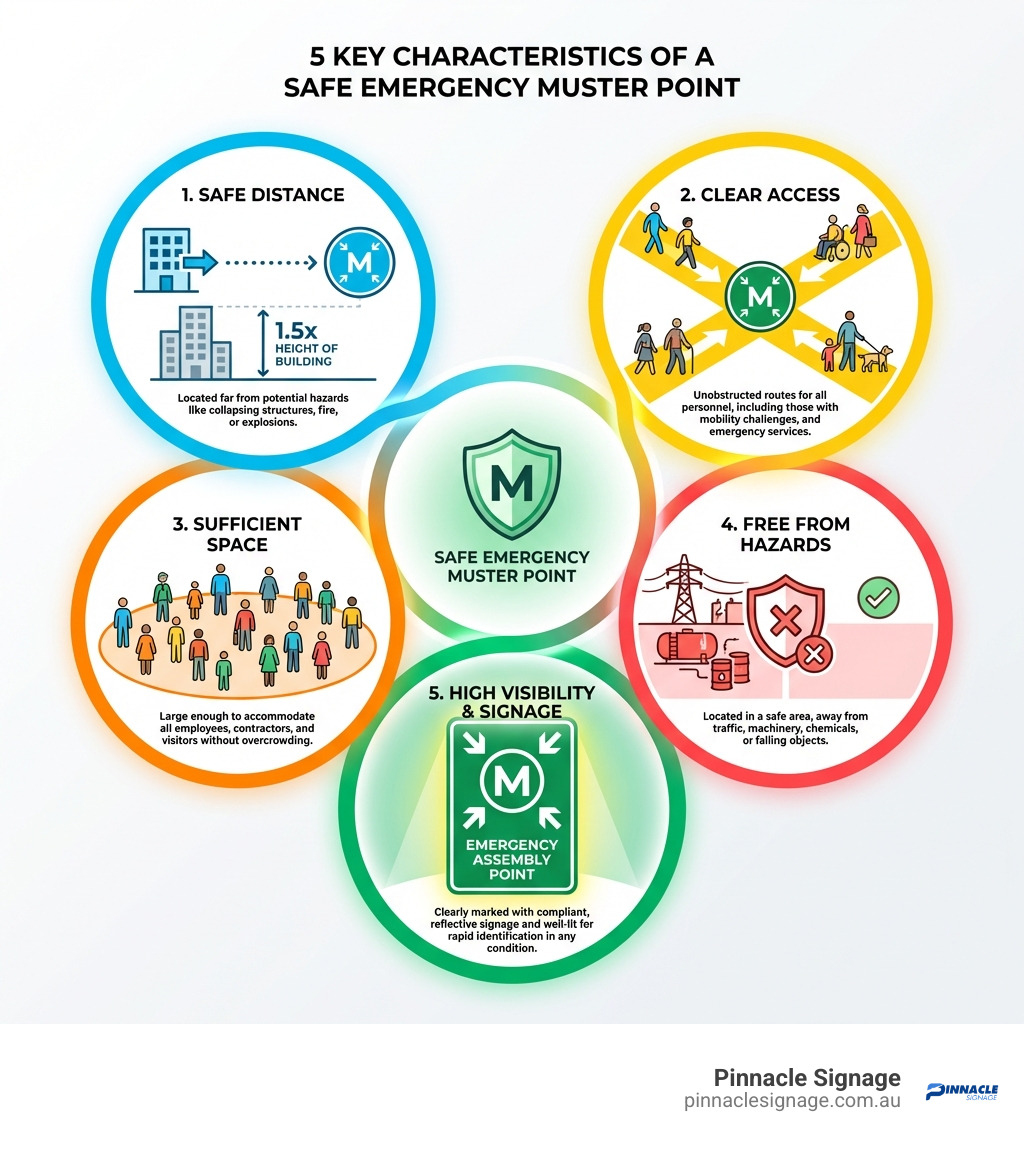
An effective Emergency muster point needs to meet several key criteria to ensure the safety and efficiency of your evacuation plan:
- Safe Distance: One of the most important factors is the distance from the building or hazard. A good rule of thumb, and a common standard in many places, is that the muster point should be at a distance of at least 1.5 times the height of the tallest building in your facility. This prevents fire, fumes, or flying debris from reaching the assembly area. For sites without a building, a thorough hazard assessment will determine the safe zone.
- Accessibility for All: The muster point must be easily accessible to everyone on site, including workers with disabilities or mobility issues. This means considering routes that avoid stairs, steep inclines, or narrow passages. The path should be clear of obstacles and wide enough for wheelchairs.
- Sufficient Space: The area must be large enough to comfortably accommodate all personnel, contractors, and visitors who might be on site at any given time, without overcrowding. For larger facilities, you might need to designate multiple muster points.
- Free from Hazards: The chosen location should be free from any additional risks. This includes avoiding areas near busy roads, power lines, potential flood zones, chemical storage, or areas where debris might fall. For chemical spills, consider prevailing wind directions to ensure the muster point is upwind of the hazard.
- Clear Visibility and Signage: The muster point needs to be clearly visible and marked with appropriate signage, even in low light or adverse weather conditions. This helps guide evacuees quickly and unambiguously.
- Does Not Impede Emergency Services: The location should not obstruct access for emergency vehicles or personnel. It should be positioned so that first responders can easily reach the affected area and the muster point for communication and medical assistance.
Primary, Secondary, and Different Types of Muster Points
Depending on the size, complexity, and potential hazards of your workplace, you might need to establish various types of Emergency muster points:
- Primary Muster Points: These are your main designated assembly areas, chosen based on the characteristics outlined above. They should be the first choice for evacuation under most circumstances.
- Secondary/Alternative Muster Points: It's crucial to have at least one alternative or secondary muster point. Why? Because your primary location might become compromised during an emergency. For example, if a fire spreads to the primary area or if a chemical spill makes it unsafe, evacuees need a pre-planned alternative. This ensures flexibility in your emergency plan.
- Outdoor Muster Points: These are the most common type, typically located in car parks, open fields, or other outdoor spaces, a safe distance from the building. They are ideal for most emergencies like fires, structural collapses, or hazardous material releases.
- Indoor Muster Points: In some specific scenarios, an indoor muster point might be necessary. This is usually within very large complexes, like multi-storey buildings or industrial plants, where an internal hazard (e.g., a localised gas leak in one section) allows for assembly in a safe, unaffected part of the building. However, these require extremely careful planning to ensure they are truly safe and won't become compromised.
Planning for different emergency scenarios, such as fire, chemical spill, or natural disaster, means considering how each might affect the suitability of your chosen muster points. For example, a chemical spill requires careful consideration of wind direction, while a flood might necessitate an uphill location.
Best Practices for Managing Your Emergency Muster Point
Having a designated Emergency muster point is only the first step. For it to be truly effective, everyone needs to know where it is, how to get there, and what to do once they arrive. This requires clear communication, regular training, and ongoing management.
Communication, Training, and Drills
Effective communication and regular practice are vital for a successful emergency response.
- Communicating Locations: From day one, all employees, contractors, and regular visitors must be informed of the muster point locations. This should be a standard part of employee onboarding and site inductions. Evacuation maps, clearly showing routes and muster points, should be displayed prominently on every floor and throughout the facility.
- Assigning Roles: Appointing and training individuals, such as fire wardens or safety officers, is essential. These individuals are responsible for guiding evacuees, conducting headcounts, and communicating with emergency services. They need clear roles and responsibilities.
- Headcount Procedures: Establish a clear and simple procedure for conducting a headcount at the muster point. This might involve using a physical roster, a sign-in sheet, or a designated area for each department to gather.
- The Importance of Regular Evacuation Drills: Theory is one thing, but practice makes perfect. Regular evacuation drills are crucial. They test the effectiveness of your plan, identify any bottlenecks or confusion, and familiarise everyone with the process. Practising these drills can significantly increase employee knowledge and confidence in emergency situations. The Safe Work Australia website offers valuable Information on creating emergency plans that includes drill guidance.
Reviewing and Maintaining Your Emergency Muster Point Plan
Workplaces are dynamic environments, and what was suitable yesterday might not be today. Therefore, your Emergency muster point plan needs regular review and maintenance.
- Annual Reviews: It is best practice to review your entire emergency plan, including muster point locations and procedures, at least annually. This review should consider any changes to your facility, such as new construction, changes in layout, or increased staffing numbers.
- Updating Plans When the Workplace Changes: Any significant changes to your site, such as new additions, demolition, or even changes in surrounding infrastructure (like new roads or buildings), should trigger an immediate review of your muster points. What if a new building next door now blocks your escape route, or creates a new hazard near your muster point?
- Checking for New Hazards: Regularly assess the area around your muster point for any newly developed hazards that might compromise its safety. This could include new traffic patterns, environmental changes (like overgrown vegetation), or the introduction of hazardous materials nearby.
- Ensuring Signage Remains Clear and Visible: Signs can fade, become damaged, or be obscured over time. Regular checks ensure that your muster point signage remains in excellent condition, clearly visible, and easy to understand.
- Drill Frequency: As a standard rule, a minimum of one fire drill should be conducted every twelve months. However, for facilities with more risks, such as those handling flammable materials or with a high turnover of staff, this frequency should increase, potentially to every three to six months. Our article Understanding Assembly Area Signs Made Easy provides further insights into maintaining clear directional information.
The Role of Signage in Modern Mustering
Clear, traditional signage is essential for guiding people quickly and safely to Emergency muster points during an emergency. Signage also supports headcounts and communication by making muster points easy to locate, even in stressful situations.
In the critical moments of an emergency, clear and unambiguous signage is your silent hero, directing people to safety and preventing confusion.
High-Visibility Muster Point Signage
The role of signage in emergency evacuations cannot be overstated. It's the visual cue that guides evacuees away from danger and towards the designated safe zone.
- Guiding Evacuees: Well-placed muster point signs provide immediate, clear direction, especially in unfamiliar environments or during low-visibility conditions like smoke or darkness.
- Australian Standard AS 1319: In Australia, emergency information signs, including those for muster points, should comply with AS 1319. This standard specifies that they comprise a white symbol or words (or both) on a green rectangular sign. This green and white colour scheme is universally recognised for emergency information. You can read more about this in Workplace Safety Made Simple: Muster Point Signs and Symbols.
- Sign Placement: Signs should be strategically placed along evacuation routes and at the muster point itself. They need to be visible from multiple angles and at a distance, ensuring that people can see them as they approach.
- Durability for Australian Conditions: Given Australia's diverse and often harsh weather, muster point signage must be made from durable, weather-resistant materials that can withstand sun, rain, and wind without fading or deteriorating. Our signs are manufactured to last in these tough conditions.
- Broader Safety Signage: While focusing on muster points, it's worth noting that compliant signage is essential for all aspects of emergency preparedness, such as ensuring first aid facilities are also clearly marked.
Supporting Accountability with Signage and Simple Systems
Beyond mere direction, clear signage, combined with simple, effective systems, plays a crucial role in accountability at the Emergency muster point.
- Visible, Weather-Resistant Signs: For outdoor muster points, signs that are both highly visible and weather-resistant are essential. They ensure that the muster point is always identifiable, which helps designated personnel manage the assembly and conduct headcounts efficiently.
- Ensuring Everyone Knows Where to Go: Clear signage ensures that all staff, visitors, and contractors, regardless of their familiarity with the site, know precisely where to go in an emergency. This centralises the gathering, making it easier to account for everyone.
- Addressing Unique Needs: Every workplace is unique, and a standard sign may not always be sufficient. In some cases, custom signage may be necessary to address specific site layouts or include unique instructions, all while maintaining compliance. This ensures muster point information is as clear and effective as possible for your specific needs. Information on custom solutions can help address these unique requirements.
- Simple Accountability Systems: While technology can play a role, simple systems like printed muster lists, designated check-in points, or visible group leaders (identified by specific vests or hats) are highly effective when supported by clear signage. These systems, combined with good communication and regular drills, facilitate accountability and ensure everyone is accounted for.
Frequently Asked Questions about Emergency Muster Points
We often receive questions about the practicalities of setting up and managing Emergency muster points. Here are some of the most common ones.
How many muster points does a workplace need?
The number of Emergency muster points a workplace needs depends heavily on several factors:
- Size of your facility: A small office building might only need one or two, while a large industrial complex could require many.
- Number of employees and visitors: You need enough space to accommodate everyone without overcrowding. If your workforce is large, multiple points prevent bottlenecks and make headcounts faster.
- Layout of the site: Complex layouts, multi-storey buildings, or sites with multiple buildings often necessitate several muster points to ensure quick and safe access from all areas.
- Types of hazards: If different parts of your site present different hazards (e.g., a chemical storage area versus an office block), you might need separate muster points that account for these specific risks.
The goal is to ensure that everyone can reach a safe muster point quickly and efficiently and be accounted for. It's better to have too many well-planned muster points than too few.
What should happen at the emergency muster point?
Once at the Emergency muster point, a structured process should unfold to ensure safety and accountability:
- Report to Designated Personnel: Everyone should report to the assigned fire warden, supervisor, or designated safety officer for their area or department.
- Headcount/Roll Call: The designated person will conduct a headcount to account for all personnel. This often involves checking a pre-prepared muster list against those present.
- Identify Missing Persons: If anyone is identified as missing, this information must be immediately communicated to the incident controller and, subsequently, to emergency services.
- Await Instructions: Everyone should remain calmly at the muster point to receive further instructions from emergency personnel or management. This could include updates on the situation, directions for relocation, or the 'all clear' to return to the building.
- Do Not Re-enter: No one should re-enter the building or affected area until the 'all clear' has been given by authorised personnel.
- Assist as directed: If you are a trained first aider or fire warden, you should assist as directed by the incident controller or emergency services.
How often should we conduct evacuation drills?
In Australia, it is best practice to conduct an evacuation drill at least once every 12 months. This allows your team to practice the procedures, become familiar with the muster points, and identify any areas for improvement in your plan.
For high-risk facilities, such as those handling hazardous chemicals, or premises with a high turnover of staff, drills may be required more frequently, such as every three to six months. Regular drills are key to ensuring that your emergency plan is effective and that everyone knows what to do when a real emergency strikes. It's not just about compliance, it's about confidence and safety.
Your Partner in Workplace Safety Signage
Ensuring your Emergency muster points are clearly marked is a non-negotiable part of any effective emergency plan. At Pinnacle Signage, we are committed to helping businesses keep their teams safe and compliant with high-quality, Australian-made safety signs that meet local standards. Our focus is on providing durable, weather-resistant signage suitable for the diverse Australian environment, ensuring it remains visible and effective when needed most.
We believe clear communication in emergencies is paramount. For businesses seeking compliant solutions, from Danger Signage to custom solutions for unique site requirements, choosing the right signage is a fundamental step in putting safety first.