
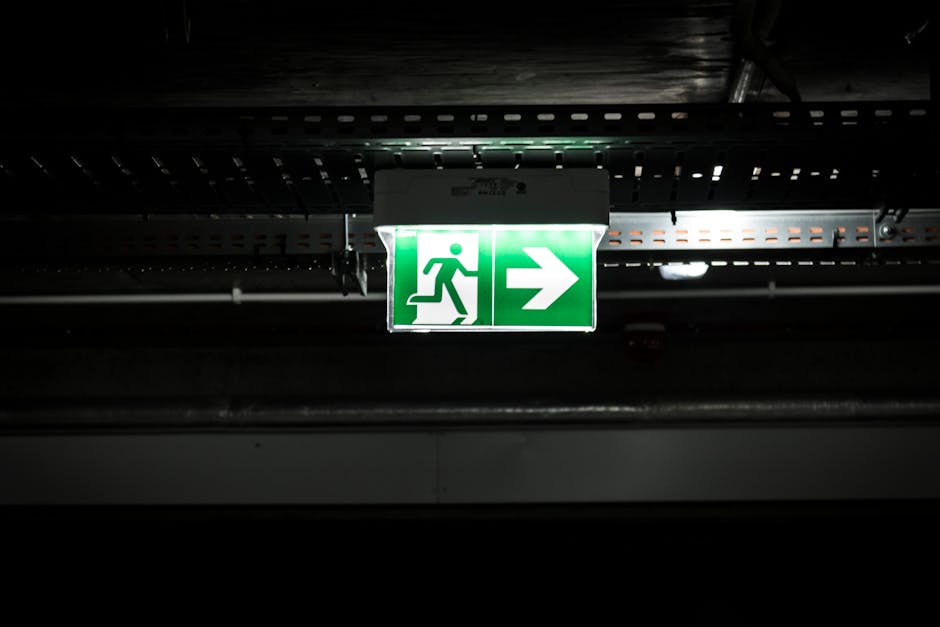
Exit Strategy—Top Picks for Fire Exit Directional Signs
Why Fire Exit Directional Signs Are Critical for Australian Workplaces
Fire exit directional signs are essential safety devices that guide people to the nearest exit during emergencies. Here's what you need to know:
Key Types:
- Photoluminescent signs - Glow for 90+ minutes without power
- LED battery-backup signs - Illuminated with 90-minute backup power
- Projecting signs - Visible from multiple angles in corridors
- Low-level floor signs - Remain visible below smoke
Essential Features:
- Green background with white running-man pictogram
- Clear directional arrows pointing to exits
- Compliant with AS/NZS 2293 standards
- Minimum 54 lux illumination requirement
In Australian workplaces, proper exit signage isn't just about compliance—it's about saving lives. Emergency exit lights are mandatory for workplaces over 300 square metres, and signs must include at least 90 minutes of backup power. Fire exit signs must use pictograms rather than words alone, and they need to remain visible even when smoke fills corridors.
Different environments need different solutions. Office buildings benefit from sleek LED signs with battery backup, while warehouses require heavy-duty projecting signs visible across long sightlines. Heritage buildings often need power-free photoluminescent options that don't require rewiring.
I'm Doug Lindqvist, and over my years in the safety and industrial supply space, I've seen how proper fire exit directional signs can transform emergency preparedness for Australian businesses. At Pinnacle Signage, we've helped countless facilities managers solve their evacuation signage challenges with compliant, durable solutions delivered on time.
What Makes a Great Fire Exit Directional Sign in Australia?
When it comes to fire exit directional signs, getting the details right can literally save lives. The best signs aren't just bright green rectangles with arrows—they're carefully engineered safety devices that meet strict Australian standards while performing flawlessly when people need them most.
AS/NZS 2293 sets the bar high for what makes a compliant sign. Every fire exit directional sign must feature that familiar green background with the white running-man pictogram we all recognise. Illuminated signs need to maintain a minimum luminance of 54 lux, while photoluminescent versions must hold at least 0.06 footlamberts. These aren't just numbers—they represent the difference between a sign that's visible in an emergency and one that disappears when you need it most.
The ISO 7010 running-man symbol has become the global standard because it works. Unlike old red "EXIT" signs that relied on English text, this pictogram communicates instantly to everyone, regardless of their language or literacy level. The figure shows a person moving through a doorway, and when combined with clear directional arrows, it creates an unmistakable message about where to go.
Colour psychology isn't just theory—it's practical safety science. Green wavelengths are more visible to the human eye than red, especially when visibility is compromised by smoke or poor lighting. This is why modern exit signs use green backgrounds rather than the red signs many of us grew up with.
Arrow orientation is where many installations go wrong. Directional arrows must point toward the actual exit route, not just the general direction. The arrows should indicate a continuous path of egress that leads to a safe exit discharge point outside the building.

The text versus pictogram debate is settled in favour of pictograms. Modern regulations require pictograms—specifically the running-man symbol—rather than text alone. While combining pictograms with text can improve comprehension when space allows, pictograms must be the primary communication method.
Braille and tactile features are becoming increasingly important as we focus on inclusive design. Signs serving public areas should include Grade II Braille and raised characters to assist visually impaired individuals.
Fire Exit Directional Signs vs General Exit Signs
Fire exit directional signs specifically mark routes designated for emergency evacuation, particularly during fires. These signs must point toward fire-rated exit routes that remain protected during emergencies, leading to exits that discharge safely outside the building. They're held to stricter visibility and illumination standards because they guide people through potentially hazardous conditions.
General exit signs mark conventional exits used during normal operations. They indicate routes that may not be fire-rated or may lead to areas that aren't safe during emergencies. Using general exit signs where fire exit signs are required can create dangerous confusion during evacuations.
The Science Behind Green & Photoluminescent Faces
The human eye's sensitivity to green light makes it the optimal colour for emergency signage. Research shows that green wavelengths penetrate smoke better than red, making exit signs more visible when visibility is compromised.
Photoluminescent technology offers remarkable advantages for fire exit directional signs. These materials absorb ambient light during normal conditions and release it slowly during darkness or power outages. Quality photoluminescent signs can glow for over 90 minutes in complete darkness, exceeding the minimum backup power requirements for electric signs without needing any electrical connections.
For more insights on visibility and safety, check out this latest research on visibility in emergency conditions.
Top Picks: Fire Exit Directional Signs for Different Settings
Choosing the right fire exit directional signs for your workplace isn't a one-size-fits-all decision. The key is matching your signs to your specific environment and needs.
Photoluminescent panels have become increasingly popular, especially in heritage buildings and areas where running new electrical cables is challenging. These signs soak up light during the day and glow steadily for hours when the power goes out.
For areas where you need guaranteed visibility regardless of lighting conditions, LED battery-backup signs are your best bet. They provide crisp, bright illumination with a reliable 90-minute backup power supply that exceeds Australian requirements.
Projecting two-way blade signs are game-changers in corridors and T-junctions. Instead of people having to crane their necks to see a wall-mounted sign, these stick out perpendicular to the wall, making them visible from multiple directions.
Low-level floor markers remain visible even when people are crawling under smoke, providing crucial guidance when it matters most. Braille and tactile signs combine the standard running-man pictogram with raised characters and Braille text, making them accessible to all users.
Best for Offices—Slimline LED with Arrow Heads
Office environments need fire exit directional signs that look professional while doing their job brilliantly. Slimline LED signs with clear directional arrow heads work best for most office settings.
The low-profile design doesn't scream "industrial safety equipment" in your sleek office space. They blend seamlessly with modern office aesthetics while providing reliable emergency guidance. Universal mounting options make these signs incredibly versatile, working with suspended ceilings, concrete walls, or unusual architectural features.
The 90-minute battery backup exceeds minimum regulatory requirements and ensures your signs keep working through extended emergencies. Office workers often aren't familiar with building layouts, so reliable illumination is crucial for guiding them safely to exits.
Best for Warehouses—Heavy-Duty Aluminium Projecting Sign
Warehouse environments are tough on everything, including fire exit directional signs. Heavy-duty aluminium projecting signs are the go-to recommendation for industrial spaces.
Impact resistance is non-negotiable in warehouses. Aluminium construction provides excellent durability while remaining light enough for secure mounting. The projecting design is crucial for warehouse visibility—unlike wall-mounted signs that can be obscured by stored goods, projecting signs stick out perpendicular to walls, making them visible from multiple directions.
Long sightlines in warehouses require signs that remain legible across vast open spaces. These signs feature larger pictograms and arrows specifically designed for distance visibility.
Best for Heritage Sites—Power-Free Photoluminescent Plate
Heritage buildings present unique challenges for fire exit directional signs. Power-free photoluminescent plates are the perfect solution.
No electrical connections required means you can upgrade your heritage building's safety without touching the electrical system. The retrofit ease is remarkable—these signs can be installed using non-invasive mounting methods that preserve historical surfaces.
Wall or ceiling mounting flexibility accommodates the quirky structural elements common in heritage buildings. These signs charge from existing ambient lighting during normal operations and provide reliable emergency illumination for hours without any electrical connection.
Installation & Placement Tips for Fire Exit Directional Signs
Getting your fire exit directional signs positioned correctly isn't just about compliance—it's about creating a clear path to safety that works when people are stressed and visibility is compromised.
The 2-metre rule forms the foundation of proper placement. Most suspended signs should sit at 2 metres above floor level, while wall-mounted signs work best at 1.7 metres. This height keeps signs visible over crowds while staying accessible for maintenance.
Ceiling versus wall mounting depends entirely on your space. Ceiling-mounted signs excel in open areas with high ceilings and minimal obstructions. Wall-mounted signs work best for corridors and areas where ceiling space is crowded with services or architectural features.
Every 30 metres represents the maximum spacing along exit routes, but complex layouts often need closer spacing. The golden rule is simple: from any point along your exit route, at least one directional sign should be clearly visible.
Low-level redundancy has become increasingly recognised as best practice. While overhead signs meet basic requirements, signs positioned 300-400mm above floor level remain visible when smoke fills the upper portions of corridors.
Stairwells demand special attention because they're critical evacuation routes. Position signs at each landing, clearly indicating the direction to continue toward the exit discharge. Never create ambiguity about which direction leads to safety.
One crucial point: avoid elevator confusion at all costs. Directional arrows should never point toward elevators as primary exit routes.
For comprehensive guidance on exit sign placement, refer to The Ultimate Guide to Exit & Fire Signs for detailed installation specifications.
Common Mistakes & Code Violations
Blocked sightlines represent the most frequent violation. Signs positioned behind pillars, equipment, or decorative elements simply don't guide people effectively. Regular facility walkthroughs from various angles help identify these issues.
Contradictory arrows create dangerous confusion during emergencies. When multiple signs point in different directions, people hesitate and waste precious evacuation time. Every directional arrow should create a logical, consistent path toward the nearest appropriate exit.
Word-only signs are illegal in many jurisdictions and create genuine safety hazards. Modern regulations require pictograms—specifically the running-man symbol—rather than text alone.
Insufficient illumination renders even the best-positioned signs useless during power outages. Emergency lighting must provide adequate illumination for exit signs, and battery backup systems require regular testing.
Quick Checklist Before Sign-Off
Monthly inspection requirements should become routine. Verify all signs are clearly visible and unobstructed. Check that directional arrows point toward appropriate exits. Ensure illuminated signs are functioning properly with all LEDs operational.
Confirm battery backup systems are operational by testing them according to manufacturer specifications. Record keeping protects you legally and operationally—maintain logs of all inspections, tests, and maintenance activities.
Test batteries in LED signs every six months. Verify arrow accuracy by walking each exit route and confirming that following the directional signs leads to appropriate exits.
Maintenance & Compliance: Keep Your Fire Exit Directional Signs Code-Ready
Keeping your fire exit directional signs compliant isn't just about ticking boxes—it's about ensuring they'll actually work when people's lives depend on them. Australian regulations require regular inspections and testing, but smart facility managers go beyond the minimum requirements.
Six-monthly professional inspections are mandatory for emergency lighting systems in commercial buildings. Licensed professionals must test all emergency lighting and exit signs to verify they meet performance standards, including checking illumination levels and confirming battery backup systems provide the full 90-minute duration.
Signs deteriorate over time, often in ways that aren't immediately obvious. Photoluminescent signs can lose their glow capability when exposed to harsh conditions or inadequate ambient lighting. LED signs may experience reduced output as components age, and battery backup systems lose capacity over time.
Replacing faded faces before they compromise visibility is far more cost-effective than dealing with compliance violations. If you're dealing with older installations, upgrading tritium signs to modern alternatives should be a priority.
Accessibility improvements during maintenance cycles make good sense both legally and practically. Including Braille when upgrading existing installations ensures compliance with current standards. Multilingual decals can improve comprehension in diverse workplaces.
The consequences of non-compliance extend far beyond regulatory fines. Insurance implications can be severe—non-compliant signage can result in claim denials and legal liability that far exceed the cost of proper maintenance.
For comprehensive guidance on upgrading existing installations, refer to our detailed guide to choosing the right fire escape signs for proven retrofit strategies.
Retrofitting Older Buildings with Fire Exit Directional Signs
Older buildings present unique challenges when installing compliant fire exit directional signs. Heritage constraints, outdated electrical systems, and architectural features require creative solutions that balance regulatory compliance with practical limitations.
Heritage constraints often severely limit modification options. Photoluminescent signs offer excellent solutions because they require no electrical connections and can be designed to complement historical architecture.
Adhesive photoluminescent systems provide retrofit options that minimise structural modifications. High-quality adhesive systems can secure signs to various surfaces without drilling or permanent alterations.
Inclusive Signage for Everyone
Modern fire exit directional signs must serve diverse populations with varying abilities and language backgrounds. Non-English speaking populations benefit enormously from clear pictograms that transcend language barriers. The ISO 7010 running-man symbol communicates effectively regardless of language background.
Vision impairment accommodations require thoughtful design that goes beyond basic compliance. Braille text, raised characters, and strong colour contrast help visually impaired individuals steer independently.
Frequently Asked Questions about Fire Exit Directional Signs
How many fire exit directional signs does my building need?
The number of fire exit directional signs your building requires depends on several factors. Australian regulations provide the foundation: workplaces over 300 square metres need emergency lighting, and this requirement extends to exit signage.
Every exit door needs a sign. You'll need signs at every change of direction—corridor corners, T-junctions, and anywhere the path to safety isn't immediately obvious. Spacing requirements typically call for signs every 30 metres along exit routes, but walk your building from a visitor's perspective to ensure clarity.
Building complexity dramatically affects your requirements. A simple warehouse needs fewer signs than a multi-storey office building with multiple corridors. The key principle is maintaining clear sightlines—from any point along an exit route, at least one directional sign should be clearly visible.
Do I need illuminated signs if I install photoluminescent ones?
Photoluminescent signs can absolutely meet illumination requirements without electrical connections. These signs absorb ambient light during normal conditions and release it steadily during darkness, with quality materials glowing for over 90 minutes.
The key factor is ambient lighting. Photoluminescent signs need adequate fluorescent or LED ambient lighting to charge properly during normal operations. If your building has consistent, quality ambient lighting, photoluminescent signs can handle emergency illumination requirements.
Areas with challenging lighting conditions might need electric signs with battery backup. Combination approaches often deliver the best results—photoluminescent signs throughout well-lit areas with electric signs in challenging locations.
What happens if my signage doesn't meet code?
Non-compliant fire exit directional signs create risks that extend far beyond potential fines. Regulatory consequences start with improvement notices from fire safety inspectors, and in severe cases, inspectors can restrict building occupancy until compliance is achieved.
Insurance implications represent perhaps the most serious risk. Many insurance policies require compliance with safety regulations, and non-compliant signage could void your coverage entirely. Legal liability increases dramatically with non-compliant signage—if inadequate signage contributes to injuries during an emergency, property owners may face criminal charges and civil lawsuits.
The reality is that proper signage is an investment in protection—protection for your occupants, your business, and yourself. The cost of compliance is minimal compared to the potential consequences of getting it wrong.
Conclusion & Next Steps
When it comes to workplace safety, fire exit directional signs aren't just about ticking compliance boxes—they're about creating clear pathways that could save lives when every second counts. The right signs, properly positioned and well-maintained, transform potentially chaotic evacuations into orderly, efficient exits to safety.
Evacuation readiness starts with understanding your space and choosing signage that matches your specific needs. A heritage-listed building might benefit from power-free photoluminescent plates that preserve architectural integrity, while a busy warehouse needs heavy-duty projecting signs that remain visible across long sightlines. The key is matching your solution to your environment rather than settling for a one-size-fits-all approach.
A single-source signage strategy makes life easier for facility managers and business owners. When you work with one experienced provider for all your emergency signage needs, you get consistency across your entire facility, streamlined maintenance schedules, and access to expert advice when regulations change or your space evolves.
At Pinnacle Signage, we've helped Australian businesses steer the sometimes complex world of emergency signage for years. We understand that every workplace is different—from the busy corridors of city offices to the challenging environments of industrial sites. Our fire exit directional signs are built to Australian standards and designed to perform reliably when it matters most.
Your next steps depend on where you're starting from. If you're planning a new fitout, now's the perfect time to design a comprehensive signage strategy that meets current regulations and anticipates future needs. If you're managing an existing facility, a signage audit can identify gaps and opportunities for improvement before they become compliance issues.
Don't wait for an inspection to find problems with your emergency signage. Whether you need a complete signage overhaul or just want to upgrade a few key signs, getting expert guidance early saves time, money, and potentially lives.
For detailed strategies on creating comprehensive evacuation signage systems, Follow the Signs to Safety offers practical guidance on planning and implementation.
Your evacuation strategy is only as strong as the signage that guides it. Quality fire exit directional signs are an investment in safety that pays dividends in peace of mind and regulatory compliance. Contact Pinnacle Signage today to discuss your specific requirements and find how proper signage can transform your workplace safety approach.