
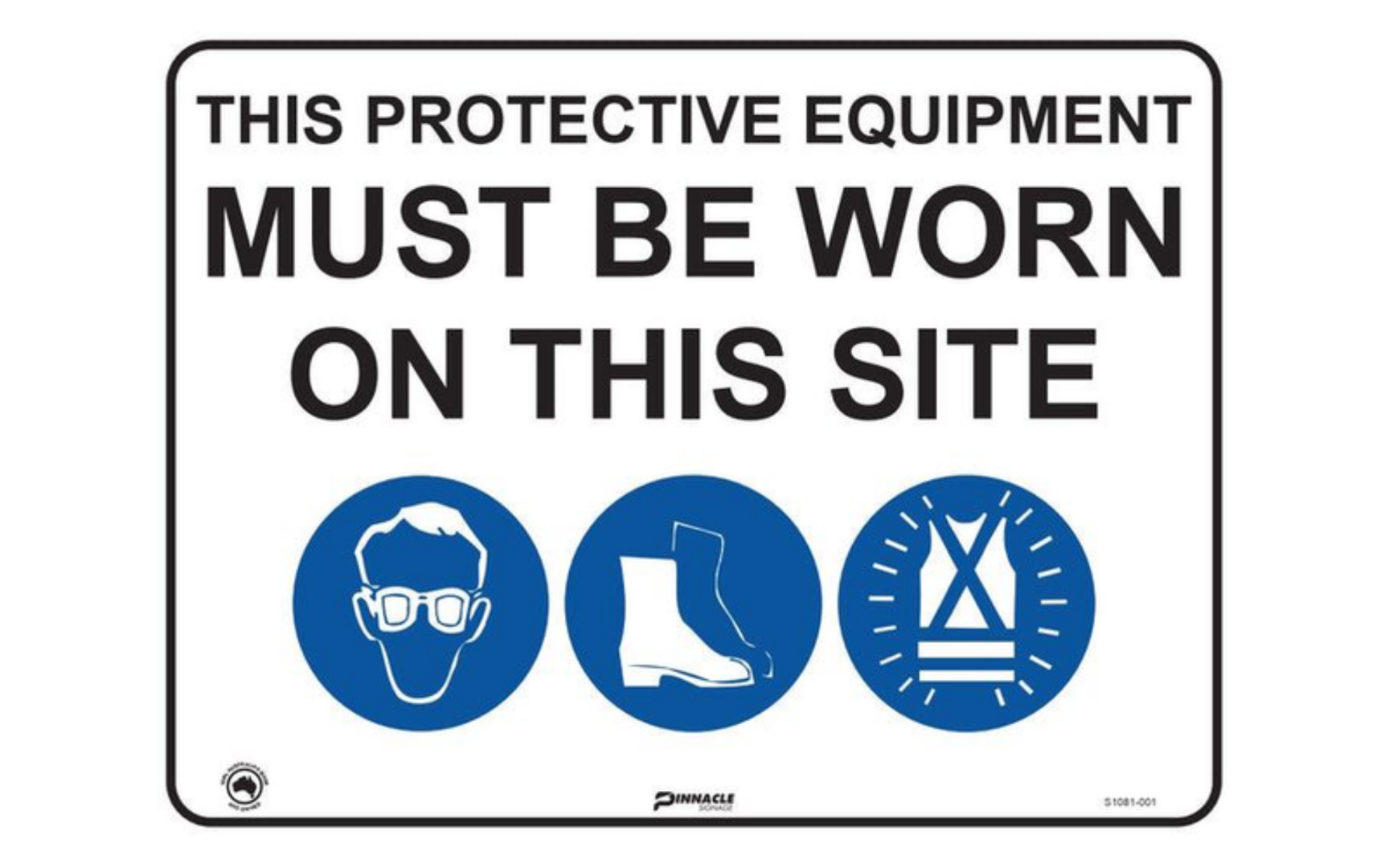
Gear Up! Understanding Personal Protective Equipment Signs
Your First Line of Defence in Workplace Safety
Personal protective equipment signage is a critical visual system that alerts workers and visitors to mandatory safety gear requirements in hazardous areas. These signs identify the specific PPE needed for different zones, communicate required actions, and reinforce training to prevent workplace injuries.
Key components of effective PPE signage include:
- Mandatory signs (blue circles): Indicate required actions like "Hard Hats Must Be Worn."
- Warning signs (yellow triangles): Alert to hazards where PPE is recommended.
- Multi-message signs: Combine multiple PPE requirements in one display.
- Pictograms and symbols: Provide universal understanding across language barriers.
- Strategic placement: Positioned at entry points and near specific hazards.
For any construction site, warehouse, or manufacturing facility, PPE signs are constant reminders that protect your workforce. They are essential for compliance and for creating a safety culture where protecting people is a priority. At Pinnacle Signage, we deliver quality safety signage that Australian businesses trust to protect their most valuable asset—their people.
Key personal protective equipment signage vocabulary:
Why PPE Signage is a Non-Negotiable for Australian Workplaces
Across Australia, from construction sites to manufacturing floors, personal protective equipment signage is a silent guardian that keeps people safe. For business owners and site managers, clear and immediate communication about hazards and required protective equipment is essential, and quality PPE signage delivers exactly that.
The Primary Purpose of PPE Signs
PPE signs are a 24/7 safety communication tool that actively protects lives.
- Hazard identification: Signs instantly communicate dangers in specific areas and what protective equipment is required to work safely. Whether it's a noisy workshop requiring hearing protection or a chemical storage area demanding respiratory gear, the right sign makes the risk and solution clear.
- Mandatory actions: Communicated through distinctive blue circular signs, these are directives that must be followed before entering hazardous areas. There is no ambiguity, only clear instructions.
- Reinforcing training: Safety training is vital, but memory can lapse. PPE signs bridge this gap by bringing lessons directly to the point of risk, ensuring knowledge translates into action.
- Preventing injuries: By providing constant reminders to wear protective gear, these signs directly contribute to reducing workplace accidents and creating safer environments.
- Building a safety culture: Well-maintained, professional signs send a clear message that safety is a core value. This can boost morale, improve productivity by reducing downtime, and show a genuine commitment to your workforce.
- Visitor awareness: Contractors, new employees, and visitors rely on clear signage to understand safety requirements immediately, ensuring everyone on site knows what protective equipment to wear.
Regulatory Standards and Your Duty of Care
Australian workplace health and safety regulations mandate that employers have a duty of care to protect workers and visitors. Personal protective equipment signage is vital for meeting these legal obligations.
Safe Work Australia provides the national WHS framework, with policies that form the basis of state and territory regulations. While specifics may vary, the core principles are consistent nationwide.
Your legal obligations centre on effective risk management—identifying hazards and implementing controls. PPE is the final layer of protection in the hierarchy of controls, and signage is how you communicate these critical measures.
Demonstrating compliance requires more than just having signs. They must be appropriate for the hazard, clearly visible, and well-maintained. This proactive approach protects your people and provides evidence of your safety commitment during inspections or in the event of an incident.
Failure to provide adequate safety signage can result in significant penalties and, more importantly, preventable injuries.
For comprehensive guidance, consult the official A guide to Personal Protective Equipment from Safe Work Australia. This resource details how to implement effective PPE programs, including the role of clear communication through signage.
Decoding Your Personal Protective Equipment Signage: Types and Formats
On any Australian worksite, personal protective equipment signage uses a universal visual language. These signs are carefully designed communication tools where every colour, shape, and symbol has a specific meaning, ensuring instant recognition that transcends language barriers.
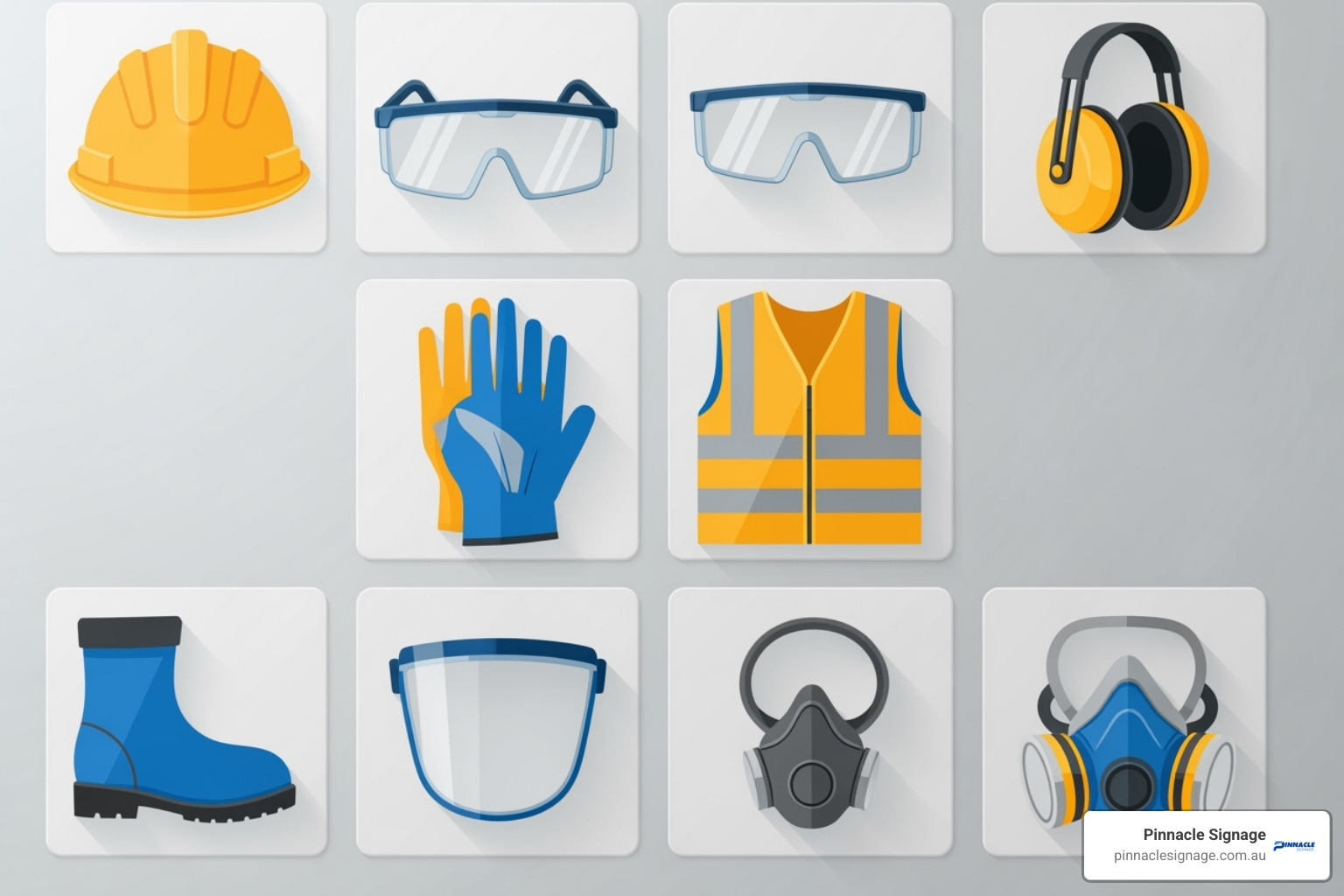
Common PPE Indicated on Signs
PPE signage uses simple, recognisable symbols to communicate safety requirements.
- Head protection: The hard hat symbol indicates risks from falling objects, low obstacles, or electrical hazards.
- Eye and face protection: Safety glasses, goggles, or face shields are shown where flying debris, chemical splashes, or intense light are present.
- Hearing protection: Earmuffs or earplugs are required in areas with high noise levels to prevent hearing damage.
- Respiratory protection: Masks or respirators are needed where airborne contaminants like dust, fumes, or gases pose a risk.
- Hand protection: Glove symbols specify the type needed, such as chemical-resistant, cut-resistant, or heat-resistant.
- Foot protection: Safety boots or steel-toed shoes are required in areas with heavy objects, sharp materials, or slip hazards.
- Body protection: This includes high-visibility vests for traffic areas, protective aprons, chemical suits, and safety harnesses for working at heights.
Common Types of Personal Protective Equipment Signage
Australian safety signage follows a standardised system (AS 1319-1994) where colours and shapes convey specific messages.
- Mandatory signs: A blue circle with a white pictogram and black text. These are direct orders, such as "Hard Hat Must Be Worn," and are compulsory.
- Warning signs: A yellow triangle with black symbols. They highlight hazards where PPE is the sensible response, like a "Caution: Chemical Storage" sign implying the need for protective gear.
- Danger signs: "DANGER" in white letters on a red oval against a black background. These mark potentially life-threatening hazards, such as "Danger: High Voltage," where specific PPE is essential for survival.
- Multi-message signs: These efficient displays combine several PPE requirements (e.g., hard hat, eye protection, and hearing protection) into one clear sign, ideal for complex work environments.
- Combination signs: These blend different sign categories, such as a mandatory PPE requirement with a warning about a specific hazard, providing complete safety information in one place.
Choosing the Right Sign for Your Site: Materials and Customisation
The effectiveness of your sign's message depends on the material it's printed on. In Australia's harsh conditions, from coastal salt spray to intense outback sun, choosing durable materials is essential to ensure your safety message remains clear and visible for years. Faded or damaged signs fail to serve their purpose, which is why we focus on materials that can handle Australian conditions.
Selecting Durable Sign Materials for Australian Conditions
The Australian climate demands materials that withstand extreme weather without compromising safety communication.
- Aluminium: Our most robust option for outdoor use, these metal signs resist rust, corrosion, and impact. They are ideal for construction sites and industrial environments, with a long lifespan even in harsh conditions.
- Polypropylene: A great value option for indoor and protected outdoor areas. This plastic material is lightweight yet resistant to chemicals, moisture, and impact, making it suitable for warehouses and manufacturing facilities.
- Self-adhesive vinyl: Offers flexibility for surfaces where traditional mounting isn't practical. Our laminated vinyl labels stick to walls, equipment, or floors and offer superior abrasion and chemical resistance.
All our outdoor materials are UV resistant to prevent fading and weather-proof against rain, wind, and temperature extremes. For industrial settings, abrasion and chemical resistance are critical to ensure signs remain legible despite constant exposure.
The Advantages of Customisable Signage
While standard personal protective equipment signage is effective, every workplace has unique challenges that may require a custom solution.
- Site-specific hazards: Custom signs can address unique risks not covered by standard pictograms, ensuring maximum relevance.
- Combining multiple requirements: A custom multi-message sign can display all necessary PPE on one panel, eliminating clutter and improving clarity.
- Company branding: Including your logo reinforces that safety is a core company value and maintains a professional, consistent look.
- Bilingual text: For Australia's multicultural workforce, custom signs can include multiple languages to ensure the message is understood by everyone.
- Improved specificity: Add detailed text or modified graphics to precisely describe hazards or required PPE, eliminating guesswork.
Our straightforward design process makes creating custom signs easy. Explore our customisable signage solutions to see how they can improve safety at your facility.
Best Practices for Effective Signage Implementation
Having the right personal protective equipment signage is only half the battle; ensuring it works in the real world is the real challenge. Effective implementation requires thoughtful planning, strategic placement, and ongoing maintenance to ensure signs are seen, understood, and followed.
Ensuring Your Personal Protective Equipment Signage is Effective
An effective PPE sign prevents incidents by clearly communicating safety requirements. Key characteristics include:
- Visibility: Signs must be conspicuously placed and not hidden behind equipment, doors, or in shadows. Consider natural sightlines.
- Clear pictograms: Universal symbols provide instant recognition across language barriers. They should be bold, compliant with Australian Standards, and large enough for the viewing distance (AS 1319-1994 suggests 15mm of symbol height per metre of viewing distance).
- Simple language: Text should be direct and straightforward. For bilingual signs, ensure both languages are equally clear.
- Regular maintenance: Signs are not a "set and forget" item. Clean them regularly to remove dust and grime that can obscure the message.
- Damage checks: During safety inspections, check for faded or damaged signs. Replace any that are no longer legible or structurally sound immediately.
- Optimal lighting: In poorly lit areas, consider larger signs or supplementary lighting to ensure legibility. Placing signs against a contrasting background also improves visibility.
Strategic Placement for Maximum Impact
Where you place your personal protective equipment signage is as important as the sign itself. Strategic placement ensures the message is received before a person encounters a hazard.
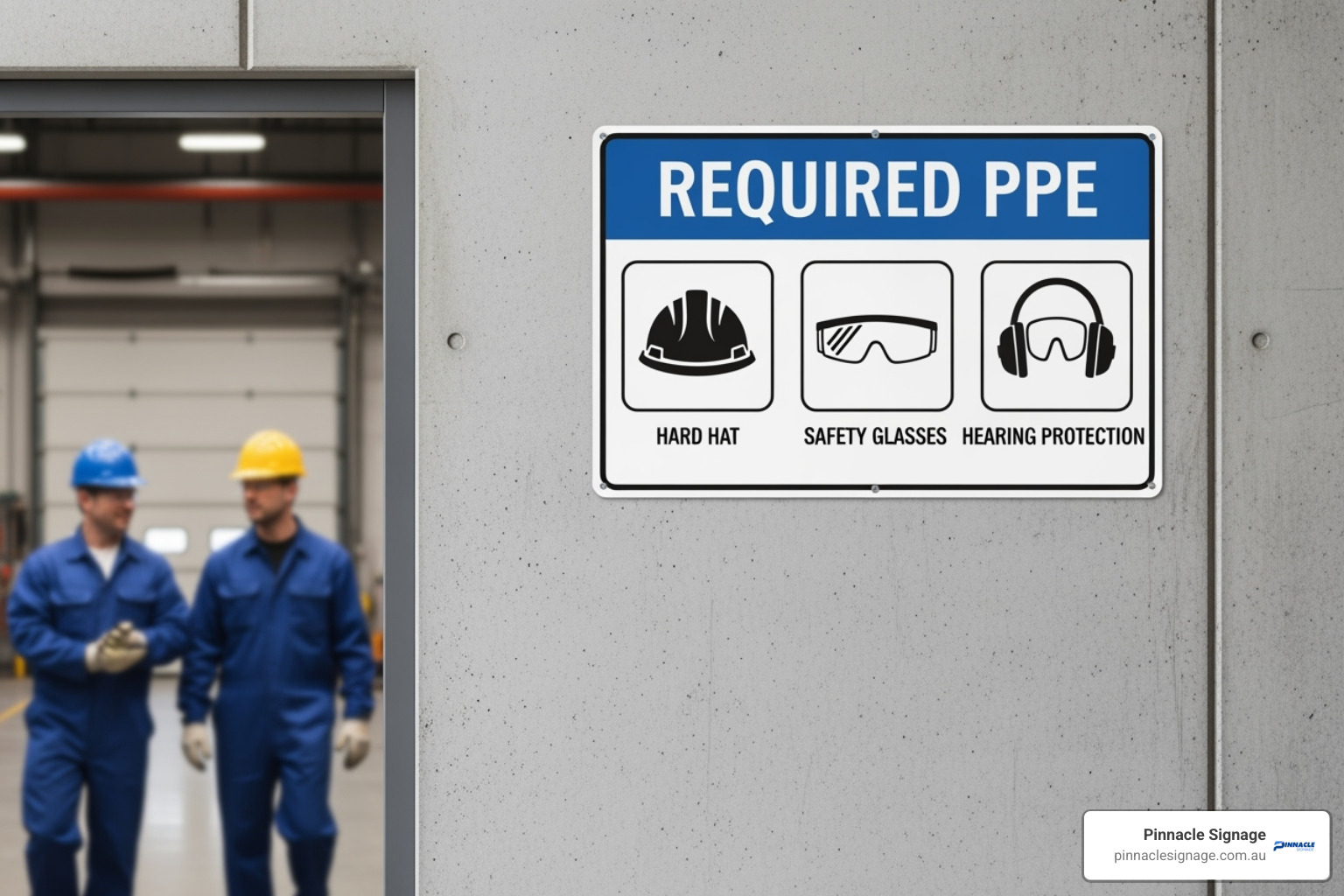
- Entry points to sites: Place general "PPE Required" signs at main gates or reception areas to establish safety expectations for everyone entering.
- Access points to hazardous areas: Position specific signs before entry to a danger zone, giving people time to put on the correct gear. For example, a "Hearing Protection Required" sign should be outside a noisy room.
- Near specific equipment: Use targeted reminders directly on or beside machinery that requires particular PPE as a final checkpoint for operators.
- At eye-level: Position signs at a comfortable viewing height to ensure they are naturally noticed and not ignored.
- In well-lit areas: Avoid placing signs in shadows. If an area is dark, add lighting to ensure the sign is visible.
- With an unobstructed view: Make sure signs are not blocked by stacked boxes, equipment, or other objects. The message must be immediate and clear.
Frequently Asked Questions about PPE Signage
When it comes to personal protective equipment signage, many businesses across Australia have similar questions. Understanding the nuances of compliance and effectiveness is key to a safe workplace. Here are answers to the most common queries.
What's the difference between a mandatory sign and a warning sign for PPE?
The distinction is crucial for effective safety communication.
Mandatory signs (blue circle) issue a direct command that must be followed. Signs like "Hard Hats Must Be Worn" use instructional language and indicate a compulsory action required to enter or work in an area.
Warning signs (yellow triangle) alert people to a potential hazard. For example, a "Caution: Forklift Traffic" sign warns of moving vehicles, implying that high-visibility clothing is a smart precaution, but it does not explicitly command it. The sign's purpose is to raise awareness of a risk.
Do I still need signs if all my staff have been trained on PPE requirements?
Yes, absolutely. Even well-trained staff can have momentary lapses. Personal protective equipment signage serves as a constant, immediate reminder at the point of risk.
Furthermore, signs are essential for communicating requirements to new hires, contractors, visitors, and delivery drivers who may be unfamiliar with your site's specific protocols. They also serve as tangible proof of your commitment to safety and are often required to meet WHS compliance obligations. Visible signs reinforce your safety culture, showing that safety is an integral part of your daily operations.
How often should we review or update our PPE signage?
PPE signage requires regular attention to remain effective. We recommend a few key practices:
- Incorporate signage reviews into your regular safety audits (e.g., quarterly or biannually).
- Review signage whenever new hazards are introduced, such as with new machinery, processes, or chemicals. This may require new or updated signs.
- Replace signs immediately if they become faded, damaged, or difficult to read. A worn-out sign undermines your safety program.
- Encourage worker feedback. Your team often has the best insight into whether signs are clear, correctly placed, and effective.
- Review signage after any incident or near miss to determine if better communication could have prevented it.
Proactive maintenance ensures your safety messages remain current, clear, and effective.
Conclusion: Investing in Safety, Protecting Your People
In any Australian workplace, clear communication is the foundation of safety. Personal protective equipment signage is more than a compliance measure; it's a commitment to ensuring everyone goes home safely at the end of the day.
Effective PPE signage acts as a silent safety advocate, working 24/7 to protect your people. These signs identify hazards, reinforce critical training, and prevent injuries. By investing in quality signage that meets Australian Standards, you demonstrate a genuine commitment to your team's wellbeing and build a strong safety culture.
At Pinnacle Signage, we've seen how the right signage transforms workplace safety. From our durable aluminium signs designed for harsh conditions to customisable multi-message displays for site-specific hazards, we provide solutions that work.
A well-placed, clear sign can be the difference between a routine day and a serious accident. Investing in comprehensive personal protective equipment signage is one of the most cost-effective safety measures you can take, protecting your business from the significant costs associated with workplace injuries.
Ready to strengthen your workplace safety? View our complete range of workplace safety signs and find how Pinnacle Signage can help you create a safer, more compliant workplace.