

Mandatory Signs: What They Are, Why They Matter, and How to Spot Them
Why Understanding Mandatory Signs Is Critical for Any Safe Workplace
What are mandatory signs? Mandatory signs are blue circular signs with white pictograms that instruct workers and visitors on compulsory actions they must take to remain safe. Unlike warning signs that alert you to hazards or prohibition signs that tell you what not to do, mandatory signs issue clear "must-do" commands, such as wearing personal protective equipment (PPE) or following specific safety procedures.
Key characteristics of mandatory signs:
- Colour: Blue background with white pictograms
- Purpose: Instruct compulsory actions for safety
- Common examples: Wear hard hat, wear safety glasses, wear hearing protection, wear hi-vis clothing
- Typical locations: Construction sites, warehouses, manufacturing facilities, agricultural properties, chemical storage areas
Whether you're managing a busy construction site, overseeing a warehouse, or running an agricultural operation, mandatory signs form the backbone of your visual safety communication system. They reduce the need for constant verbal reminders and create a culture where safety expectations are instantly clear to everyone. This guide breaks down everything you need to know about mandatory signs, from visual identification to practical applications across different industries.
What Are Mandatory Signs and What Is Their Primary Purpose?
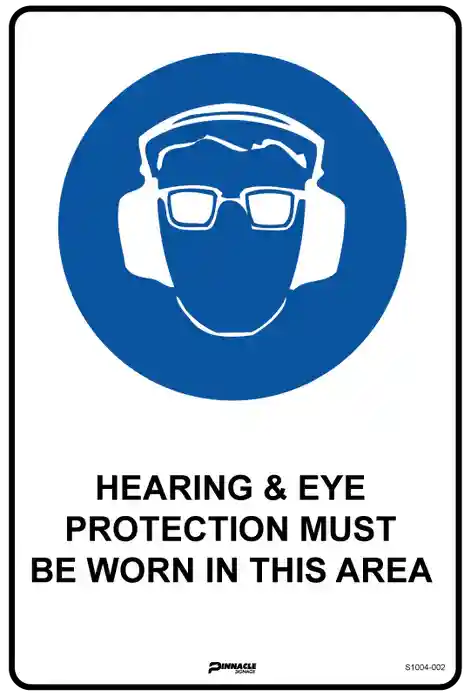
On any Australian worksite, you'll see distinctive blue circular signs with white symbols. These are mandatory signs, and their purpose is to tell people exactly what they must do to stay safe. Unlike warning signs that alert you to dangers or prohibition signs that forbid actions, mandatory signs are about compulsory action with no room for personal choice.
Think of them as non-negotiable safety requirements made visible. They communicate critical instructions around the clock, reducing workplace risks and helping businesses meet OHS obligations. Every mandatory sign is a proactive step toward preventing accidents before they happen. The power of these signs is their clarity, removing ambiguity and ensuring everyone, from employees to visitors, understands what is expected. For more insight into building a comprehensive safety signage system, take a look at our guide on Safety Signs Australia: Your Guide to Clear and Compliant Signs.
Defining Mandatory Signs: The 'Must-Do' of Safety Communication
What are mandatory signs if not the most direct form of safety communication? They are regulatory signs that issue a clear command for a specific action that must be taken. While other signs might warn about slippery floors or prohibit smoking, mandatory signs compel behaviour. They are the difference between "be careful" and "you must do this."
This distinction is vital for managing workplace safety. A sign for "Wear Hearing Protection" isn't a suggestion; it's a requirement for everyone in that area. This unambiguous message creates consistent safety practices. The visual instruction works universally, as the blue circle and white pictogram are clear to people from diverse linguistic backgrounds. Understanding where to place these signs starts with hazard identification, which we cover in The Definitive Guide to Safety Sign Hazard Identification.
The Core Goal: Enhancing Health and Safety
At its heart, every mandatory sign aims to keep people safe by influencing behaviour and ensuring protective measures are used. A mandatory hard hat sign exists because there's a real risk of head injury, making Personal Protective Equipment (PPE) essential, not optional.
Beyond preventing individual accidents, these signs help build a stronger safety culture. When requirements are clearly posted, it sends a message that safety is a lived priority, not just a policy. This also reduces the burden on supervisors, as the signs provide continuous reminders. They are a proactive safety measure that works silently but effectively. To explore how quality signage contributes to a secure workplace, read Making Your Workplace Safe and Secure with High-Quality Safety Signage.
How to Visually Identify a Mandatory Sign
Once you understand what mandatory signs are and their purpose, learning to spot them is easy. They are designed to be unmistakable, with standardised elements that make them recognisable across any worksite.
In Australia, mandatory signs follow AS 1319-1994, ensuring consistency nationwide. The visual formula is a blue circular background with a white pictogram in the centre, often with black text underneath for clarity. The circular shape distinguishes them from triangular warning signs, rectangular emergency signs, or prohibition signs with their red border.
The Universal Colour Code: The Significance of Blue
The blue colour of mandatory signs isn't just aesthetic; it's the universal colour of instruction. It tells you action is required in a calm, clear way, unlike other safety sign categories. Red signals prohibition or danger, yellow warns of hazards, and green indicates safety or emergency information. Blue means "this is what you must do." It's authoritative without being aggressive.
This consistency helps ensure the signs are clearly understood in diverse workplaces, allowing visual communication to transcend potential language barriers.
Understanding the Pictograms and Text
The power of mandatory signs lies in their pictograms. These simple, white symbols convey their message at a glance, often without words. This universal language is invaluable in Australia's diverse workplaces, where a pictogram of safety boots is understood by everyone.
However, most signs also include black text beneath the blue circle for additional context. The combination of a symbol and words ensures maximum clarity. For example, a hard hat pictogram with the text "Hard Hat Area" removes any ambiguity.
Common mandatory sign pictograms include:
- Hard hat signs: Head protection must be worn.
- Safety glasses signs: Eye protection is required.
- Safety boot signs: Foot protection is mandatory.
- Glove signs: Hand protection must be worn.
- Mask or respirator signs: Respiratory protection is compulsory.
- Hi-visibility vest signs: High-vis clothing is required.
- Ear protection signs: Hearing protection is mandatory.
- Wash hands signs: Hygiene requirements must be followed.
- Keep fire door closed signs: A critical fire safety instruction.
- Sound horn signs: For vehicle operation areas.
Once you learn this pattern, identifying "what are mandatory signs" becomes second nature, allowing you to understand the required action immediately.
Mandatory Signs in Action: Common Examples and Contexts
In the real world, what are mandatory signs? They are the blue circles you see everywhere, from construction sites to farms, each issuing a clear, non-negotiable instruction. Their applications are diverse, adapting to the specific safety needs of different industries across Australia.
In the Workplace and on Construction Sites
Construction and industrial sites are where mandatory signs are most critical. They dictate everything from "Hard Hat Area" requirements to "Hi-Vis Clothing Must Be Worn" zones. On any active site, you'll find signs for "Hearing Protection Must Be Worn" in noisy areas or "Wear Safety Footwear" to protect from falling objects. Signs like "Keep Aisle Clear" ensure emergency exits remain unobstructed, a vital requirement for evacuations.
Even before entering a worksite, a "Report to Site Office" sign ensures proper induction. These signs form the backbone of site safety management, creating a visual system that works around the clock. For a deeper dive into how these signs fit into site safety, see Your Comprehensive Guide to Site Safety Signs.
Beyond Construction: Applications in Other Industries
Mandatory signs extend far beyond building sites. In the food and beverage industry, signs mandating "Wash Hands" are critical for hygiene and preventing contamination. In environments with hazardous chemicals, signs like "Wear Face Mask and Respirator" or "Wear Protective Gloves" are essential instructions to prevent dangerous exposure. GHS-compliant signage helps with proper chemical handling protocols.
On agricultural properties, mandatory signs address biosecurity challenges. Signs requiring "Foot Bath Must Be Used" help prevent the spread of diseases, protecting livestock and crops. Specialised stock and farm signage is designed for these applications. In laboratories and medical facilities, signs like "Wear Laboratory Coat" maintain sterile environments and create standardised safety protocols.
This diversity shows how what are mandatory signs adapt to meet the specific safety requirements of different sectors. To explore how various industries rely on safety signage, read Top Industries That Rely on the Right Health Safety Signage.
Mandatory vs. Other Safety Signs: Understanding the Differences
Knowing what are mandatory signs means understanding their place in the broader safety signage system. Australian workplaces use different signs, each with a distinct colour and shape to communicate messages quickly. The key is colour coding: blue tells you what you must do, red what you must not do, yellow warns you to be careful, and green shows you where to find help.

What are mandatory signs compared to Prohibition Signs?
The difference is the type of instruction. Mandatory signs (blue) are positive commands requiring an action, like "Wear Hard Hat." Prohibition signs (red) are negative commands forbidding an action, like "No Unauthorised Entry." Visually, prohibition signs feature a red circle with a diagonal line through a black pictogram, a universal symbol for "don't." The blue circle of a mandatory sign signals a positive obligation, while prohibition signage is used to mark forbidden actions.
What are mandatory signs compared to Warning and Caution Signs?
Their roles are fundamentally different. Mandatory signs (blue) issue a direct command, such as "Wear Safety Harness," leaving no room for interpretation. Warning signs (yellow), however, don't command an action but alert you to a potential hazard, like "Slippery When Wet." They feature a yellow background with a black triangle and symbol, signalling the need for awareness. Warning signs prepare you for danger, while mandatory signs require a specific preventative action. For more on these distinctions, read Caution vs Danger vs Warning: What's the Difference.
Mandatory vs. Emergency & Fire Signs
Emergency and fire signs are about response, not ongoing prevention. Mandatory signs (blue) focus on preventative actions, such as the continuous requirement to "Keep Fire Door Closed." Emergency signs (green) guide people to safety equipment or escape routes. Fire signs (red) identify the location of firefighting equipment like extinguishers. So, a blue sign tells you to keep a door closed daily, while a red fire extinguisher sign or a green emergency exit sign guides you during a crisis. A full range of fire and first aid signage is used to identify the location of safety equipment and guide people during an emergency.
Compliance, Standards, and Customisation
Understanding what are mandatory signs includes grasping why adherence matters, which standards apply, and how to tailor them to your workplace.
Adherence and Legal Implications
Following mandatory sign instructions is not optional. For workers, ignoring a sign can lead to serious injury. For businesses, failing to display required signage can result in fines and legal consequences, especially if an incident occurs. Australian OHS laws require employers to provide a safe environment, and mandatory signage is a key part of this obligation. They demonstrate a proactive approach to safety, making protocols clear and consistent. Our article Workplace Safety Signs That Speak Louder Than Words explores this concept further.
Australian and International Standards
Consistency in design is crucial for instant recognition. In Australia, AS 1319-1994, Safety signs for the occupational environment, is the primary standard governing safety signage. It dictates colour, shape, and symbol design to ensure effectiveness.
This standardisation helps create a broad understanding in diverse workforces. Adhering to the local Australian Standard is essential for compliance. For more details on Australian requirements, read Understanding Australian Standards for Safety Signs.
Can Mandatory Signs Be Customised?
Yes. While the core visual elements, the blue circle and white pictogram, must remain consistent with Australian standards, customisation can tailor signage to your specific needs. You can add custom text for site-specific instructions, incorporate company logos, or include unique instructions for specialised processes. This flexibility ensures your mandatory signage is not just compliant but highly effective for your unique environment. Our team can help develop bespoke solutions for clear and precise safety messages. Feel free to contact us for custom solutions. This approach is discussed in How to Use Health and Safety Signs in the Workplace Effectively.
How do mandatory signs contribute to overall health and safety?
Understanding what are mandatory signs means seeing them as active components of a workplace safety strategy. Their contribution is deep and multifaceted.
By providing crystal-clear expectations, such as "Wear Hard Hat," they eliminate confusion for new employees, contractors, and visitors. Everyone immediately knows what they must do to stay safe. This direct link to accident prevention is undeniable; a sign mandating hearing protection helps prevent noise-induced hearing loss, while one requiring hi-vis clothing ensures visibility in high-traffic zones.
These signs also enforce procedures that improve risk mitigation for the entire operation. A "Keep Fire Door Closed" sign helps contain fires, while "Keep Aisles Clear" ensures evacuation routes are accessible. From a business perspective, mandatory signs demonstrate a visible commitment to Australian OHS laws, helping to avoid penalties and reputational damage.
Most importantly, their consistent presence fosters a genuine safety culture where safe behaviour becomes automatic. They also improve efficiency by reducing the need for supervisors to give constant verbal reminders. The signs communicate requirements continuously, making them a silent but powerful guardian of workplace safety.
Ensuring Your Workplace Has the Right Mandatory Signs
Understanding what are mandatory signs is about protecting your people and operations. Using high-quality, Australian-made signage designed for the demands of local workplaces is crucial for clear, effective safety communication. Whether for a construction site, warehouse, farm, or retail space, standard and fully customisable mandatory signs are available to ensure your workplace is as safe as it can be.
Questions or custom needs? Contact Pinnacle Signage or shop our range at Bunnings Warehouse.