

Hazardous Chemicals Sign Requirements 101
Why Chemical Hazard Signs are Essential for Workplace Safety
A hazardous chemicals sign is a critical safety tool that alerts workers and visitors to the presence of dangerous substances. These signs use standardised symbols, colours, and text to communicate specific hazards and safety requirements.
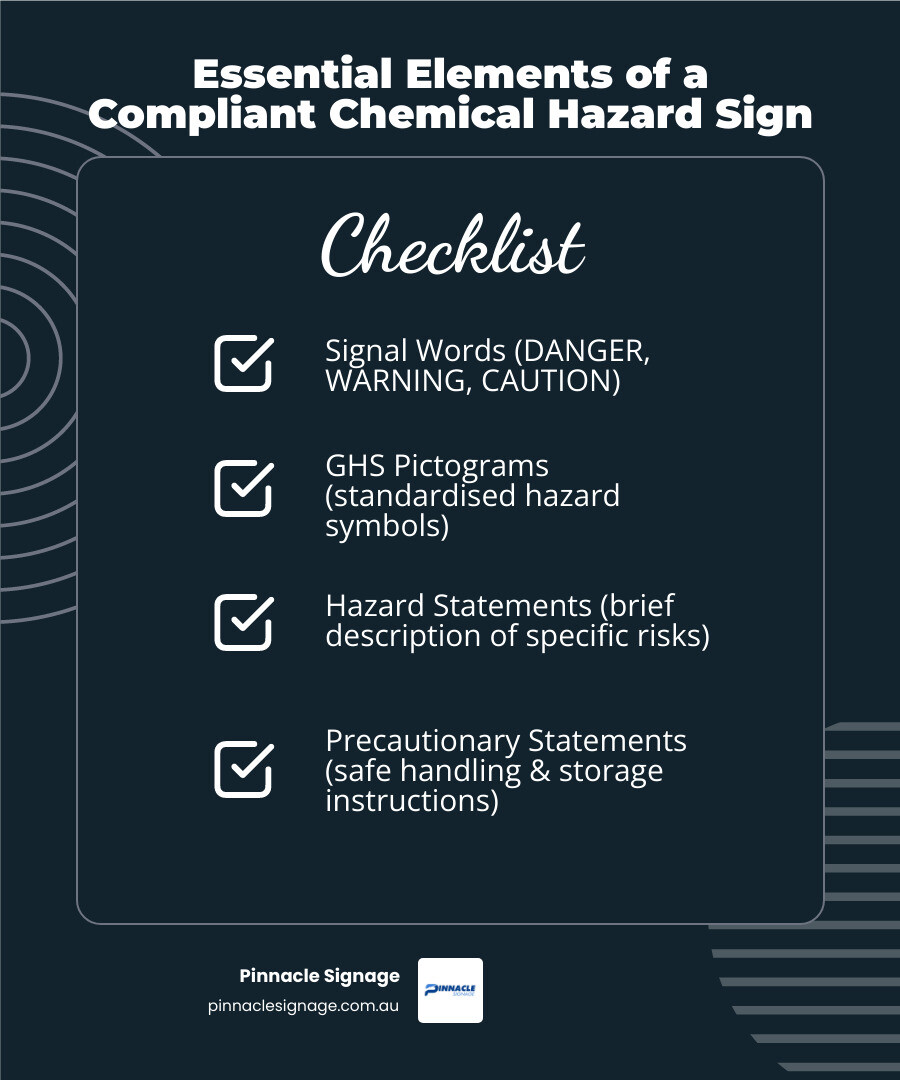
Key components of hazardous chemical signage include:
- Signal words: DANGER, WARNING, or CAUTION to indicate the severity level.
- Pictograms: Standardised symbols showing the type of hazard (e.g., flammable, toxic, corrosive).
- Hazard statements: Brief descriptions of the specific risks.
- Precautionary statements: Instructions for safe handling and storage.
- Emergency information: Contact details and first aid procedures.
Hazardous chemicals are defined by four key characteristics: ignitability (can easily catch fire), corrosivity (can damage skin and materials), reactivity (can become unstable or explosive), and toxicity (can cause harm if absorbed, inhaled, or ingested).
The primary purpose of these signs is to provide universal understanding across language barriers, enable immediate hazard recognition for quick decision-making, and support comprehensive workplace safety programs. They are also crucial aids during emergency response situations.
Australian employers have clear legal responsibilities for chemical hazard signage. They must ensure employee safety through proper hazard communication, maintain compliance with workplace health and safety regulations, and provide adequate training so workers understand what each sign means and how to respond.
Proper hazardous chemicals sign compliance is critical for preventing workplace accidents and ensuring regulatory adherence. At Pinnacle Signage, we deliver quality signage solutions that meet Australia's strict safety standards, helping you protect your team and your business.
Simple guide to hazardous chemicals sign terms:
A Guide to the Hazardous Chemicals Sign Systems in Australia
Australia relies on two internationally recognised systems to keep workplaces and transport routes safe: the Globally Harmonised System of Classification and Labelling of Chemicals (GHS) and the Australian Dangerous Goods (ADG) Code.
These systems translate complex chemical hazards into clear, visual messages that everyone can understand, regardless of their background or language. This standardisation creates a universal safety language that works across all industries, from small workshops to large mining operations. The consistency of these symbols is not just convenient—it's lifesaving, ensuring a worker in Darwin understands the same hazard as one in Melbourne.
The GHS handles the classification and labelling of chemicals in workplaces, while the ADG Code focuses specifically on the safe transport of dangerous goods. Understanding how these systems work together is essential for any Australian business handling chemicals. For a deeper dive, check out our comprehensive guide: Know Your Hazard Symbols: A Guide to Chemical Signage.
Decoding GHS Pictograms
The GHS pictograms are a set of nine distinct symbols that convey a chemical's dangers at a glance. Each symbol appears within a red diamond border on a white background, making them instantly recognisable.
- Health Hazard: A human silhouette with a starburst warns of serious long-term effects like cancer or reproductive harm.
- Flammable: A flame symbol indicates substances that can easily catch fire.
- Corrosive: Liquid pouring onto a hand and a surface shows the chemical can cause severe burns or damage materials.
- Acute Toxicity: The classic skull and crossbones means a substance can cause death or severe illness.
- Gas Cylinder: Warns of gases under pressure that could explode if heated.
- Explosive: A bursting bomb symbol indicates materials that can explode from heat, shock, or friction.
- Oxidising: A flame over a circle signifies chemicals that can intensify fires by providing oxygen.
- Environmental Hazard: A dead tree and fish alerts you to chemicals that can harm aquatic life.
- Exclamation Mark: Covers less severe hazards like skin irritation, allergic reactions, or drowsiness.
When you need compliant signage for your workplace, browse our GHS Signage collection for Australian-made quality.
Understanding ADG Code and Hazchem Signs
While GHS focuses on workplace safety, the ADG Code governs the safe transport of dangerous goods across Australia. This system uses coloured class diamonds on trucks, tanks, and transport containers.
Hazchem signs and Emergency Information Panels (EIPs) provide a complete information package for emergency responders. These signs include the class diamond, the UN Number (a four-digit identifier), the proper shipping name, and the Hazchem code, which tells emergency crews how to respond to an incident.
Understanding the ADG classes helps you recognise hazards on the road:
- Class 2 Gases: Use red (flammable), green (non-toxic), or white (poisonous) diamonds.
- Class 3 Flammable Liquids: Red diamonds, used for substances like petrol and diesel.
- Class 8 Corrosives: Black and white diamonds with the corrosive symbol, seen on trucks carrying industrial acids.
The system covers everything from explosives (orange diamonds) to miscellaneous dangerous goods like lithium batteries (yellow and black striped diamonds).
For practical guidance, see our Step-by-Step Guide to Hazchem Signage Compliance. To ensure your transport operations are compliant, shop for compliant Hazchem signage.
What is a hazardous chemicals sign and what does it convey?
A hazardous chemicals sign is a communication system using signal words, statements, and symbols to ensure safety. The signal word indicates the severity of the hazard.
- DANGER: Used for the most serious, immediately life-threatening hazards where severe injury or death could occur.
- WARNING: Indicates serious hazards that are not immediately life-threatening.
- CAUTION: Alerts to hazards that might cause minor injuries or property damage.
Hazard statements describe the specific danger (e.g., "Highly flammable liquid and vapour"), while precautionary statements provide clear instructions (e.g., "Wear protective gloves").
This information is derived from the product's Safety Data Sheets (SDS), which employers must keep readily available for all hazardous substances in the workplace.
For workplaces with the most serious hazards, View our range of Danger Signs to ensure your hazardous chemicals sign requirements are met.
Ensuring Compliance and Choosing the Right Signage
Correctly implementing hazardous chemicals sign requirements is fundamental to workplace safety. It goes beyond regulatory compliance, playing a direct role in preventing accidents and protecting workers. The Australian regulatory landscape, guided by bodies like Safe Work Australia, sets clear standards because they are proven to save lives, prevent injuries, and protect the environment.
Your Responsibilities for Chemical Safety
Chemical safety is a shared responsibility between employers and employees.
Employer responsibilities include:
- Ensuring every hazardous chemical is clearly labelled with the correct hazardous chemicals sign according to GHS and ADG Code requirements.
- Providing comprehensive training on symbol meanings, hazards, safe handling, and emergency procedures.
- Maintaining an up-to-date and easily accessible Safety Data Sheet (SDS) register.
- Ensuring all signs are visible, legible, and well-maintained.
Employee responsibilities include:
- Understanding what each hazard symbol and sign means.
- Strictly following all safety protocols, handling procedures, and PPE guidelines.
- Immediately reporting spills, leaks, damaged containers, or missing signs to a supervisor.
Safe Work Australia provides detailed guidance on Hazardous chemicals signs (placards), emphasising the importance of clear communication.
Common Mistakes to Avoid with Your Hazardous Chemicals Sign
Even with good intentions, workplaces can make preventable mistakes that undermine their chemical safety programs.
- Non-standard or generic symbols: Using homemade or incorrect symbols defeats the purpose of a universal system and can cause confusion.
- Incorrect placement: Signs must be clearly visible at the point of use, not hidden behind equipment, placed too high, or in poorly lit areas.
- Poor visibility: Signs that are dirty, faded, or obscured are ineffective. Regular checks and maintenance are essential.
- Outdated information: Signage must reflect current chemical hazards and regulations, not what was correct years ago.
- Damaged signs: Torn, scratched, or otherwise damaged signs can be misread or ignored and should be replaced immediately.
The consequences of non-compliance go beyond fines and include serious accidents, injuries, and long-term damage to a business's reputation. Safe Work Australia enforces these requirements seriously.
Find the Right Signage for Your Workplace
At Pinnacle Signage, we understand the demands of Australian workplaces. Based in East Wagga Wagga, NSW, we provide durable signage designed for conditions ranging from harsh outback sun to busy industrial sites.
Material selection is key to longevity:
- Aluminium (1mm): A durable and rigid option for indoor and outdoor use, resistant to weather and physical impact.
- Self-Adhesive Vinyl: A flexible and cost-effective choice for smooth, indoor surfaces or curved applications.
- Laminated Aluminium (1.1mm): Offers maximum durability with a protective laminate that resists UV rays, abrasion, and chemicals, ideal for harsh Australian conditions.
We offer a comprehensive range of standard GHS and Hazchem signs, along with customisable options to meet your specific needs.
With fast, Australia-wide shipping, you can get the signs you need without delay. Most items are dispatched within 2-4 business days, and we offer free shipping on orders over $100 for most items. Pickup is also available from our warehouse at Unit 4/28 Nagle Street, East Wagga Wagga NSW, from 8am to 5pm, Monday to Friday.
Don't leave workplace safety to chance. Get Your Hazchem Signs Online Today or Contact us for custom signage solutions and let our team help you create a safer workplace.