

How to Identify Non-Drinkable Water Signs with These 5 Easy Tips
Why Recognising Water Safety Signs is Crucial
Non drinkable water signs are essential safety markers that protect people from consuming contaminated or unsafe water. In Australian workplaces like construction sites and farms, multiple water sources often exist side-by-side—some safe for drinking, others only for irrigation, cleaning, or industrial use.
Consuming contaminated water can cause serious gastrointestinal illnesses within hours. While some signs of contamination like unusual taste or odour are obvious, many dangerous contaminants are invisible. This makes proper signage your first and most reliable line of defence.
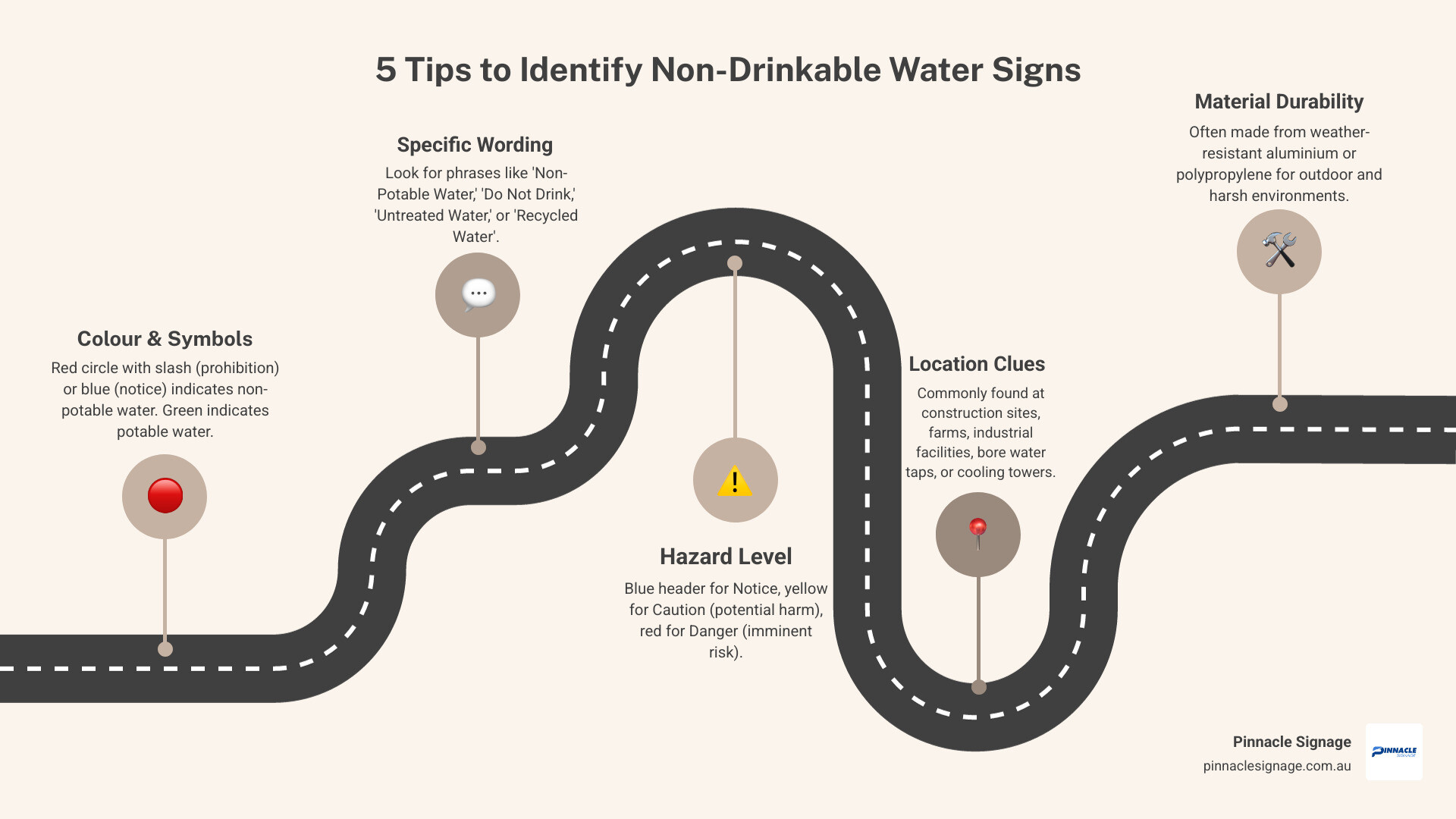
Here are 5 key ways to identify non drinkable water signs:
- Colour coding: Red prohibition symbols or blue notice backgrounds.
- Clear wording: Phrases like "Non-Potable Water," "Do Not Drink," or "Not for Drinking."
- Hazard levels: Headers indicating Notice (blue), Caution (yellow), or Danger (red).
- Strategic placement: Located near bore water taps, irrigation systems, and cooling towers.
- Durable materials: Made from weather-resistant aluminium or polypropylene for outdoor use.
Proper signage prevents costly incidents and protects workers and visitors from serious health risks.
A Practical Guide to Australian Non Drinkable Water Signs
Ensuring the safety of workers and visitors is paramount where multiple water sources are present. Understanding and correctly identifying non drinkable water signs is a crucial part of maintaining a safe environment and complying with Australian safety standards. These practical tips will help you recognise and implement effective signage.
Tip 1: Understand the Standard Colours and Symbols
Australian safety signs use specific colours and symbols for immediate recognition, as set by national standards. For non drinkable water signs, these visual cues are critical:
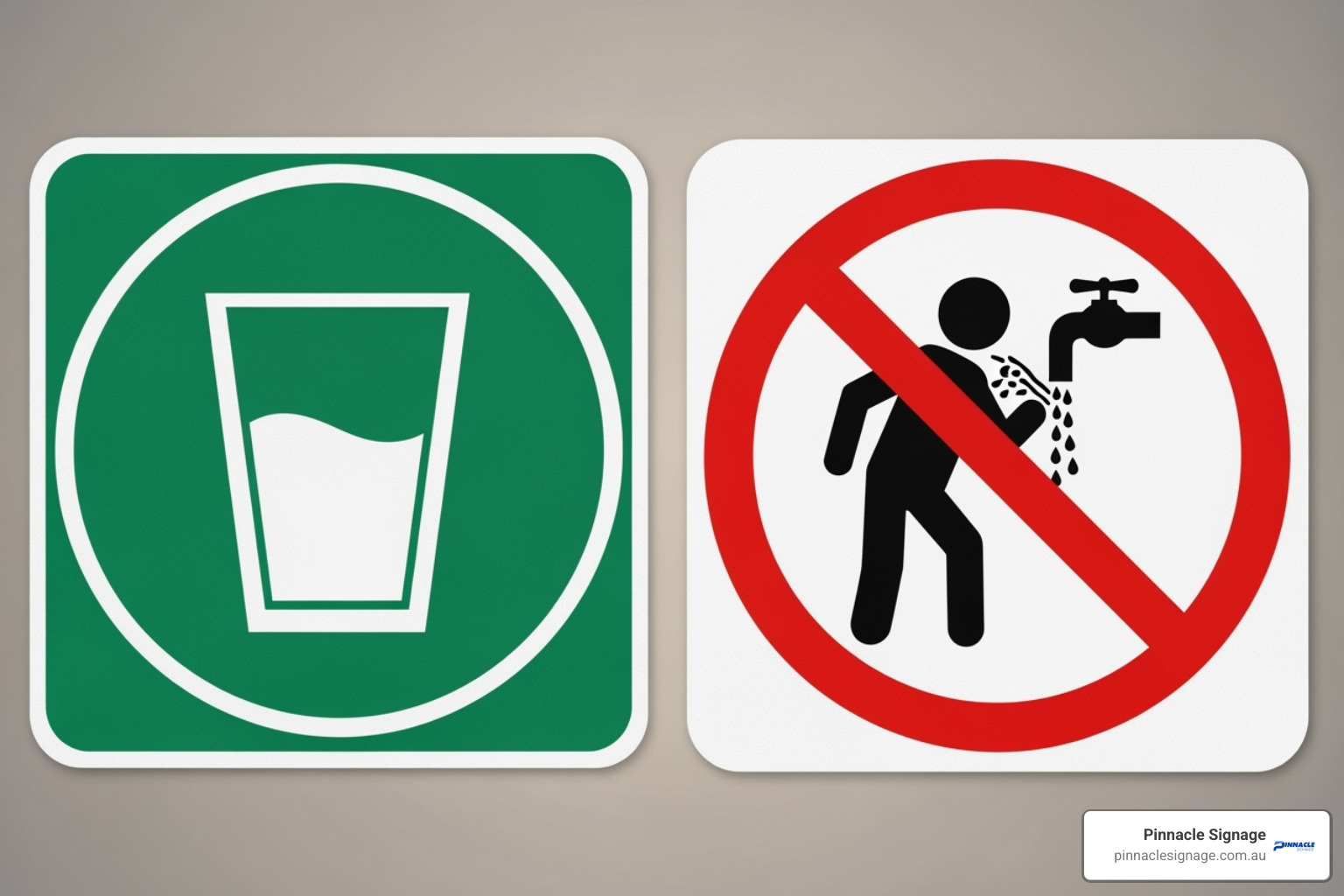
- Prohibition Signs: These indicate a forbidden action. They feature a red circle with a diagonal slash over a black pictogram, such as a person drinking. This universally means "Do Not Drink." The red colour signals immediate danger.
- Notice Signs: These provide important information. With a blue background and white text, they might state "Recycled Water – Not for Drinking." While not a direct prohibition, they alert users to the water's specific, non-potable use.
In contrast, potable (drinkable) water signs are often green, signifying safety. This colour distinction is deliberate and vital for preventing accidents. Green means safe to drink; red or blue with specific wording means caution or prohibition.
At Pinnacle Signage, we manufacture all non drinkable water signs to comply with AS 1319, ensuring they are instantly recognisable and meet Australian regulations. For more on standards, see our Guide to Clear and Compliant Signs or guidance from the WA Health Department.
Tip 2: Decode the Message: Key Wording on Non Drinkable Water Signs
Clear wording is essential for an unambiguous message. Non drinkable water signs use direct, concise language to prevent any confusion about the water's safety.
Common phrases include:
- "Non-Potable Water": The standard term for water not suitable for drinking.
- "Not for Drinking" or "Do Not Drink": A clear, direct instruction.
- "Untreated Water": Indicates the water has not been purified.
- "Recycled Water" or "Bore Water": Specifies the source, which is not treated to drinking standards.
- "Not for Drinking or Cooking Use": An important addition for worksite kitchens or canteens.
These clear messages prevent accidental consumption. A sign stating "NON POTABLE WATER NOT FOR DRINKING" immediately communicates the hazard on a busy worksite. We design our signs with these critical, easy-to-read messages and offer customisation for specific site needs. For more on labelling, see our article on Non-Potable Water Labels.
Tip 3: Know the Hazard Level: Notice, Caution, or Danger
In line with Australian standards, safety signs use different headers to show the level of risk. Understanding these helps you choose the right non drinkable water sign for your situation.
The hazard levels, from lowest to highest risk, are:
- Notice Signs (Blue Header): Provide general information. For example, "This Water is for Irrigation Only." They inform users about the water's purpose to prevent misuse.
- Caution Signs (Yellow Header): Warn of a potential hazard that could cause minor or moderate injury. A "Caution: Untreated Water" sign is suitable if the water could cause illness but isn't life-threatening.
- Danger Signs (Red Header): Reserved for the most extreme hazards that will cause serious injury or death if not avoided. A "Danger: Highly Contaminated Water" sign should be used for water containing lethal pathogens or chemicals.
A risk assessment is essential. If water is merely unpleasant, a Notice or Caution sign may be enough. If it poses a severe health threat, a Danger sign is required. We provide signs for all hazard levels to help you protect everyone on your site.
Tip 4: Common Locations for Non-Potable Water Sources
The effectiveness of non drinkable water signs depends on strategic placement. They must be visible at the point of use. Common locations include:
- Construction Sites: At taps and hoses used for dust suppression, concrete mixing, or cleaning.
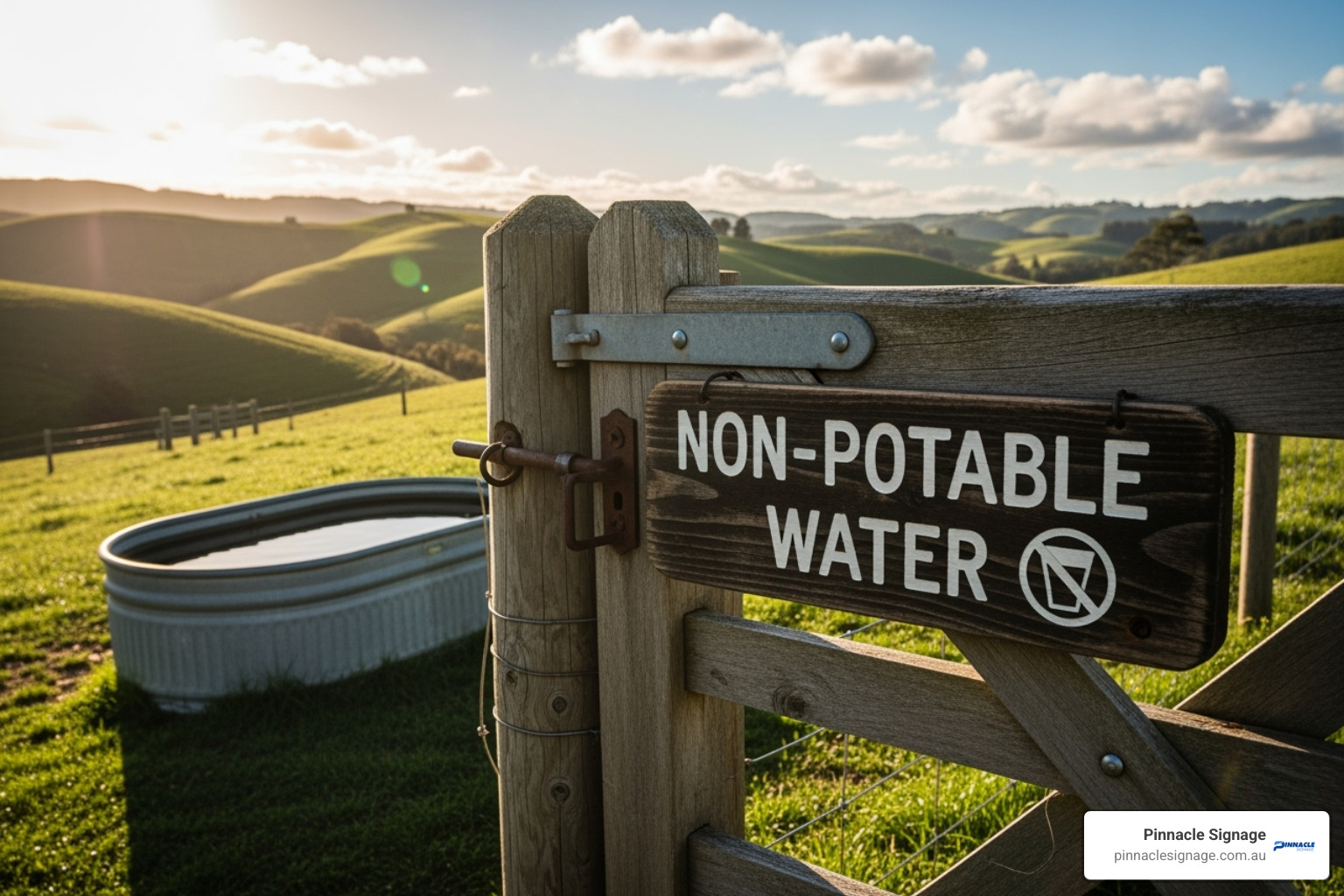
- Agricultural Properties: Near bore water taps, dams, troughs, and pumps used for irrigation or livestock.
- Industrial Facilities: On cooling towers, manufacturing lines, and chemical mixing outlets.
- Public Parks: At irrigation taps and decorative water features to distinguish them from drinking fountains.
- Greywater and Rainwater Systems: On all outlets from rainwater tanks or greywater recycling systems.
- Temporary Water Supplies: For any non-potable water provided at events or during emergencies.
Proper placement means putting signs directly at the water source, at eye level, and in well-lit areas. For detailed advice, see our Site-by-Site Guide for Placing Non-Potable Water Signs.
Tip 5: Choosing the Right Sign Material for Durability
A sign's material is crucial for its longevity, especially in the harsh Australian environment. Your non drinkable water signs must remain clear and intact to be effective.
Common materials and their uses include:
- Aluminium: A premium, weather-resistant choice for outdoor signs. It won't rust and withstands sun and rain, making it ideal for industrial or agricultural settings.
- Polypropylene (Plastic): A versatile and cost-effective option for indoor or sheltered outdoor use. It's lightweight and resistant to moisture and chemicals.
- Vinyl Stickers: Practical for temporary use, indoor applications, or labelling pipes and fixtures directly.
When choosing, consider these factors:
- UV Resistance: Essential for preventing fading in the Australian sun.
- Weatherproofing: To resist rain, wind, and temperature changes.
- Chemical Resistance: Important for industrial environments.
- Vandal Resistance: For signs in public areas.
Investing in quality materials ensures compliance and saves on replacements. Learn more in our guide on How to Choose the Right Signage for Your Australian Business.
Ensuring Compliance and Finding the Right Signage
Implementing clear and compliant non drinkable water signs is a critical component of workplace safety and legal responsibility in Australia. The consequences of using incorrect signage can be severe, ranging from health incidents to significant legal and financial repercussions.
Consequences of Non-Compliance and How to Choose Effective non drinkable water signs
The health risks of drinking non-potable water are significant, ranging from immediate gastrointestinal illness to long-term chronic health problems. For businesses, failing to provide clear warnings is a breach of their duty of care and can lead to:
- Legal Liability: Facing legal action if someone becomes ill.
- WorkSafe Fines: Penalties from safety authorities for non-compliance.
- Reputational Damage: Loss of trust from employees and the public.
- Increased Insurance Premiums: A poor safety record often results in higher costs.
To ensure you use effective non drinkable water signs, follow these steps:
- Assess Your Site: Identify all water sources and their risks.
- Choose Compliant Signs: Select signs that meet Australian Standard AS 1319.
- Use Clear Messaging: Ensure the wording and hazard level are unambiguous and appropriate.
- Ensure Visibility: Place signs at the point of use, at eye level, and in well-lit areas.
- Select Durable Materials: Match the material to the environment (e.g., aluminium for outdoors).
- Inspect and Maintain: Regularly check signs and replace any that are faded or damaged.
At Pinnacle Signage, we manufacture high-quality, compliant non drinkable water signs to help you protect your people and your business.
Why Choose Pinnacle Signage?
We are your trusted Australian partner for high-quality, durable, and compliant signage.
- Australian Made & Owned: We understand local standards and conditions, manufacturing signs that meet all requirements.
- Quality and Durability: We use premium materials like aluminium and polypropylene to ensure our signs last.
- Customisable: We offer custom designs to meet your specific safety messaging needs.
- Fast & Reliable: With a 2-4 business day turnaround and fast, Australia-wide shipping, you get the signs you need, when you need them.
Shipping & Pick Up
For most deliveries within Australia, we use courier services such as FEDEX; please note that couriers cannot deliver to PO Boxes, so provide a valid daytime delivery address. To ensure safe delivery, a signature is required upon receipt. You must be available to accept courier deliveries; re-delivery charges will apply if you are not present. Include a daytime phone number with your shipping details if we need to contact you about your delivery. For items weighing over 50kg, a tailgate delivery is usually required for residential addresses. This service is included in our standard shipping. Alternatively, you can choose to pick up the item from a nearby depot.
Free Shipping
Free shipping is available for orders over $100 AU Wide. Free shipping applies to most items on the site. However, some bulky items additional shipping costs will apply for deliveries to WA, North QLD, NT, TAS, and island areas. Our staff will reach out to you after your order if these charges apply.
Shipping & Production Time
Most items are ready for dispatch or pickup within 2-4 business days of receiving your order and payment confirmation. Delivery times are estimated as follows:
- 1 - 2 days: Sydney, ACT, Melbourne, Brisbane, Gold Coast
- 2 - 4 days: Rest of NSW, Rest of VIC
- 3 - 6 days: SA, North QLD, Perth
- 5 - 9 days: TAS, NT, WA
Pickup
Pickup is available at our warehouse, located at Unit 4/28 Nagle Street, East Wagga Wagga NSW. The warehouse is open from 8am to 5pm Monday through Friday. We are closed on weekends and public holidays.
