

Sign Up for Success: The Ultimate Recycling Area Sign Guide
Why Proper Waste Management Signage Matters
Recycling area signs are the visual tools that guide proper waste sorting, reduce contamination, and support environmental goals. Whether managing a commercial office, construction site, or hospitality venue, the right signage makes the difference between an effective recycling program and one that sends recyclables to landfill.
The challenge many facilities managers face is contamination. When staff or visitors dispose of the wrong materials in recycling bins, entire loads can be rejected by processors, undermining waste diversion efforts and increasing costs. Clear, well-designed recycling area signs address this by providing instant visual guidance at the point of disposal, helping people make the right choice without hesitation.
Essential Elements of Effective Recycling Area Signs
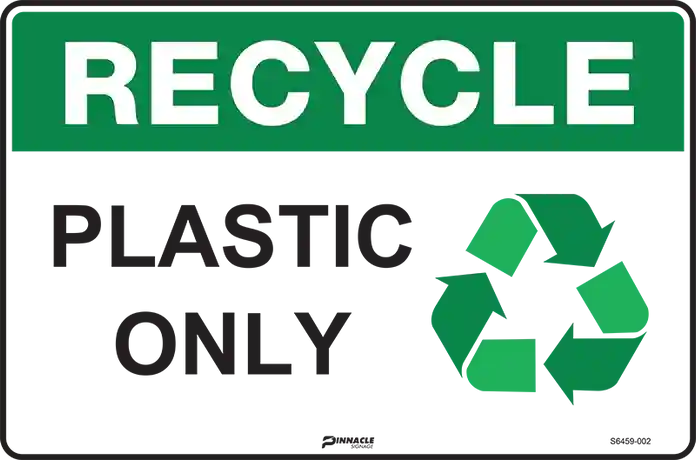
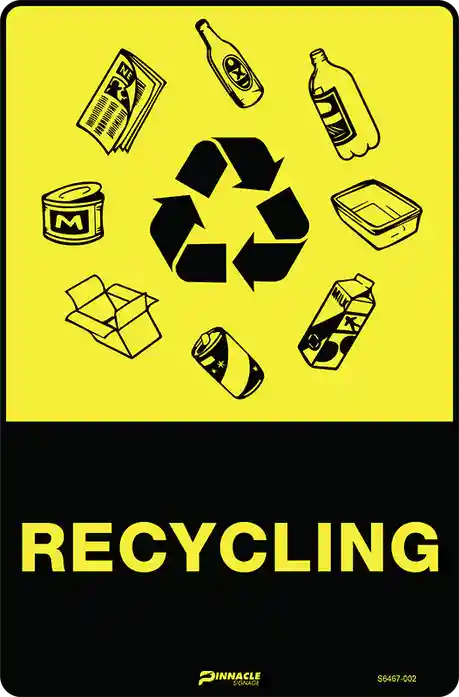
Effective waste management relies on durable materials such as poly or metal signs suited to specific indoor or outdoor environments. Using clear visual symbols, including the Mobius loop and material-specific graphics for paper, glass, or organics, ensures immediate recognition. In Australia, following national colour standards—yellow for recycling, red for general waste, and lime green for organics—is critical for consistency. Strategic placement at eye level or directly on bins ensures visibility, while the inclusion of Braille and tactile features supports inclusive access. Customisation allows for the inclusion of specific waste streams or site-specific instructions to meet unique operational needs.
Relevant articles related to the recycling area signs:
The Primary Purpose of Waste Management Signage
The fundamental goal of any waste management system is waste diversion, which is the process of redirecting waste from landfills to recycling or composting facilities. Without effective Recycling area signs, this process breaks down. Signs serve as the primary educational touchpoint between waste policy and the person disposing of an item.
Clear signage significantly reduces contamination, which occurs when non-recyclable items are placed in recycling bins. Standardised graphics and colour coding are essential for promoting recycling facilities at events, workplaces, and homes. When everyone understands the rules, operational efficiency increases because cleaners and waste contractors spend less time sorting through contaminated loads.
Furthermore, these signs help maintain high housekeeping standards across a facility. A well-marked waste station encourages users to keep the area tidy, preventing the "unwanted dumping" often seen in poorly identified waste zones. By clearly marking disposal areas, organisations support broader environmental goals and demonstrate a commitment to a cleaner workplace.
Material-Specific Recycling Area Signs
Not all recycling is the same, and signage should reflect that. Effective systems use specific signs for different waste streams:
- Paper Recycling and Cardboard Only: Essential for offices and warehouses to keep high-value fibre streams clean.
- Glass Bottles and Jars: Often separated to prevent breakage from contaminating other recyclables.
- Organic Waste: Used in kitchens and hospitality to divert food scraps from general waste.
Using durable materials ensures these signs remain legible and effective in various industrial and commercial applications.
Promoting Corporate Responsibility
Implementing a robust recycling program is a visible way to showcase corporate social responsibility. When employees see an investment in high-quality Recycling area signs, it signals that sustainability is a core value. This transparency is vital for sustainability reporting and meeting community expectations. Using recognisable symbols like the Möbius loop aligns a business with Australian standards, fostering a culture of environmental accountability.
Understanding Materials and Durability
When selecting Recycling area signs, the environment where they will be placed is the most important factor. In Australia, harsh sun and varied weather conditions mean that weather-resistant materials with high UV stability are necessary to ensure signs do not fade or peel over time.
For industrial environments or construction sites, signs must withstand physical impacts and heavy usage. Durable metal backings or high-quality poly materials offer the long-term performance required in these high-traffic zones. Different materials are selected based on their performance under pressure in specific Australian conditions.
Choosing the Right Material for the Environment
Material choice is generally categorised into two main areas:
- Indoor Applications: For offices, hotels, or commercial interiors, self-stick vinyl or low-profile aluminium composite signs are often preferred. They offer a clean, professional look and are easy to adhere to smooth surfaces like bins or walls.
- Outdoor Durability: For loading docks, parks, or building exteriors, robust poly or metal signs are recommended. These materials are designed to resist moisture and temperature fluctuations.
Design Best Practices for Recycling Area Signs
Effective design is about instant recognition. A person should be able to identify where their waste goes in less than two seconds. To achieve this, systems rely on standardised symbols and colour coding. The Möbius loop is the universal symbol for recycling, and in Australia, the standard AS 4123.7 outlines the specific colours for mobile waste containers, providing a benchmark for signage designs.
Key design principles include:
- Visual Recognition: Use pictures of the items (e.g., a plastic bottle or a crumpled newspaper) rather than just text.
- Simplified Text: Use bold, high-contrast fonts.
- Colour Consistency: Ensure the sign colour matches the bin lid colour.
Standardised graphics ensure consistency across different regions and industries, making the recycling process more intuitive for all users.
Enhancing Accessibility with Braille Recycling Area Signs
Inclusivity is a vital part of modern facility management. For public spaces and large workplaces, providing Braille and tactile signage ensures that individuals with vision impairments can participate in recycling programs. Under Australian Standard AS 1428.1, tactile lettering and Braille provide the necessary guidance for inclusive access. This design approach ensures every member of the community can navigate waste systems independently.
Avoiding Common Symbol Confusion
One of the biggest problems in recycling is "wish-cycling," where items are placed in the bin incorrectly. Clear signage that explicitly states "No Plastic Bags" or "No Food Waste" helps clear up confusion regarding materials like PETE (1), HDPE (2), or wax-coated cardboard. Visual aids are a powerful tool in reducing these common errors and ensuring waste streams remain clean.
Strategic Placement for Maximum Impact
Strategic placement involves putting information exactly where the user needs it. Recommended strategies include:
- Eye-Level Mounting: Place signs on the wall behind the bins at eye level.
- Bin Lid Application: Use durable stickers directly on the bin lids so the message is visible as the user reaches to open the bin.
- Proximity to Source: Place paper recycling signs next to printers and organic waste signs next to food preparation areas.
For facilities with unique layouts, custom signage can be designed to fit specific dimensions or mounting requirements, ensuring a clear line of sight from all entry points.
Frequently Asked Questions about Recycling Signs
What are the standard colours for recycling signs in Australia?
Following the Australian Standard AS 4123.7, the colour coding is:
- Yellow: Mixed/Commingled Recycling
- Red: General Waste (Landfill)
- Lime Green: Organics/FOGO (Food Organics and Garden Organics)
- Blue: Paper and Cardboard
- White: Soft Plastics (where specific collection exists)
How do I reduce contamination in my recycling bins?
The most effective way is to use specific signage that shows exactly what is allowed (e.g., "Plastic Bottles Only"). Adding a "No Food or Liquids" warning is also a powerful way to keep the stream clean.
Can I get custom recycling signs for my business?
Yes. Many businesses require custom signage to include specific instructions or to match a particular interior design aesthetic. Custom text, colours, and dimensions can be provided to suit any facility in Australia.
Wrap Up: Make Recycling Simple, Fast, and Correct
Pinnacle Signage is an Australian-made manufacturer based in East Wagga Wagga, NSW. We understand the specific needs of Australian businesses, from local councils and construction firms to hospitality venues. Whether you need a single sign or are looking to place bulk orders for a national rollout, we focus on providing quality safety and waste management signs.
For those who need something unique, custom signage options allow for a tailored waste management system. We offer shipping across Australia and warehouse pickup for customers in New South Wales.
Shipping & Pickup Information
Production & Shipping Times Most items are dispatched within 48 hours of receiving an order and payment confirmation. Estimated delivery times:
- 1, 2 days: Sydney, ACT, Melbourne, Brisbane, Gold Coast
- 2, 4 days: Rest of NSW, Rest of VIC
- 3, 6 days: SA, North QLD, Perth
- 5, 9 days: TAS, NT, WA
Delivery Details Courier services are used for most Australian deliveries. Please provide a valid daytime address as couriers cannot deliver to PO Boxes. A signature is required upon receipt. Free shipping is available for most orders over $100 AU Wide, though some bulky items to remote areas may incur additional charges.
Warehouse Pickup Orders can be picked up from the warehouse at Unit 4/28 Nagle Street, East Wagga Wagga NSW. Open from 8am to 5pm, Monday through Friday.