

Your Guide to Restricted Area Signs: Authorised Personnel Only Edition
Why Restricted Area Authorized Personnel Only Signs Matter in Australian Workplaces

A restricted area authorised personnel only sign serves a critical dual purpose: it controls access to hazardous or sensitive zones while protecting both your business and your people from preventable incidents. Here's what you need to know:
Essential Characteristics of Restricted Area Signs:
- Clear messaging that leaves no room for interpretation
- Durable, weather-resistant materials suitable for Australian conditions
- Appropriate signal words (Danger, Warning, Caution, or Notice) matched to hazard levels
- High-visibility design with colour coding that complies with Australian Standards
- Strategic placement at all entry points to restricted zones
Common Applications:
- Chemical storage areas and electrical rooms
- Heavy machinery zones and construction sites
- Data centres and server rooms
- Laboratories and research facilities
- Loading docks and warehouse restricted zones
These signs do more than keep unauthorised visitors out. They create awareness about workplace hazards, establish clear boundaries for who can access potentially dangerous areas, and demonstrate your commitment to safety compliance. In Australia, workplace health and safety legislation requires employers to identify and control risks, and proper signage is a fundamental part of that obligation.
I'm Doug Lindqvist, General Manager of Pinnacle Signage, and I've spent years helping Australian businesses implement effective restricted area authorised personnel only sign solutions that meet both regulatory requirements and real-world site demands. Whether you're securing a construction site, a manufacturing floor, or a commercial facility, choosing the right signage is about more than compliance, it's about creating a safer workplace culture.
Learn more about the restricted area authorised personnel only sign:
Understanding the Restricted Area Authorised Personnel Only Sign
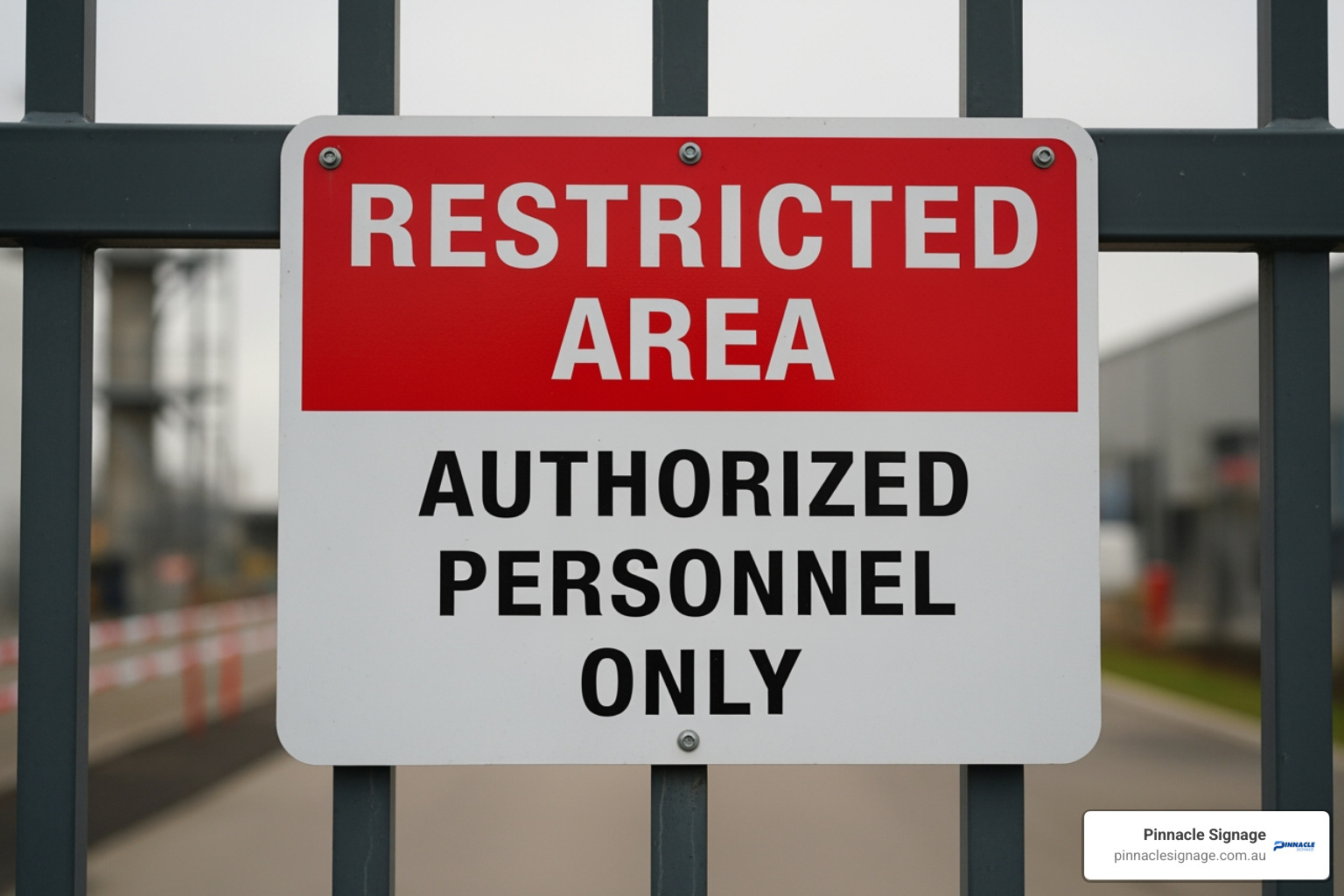
When we talk about a restricted area authorised personnel only sign, we are looking at a tool designed for hazard awareness and accident prevention. These signs aren't just suggestions, they are formal indicators that an area contains risks or sensitive operations that require specific training, qualifications, or permission to encounter.
By clearly marking these zones, we help maintain strict security protocols and ensure that only those with the necessary expertise or safety equipment enter. This is particularly vital in environments where a simple mistake by an untrained visitor could lead to a significant safety breach or equipment damage.
To dive deeper into the specifics of what makes these signs compliant, check out our guide on Restricted Area Signage Requirements 101.
The Primary Purpose of a Restricted Area Authorised Personnel Only Sign
The primary goal of these signs is access control. By defining who is allowed to enter, businesses can achieve several key outcomes:
- Risk Mitigation: Keeping untrained people away from high-voltage equipment, chemicals, or moving machinery.
- Liability Protection: Demonstrating that the employer has taken reasonable steps to warn of hazards, which is a key part of Australian WHS obligations.
- Asset Security: Protecting sensitive data in server rooms or high-value inventory in warehouses.
We find that most businesses use these as their first line of defence in a comprehensive safety plan.
Design Elements for a Restricted Area Authorised Personnel Only Sign
For a sign to be effective, it must be understood in a split second. This is achieved through specific design elements:
- Signal Words: Using headers like DANGER or WARNING to communicate the severity of the risk.
- Colour Coding: Following Australian Standards, such as red for danger and blue for notice.
- Universal Pictograms: Using symbols (like a hand held up for "Stop" or "No Entry") ensures the message is understood regardless of language barriers.
Effective signage is designed with these principles in mind, ensuring messages are concise, legible, and easily understood by everyone on site.
Regulatory Standards and Industry Applications
In Australia, safety signs should generally align with AS 1319-1994, which outlines the design and use of safety signs in the occupational environment. While we don't need to get bogged down in the technical clauses, it is important to know that using compliant signage helps you meet your duty of care under Safe Work Australia guidelines.
For a broader look at staying compliant, read our article on Safety Signage Australia: Your Guide to Clear and Compliant Signs.
Typical Locations for Restricted Access
Where exactly should you be placing a restricted area authorised personnel only sign? In our experience across New South Wales and the rest of Australia, common locations include:
- Data Centres: Where sensitive information and expensive hardware must be protected from unauthorised physical access.
- Chemical Storage: Areas containing hazardous substances that require specific PPE to handle.
- Electrical Rooms: High-voltage zones that pose a significant risk of electrocution.
- Heavy Machinery Zones: Factory floors or workshops where moving parts create a constant physical hazard.
Using the right sign in these locations is essential. As we often say, Restricted Access Signs Are Your First Line of Defence against workplace accidents.
Distinguishing Between Access Notices
It is a common mistake to think that all "keep out" signs are the same. However, there are subtle but important differences:
- Employees Only: Usually found in retail or hospitality, this keeps customers out of staff rooms or kitchens. It doesn't necessarily imply a hazard.
- No Trespassing: A legal warning to the general public that they are on private property and may face legal action.
- Authorised Personnel Only: This is more specific. It means even some employees might be restricted if they aren't trained for that specific area. This often includes third-party contractors who have been given a site induction.
Understanding these nuances is key to effective site management. For more clarity, see our post where No Entry Signs are Demystified.
Material Selection and Visibility Improvements
When selecting a restricted area, authorised personnel only sign, the material is just as important as the message. Australia’s harsh sun and variable weather can quickly degrade poor-quality signs, making them unreadable and, therefore, useless.
We focus on Making Your Workplace Safe and Secure with High Quality Safety Signage by using materials that stand the test of time.
Durable Materials for Australian Environments
For most Australian workplaces, durable, weather-resistant materials are necessary. Metal (usually aluminium) is a top choice for outdoor longevity, often lasting over 10 years even in direct sunlight. For indoor or temporary use, poly or self-adhesive vinyl are excellent, cost-effective alternative.
High-Visibility and Specialised Features
Sometimes a standard sign isn't enough. Depending on your environment, you might consider:
- Reflective Films: Essential for car parks or loading docks where visibility at night or in low light is required.
- Photoluminescent (Glow-in-the-Dark): Ideal for areas that might experience power outages. These signs absorb light and glow during blackouts, ensuring safety messages remain visible.
- Anti-Graffiti Laminate: A specialised coating that allows you to easily remove marks or spray paint, protecting your investment from vandalism.
Signs that combine clear messaging with robust construction are essential for maintaining long-term site safety.
Strategic Placement and Mounting Best Practices
A sign is only effective if people actually see it before they enter the restricted zone. Mounting signs at eye level (roughly 1.5 metres from the ground) on doors, gates, or walls directly adjacent to the entry point ensures maximum visibility.
Effective Mounting Solutions
There are several ways to display your restricted area authorised personnel only sign depending on the location:
- Door Barricades: Temporary poles and signs that physically block a doorway.
- Floor Stands: Great for temporary hazards or cleaning in progress.
- Fence Brackets: For securing metal signs to chain-link fencing around construction sites.
- Adhesive Labels: Perfect for machinery or smooth indoor surfaces.
Finding the right mounting hardware is the final step in ensuring your sign stays exactly where it needs to be. You can find more about these options in Access Signs Made Easy: Find Your Perfect Solution Today.
Consequences of Improper Signage Use
What happens if you don't use these signs, or if you use the wrong ones? The consequences can be severe:
- Safety Breaches: Unauthorised entry into a dangerous zone can lead to serious injury or death.
- Workplace Mishaps: Damage to sensitive equipment by someone who doesn't know how to operate it.
- Legal Action: If an accident occurs and proper signage is not present, the employer may face significant fines and legal action under WHS laws.
Don't wait for an incident to occur. Ensure your Entry Restricted Signs are up to date and clearly visible.
Frequently Asked Questions about Restricted Area Signs
What is the difference between "Employees Only" and "Authorised Personnel Only"?
"Employees Only" generally excludes the public from staff areas like break rooms. "Authorised Personnel Only" is more restrictive, excluding even regular employees if they haven't been specifically trained or assigned to that hazardous or sensitive area.
Are businesses legally required to post restricted area warnings in Australia?
Yes, under Australian WHS legislation, employers have a duty of care to identify hazards and implement controls. Posting appropriate safety signage is a recognised and often mandatory method of communicating these risks to workers and visitors.
How do I choose the correct header (Danger, Warning, or Caution) for my sign?
- DANGER: Use for life-threatening hazards where death or serious injury is likely if the sign is ignored.
- WARNING: Use for serious hazards that could cause significant injury.
- CAUTION: Use for minor to moderate injury risks, like trip hazards or low headroom.
Picking the Right "Authorised Personnel Only" Sign Fast
At Pinnacle Signage, we are dedicated to providing Australian businesses with clear and effective signage solutions that help maintain a safe and secure workplace. Maintaining such an environment requires constant vigilance and clear communication.
A restricted area authorised personnel only sign is a fundamental component of a robust safety strategy, ensuring that hazards are identified and access is controlled in accordance with Australian safety expectations. By choosing durable materials and ensuring strategic placement, businesses can effectively mitigate risks and protect their most valuable assets—their people. Regular audits of site signage help ensure that all warnings remain legible and relevant to the current site conditions, fostering a culture of safety and compliance across all Australian industries.
Need help choosing the right "Restricted Area, Authorised Personnel Only" sign for your site, or want to customise wording, size, or material? Contact the team for a quote.