

How to Keep Your Farm Safe and Compliant
Understanding the Role of Safety Signs for Farms

In Australian agriculture, safety isn't just a buzzword; it is a daily practice that keeps our families and workers whole. The primary role of safety signs for farms is to provide immediate, high-visibility communication of hazards that cannot be eliminated through engineering or administrative controls alone. Under the Work Health and Safety (WHS) Act, farm owners in New South Wales have a "duty of care" to ensure the health and safety of everyone on their property.
Using signs effectively is a core part of The ABCs of Stock & Farm Signage for Every Farmer. When a contractor enters your back paddock, they might not know about the overhead powerlines or the temperamental bull. A well-placed sign acts as a silent supervisor, providing essential warnings when you aren't there to give a verbal induction. For a deeper dive into the basics, check out our guide on Farm Safety Signs 101: Keeping Your Farm Accident-Free.
Categorising Visual Alerts
Not all signs serve the same purpose. To maintain a compliant site, we use specific categories defined by Australian Standard AS 1319:
- Danger Signs: Used for life-threatening hazards (e.g., "High Voltage"). These feature a red oval with the word "DANGER" in white.
- Warning Signs: Alert you to conditions that are hazardous but not life-threatening (e.g., "Slippery Surface"). These are yellow triangles with black symbols. You can find a range of these in our Caution signs collection.
- Mandatory Signs: Indicate an instruction that must be followed, like "PPE Must Be Worn." These feature a blue circle with a white symbol.
- Prohibition Signs: Tell you what you cannot do, such as "No Smoking." These feature a red circle with a slash through it.
Compliance with Australian Standards
Adhering to AS 1319 is not optional for commercial operations. This standard dictates the layout, colours, and symbols used to ensure that a worker from Wagga Wagga can understand a sign just as easily as someone from Dubbo. Using non-compliant, hand-painted signs might seem like a quick fix, but they often lack the reflectivity and standardised symbols required to meet legal obligations. For more on staying on the right side of the law, see Safety Signage Australia: Your Guide to Clear and Compliant Signs.
Identifying High-Risk Zones and Required Signage
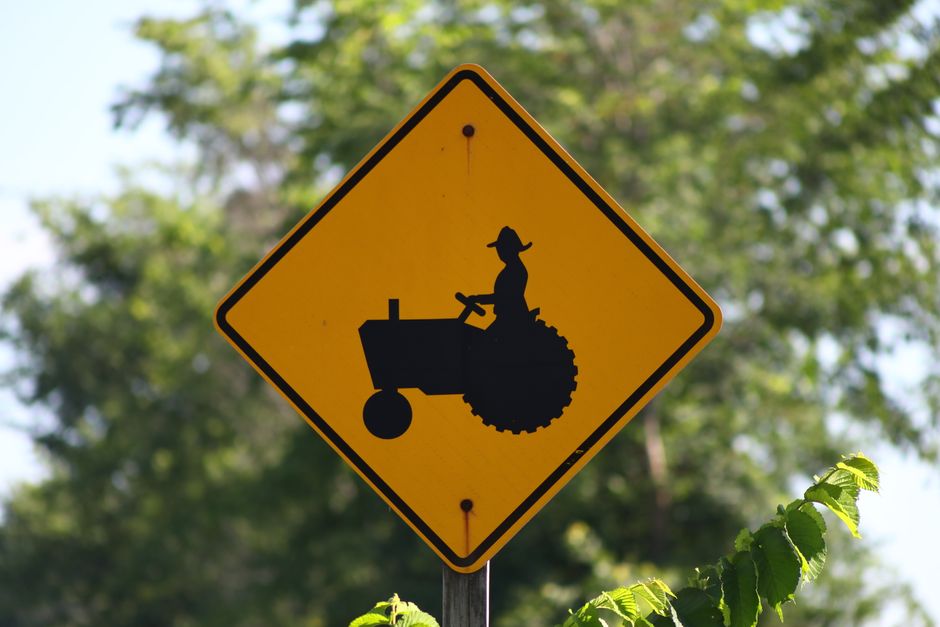
Every farm has its "hot zones" - areas where the risk of injury is significantly higher. Identifying these zones is the first step in a proper safety audit. Common high-risk areas include workshops, chemical sheds, silos, and livestock handling yards. According to research, vehicle collisions and machinery accidents account for a massive 38% of workplace fatalities in Australia, making traffic management a top priority. A clear safety notice at the main entrance is an excellent way to set the tone for safety the moment someone arrives.
Managing Livestock and Animal Handling Areas with Safety Signs for Farms
Animals are unpredictable. Whether it is a 600kg steer or a flighty colt, handling livestock involves inherent risks of crushing, kicking, or goring. Signs like "Bull in Paddock" or "Caution: Stallion" are vital for alerting visitors. In handling yards, "Crush Zone" signs remind workers to stay clear of moving gates and cattle crushes.
We recommend placing signs on every gate leading into a paddock with potentially aggressive livestock. For more specific advice on this, read The Definitive Guide to Livestock Signage or browse our Stock & Farm Signage for ready-to-go options.
Machinery and Vehicle Safety Protocols
Farm machinery is getting larger and quieter, which increases the risk of accidents. Tractors, harvesters, and quads are the leading causes of injury on Australian farms.
- Tractor Crossings: Place these where internal farm tracks meet public roads or high-traffic areas.
- Speed Limits: Keeping dust down and speeds low (usually 20km/h on access roads) saves lives.
- Blind Spots: Signs like "If you can't see my mirrors, I can't see you" are effective on large grain trucks.
- Stock Ahead: If you move stock across roads, high-visibility reflective signs provide that extra level of visibility, especially in the early morning or late evening.
Implementing Effective Biosecurity Safety Signs for Farms
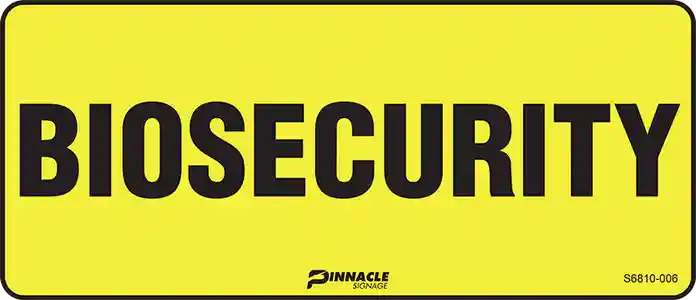
Biosecurity is about protecting your livelihood from pests, diseases, and weeds. A single contaminated vehicle can bring in seeds or pathogens that take years to eradicate. Effective biosecurity starts at the front gate. By directing all visitors to a central check-in point, you can control where they go and ensure their boots and vehicles are clean. Our Biosecurity signs are designed to be the first line of defence for your property.
Chemical Storage and Hazchem Requirements
Farms often store significant quantities of diesel, fertilisers, and pesticides. These substances are classified as Dangerous Goods and require specific GHS (Globally Harmonised System) labelling.
- Pesticide Storage: Must be clearly marked to prevent accidental exposure.
- Fuel Tanks: Require "No Smoking" and "Flammable Liquid" signs.
- Acute Toxicity: For highly scheduled poisons, Acute toxicity GHS signs are a mandatory requirement. Explore our full range of GHS signage to ensure your chemical shed is compliant.
Restricting Unauthorised Access
Trespassing isn't just a nuisance; it is a liability risk. If an unauthorised person wanders into a hay shed and gets injured, you could still be held liable if you haven't taken reasonable steps to warn them. "Private Property" and "No Unauthorised Entry" signs should be posted at all entrance points.
Your front gate is your first impression. We discuss how to balance a welcoming look with firm safety warnings in Farm Gate Signs Australia and Farm Gate Signs: First Impressions and Practical Safety.
Durability and Material Selection for Rural Environments
The Australian sun is brutal on signage. Cheap plastic signs from overseas often crack and fade within a single summer, losing their effectiveness and leaving you non-compliant. In rural environments, material selection is critical for longevity. We manufacture our signs to withstand the harsh conditions of regional NSW, from the frost of Wagga winters to the 40-degree heat of summer.
At Pinnacle Signage, we use high-quality materials like:
- Heavy-Duty Aluminium: Rust-proof and incredibly stiff, perfect for gate mounting.
- ACM (Aluminium Composite Material): Lightweight but very durable, often used for larger safety notices.
- UV-Stable Inks: Essential for preventing the "fading to white" that renders signs useless.
- Reflective Vinyl: We use premium reflective films to ensure your signs are visible at night under tractor or truck headlights.
For more details on why our materials lead the pack, see Durable Stock and Farm Signage Delivered to Your Door: Order Online from Pinnacle Signage.
Placement and Maintenance for Maximum Visibility
A sign is only useful if it is seen. We often see great signs tucked behind overgrown hedges or mounted so high that a truck driver can't see them. Proper placement is just as important as the sign itself.
Strategic Location Planning
- Eye Level: Most signs should be mounted at eye level (approx. 1.5m to 1.8m from the ground).
- Line of Sight: Place signs where the viewer has enough time to react. A "Tractor Crossing" sign needs to be far enough back from the crossing for a driver to slow down safely.
- High Traffic Areas: Workshops and fuel bays should have clear Notice signage regarding PPE and fire safety.
- First Aid: First aid signage must be visible from across the room in a workshop or dairy.
For a step-by-step approach to planning your layout, read How to Choose the Right Safety Signs for Your Farm.
Regular Safety Audits
Farms are dusty places. Over time, mud, dust, and bird droppings can obscure your safety messages. We recommend a quick "sign walk" every six months:
- Clean: Wipe down signs with soapy water.
- Clear: Trim back any branches or weeds blocking the view.
- Assess: Replace any signs that are faded, dented, or peeling.
- Update: Ensure contact numbers and UHF channels are still correct.
Large-scale operations often rely on us for Stock & Farm Signage Solutions Trusted by Large-Scale Agricultural Operations to keep their compliance up to date across multiple properties.
Frequently Asked Questions about Farm Safety
What are the legal requirements for farm signs in NSW?
In NSW, the primary regulator is SafeWork NSW. Under the WHS Act 2011, you must provide information, training, and instruction to protect people from risks. Safety signs are the most efficient way to provide this instruction for common hazards. All signs must comply with AS 1319 regarding colour and layout. Using Danger signs for high-risk areas like silos and pits is a fundamental requirement.
Which materials last longest in the Australian sun?
Heavy-duty aluminium with UV-stable inks is the gold standard. While Corflute is great for temporary warnings (like a "Sheep Spraying in Progress" sign), it will eventually become brittle in the sun. For permanent fixtures, always go with metal. Our heavy-duty metal signs are built for these exact conditions and provide the durability required for long-term compliance.
How do I manage public access and liability?
If your property has public footpaths or "Right of Way" access, your liability increases. You have a legal duty to warn the public of "lurking hazards" they wouldn't expect, such as electric fences, chemical spraying, or aggressive livestock. Clear, weatherproof notices are your best defence against liability claims.
Safer Farms Start with Clear Signs
At Pinnacle Signage, we take farm safety seriously because we live and work in the same rural communities you do. Based in East Wagga Wagga, NSW, we understand the specific challenges of regional Australian properties. We don't just sell signs; we provide the peace of mind that comes with knowing your property is compliant and your people are protected.
Whether you need a single custom gate sign or a full suite of biosecurity and hazard warnings for a large-scale operation, we are here to help. We offer fast turnaround times, with most orders dispatched within 48 hours. Plus, we offer free shipping on orders over $100 AU Wide (exceptions apply) and convenient warehouse pickup for our local customers in the Riverina.
Ready to secure your property? Contact us today or visit our warehouse at East Wagga Wagga. Let's make sure your farm stays safe for the next generation.