

Are You Being Watched? A Comprehensive Look at Surveillance Signs
Why Surveillance Signs Matter for Property Security

Surveillance signs are essential tools for communicating security measures, deterring crime, and informing visitors that an area is monitored. Whether you're securing a construction site, commercial facility, retail space, or residential property, these signs serve as a visible first line of defence, making it clear that activities are being recorded and monitored.
Key purposes of surveillance signs include:
- Deterrence - Warning potential intruders and trespassers that surveillance is active
- Legal notification - Informing people that they are entering a monitored area, which can help establish consent
- Property protection - Supporting broader security measures like cameras, alarms, and patrols
- Liability reduction - Demonstrating that reasonable steps have been taken to warn and inform visitors
- Compliance - Meeting workplace safety and privacy notification requirements in some contexts
These signs come in various formats, from simple "CCTV in Operation" warnings to detailed notices about 24-hour video and audio recording. They can be made from durable materials like aluminium or polypropylene, with reflective options for visibility at night. Effective surveillance signage combines clear messaging, strategic placement, and weather-resistant construction to ensure it remains visible and readable over time.
Understanding how to select, design, and place surveillance signs for maximum effectiveness is key to building a more secure environment.
The Role of Surveillance Signs in Property Security
In the vast and varied landscapes of Australia, from busy city centres to expansive rural properties, the need for robust security is paramount. Surveillance signs play a critical, often underestimated, role in this endeavour. They are far more than just pieces of metal or plastic; they are active participants in a layered security approach, working in tandem with technology and other physical barriers to protect assets and prevent unwanted incidents.
Consider a construction site in regional New South Wales, an office park in Sydney, or even a remote farm in East Wagga Wagga. Each location presents unique security challenges. By clearly displaying surveillance signs, we immediately establish a visible deterrent, signalling to potential intruders and trespassers that the area is not an easy target. This psychological impact is invaluable, often prompting individuals with ill intentions to reconsider their actions.
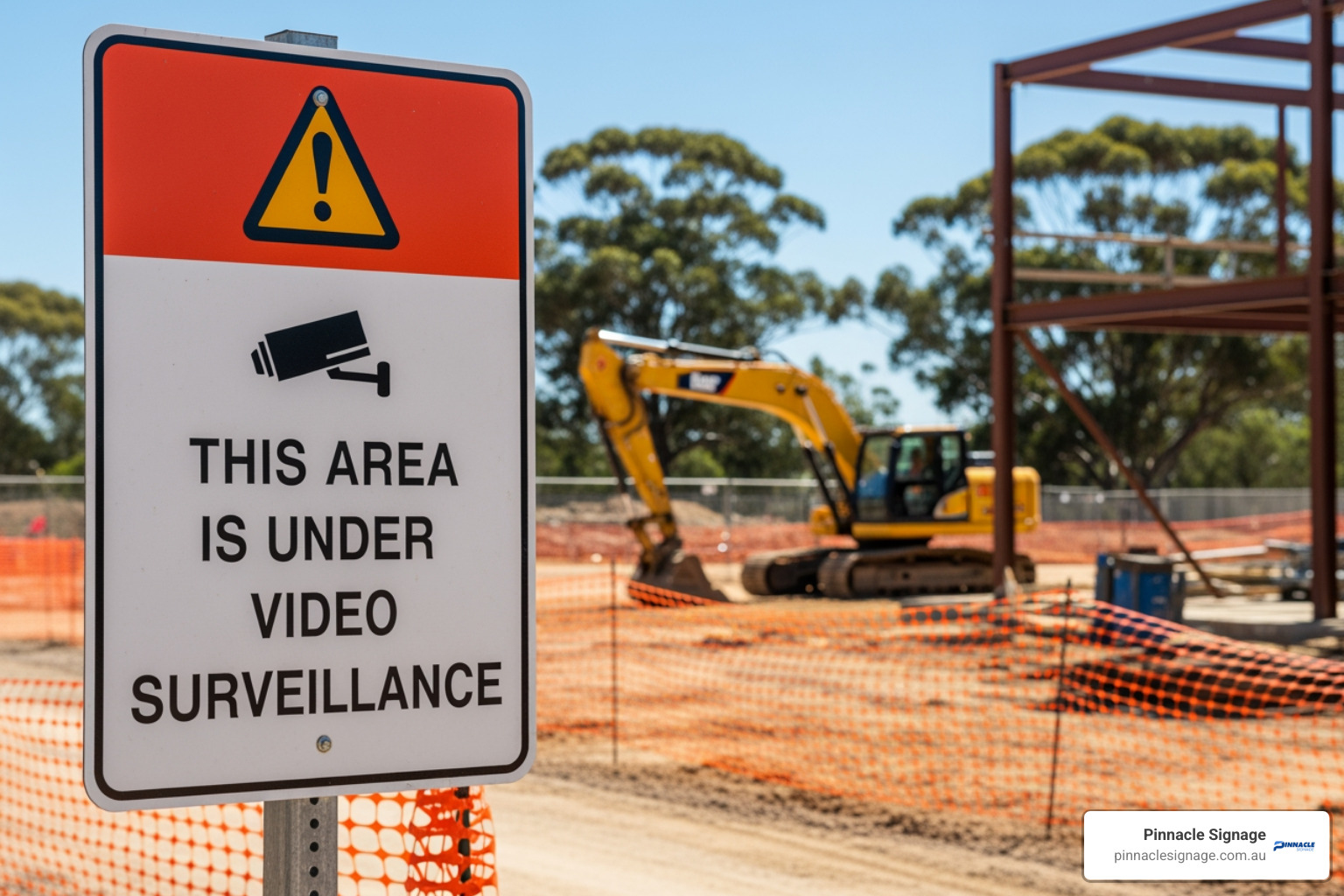
These signs contribute significantly to crime deterrence and trespassing prevention. When someone sees a sign indicating "24 Hour Video Surveillance," it communicates a clear message: "We are watching, and your actions will be recorded." This perception of constant monitoring reduces opportunistic crime, making criminals think twice before attempting to breach security. Effective surveillance signs are a proactive step towards greater asset protection for businesses and individuals across Australia.
More Than Just a Warning: How Signs Deter Unwanted Activity
The power of a surveillance sign lies in its ability to create a perceived risk for anyone contemplating unauthorised access or activity. It's a silent guardian, constantly reminding people that their actions might have consequences. This isn't just about actual cameras being present, though that's certainly part of it; it's about the idea of being monitored.
When a sign clearly states "Warning: Surveillance & 24Hr CCTV Recording & Monitoring In Operation In This Area," it sends a strong message. This is particularly effective in reducing opportunistic crime, where individuals might act impulsively if they believe they won't be caught. By making surveillance visible, we shift the odds in favour of property owners.
These signs don't replace physical security systems, but rather support them. They act as a crucial first line of defence, often deterring issues before they even begin. Think of it as a helpful assistant to your security cameras, alarms, and patrols. For a deeper dive into how these signs integrate with your security setup, you might find our guide on The ultimate guide to electronic surveillance sign requirements particularly useful.
Legal Notification and Reducing Liability
Beyond deterrence, surveillance signs serve a vital legal function: informing the public. In Australia, privacy considerations are important, and openly notifying people that they are entering a monitored area can be crucial for establishing implied consent. This is particularly relevant in workplaces and public-facing commercial premises.
For property owners, clear and unambiguous surveillance signs can offer significant legal protection, helping to reduce liability. By demonstrating that reasonable steps have been taken to warn visitors about surveillance, owners can strengthen their position should any legal disputes arise regarding privacy or incidents captured on camera. For instance, a sign explicitly stating "These Images Are Being Recorded For The Purpose Of Fly Tipping/Littering Surveillance" can support prosecution efforts for illegal dumping.
It's about transparency and ensuring everyone understands the rules of entry. The Office of the Australian Information Commissioner (OAIC) provides guidance on workplace surveillance, which underscores the importance of proper notification. While we don't provide legal advice, we understand the practical benefits of clear signage in meeting these notification requirements and promoting a safer, more accountable environment.
Different Types of Surveillance Signs
Just as there are many kinds of properties and security needs, there's a wide array of surveillance signs available. Each type is designed to convey a specific message, whether it's a general warning or a detailed notification about the kind of monitoring taking place. Understanding these different types is essential for communicating the right message in a specific situation.
We see everything from standard CCTV warnings to more explicit notices about 24-hour monitoring, audio recording, or even signs specifically for private property and no trespassing. The goal is always to communicate clearly and effectively, leaving no room for misunderstanding about the presence of security measures.
Common Surveillance Sign Messages and Their Meanings
Let's break down some of the most common messages you'll encounter on surveillance signs and what they signify:
- "CCTV in Operation" or "Video Surveillance in Use": These are general warnings indicating that closed-circuit television cameras are actively recording. They are widely used and easily understood.
- "24 Hour Video Surveillance" or "24 Hr Surveillance": These signs emphasise continuous monitoring, day and night. This message improves the deterrent effect, suggesting constant vigilance.
- "Audio and Video Recording in Progress" or "Premises Protected By 24 Hour Audio and Video Surveillance": This is a more comprehensive warning, notifying individuals that both visual and auditory data are being collected. It's crucial to be explicit if audio recording is in place.
- "Private Property - No Trespassing" (often combined with surveillance warnings): These signs reinforce property rights while also stating the presence of monitoring. They clearly mark boundaries and consequences for unauthorised entry.
- "Smile, You're on Camera!": A more light-hearted yet effective approach, this sign still conveys that surveillance is active and captures a person's image.
The key is to select wording that is clear, concise, and accurately reflects your security setup.
The Value of Bilingual and Custom Surveillance Signs
Australia is a multicultural nation, and clear communication is vital for everyone's safety and security. This is where bilingual surveillance signs come into their own. By presenting messages in multiple languages, such as English and a common community language, we ensure that the warning is understood by a broader audience. This eliminates potential misunderstandings and reinforces the deterrent message across diverse communities.
Beyond language, customisation offers incredible flexibility. Perhaps you have specific site rules that need to be communicated alongside your surveillance warning, or you want to integrate your company logo for brand consistency. With custom text options, we can tailor surveillance signs to your exact requirements, ensuring that every message is precise and relevant to your operations.
Whether it's a unique warning about specific hazards or a branded security notice, custom designs allow us to create signage that perfectly fits your needs. You can explore the possibilities for custom designs for your business directly on our website.
Effective Design and Placement of Surveillance Signs
The effectiveness of a surveillance sign depends heavily on its design and placement. A sign, no matter how well-worded, is only impactful if it's seen, understood, and respected. This requires careful attention to visibility, readability, durability, and strategic placement.
Signs should be clear indicators of security, catching the eye of anyone approaching or entering a monitored area. This involves careful consideration of materials that can withstand Australia's diverse weather conditions, designs that stand out, and positioning that ensures the message is unavoidable without being intrusive. From high-traffic entry points to the quiet corners of a property's perimeter, every sign plays a part in communicating our security posture.
Material and Design Considerations for Surveillance Signs
When it comes to surveillance signs, durability is non-negotiable. Australian conditions, from harsh sunlight to heavy rain, demand materials that can stand the test of time without fading, rusting, or deteriorating. We typically recommend durable, weather-resistant materials such as:
- Aluminium signs: Known for their robustness, rust-free nature, and longevity, aluminium signs are excellent for outdoor use in all conditions. They can be UV protected to prevent fading.
- Polypropylene signs: A good alternative for certain applications, offering flexibility and resistance to moisture.
- Self-adhesive vinyl: Ideal for direct application to smooth surfaces, though often best for less exposed or indoor areas unless specifically designed for outdoor use.
To ensure your surveillance signs are effective day and night, reflective materials are a smart choice. These materials catch and return light, making the sign visible even in low-light conditions or after dark. This is crucial for 24-hour surveillance warnings.
Design features that improve effectiveness include:
- Contrasting colours: Bold colour combinations (e.g., black on yellow, red on white) grab attention immediately.
- Bold lettering: Large, clear fonts ensure readability from a distance.
- Use of graphics: A universally recognised icon of a video camera or an eye can convey the message instantly, often before the text is even read.
We believe that high-quality signage is an investment in safety and security. Our article on Making your workplace safe and secure with high quality safety signage provides more insights into the importance of material and design choices.
Best Practices for Placing Your Surveillance Signs
Strategic placement is just as important as the sign itself. A well-designed surveillance sign won't deter anyone if it's hidden behind a bush or placed too high to read. Here are some best practices for optimal placement:
- Property Entrances: This is the first point of contact. Place signs prominently at all vehicular and pedestrian entry points to ensure everyone entering the property sees the warning.
- Fencelines and Perimeters: For larger properties, signs along fencelines, especially in more vulnerable or less visible sections, reinforce the message of continuous monitoring.
- Car Parks: These are common areas for theft and vandalism. Placing signs in car parks helps deter criminal activity.
- Building Lobbies and Public Areas: In commercial buildings, signs in lobbies, reception areas, and common corridors inform visitors and employees alike.
- Restricted Areas: If certain zones are under heightened surveillance, specific signs at the entry to these areas are essential.
- Eye-Level Placement: Aim to place signs at eye-level for an average adult, typically around 1.5 to 1.8 metres (5 to 6 feet) from the ground.
- Ensuring Visibility from a Distance: Before installation, step back and assess if the sign is clearly visible and readable from various approach angles and distances. Consider the speed at which people might be moving (e.g., in a vehicle versus walking).
The goal is to make the presence of surveillance undeniable, leaving no plausible claim of ignorance.
Common Questions and Best Practices
When it comes to implementing surveillance signs, we often encounter similar questions and misunderstandings. It's easy to assume that any sign will do, or that once a sign is up, our job is done. However, maximising the effectiveness of your signage strategy requires a bit more thought and a commitment to best practices. Let's address some common misconceptions and outline how to maintain an effective signage system.
Common Misconceptions About Surveillance Signs
Here are a few common pitfalls we often see people fall into:
- "A sign is enough without a camera": While surveillance signs are powerful deterrents, they are most effective when they genuinely reflect the presence of an active surveillance system. A sign without any actual cameras or monitoring can quickly lose its credibility if tested.
- "Any sign will do": Not all signs are created equal. A faded, small, or poorly placed sign will not have the same impact as a clear, well-maintained, and strategically positioned one. Quality matters for both deterrence and legal notification.
- "Signs are only for businesses": Residential properties can also benefit immensely from surveillance signs. They deter home invasions, package theft, and trespassing, providing peace of mind for homeowners.
- "Once it's up, the job is done": Like any security measure, surveillance signs require ongoing attention. They need to be checked for damage, cleanliness, and relevance.
Best Practices for an Effective Signage Strategy
To ensure your surveillance signs remain a strong component of your security, consider these best practices:
- Regular Inspection: Periodically check all your signs for damage, fading, or obstruction. A damaged sign looks neglected and can undermine its authority.
- Keeping Signs Clean: Dirt, grime, or graffiti can obscure your message. A quick clean can restore its impact.
- Updating Signs for New Rules: If your surveillance system changes (e.g., adding audio recording, expanding coverage), update your signs to accurately reflect these changes.
- Integrating with Other Security Signage: Surveillance signs are part of a broader security ecosystem. Ensure they complement other security signage like "No Trespassing," "Restricted Area," or "Guard Dog On Duty" signs.
- Consistency Across the Property: Maintain a consistent look, size, and message for your surveillance signs across your entire property. This creates a professional and unified security presence.
- Consider Environmental Factors: Choose materials that are suitable for your local climate. For example, highly reflective options are crucial for areas with poor night lighting.
Effective surveillance signs speak louder than words, especially when they are part of a well-thought-out, comprehensive security plan. Our insights into Workplace safety signs that speak louder than words highlight the broader impact of clear and consistent signage.
Bringing Your Surveillance Strategy Together
Ensuring your property is equipped with clear, durable, and correctly placed surveillance signs is a fundamental aspect of a comprehensive security strategy. Pinnacle Signage offers a wide range of Australian-made options designed for local conditions, from standard warnings to custom designs. You can explore our range of security signs, contact our team for custom solutions, or find many of our standard signs at retailers like Bunnings Warehouse.