

Understanding Detour Signs: How to Read and Follow Temporary Traffic Routes
Why Understanding Detour Signs Matters for Road Safety
A detour sign is a temporary traffic control device that directs road users around closures, hazards, or construction zones by indicating an alternative route. These signs typically feature an orange background with black text or arrows and are essential for maintaining safe traffic flow when the normal route is unavailable.
Key things to know about detour signs:
- Appearance: Orange background with black text/symbols.
- Purpose: To guide traffic safely around temporary closures or hazards.
- Common types: Detour Ahead (warning), directional arrows, and End Detour.
- Placement: Positioned well in advance of closures with clear guidance throughout the route.
- Users: Signs are available for vehicles, pedestrians, and cyclists.
- Legal requirement: Drivers must follow detour signs, and failure to comply can result in fines.
For anyone managing a construction site, coordinating roadworks, or planning an event, understanding how detour signs work is crucial for safety. These signs prevent drivers from entering dangerous areas, protect workers, and keep traffic moving. When detour signage is clear and well-placed, it reduces confusion, minimises delays, and helps prevent accidents.
A Guide to the Detour Sign: Types, Meanings, and Placement
When navigating our roads, clear communication is essential, especially around temporary changes. The detour sign serves as a critical communication tool, guiding drivers, pedestrians, and cyclists safely through alternative routes. Understanding how these signs are designed, what they mean, and where they should be placed helps everyone get where they're going safely and efficiently.
Decoding the Standard Detour Sign
A detour sign uses specific design elements to communicate clearly and grab your attention.
Colours and Shapes
The vibrant orange background with bold black text instantly signals a temporary traffic change due to roadworks, incidents, or events. This colour distinguishes it from permanent yellow warning signs. Detour signs can be rectangular for instructions or diamond-shaped for advance warnings.
Reflectivity for 24/7 Safety
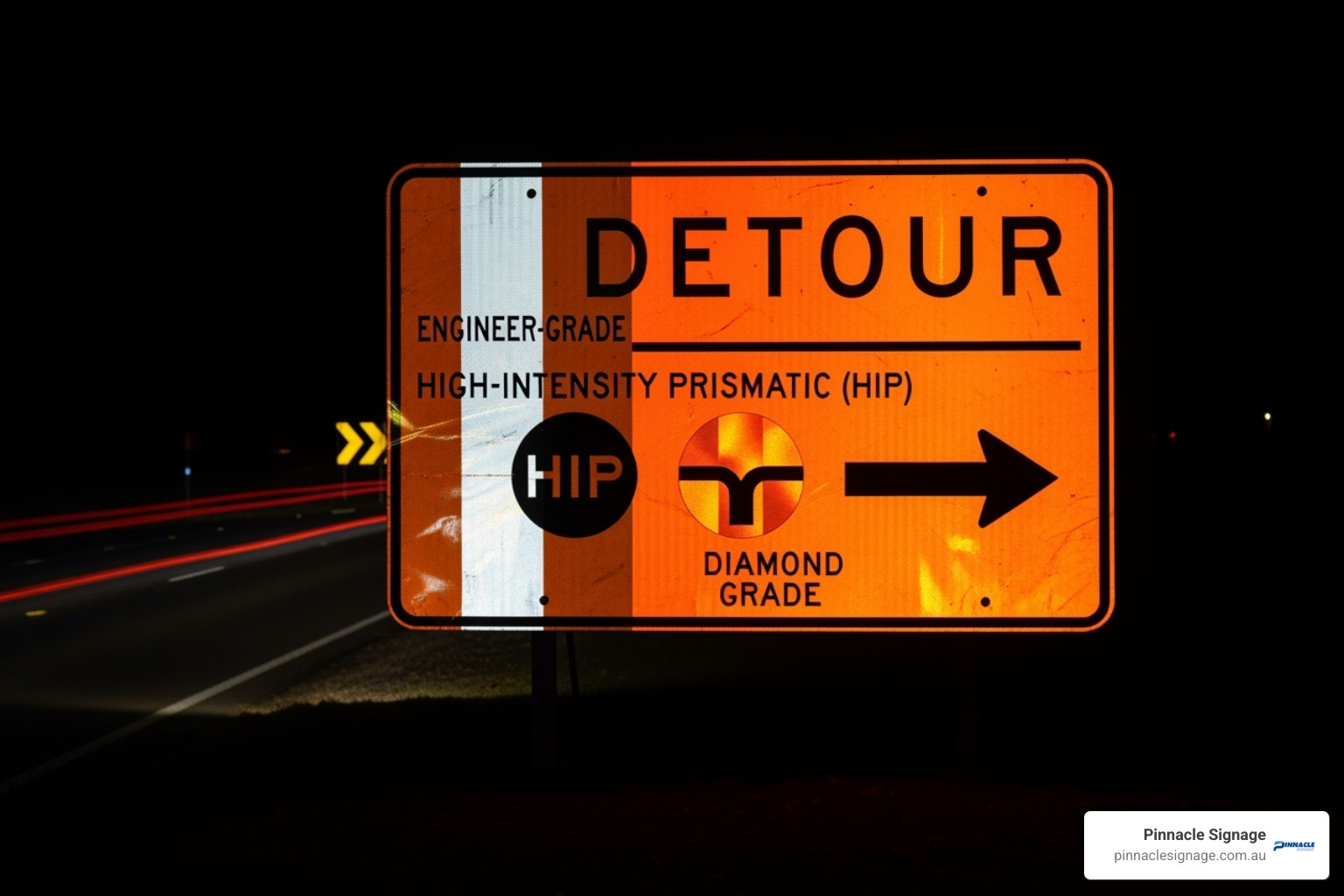
A detour sign must be visible day and night. Reflective materials capture your vehicle's headlights, making the sign glow in the dark. In Australia, temporary road signs must meet minimum reflectivity standards to ensure they are visible in all conditions. Higher grades of reflectivity are available for increased brightness, which is crucial in poor weather or complex environments.
Common Types of Detour Signs and Their Purpose
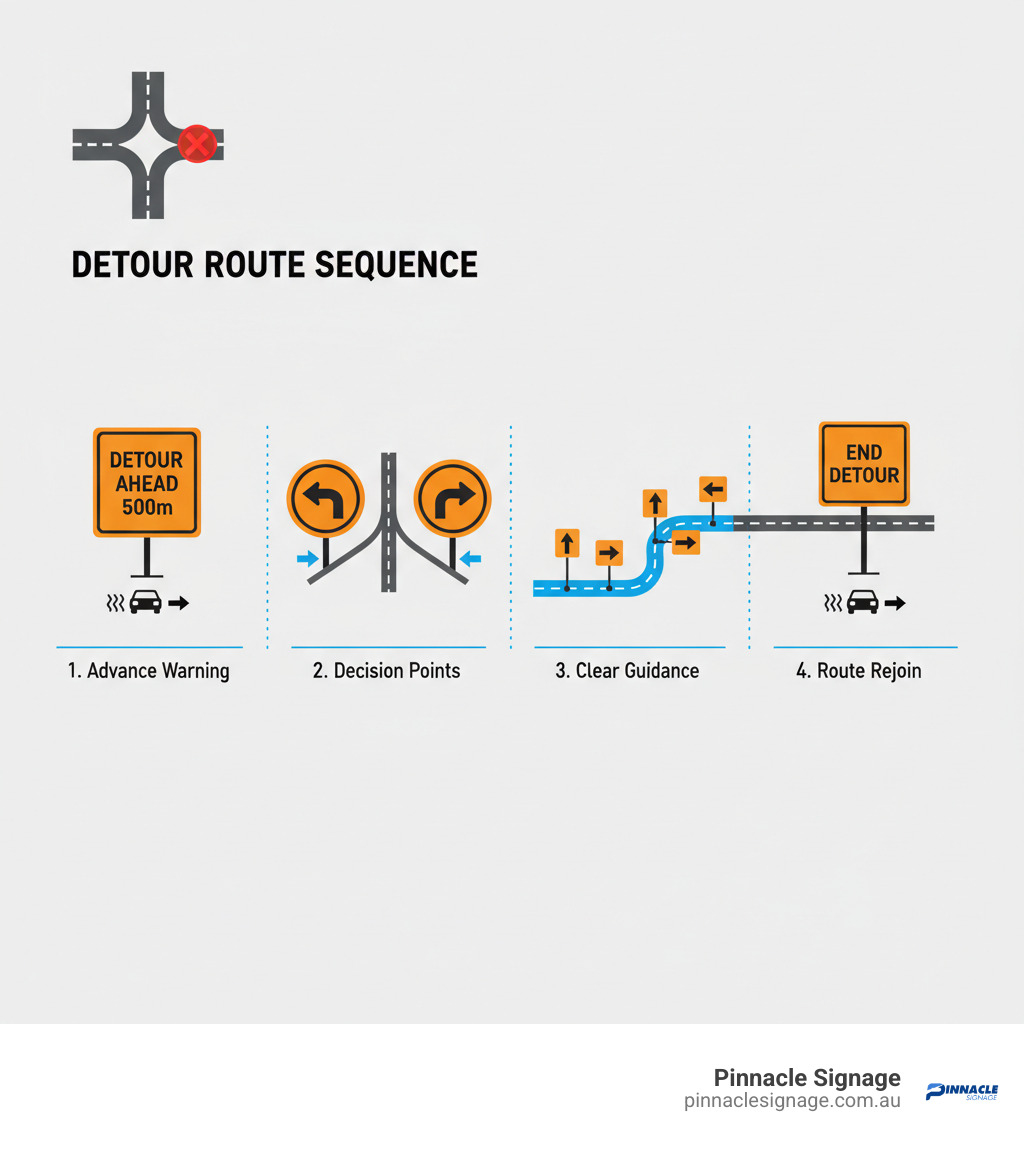
A well-planned detour uses a sequence of signs to guide you.
- Advance Warning: The first signs, like Detour Ahead or Detour 500m, give you notice to prepare for the change.
- Directional Guidance: At the diversion point and along the new route, a detour sign with an arrow (left, right, or straight) will show you which way to go at each turn.
- End of Detour: An End Detour sign lets you know when you have completed the alternative route and are rejoining the main road.
For more context on signs used in work zones, see our construction traffic signs guide.
Signs for Pedestrians, Cyclists, and Special Events
It's not just about vehicles. Pedestrians and cyclists are more vulnerable and require their own clear guidance.
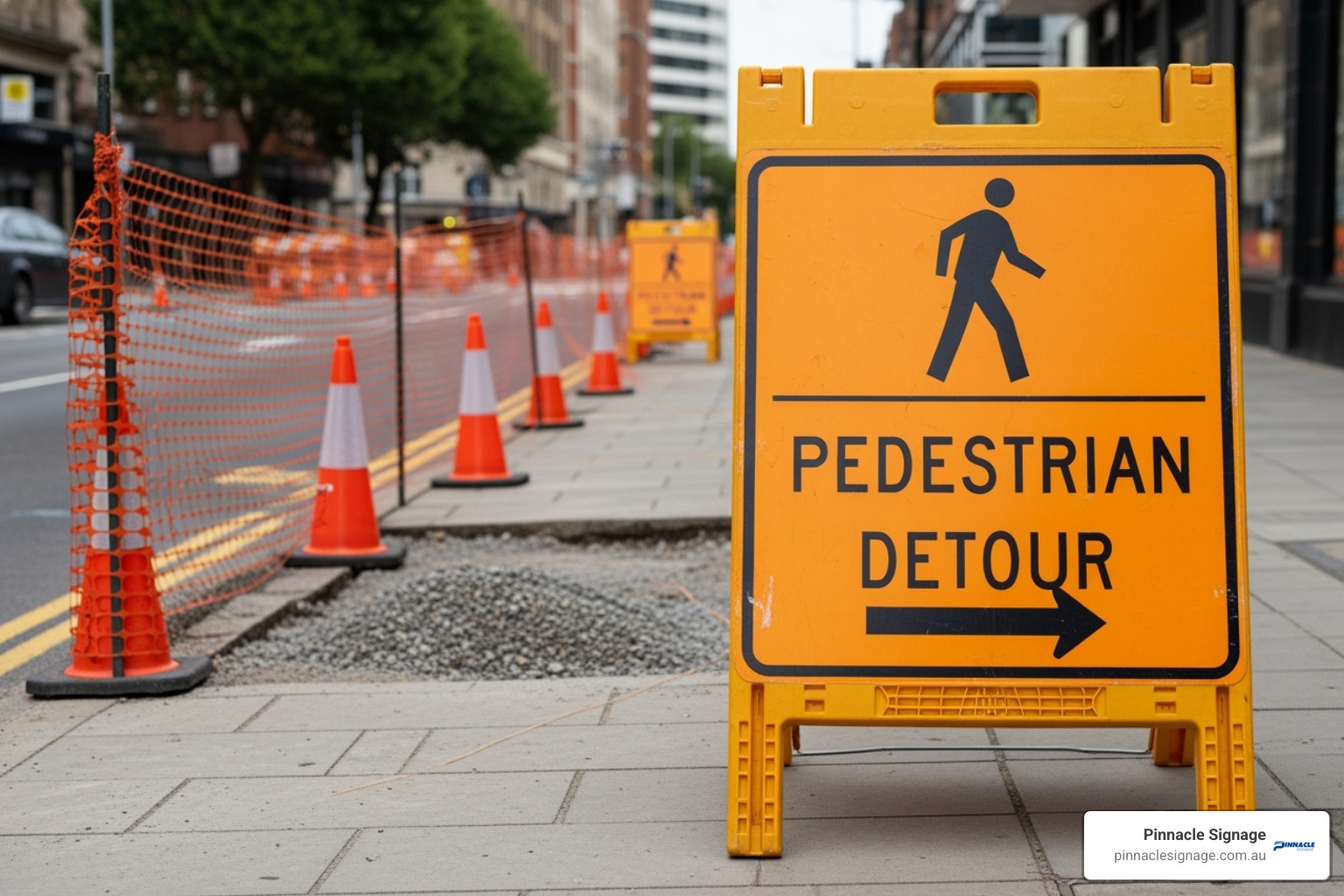
- Pedestrian and Bicycle Detours: Signs with pedestrian or bicycle symbols direct people safely around closed footpaths and hazards.
- Incident Management: Highly visible fluorescent pink signs are often used for unexpected incidents like accidents, helping first responders manage traffic safely.
- Portable Signs: For events or short-term works, portable solutions like A-frames, swing stands, and roll-up signs offer flexibility. These are easy to deploy and move as needed.
We stock a wide range of temporary road signs to suit any project.
Best Practices for Placing a Detour Sign Effectively
Strategic placement is key to a successful detour.
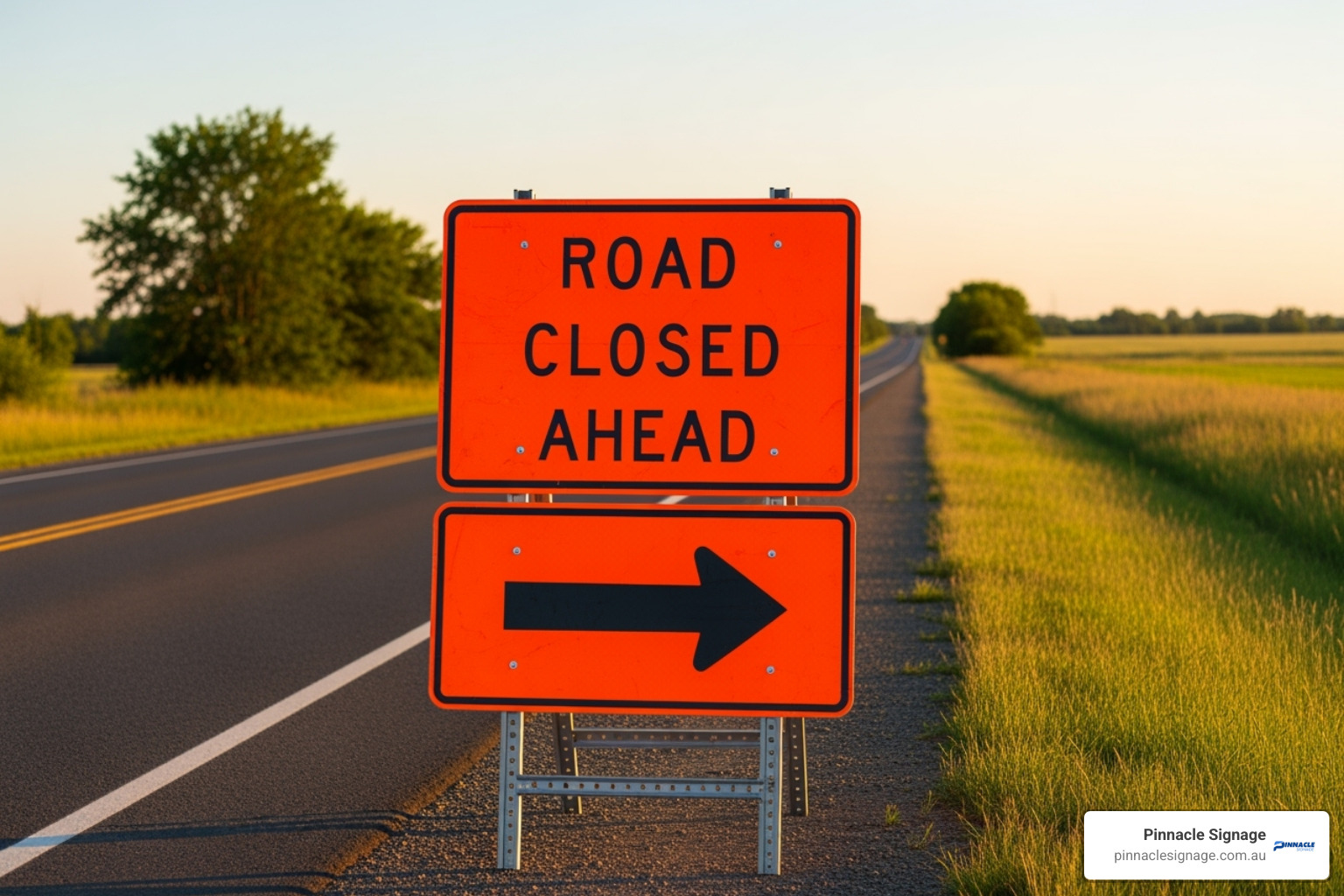
- Give Advance Warning: Place "Detour Ahead" signs far enough before the turn to give drivers time to react, especially on high-speed roads.
- Be Clear and Consistent: Use a logical sequence of signs with consistent messaging. Place directional signs at every decision point so drivers are never left guessing.
- Ensure Visibility: Position signs where they won't be blocked by trees, parked cars, or equipment. Mount them at the correct height and angle for all vehicle types.
- Maintain Your Signs: Regularly check signs for dirt or damage. Clean signs are more reflective and legible. Remove signs promptly once the detour is over to avoid confusion.
Effective placement is a critical part of road construction signage requirements.
Why Following Detour Signs is Non-Negotiable
Ignoring a detour sign is dangerous and illegal. Following them is not optional.
- Safety: Detours guide you around hazards like construction, road damage, or accident scenes. Ignoring them puts you, other drivers, and road workers at serious risk.
- Legal Consequences: In Australia, disobeying a detour sign is a traffic offence that can lead to fines and demerit points. It may also affect your insurance coverage if an accident occurs.
- Traffic Flow: Detours are planned to keep traffic moving. Ignoring them can cause congestion and delays for everyone.
For practical guidance on traffic management at worksites, see Safe Work Australia's Traffic management resources.
Common Mistakes to Avoid with Detour Signage
A successful detour plan avoids common pitfalls. Here are some mistakes to watch out for:
- Poor Timing: Placing a detour sign too close to a turn gives drivers no time to react, while placing it too far away causes them to forget. Find the right distance for the road's speed limit.
- Unclear Messages: Ambiguous or inconsistent signs frustrate drivers and create confusion. Use the same clear terminology, symbols, and colours throughout the entire route. For more on this, see our guide to road construction signage requirements.
- Lack of Maintenance: A dirty, faded, or damaged detour sign is ineffective, especially at night. Regularly inspect and clean signs to ensure they remain visible and legible.
- Forgetting to Remove Old Signs: Leaving signs up after a detour has ended erodes public trust and can lead to drivers ignoring future warnings. Remove them promptly.
- Ignoring Pedestrians and Cyclists: Always plan separate, safe detour routes for vulnerable road users. A detour for cars may be unsafe for people on foot or on bikes. Find out more about temporary road signs for all users.
- Overlooking Local Knowledge: A plan that looks good on a map might fail in reality. Consider local traffic patterns, school zones, and peak hours to avoid creating new bottlenecks.
Need Clear and Compliant Detour Signage?
When managing roadworks or an event, the quality of your detour sign is critical. A faded or poorly designed sign creates safety risks, confusion, and delays. At Pinnacle Signage, we provide high-quality, durable signage that performs reliably in tough Australian conditions.
Custom and Bulk Detour Sign Solutions
While a standard detour sign often works, some projects require a specific solution. We offer custom options to meet your exact needs, including custom text for site-specific instructions, company logos for a professional look, and custom dimensions for unique placement requirements.
Our detour signs are made in Australia from weather-resistant materials and premium reflective sheeting, ensuring they remain visible and legible day and night. Whether you need a single sign for a small job or a bulk order for a major project, we can help. We supply construction companies, civil contractors, local councils, and event managers with reliable signage at scale.
Ready to discuss your project? Contact us for custom signage solutions and our team will help you design the perfect detour sign. You can also browse our range of construction signs to see our full selection.
Fast, Australia-Wide Shipping and Local Support
We know that getting your detour sign on time is critical. We've streamlined our process to get your signs to you quickly and reliably.
Production and Shipping Times
Most items are dispatched within 48 hours of order and payment confirmation. Estimated delivery times are:
- 1 - 2 days: Sydney, ACT, Melbourne, Brisbane, Gold Coast
- 2 - 4 days: Rest of NSW, Rest of VIC
- 3 - 6 days: SA, North QLD, Perth
- 5 - 9 days: TAS, NT, WA
Delivery Details
We use courier services for most deliveries. Please provide a valid daytime delivery address, as couriers cannot deliver to PO Boxes and a signature is required. Re-delivery charges will apply if no one is available to sign. For items over 50kg, a tailgate delivery may be required for residential addresses, which is included in our standard shipping.
Free Shipping
We offer free shipping for orders over $100 across Australia on most items. For some bulky items delivered to WA, North QLD, NT, TAS, or island areas, additional shipping costs may apply. Our team will contact you if any extra charges are needed.
Warehouse Pickup
You can collect your detour sign from our warehouse at Unit 4/28 Nagle Street, East Wagga Wagga NSW. We are open 8am to 5pm, Monday to Friday.
For questions about shipping or to arrange a pickup, see our shipping and pickup details.