

Road Construction Signage Requirements 101
Why Clear Road Construction Signage is Non-Negotiable
Road construction signage serves three critical functions in every work zone: warning drivers of upcoming hazards, guiding traffic safely around construction areas, and protecting workers on site. With over 100,000 crashes occurring annually in work zones, effective signage is the first line of defence against accidents.
Key Functions of Road Construction Signage:
- Warning Signs - Alert drivers to construction activities ahead.
- Regulatory Signs - Legally enforce speed limits and traffic control measures.
- Guide Signs - Direct traffic through detours and lane changes.
- Information Signs - Communicate project details and distances.
Beyond simple communication, these signs reduce accident rates, ensure compliance with Australian road authority standards, and maintain efficient traffic flow. For project managers, quality signage delivered on time is key to preventing delays and safety incidents, creating a controlled environment where work can proceed safely and efficiently. Properly implemented signage can be the difference between a smooth project and a potential tragedy.
A Guide to Effective Road Construction Signage in Australia
When navigating the dynamic environment of a road construction zone, clear and unambiguous signage is paramount. It acts as a silent, constant communicator, translating complex situations into actionable information for drivers, pedestrians, and workers. Understanding the different types of signs and their specific roles is the first step towards creating a safer, more efficient work site.
Understanding the Main Categories of Road Work Signs
Road construction signs fall into distinct categories, each with a unique purpose and design. Together, they form a comprehensive system to guide traffic safely.
-
Warning Signs: These are the first alert for drivers, indicating potential hazards or changed road conditions ahead. They give drivers time to react and adjust their speed.
- Purpose: To warn of upcoming hazards.
- Examples: 'Roadwork Ahead', 'Men at Work', 'Loose Stones'.
- Colour Scheme: Yellow background with black symbols or text.
- Shape: Diamond.
-
Regulatory Signs: These signs inform road users of traffic laws that are legally enforceable within the work zone. Non-compliance can result in penalties.
- Purpose: To enforce specific actions like speed reductions or lane closures.
- Examples: 'Speed Limit Reduced', 'Stop', 'Lane Closed'. Handheld 'Stop/Slow' bats also fall into this category.
- Colour Scheme: Typically white, black, and red.
- Shape: Varies (e.g., circular for speed limits, octagonal for 'Stop').
-
Guide Signs: These signs provide directional information, helping drivers steer detours or altered routes around the construction area.
- Purpose: To maintain traffic flow and prevent confusion.
- Examples: 'Detour Ahead', 'Lane Diversion', 'End Roadwork'.
- Colour Scheme: Often orange with black text for temporary work zones.
- Shape: Rectangular.
By understanding these fundamental categories, construction managers can ensure they select and deploy the correct road construction signage for every situation, promoting safety and compliance. For a broader look at safety signage, explore our Ultimate Guide to Construction Safety Signage.
Common Road Construction Signage and Their Meanings
Let's look at some of the most common road construction signage and what they mean. These signs are designed to convey vital information quickly.
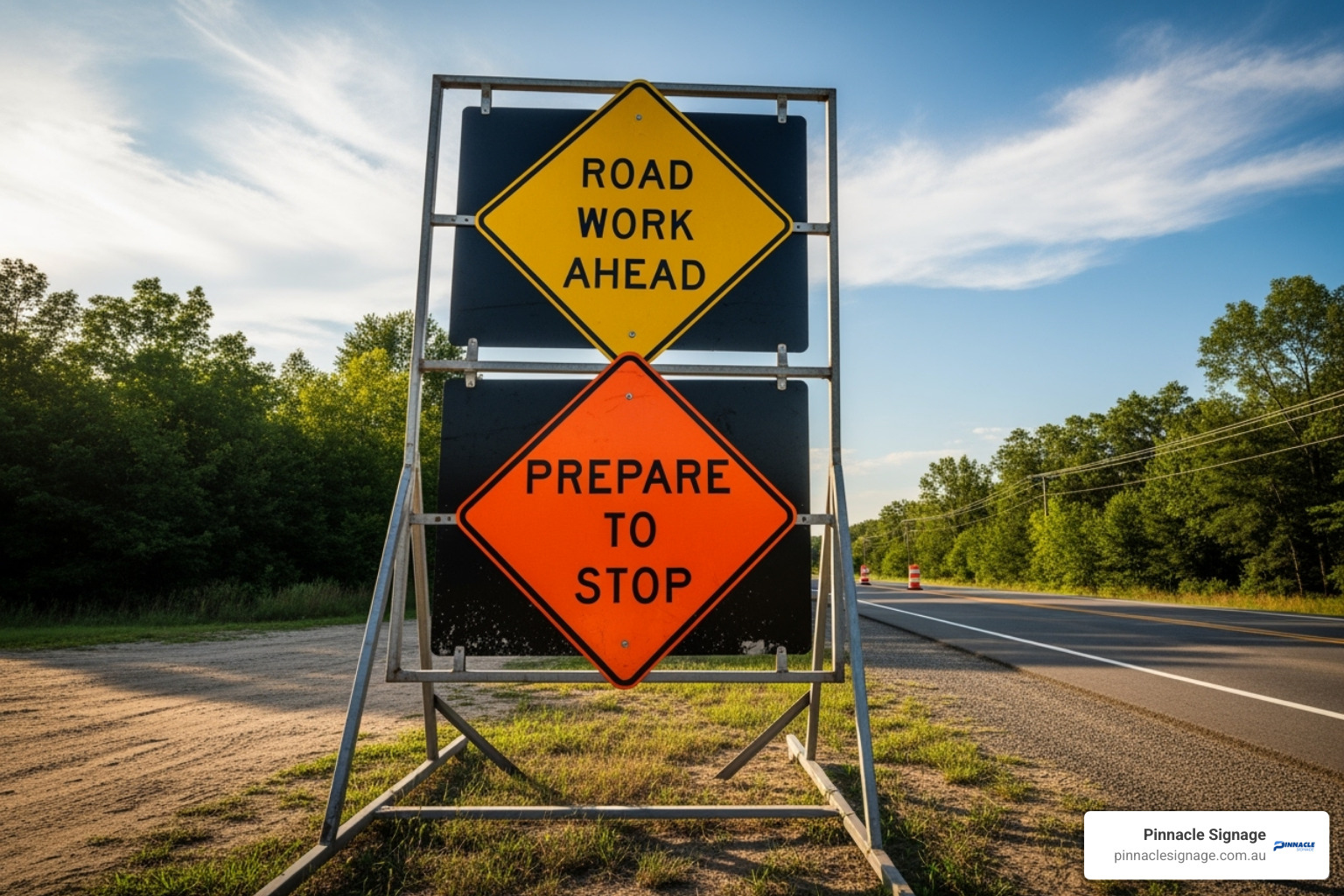
Roadwork Ahead: This is usually the first sign drivers see, warning them to prepare for changed conditions, slow down, and expect potential delays. It may specify the distance to the work zone.
Detour: When a road is closed, 'Detour' signs guide traffic along an alternative route, preventing drivers from entering unsafe areas. Arrows indicate the correct path.
Lane Closed: This sign warns that a lane is unavailable, requiring drivers to merge safely into an open lane. It often specifies which lane is closed (e.g., 'Left Lane Closed').
Merging Traffic: This sign alerts drivers that lanes are converging. It calls for caution and cooperation to ensure a smooth flow of traffic.
Traffic Controller Ahead / Prepare to Stop: These signs indicate a person is managing traffic, often with a 'Stop/Slow' bat. Drivers must be ready to slow down or stop as instructed. A traffic controller's instructions override all other signs.
Reduced Speed Limit: Speed limits are often lowered in work zones to protect workers. These regulatory signs are legally enforceable and must be obeyed to prevent accidents and fines.
End Roadwork: This sign signals the end of the construction zone, allowing normal road conditions and speed limits to resume unless otherwise posted.
Understanding these signs is vital for everyone. For more details, see these resources: Common Construction Signs and What They Mean and Construction Traffic Signs 101: What Every Driver Should Know.
Choosing the Right Materials for Your Road Construction Signage
The effectiveness of road construction signage depends heavily on its physical quality. Signs must remain visible and intact throughout a project, even in harsh Australian conditions.

When selecting signage, consider these key factors:
Durability and Weather-Resistance: Signs must withstand sun, rain, and wind without fading, warping, or tearing. Our signs are made from durable, weather-resistant materials designed for longevity on Australian construction sites.
Visibility and Reflectivity: For signs to be effective 24/7, they must be highly visible. Reflective sheeting ensures signs are illuminated by vehicle headlights at night or in low-light conditions. For critical road signs, highly reflective materials are often specified to provide superior visibility, which is crucial for preventing accidents.
Different sign types have different needs. For example, legally enforceable regulatory signs require high-visibility, durable materials to remain effective for the project's duration, while temporary warning signs need to be both sturdy and easy to reposition. Choosing the right quality ensures your signs not only meet Australian standards but also stand up to the demands of a busy work site.
Best Practices for Sign Placement and Visibility
Having the right signs is only half the battle; placing them correctly is crucial for safety. Well-placed signage helps mitigate risks like speeding and distracted driving.
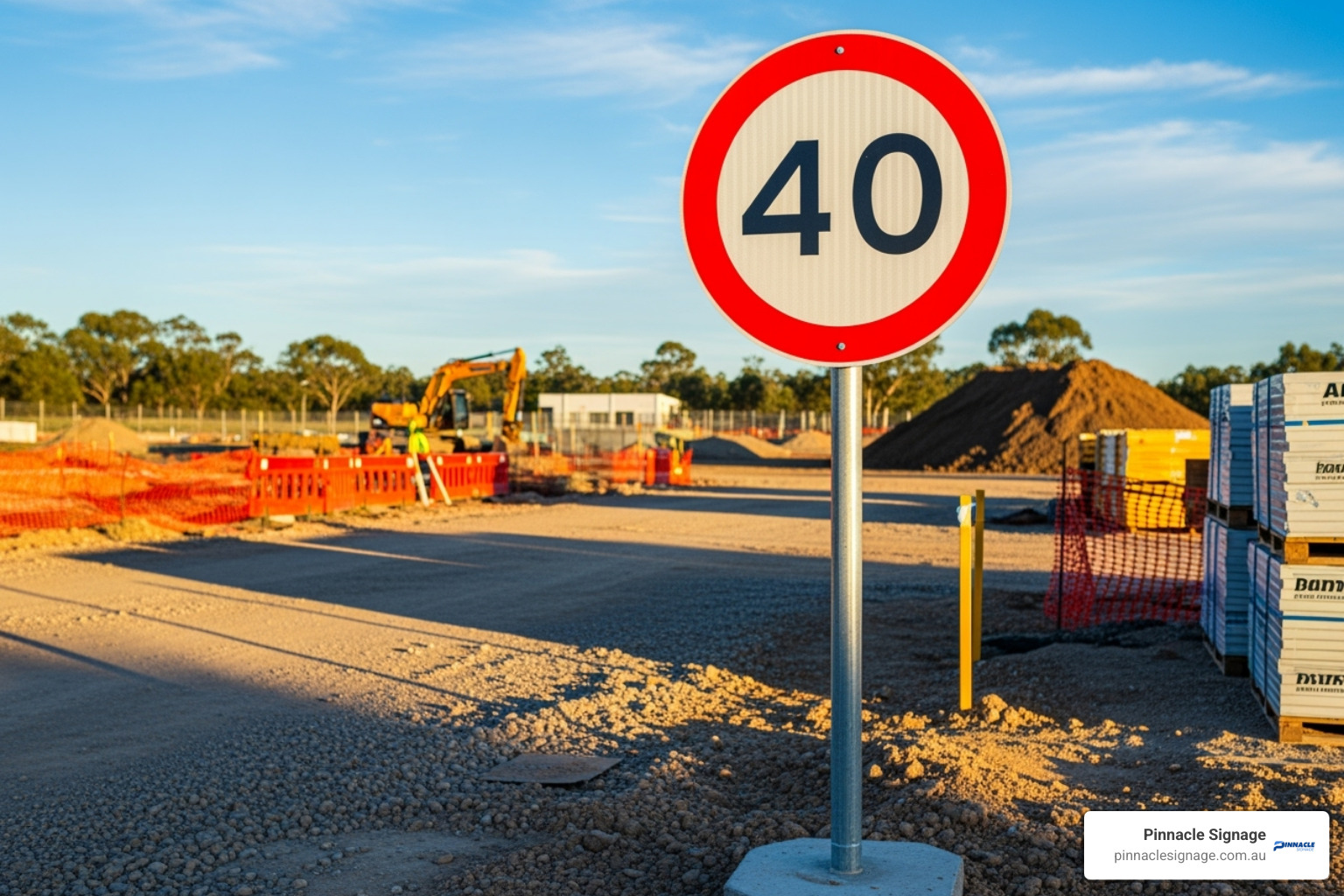
Here are key best practices for sign placement:
Advance Warning: Place signs well ahead of the work zone to give drivers ample time to react. The required distance depends on the road type and speed limit, with high-speed roads needing warnings placed much further back.
Logical Spacing: Follow Australian road authority guidelines for sign spacing. This ensures a clear, progressive sequence of information as drivers approach the work area, preventing confusion.
Clear Line of Sight: Ensure every sign is fully visible and not obstructed by trees, equipment, or other objects. Signs should be at a height and angle that makes them easy to see and read, minimising glare.
Regular Maintenance: Signs can become dirty or damaged. Regularly inspect and clean them to maintain visibility and legibility. Damaged or faded signs are ineffective and should be replaced immediately to ensure safety and compliance.
Protecting Everyone: Proper sign placement creates a safer environment for all. It guides drivers smoothly, establishes a protective buffer for workers, and directs pedestrians safely around the site.
Adhering to these practices is essential for creating a safe and efficient work zone. For more insights, refer to Taking care at roadworks and Building Site Signs: Essential Requirements for Construction Safety.
Custom Signs, Renting, and Other Practical Considerations
Beyond standard signs, many projects have unique needs that require custom solutions or flexible procurement options.
-
Benefits of Custom Signs:
- Address Site-Specific Hazards: Create signs for unique risks not covered by standard options (e.g., "Caution: Uneven Ground").
- Improve Professionalism: Incorporate your company logo or project details for better site identification.
- Communicate Unique Messages: Our custom design service allows you to create signs with any specific instruction or warning your project requires.
-
Renting vs. Purchasing Signs:
- Renting: A cost-effective choice for short-term projects. It reduces storage needs and provides access to a wide range of signs without a large upfront investment.
- Purchasing: More economical for long-term or recurring projects. It ensures immediate availability and allows for full customisation. Over time, the per-use cost of high-quality purchased signs can be lower.
Proper Sign Storage: To protect your investment, store signs correctly. They should be cleaned, kept in a dry and secure location, and stored flat or racked to prevent warping and damage. Avoid leaving signs on the roadway when not in use.
Choosing the right approach depends on your project's scale and duration. Learn more with our guide: Everything You Need to Know About Construction Site Signage.
Find the Right Signage for Your Project
When it comes to road construction signage, there's no room for compromise. Every sign plays a vital role in protecting lives, maintaining traffic flow, and keeping your project compliant with Australian standards. From that first crucial warning sign alerting drivers to upcoming work zones through to the final 'End Roadwork' marker, your signage creates the foundation of a safe, well-managed construction environment.
The difference between a chaotic work site and a smoothly operating one often comes down to having the right signs in the right places at the right time. Quality signage doesn't just tick compliance boxes - it actively prevents accidents, reduces delays, and gives everyone the confidence to steer your work zone safely.
Your Partner in Road and Site Safety
At Pinnacle Signage, we understand that when it comes to road construction signage, there is no room for compromise. Our high-quality Australian-made signs are built to meet Australian standards and withstand the harsh conditions of local work sites.
We use robust, weather-resistant materials and highly reflective sheeting where required to ensure maximum visibility and durability. This isn't just about compliance; it's about providing signs that perform reliably when it matters most.
We know project timelines are tight, which is why we offer fast Australia-wide delivery, with most items dispatched within 48 hours. Whether you need standard signs like 'Roadwork Ahead' or custom options with specific messaging and branding, we have the capability to deliver.
What sets us apart is our commitment to helping you find the right solution for your project. Investing in proper signage is an investment in safety, efficiency, and peace of mind. Choose Pinnacle Signage as a partner committed to your project's success.
Ready to get started? Explore our full range of Warning and Regulatory Signage or Contact us for a custom quote or to discuss your project needs.
Shipping & Pickup Information
Production & Shipping Times: Pinnacle Signage dispatches most items within 48 hours of receiving your order and payment confirmation. Delivery times are estimated as follows:
- 1 - 2 days: Sydney, ACT, Melbourne, Brisbane, Gold Coast
- 2 - 4 days: Rest of NSW, Rest of VIC
- 3 - 6 days: SA, North QLD, Perth
- 5 - 9 days: TAS, NT, WA
Delivery Details: We use courier services like FEDEX for most deliveries within Australia. Please provide a valid daytime delivery address, as couriers cannot deliver to PO Boxes. A signature is required upon receipt, so you must be available to accept the delivery to avoid re-delivery charges. For items over 50kg sent to a residential address, a tailgate delivery service is included in our standard shipping. Alternatively, you can collect the item from a nearby depot.
Free Shipping: Free shipping is available for orders over $100 AU Wide on most items. For some bulky items, additional shipping costs may apply for deliveries to WA, North QLD, NT, TAS, and island areas. Our staff will contact you if these charges apply to your order.
Warehouse Pickup: Pickup is available at our warehouse, located at Unit 4/28 Nagle Street, East Wagga Wagga NSW. The warehouse is open from 8am to 5pm, Monday to Friday, and is closed on weekends and public holidays.