

Understanding Prohibition Signs in the Workplace and Public Spaces
What Are Prohibition Signs and Why Are They Essential?
Prohibition Signage is designed to clearly indicate actions or behaviours that are not permitted in specific areas. These signs feature a distinctive red circle with a diagonal line crossing through a black pictogram on a white background, creating universal visual communication that transcends language barriers.
Key features of prohibition signs:
- Red circle with diagonal slash - internationally recognised symbol for "not allowed"
- Black pictogram on white background - shows the specific prohibited action
- Universal design - communicates effectively regardless of language
- Safety-focused purpose - prevents accidents, injuries, and unwanted behaviour
- Compliance tool - helps meet workplace health and safety requirements
Prohibition signs serve as your first line of defence against unsafe behaviour, operational disruptions, and potential liability issues. Whether you're managing a construction site, retail space, or office environment, these signs communicate rules instantly and effectively. They're particularly valuable in multicultural workplaces where clear visual communication eliminates confusion and ensures everyone understands the restrictions in place.
From preventing smoking near hazardous materials to restricting access to dangerous areas, Prohibition Signage protects both people and property while helping maintain compliance with Australian workplace safety standards. The simple yet powerful design ensures your message is understood immediately, reducing the risk of accidents and creating a safer environment for everyone.
Effective Prohibition Signage is one of the most cost-effective safety investments any business can make. When properly placed and clearly visible, these signs are crucial for preventing costly accidents and operational headaches.
Prohibition Signage further reading:
A Guide to Common Prohibition Signage and Their Applications
Understanding Prohibition Signage is one thing, but knowing which signs to use and where to place them makes all the difference. Let's explore the most common prohibition signs you'll encounter and how to use them effectively across different environments.
Common Examples of Prohibition Signage
The genius of Prohibition Signage lies in its simplicity. Each sign uses the same visual language—that unmistakable red circle with a diagonal line—but tells a different story through its central pictogram.
No Smoking or Vaping signs feature a crossed-out cigarette or vaping device and are everywhere for good reason. They maintain healthy environments, comply with fire safety regulations, and protect people from second-hand smoke exposure. You'll find these essential signs in public buildings, hospitals, schools, fuel stations, and most commercial premises.
No Entry – Authorised Persons Only signs typically show a crossed-out person figure, restricting access to sensitive areas. These are crucial in laboratories, server rooms, warehouses, and anywhere with hazardous materials. They protect both people and valuable assets by ensuring only qualified personnel enter high-risk zones.
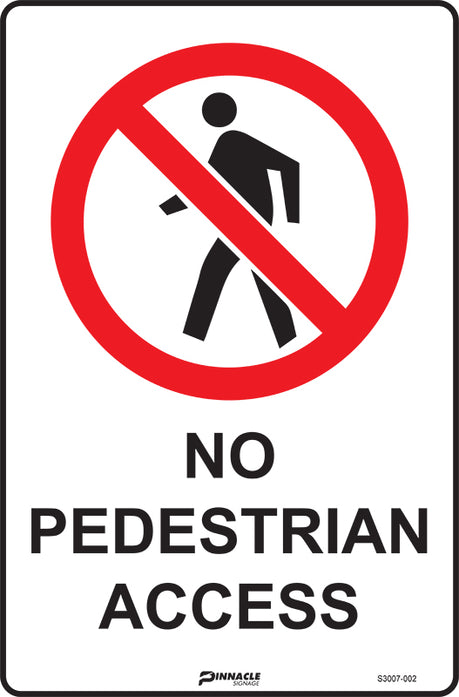
No Pedestrian Access signs display a walking figure with the prohibition symbol, preventing people from entering dangerous areas. Construction zones, private driveways, and restricted industrial areas rely on these signs to avoid injuries and potential liability issues.
No Food or Drink signs show crossed-out food items or cups, maintaining cleanliness standards in libraries, laboratories, healthcare facilities, and manufacturing zones where contamination could cause serious problems.
No Mobile Phones signs feature a crossed-out phone symbol, essential where phone usage creates safety hazards near sensitive machinery, causes interference in hospitals, or becomes a distraction in schools and secure facilities.
No Parking signs with the familiar crossed-out 'P' symbol manage traffic flow on roadsides, private car parks, and loading zones, ensuring clear access for emergency services and preventing obstruction.
Where to Use Prohibition Signage for Maximum Impact
Getting your Prohibition Signage seen and followed isn't just about having the right sign—it's about putting it in the right place at the right height.
Workplaces need prohibition signs to enforce safety protocols, from 'No Unauthorised Entry' signs protecting machinery areas to 'Do Not Operate' warnings on equipment under maintenance. These signs maintain order and prevent costly accidents.
Construction sites are high-risk environments where signs like 'No Pedestrian Access' or 'No Entry Beyond This Point' literally save lives by keeping workers and the public away from dangerous zones.
Public spaces including parks, shopping centres, and transport hubs use signs like 'No Littering', 'No Smoking', or 'No Dogs Allowed' to maintain cleanliness, safety, and respect for shared areas.
Hospitals and healthcare facilities depend on signs such as 'No Mobile Phones', 'No Food or Drink', or 'No Entry' for restricted wards to ensure patient care, maintain hygiene standards, and protect privacy.
Schools use prohibition signs to manage student behaviour and prevent access to sensitive areas, with signs like 'No Access' to chemical storage or 'No Running' in corridors creating safer learning environments.
Hazardous areas with chemicals, high voltage, or dangerous machinery require signs like 'Do Not Touch' or 'No Open Flames' as non-negotiable safety measures preventing severe injury or damage.
Correct placement means positioning signs at eye level and at all primary entry points to restricted areas. This ensures maximum visibility when people need to see them most.
Common mistakes include placing signs where they're obscured by objects or poor lighting, creating 'sign blindness' with too many signs in one area, or inconsistent placement that confuses people about where to look for important safety information.
For more insights on effective safety communication, explore our guide: Workplace Safety Signs That Speak Louder Than Words.
Choosing the Right Materials for Durability and Visibility
Your Prohibition Signage is only as good as the material it's made from. Choose wrong, and you'll be replacing faded, cracked signs within months instead of years.
Aluminium stands out as the champion for outdoor applications. Its exceptional durability and resistance to rust and corrosion make it perfect for construction sites, car parks, and industrial environments. Heavy-duty aluminium signs maintain their professional appearance even after years of harsh Australian weather conditions.
Polypropylene offers versatility as a lightweight yet robust plastic suitable for both indoor and outdoor use. Its resistance to moisture and many chemicals makes it ideal for laboratories, food preparation areas, and general public spaces, often providing a more cost-effective solution while maintaining good durability.
Self-adhesive vinyl provides flexibility and ease of installation when applying directly to smooth surfaces like walls, doors, or machinery. Perfect for indoor Prohibition Signage or temporary outdoor applications, though it may not withstand extreme outdoor conditions as well as rigid materials.
Reflective materials become essential for signs that need visibility in low light conditions or at night. These materials bounce light back to the source, making signs highly visible when illuminated by headlights or torches—critical for safety in areas with night-time operations or limited natural light.
Common mistakes include using indoor-grade materials outdoors where UV exposure and weather quickly cause degradation, ignoring visibility needs by not choosing reflective materials for night-time areas, and compromising on quality with cheaper materials that require frequent replacement, ultimately costing more in the long run.
The Benefits of Clear Prohibitive Signs for Your Business
Investing in clear, well-placed Prohibition Signage delivers significant benefits that extend far beyond simple rule enforcement.
Safety culture flourishes when rules are clearly communicated through visible signs. This demonstrates management's commitment to safety, embedding a proactive culture where employees and visitors understand expectations and contribute to a safer environment, ultimately improving overall employee well-being.
Liability reduction occurs when you explicitly prohibit dangerous behaviours or restrict access to hazardous areas. Clear signage helps demonstrate that you took reasonable steps to prevent harm, significantly reducing liability when accidents occur due to disregarded warnings.
Operational efficiency improves through clear rules that prevent disruptions. 'No Parking' signs ensure clear access for deliveries, while 'No Entry' signs streamline workflows by preventing unauthorised personnel from entering operational zones, leading to smoother operations and increased productivity.
Risk management benefits from Prohibition Signage as a fundamental component of robust safety strategies. These signs proactively address potential hazards by preventing actions that could lead to accidents, injuries, or property damage.
Protecting people and property remains the primary benefit, actively preventing accidents by making employees and visitors aware of prohibited actions, safeguarding them from harm and preventing damage to equipment or facilities.
Compliance, Customisation, and Finding the Right Solution
Ensuring your Prohibition Signage is compliant and custom to your specific needs is crucial for its effectiveness. At Pinnacle Signage, we're here to help you steer these important considerations.
Ensuring Your Signage is Clear and Compliant
The effectiveness of Prohibition Signage comes from its consistent, universally understood design. To ensure your signs are instantly recognisable, they should follow the established format: the familiar red circle and diagonal line over a black pictogram on a white background. This consistency is key to eliminating confusion and ensuring everyone, regardless of language, understands the message.
Using compliant signage is a key part of providing a safe work environment and meeting your work health and safety (WHS) obligations. Non-standard or confusing signs can be ineffective and may fail to prevent accidents.
Common mistakes to avoid:
- Using non-standard designs: Creating signs with different colours or shapes that don't match the recognised format can cause them to be ignored or misinterpreted.
- Outdated signage: Failing to update signs when workplace hazards or rules change.
- Poor placement: Even a compliant sign is useless if it's hidden, too high, or not at the entrance to the restricted area.
Find the Right Signs for Your Site
Every workplace and public space has its unique set of rules and specific risks. That's why customisation is key when it comes to Prohibition Signage. While standard signs cover common scenarios, sometimes you need something custom to your exact requirements.
We understand that you might need to prohibit a very specific activity or communicate a unique rule that isn't covered by off-the-shelf options. Perhaps it's 'No Entry for Forklifts Beyond This Point' in a specific warehouse aisle, or 'No Playing on Equipment' in a unique recreational area. Custom Prohibition Signage allows you to address these specific needs effectively.
At Pinnacle Signage, we make creating custom Prohibition Signage simple. We can help you design signs that feature your specific text and graphics, ensuring your unique message is conveyed clearly and effectively. Our customisation options allow you to choose from various sizes, materials, and even upload your own images to create the perfect sign for your situation. This means you can warn of specific risks, discourage particular behaviours, or guide visitors precisely as needed.
We pride ourselves on offering high-quality, durable signage products for various applications, with a focus on customisable options and fast turnaround. Operating from Wagga Wagga NSW, we offer Australia-wide shipping, making it easy for businesses across the country to get the signs they need, quickly and reliably. Our commitment is to premium products, excellent customer service, and reliable delivery.
Whether you need a single custom sign or a bulk order for a large facility, we're here to help you get it right. Our team is ready to assist you in designing Prohibition Signage that not only meets compliance requirements but also effectively communicates your rules and improves safety on your premises.
Take the first step towards a safer, more compliant environment. Explore our range of Prohibition Signage and customisation options today.
Making your workplace safe and secure with high-quality safety signage