

Walk This Way: Understanding All Road Signs for Pedestrians
Why Understanding Pedestrian Signage is Non-Negotiable
Road signs for pedestrians are critical safety tools that communicate essential information to walkers and drivers across Australia. Understanding these signs isn't just about following rules, it's about preventing accidents and protecting lives in streets, work zones, and public spaces.
Types of Road Signs for Pedestrians:
- Regulatory Signs - Show what pedestrians must or must not do (e.g., white walking symbols, red prohibition circles).
- Warning Signs - Alert to potential hazards ahead (e.g., diamond-shaped, yellow with black symbols).
- Guidance Signs - Provide direction and information (e.g., green directional signs, temporary orange detour signs).
- Temporary Signs - Manage pedestrian traffic during construction or special events (e.g., orange background).
The stakes are high when signage is unclear or ignored. Quality signage with proper placement and high-visibility materials significantly reduces risks by clearly communicating hazards and safe crossing points to both pedestrians and drivers.
For anyone managing a construction site, public infrastructure, or commercial property, providing compliant and durable pedestrian signage is essential for legal compliance and public safety. At Pinnacle Signage, we help businesses across Australia implement signage that meets Australian Standards, delivering the durability and visibility that saves lives.
A Comprehensive Guide to Road Signs for Pedestrians
When you're walking through Australian streets, road signs for pedestrians are your silent guardians, constantly communicating vital information to keep you safe. These signs aren't just suggestions; they're carefully designed communication tools that work around the clock to protect both walkers and drivers. Let's explore what each type means for your safety.
Regulatory Signs: The Rules of the Road for Walking
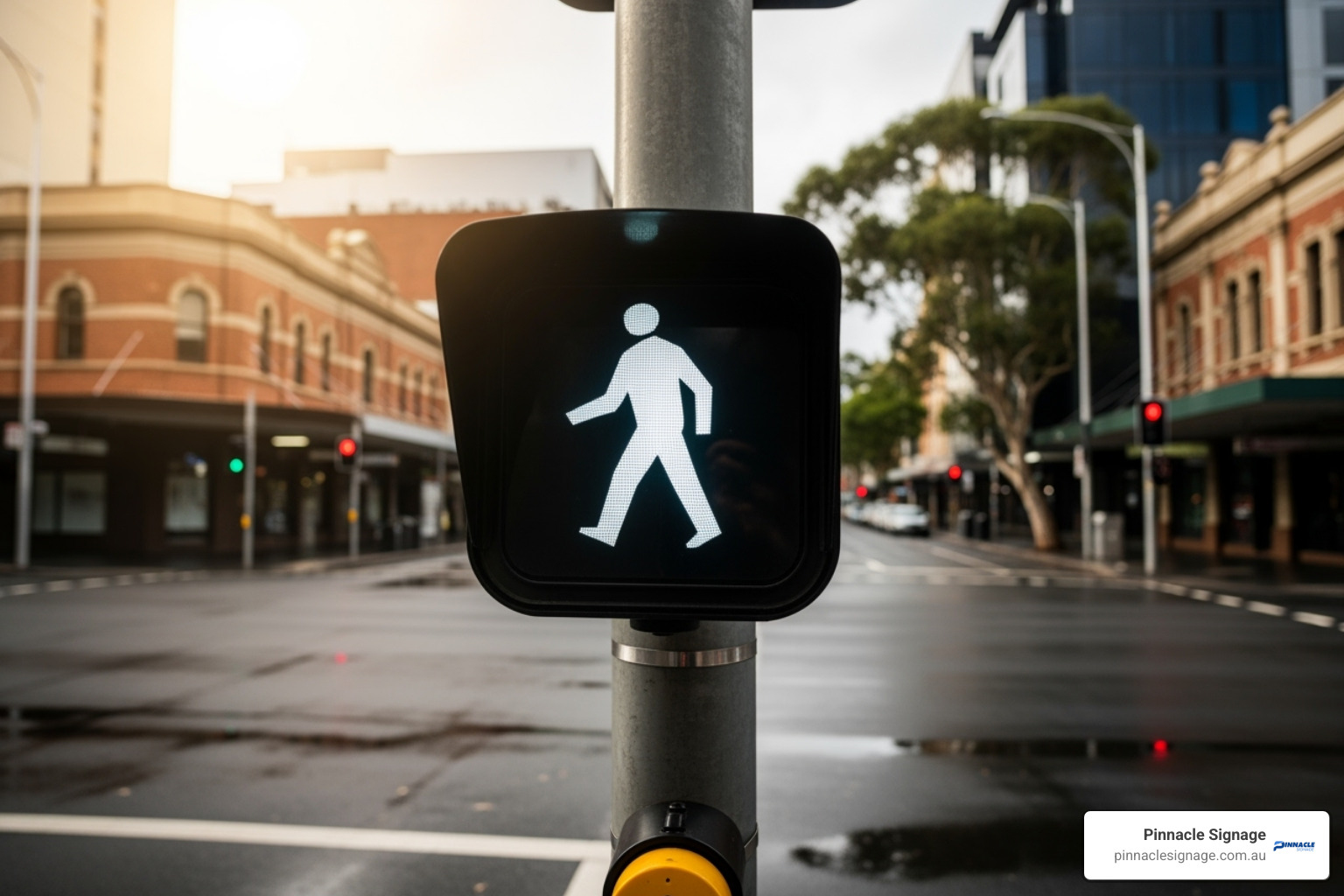
Regulatory signs are legally enforceable rules that tell you what you must or must not do. Ignoring them can lead to fines and serious safety risks.
- Pedestrian signals are your most direct instruction. The white walking symbol means it's safe to cross, and you have right-of-way. When the flashing or steady orange hand symbol appears, do not start crossing. If you are already in the crosswalk, finish crossing quickly.
- Prohibitive signs, often a red circle with a line through it, indicate forbidden actions. A common example is the "No Pedestrians Allowed" sign, used on freeways or in industrial zones.
- Mandatory signs instruct you to perform an action, such as "Use Pedestrian Underpass" or "Keep Right" on shared paths. These are legal requirements.
At intersections without pedestrian signals, you can cross when facing a green light, but always be cautious of turning vehicles. For a broader look at how these signs fit into Australia's road safety system, check out our simple guide to road and safety signs. You'll also find detailed information from Transport for NSW about regulatory sign requirements.
Warning Signs: Staying Alert to Potential Hazards
Warning signs act as an early alert system for potential dangers ahead. They don't set rules but encourage caution. In Australia, these signs are easily recognised by their diamond shape with a yellow background and black symbols, designed for high visibility from a distance.
Common examples include:
- Pedestrian Crossing Ahead: This sign tells drivers a pedestrian crossing is coming up. For you, the walker, it means "hey, a safe spot to cross is just ahead!"
- Children Crossing: Often near schools or parks, this sign warns everyone: children are likely present. Drivers must be cautious, and pedestrians should stay extra alert. Explore Children Crossing signs.
- Shared Zone: In a shared zone, cars and people mix. Drivers must give way to you, but don't switch off! Stay alert, because you're sharing the road. Find out more about Shared Zone signs.
- Slippery When Wet: Rain makes things slick. This sign is a simple warning: surfaces can get slippery. Watch your step, whether you're walking or driving.
These signs reduce accidents by giving everyone advance notice of changing conditions. Our caution signage range includes various warning signs to alert people to hazards. For more on this topic, explore our guide on Road Hazard Signs Explained: Know Before You Go.
Decoding Common Pedestrian Crossing Signs
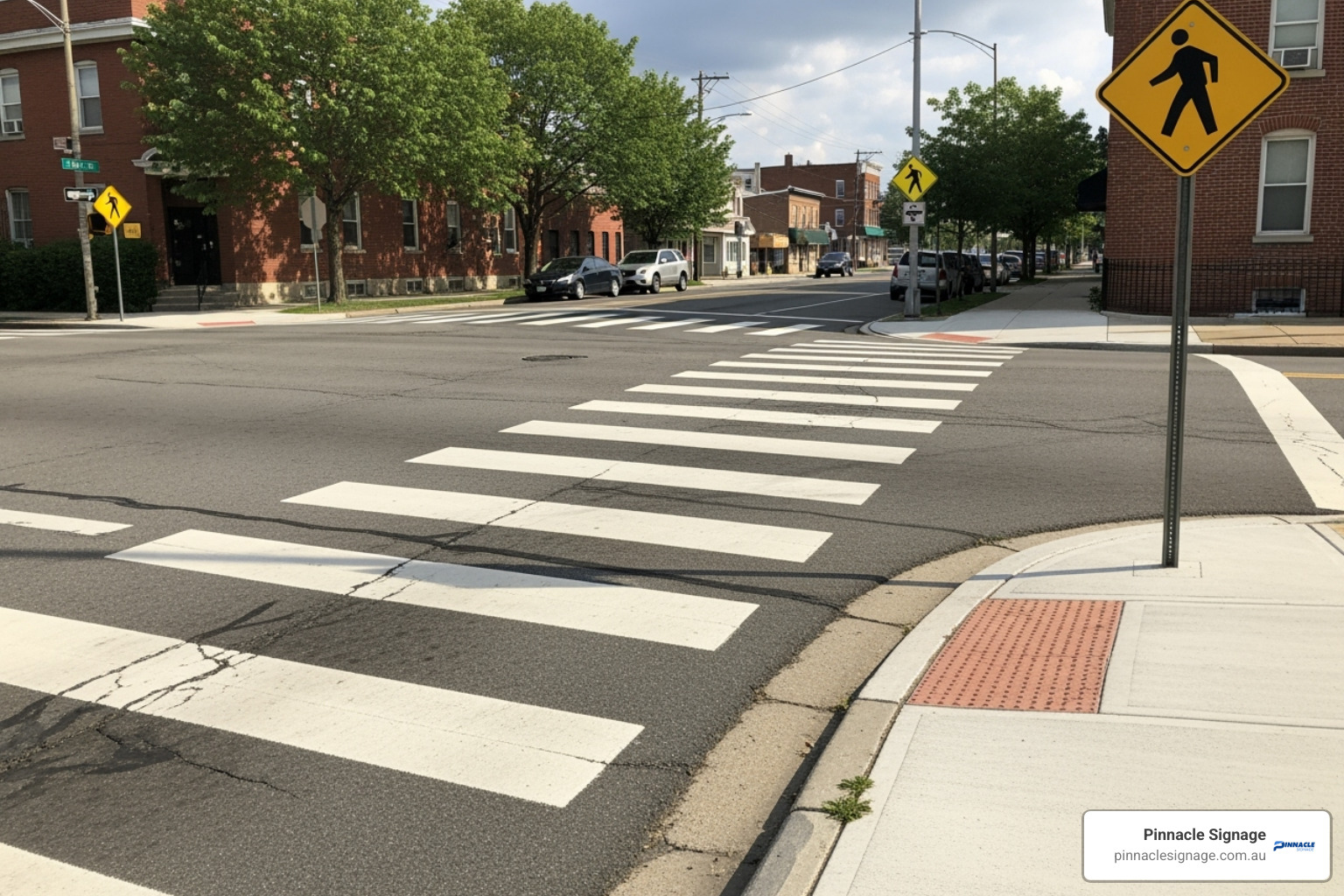
Pedestrian crossing signs guide pedestrians to safe crossing points while warning drivers of their presence.
- Zebra crossings are marked by thick white stripes on the road and accompanying signs. Once a pedestrian steps onto a zebra crossing, they have the right-of-way, and drivers must stop.
- Signalised intersections use traffic lights and pedestrian signals (often with push-buttons) to coordinate movement safely, giving pedestrians dedicated time to cross.
- Pedestrian crossovers are specially marked crossings where drivers are legally required to stop for pedestrians, often featuring prominent signs and flashing lights.
The effectiveness of these signs depends on their quality. High-grade reflective materials are crucial for 24-hour visibility in all weather. Our pedestrian crossing signs use top-grade substrates and tough coatings designed for Australia's harsh climate, ensuring they perform their life-saving function when it matters most. For official rules, refer to the pedestrian crossing guidelines in NSW.
Temporary Road Signs for Pedestrians in Work Zones
Construction and road maintenance create temporary hazards that require special road signs for pedestrians. Their bright orange colour with black text or symbols instantly signals unusual conditions and demands extra caution.
These signs serve to:
- Warn of temporary hazards like uneven surfaces or moving machinery.
- Indicate safe alternative routes around work sites.
- Protect workers from pedestrian interference.
Common temporary signs include "Pedestrian Detour," "Footpath Closed," "Workers Ahead," and "Uneven Surface." They prevent pedestrians from entering dangerous areas while providing safe passage.
Temporary signs must be durable enough to withstand harsh weather while remaining highly visible. Our range includes Multi Message Signage, Boxed Edge Signage, and Swing Stands designed for temporary traffic management. Learn more in our guide: Road Construction Traffic Signs Explained.
Sign Quality, Compliance, and Legal Consequences
For road signs for pedestrians, quality and compliance are non-negotiable. In Australia, signs must adhere to Australian Standards to function reliably and legally.
- Quality Materials: Signs must be made from robust materials like aluminium or galvanised steel to withstand harsh weather. Premium inks and tough coatings ensure a long performance life, reducing fading and maintenance costs.
- Reflectivity: To work 24/7, signs require high-grade reflectivity. Different grades of material offer various levels of visibility, with the highest grades being ideal for high-risk areas.
- Compliance: Using compliant signs is a legal requirement. For business and property managers, non-compliant, damaged, or poorly placed signage can lead to significant liability if an accident occurs.
Legal consequences for ignoring signs are severe for everyone. Pedestrians can be fined, while drivers face heavy penalties for failing to yield. Investing in high-quality, compliant signage is not just about safety—it's about protecting your organisation legally.
Our Caution Signage and Warning & Regulatory Signage are manufactured to meet these crucial compliance requirements.
The Future of Safety: Smart Signage and Technology
Technology is making road signs for pedestrians more noticeable and effective. These innovations improve awareness and reduce accidents through real-time communication.
- LED flashing signs draw immediate attention to critical warnings, especially at dawn, dusk, or in bad weather. They can be activated as pedestrians approach, alerting drivers more effectively than static signs.
- Solar-powered signs make advanced systems like LED signs practical and eco-friendly, allowing installation in remote or off-grid locations based on need, not power access.
- Digital and variable message signs can display real-time information, such as warnings about temporary hazards or changes to walking paths.
These smart technologies offer improved visibility and awareness, making signs more noticeable and informative. This directly contributes to increased safety and accident reduction. Our illuminated signage options demonstrate our commitment to incorporating cutting-edge technology for improved pedestrian safety.
Common Mistakes to Avoid with Pedestrian Signage
Even with the best intentions, mistakes in pedestrian signage can compromise safety. Avoiding these common pitfalls is key to creating a safe environment.
- Incorrect sign placement: A sign is useless if it's obscured by obstacles, mounted too high, or placed where drivers and pedestrians can't see it in time to react. Ensure clear sightlines and adequate response time.
- Using non-compliant signs: Signs that don't meet Australian Standards for colour, shape, and reflectivity can cause confusion and create legal liability if an incident occurs.
- Poor visibility: Choosing signs without adequate reflective material makes them invisible at night or in poor weather. In high-risk areas, high-grade reflective or illuminated signs are essential.
- Faded or damaged signs: Sun, weather, and wear can make signs unreadable. Illegible signs are dangerous. Regular inspections and timely replacement are crucial maintenance tasks.
- Overlooking temporary signage needs: During construction, clear detour signs are critical. Failing to guide pedestrians safely around altered paths puts them at serious risk.
- Not updating signs after site changes: If a crossing is moved or a path is altered, the signage must be updated immediately to reflect the new layout and prevent confusion.
These mistakes are preventable with a proper strategy and quality materials. Our range of warning and regulatory signage is designed to help you avoid these issues with compliant and durable solutions.
Ensure Pedestrian Safety with Compliant Signage
The safety of our communities relies on a shared responsibility. Pedestrians must be aware and obey signs, drivers must remain vigilant, and authorities must provide clear, high-quality signage. The clarity, durability, and visibility of road signs for pedestrians are non-negotiable for preventing accidents.
At Pinnacle Signage, we are a trusted partner for Australian businesses seeking effective and reliable signage. We understand the challenges of our climate and the local regulatory landscape. That's why our solutions are built on key principles:
- Quality and Durability: We use the finest materials, super-tough coatings, and premium inks to ensure our signs withstand Australia's harsh conditions.
- Compliance as Standard: Every sign meets or exceeds relevant Australian Standards, providing you with effective safety tools and legal peace of mind.
- Australian Made and Owned: We support local industry with 100% Australian manufacturing, ensuring rigorous quality control.
- Customer-Focused Solutions: We offer extensive customisation and personalised service to help you find the perfect signage for your specific needs.
Whether you need standard warning signs, custom crossing solutions, or advanced illuminated options, we have the expertise to keep people safe.
Explore our comprehensive range of warning and regulatory signage to find the right solution for your site. For custom requirements, our team is ready to help.
Ready to discuss your specific needs? Contact us to talk about custom signage options or get expert advice on the best solutions for your situation.
Shipping & Pick Up
For most deliveries within Australia, we use courier services such as FEDEX; please note that couriers cannot deliver to PO Boxes, so provide a valid daytime delivery address.
To ensure safe delivery, a signature is required upon receipt. You must be available to accept courier deliveries; re-delivery charges will apply if you are not present. Include a daytime phone number with your shipping details if we need to contact you about your delivery.
For items weighing over 50kg, a tailgate delivery is usually required for residential addresses. This service is included in our standard shipping. Alternatively, you can choose to pick up the item from a nearby depot.
Pickup is available at our warehouse, located at Unit 4/28 Nagle Street, East Wagga Wagga NSW. The warehouse is open from 8am to 5pm Monday through Friday. We are closed on weekends and public holidays.
Free Shipping
Free shipping is available for orders over $100 AU Wide. Free shipping applies to most items on the site. However, some bulky items additional shipping costs will apply for deliveries to WA, North QLD, NT, TAS, and island areas. Our staff will reach out to you after your order if these charges apply.
Shipping & Production Time
Most items are ready for dispatch or pickup within 2-4 business days of receiving your order and payment confirmation. Delivery times are estimated as follows:
- 1 - 2 days: Sydney, ACT, Melbourne, Brisbane, Gold Coast
- 2 - 4 days: Rest of NSW, Rest of VIC
- 3 - 6 days: SA, North QLD, Perth
- 5 - 9 days: TAS, NT, WA