

Why You Should Never Ignore a Danger Asbestos Keep Out Sign
Why Asbestos Danger Signs Are Crucial
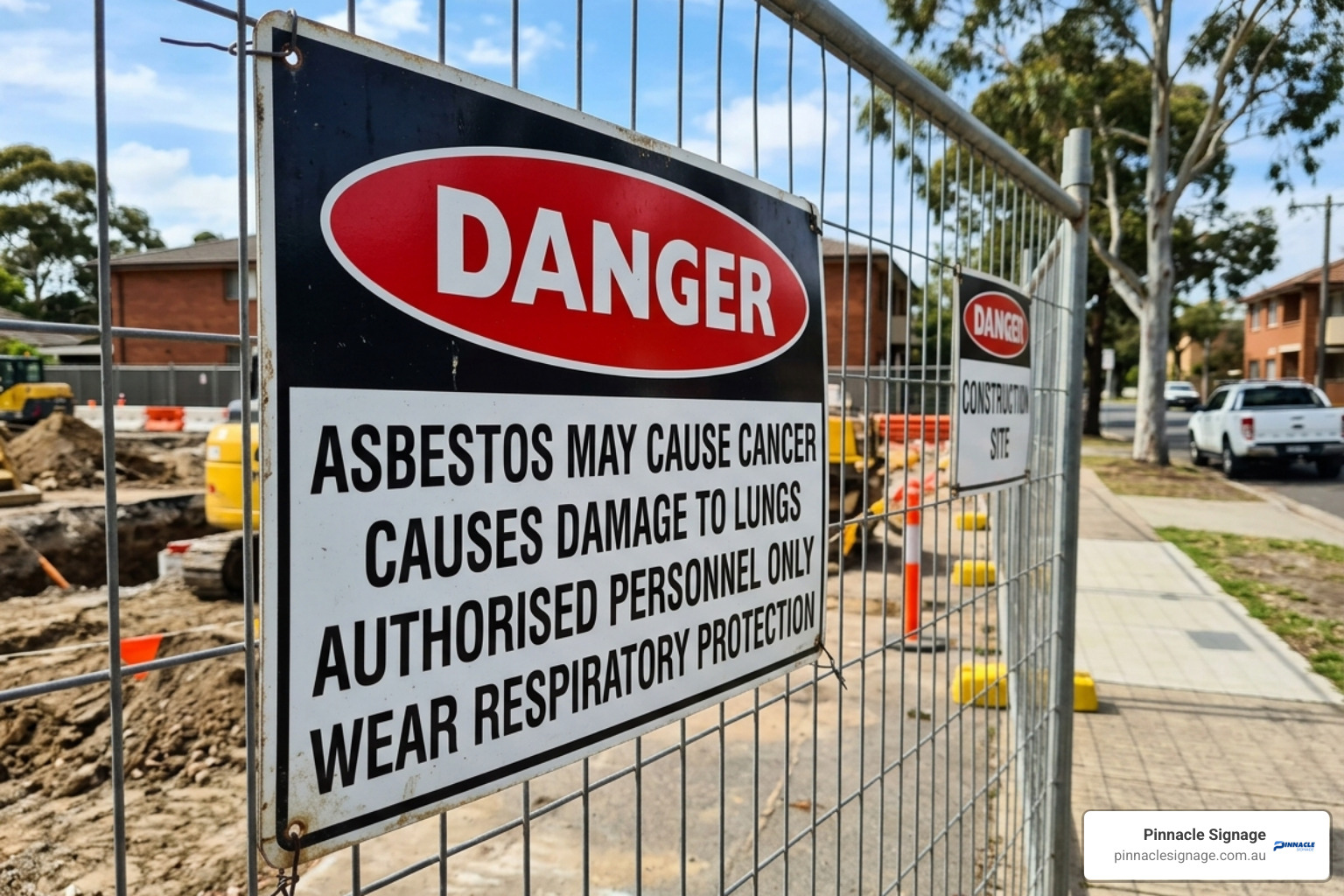
Asbestos danger signs are non-negotiable safety warnings that protect lives from an invisible yet deadly threat. These signs are meticulously designed to meet Australian Standard AS 1319, featuring the word 'DANGER' in white on a striking red oval against a black background. They explicitly warn of severe health risks, typically stating "ASBESTOS MAY CAUSE CANCER" and "CAUSES DAMAGE TO LUNGS," often including directives like "AUTHORISED PERSONNEL ONLY" and "WEAR RESPIRATORY PROTECTION." Displaying these signs clearly is paramount for preventing exposure and ensuring workplace safety.
Asbestos, a naturally occurring mineral once lauded for its heat resistance and strength, is now infamous for the devastating health issues it causes. When its microscopic fibres become airborne and are inhaled, they can lodge in the lungs, leading to chronic and often fatal diseases that may not appear until decades after exposure. This long latency period means that the dangers of past exposure are still very real, particularly in older buildings and infrastructure across Australia.
For facilities managers, construction supervisors, and anyone responsible for safety, understanding these hazards and ensuring proper hazard communication is not just a regulatory requirement; it's a moral imperative. Effective signage acts as a critical first line of defence, alerting individuals to potential asbestos-containing materials and guiding them on necessary precautions.
I'm Doug Lindqvist, General Manager at Pinnacle Signage. My years in safety and industrial supply highlighted the critical role of clear, compliant asbestos danger signs in protecting workers and the public. This article will delve into why these signs are so vital, what they signify, and how to use them effectively to safeguard health and maintain compliance.
Further safety resources from Pinnacle Signage:
Understanding the Health Risks Behind Asbestos Danger Signs
When we see a sign that warns of a "Cancer and Lung Disease Hazard," it is not there for decoration. The biological reality of asbestos exposure is sobering. Asbestosis is a chronic lung disease caused specifically by inhaling asbestos fibres. These tiny, needle-like fibres are so small they can bypass the body's natural filters and lodge deep within the alveoli - the tiny air sacs in your lungs where oxygen exchange happens.
Once these fibres are stuck, the body cannot easily remove them. Over time, they cause irritation and inflammation, leading to permanent lung scarring. This process is detailed further by Safe Work Australia, which provides comprehensive resources on the health impacts of asbestos and how it leads to conditions like pulmonary fibrosis.
The most terrifying aspect of asbestos is the latency period. Symptoms typically do not appear until 10 to 40 years after the initial exposure. This means a worker exposed on a job site in the 1980s might only start feeling the effects today. Common symptoms include:
- Shortness of breath, initially only during physical activity but eventually even at rest.
- A persistent, dry cough.
- Chest tightness or pain.
- "Clubbing" of the fingers and toes, where the tips appear wider or more rounded than usual.
- Dry, crackling sounds in the lungs during inhalation.
Beyond asbestosis, Healthdirect Australia highlights even more severe complications like lung cancer and malignant mesothelioma - a rare but aggressive cancer of the lining of the lungs or abdomen. Smoking significantly interacts with asbestos exposure, exponentially increasing the risk of developing lung cancer. Because these risks are so high, we must treat every Asbestos danger sign as a life-saving instruction. For a deeper look at how safety signage categorises these threats, you can read our guide on decoding danger.
Identifying Asbestos Hazards in Australian Workplaces and Homes
In Australia, the history of asbestos is deeply woven into our built environment. Before the national ban in December 2003, asbestos was used in thousands of products. It is estimated that 1 in 3 Australian homes contains asbestos, particularly those built or renovated before 1990. In our local region around East Wagga Wagga and across NSW, this legacy remains in residential houses, commercial buildings, and rural farm sheds.
There are two main types of asbestos-containing materials (ACM) we need to be aware of:
- Non-friable (Bonded) Asbestos: This is where the fibres are bonded into a hard matrix, like cement sheeting (fibro). It is generally safe if left undisturbed and in good condition. You will find this in roofing, wall cladding, and vinyl floor tiles.
- Friable Asbestos: This is the most dangerous form. The material can be crumbled or reduced to powder by hand pressure, easily releasing fibres into the air. Examples include old pipe insulation, fireproofing sprays, and some types of backing on linoleum.
Common locations where you might encounter these hazards include:
- Attic and wall insulation (especially loose-fill "Mr Fluffy" insulation in some parts of NSW).
- Corrugated roofing sheets on old farm sheds.
- Cement pipes and electrical meter boards.
- Textured paints and plasters.
The Asbestos Diseases Research Institute (ADDRI) notes that more than 6 million tonnes of asbestos remain in our built environment. This is why site-specific signage is vital. Whether you are a site manager or a homeowner, knowing where these materials are and marking them with Asbestos danger signs prevents accidental disturbance during maintenance or renovations. For more on identifying workplace hazards, check out our ultimate guide to hazard signs.
Compliance and Standards for Asbestos Danger Signs
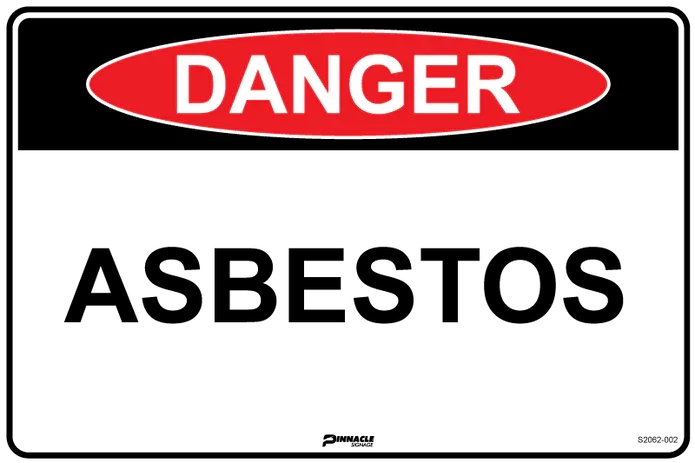
In Australia, safety signage is governed by Australian Standard AS 1319. This standard ensures that regardless of where you are - whether a construction site in Sydney or a workshop in Wagga Wagga - safety symbols and layouts are consistent and instantly recognisable.
A compliant Asbestos danger sign must feature:
- The "DANGER" header: White text on a red oval, surrounded by a black rectangle.
- Specific wording: It must clearly state the hazard (Asbestos) and the consequences (e.g., "May Cause Cancer," "Do Not Create Dust").
- High contrast: Black text on a white background for the main message.
Under Safe Work Australia guidelines and state-based WorkHealth and Safety (WHS) regulations, site managers have a strict obligation to identify and manage asbestos. This includes maintaining an asbestos register and ensuring that all regulated areas are clearly marked. If a person could potentially enter an area where they might be exposed to airborne fibres, a sign must be posted at the entrance.
You can view our range of compliant Danger Signage to see how these standards are applied in practice. For those managing complex sites, understanding OHS and Hazchem signs is also a critical part of the compliance puzzle.
Customising Asbestos Danger Signs for Specific Site Needs
While standard signs cover most situations, some sites require a more tailored approach. At Pinnacle Signage, we understand that a large industrial site in regional NSW might have different needs than a small commercial renovation.
Customisation can include:
- Site-Specific Instructions: Adding contact numbers for the site supervisor or specific PPE requirements.
- Bilingual Options: In many Australian workplaces, a diverse workforce means that having warnings in multiple languages can be a life-saving addition.
- Bulk Orders: For large-scale remediation projects, we provide bulk quantities of signs to ensure every entry point and hazard is covered.
Explore our guide to custom danger signs to see how we can adapt safety messages to your specific environment.
Maintaining Visibility of Asbestos Danger Signs
A sign is only effective if it can be seen. We recommend following these best practices for installation:
- Placement: Signs should be posted at every entrance to a regulated area so that workers can read them and take protective steps before entering.
- Height: Install signs at eye level (approximately 1.5 metres from the ground) to ensure they are within the natural line of sight.
- Durability: In the harsh Australian sun, signs can fade. We use UV-resistant inks and durable materials to ensure your message stays clear for years.
Faded or damaged signs are a major liability. Our article on signs of trouble discusses how to maintain your signage for maximum safety.
Essential PPE and Safety Protocols for Regulated Areas
When you see an Asbestos danger sign that says "Respiratory Protection Required," it is a mandatory instruction. Standard dust masks found at hardware stores are often insufficient for asbestos fibres.
Essential Personal Protective Equipment (PPE) for asbestos regulated areas typically includes:
- Respirators: At a minimum, a P2 or P3 rated disposable respirator or a half-face filter respirator is required. It must be fit-tested to ensure no fibres can leak around the edges.
- Protective Clothing: Disposable coveralls (Type 5, Category 3) help prevent fibres from hitching a ride on your clothes.
- Footwear: Laceless boots or boot covers are preferred, as fibres can get trapped in laces.
According to Safe Work Australia, even brief exposure can be harmful, but the risk increases with the duration and intensity of the contact. This is why decontamination protocols are so strict. When leaving an asbestos area, workers must follow a specific "strip-down" procedure, usually involving a vacuum with a HEPA filter and wet wiping to ensure no dust is carried outside the zone. To learn more about the symbols used for these types of hazards, visit our guide on hazard symbols and chemical signage.
Selecting Durable Materials for Asbestos Signage
At Pinnacle Signage, we manufacture our products right here in East Wagga Wagga. We know that Australian conditions - from the dust of the Riverina to the humidity of the coast - demand tough materials.
Pinnacle Signage utilises various high-quality materials for asbestos signage:
- Metal (Pre-Coated Steel): These are the heavy-duty champions. They are ideal for outdoor use on construction fences or the exterior of old farm buildings. Our metal signs are built for maximum longevity.
- Polypropylene: A versatile, semi-rigid plastic that is perfect for both indoor and outdoor use. It is resistant to chemicals and easy to mount on walls or doors. Our poly signage provides a durable and professional finish.
- Self-Adhesive Vinyl: Great for sticking directly onto smooth surfaces like pipes, equipment, or doors. Our vinyl is high-gloss and designed to stay put.
By choosing locally manufactured signs, you are ensuring that the products meet Australian Standards and are built to last in our unique climate.
Frequently Asked Questions about Asbestos Signage
What should I do if I find disturbed asbestos in an older building?
If you suspect you have found disturbed or damaged asbestos, the most important rule is: Do not touch it. Stop all work in the area immediately. Evacuate the room and prevent others from entering. You should then contact a licensed asbestos assessor or removalist. They will take samples for testing and determine the best course of action, whether it is encapsulation or removal. In the meantime, placing a temporary Asbestos danger sign at the entrance is a vital step to keep people away.
How do Danger, Warning, and Caution headers differ on asbestos signs?
Under Australian Standard AS 1319 and relevant safety regulations, the header indicates the level of risk:
- DANGER: Used for life-threatening hazards. Since asbestos exposure can lead to fatal cancers, "Danger" is the standard header for most asbestos warnings.
- WARNING: Used for hazards that could cause serious injury but are generally not life-threatening.
- CAUTION: Used for potential hazards or unsafe practices that could lead to minor or moderate injury. For example, "Caution: Asbestos Removal in Progress" might be used at the perimeter of a site where the risk is lower, but caution is still required.
Where is the most effective place to install asbestos warning signs?
The most effective placement is at every point of entry to the regulated area. If you are working on a specific piece of equipment, like an old boiler or pipework, the sign should be affixed directly to or immediately adjacent to the hazard. For building-wide warnings, signs should be placed on all external doors and at the main reception or site office to alert visitors before they move through the facility.
Do Not Ignore the Sign. Ignore the Risk Instead
Asbestos remains one of the most significant workplace health challenges in Australia. While we cannot change the history of its use, we can control how we manage the risk today. Asbestos danger signs are not just about ticking a compliance box; they are about ensuring that every worker and visitor returns home safely to their families.
At Pinnacle Signage, we take pride in being the premier safety signage manufacturer in East Wagga Wagga, NSW. Our regional expertise and commitment to local production mean you get high-quality, durable signs that you can trust. Our commitment to quality ensures that safety is always within reach for Australian businesses and homeowners.
Whether you need a single sign for a home renovation or a bulk order for a major construction project, we are here to help. We offer:
- Fast 48-hour dispatch on standard orders.
- Free shipping Australia-wide for orders over $100 (exceptions apply).
- Local warehouse pickup in East Wagga Wagga for our regional customers.
Don't leave safety to chance. If you have questions about which signs are right for your site, or if you need to discuss a custom order, please Contact Pinnacle Signage today. When it comes to asbestos, the sign you post today could save a life twenty years from now.