

Beyond the Barricade: Decoding Access Control Door Signage
The Silent Sentinels of Your Facility
Access control door signage is your facility's first line of defence, silently communicating critical safety and security information. These visual guardians work around the clock to deter unauthorised access, inform visitors of restrictions, direct traffic flow, and protect both people and property.
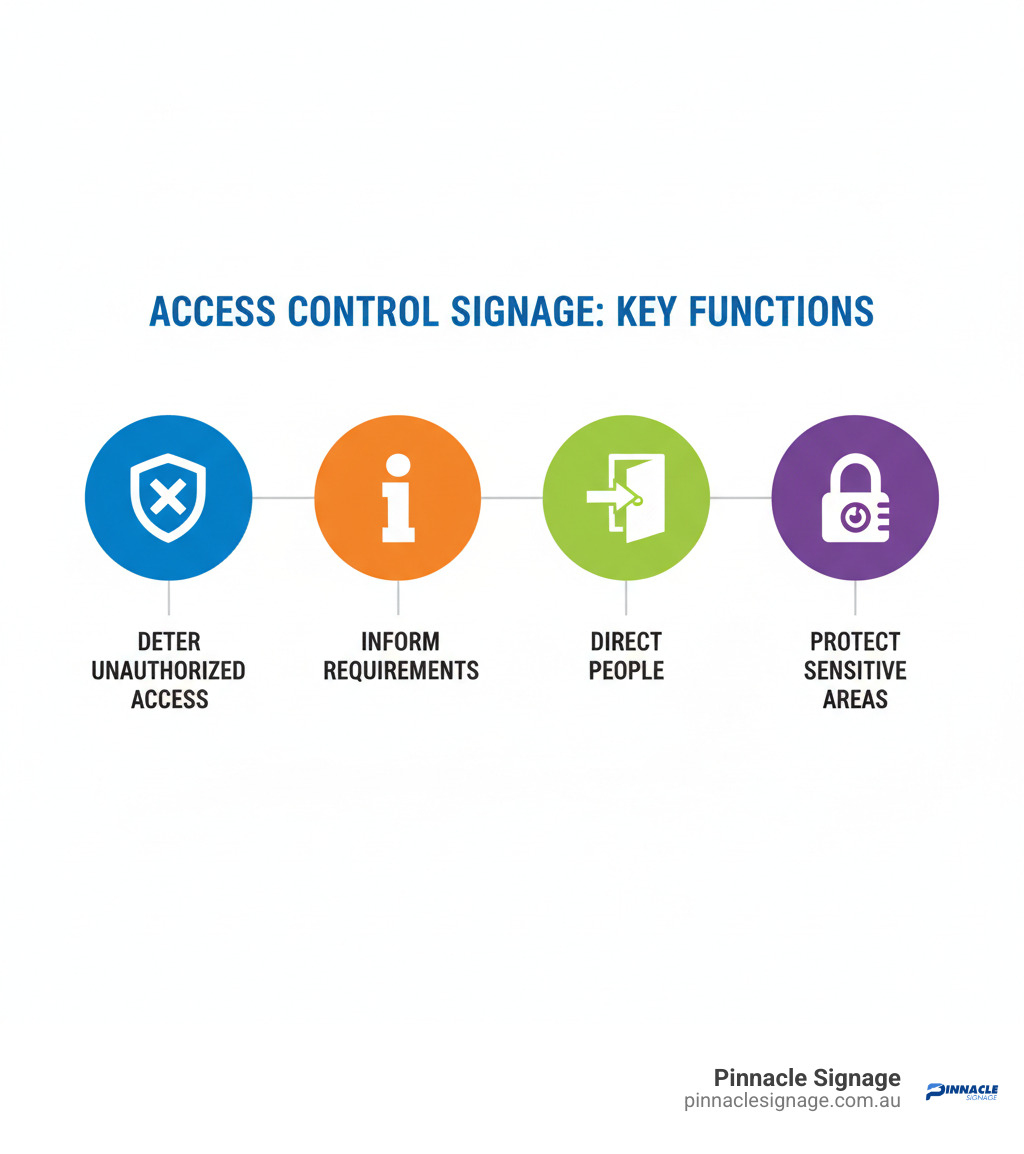
Key Functions of Access Control Door Signage:
- Deter - Prevent unauthorised entry through clear warnings.
- Inform - Communicate specific access requirements and restrictions.
- Direct - Guide people to appropriate entrances and exits.
- Protect - Safeguard sensitive areas and maintain security protocols.
Whether you manage a construction site, retail store, office, or industrial complex, the right signage creates an immediate understanding of where people can and cannot go. From simple "Authorised Personnel Only" messages to complex security warnings, these signs are the foundation of effective access management. Quality signage is not just about compliance; it's about creating clear communication that keeps everyone safe and your operations running smoothly.
A Comprehensive Guide to Access Control Door Signage
When you walk through any Australian workplace, you're constantly receiving messages from the access control door signage that quietly guides your every step. These visual communicators use a language of colours, symbols, and words to keep everyone safe and informed. For this communication to be effective, the message about who can go where must be crystal clear.
The Language of Access: Types of Door Signage
Understanding the different types of access control door signage is like learning a visual language that keeps facilities running smoothly and safely. Each type serves a specific purpose and uses distinct visual cues that people instinctively recognise.
Prohibition signs are the firm "no" of the signage world. With their red circle and diagonal slash, signs like "Do Not Enter" or "No Unauthorised Access" create an unmistakable boundary, crucial in high-risk areas. Our guide on Understanding Prohibition Signs in the Workplace and Public Spaces explores these further.
Mandatory signs use blue circles and white symbols to tell people what they must do. Signs like "Report to Office" or "Visitors Must Sign In" ensure procedures are followed and maintain security protocols.
Warning signs use a yellow triangle with a black border to communicate potential hazards. You might see "Caution: Construction Area" or "Warning: High Voltage" signs informing people about dangers in restricted zones.
Notice signs provide operational guidance without the urgency of safety warnings. These blue and white panels communicate important procedures like "Keep Door Closed" to keep facilities running smoothly.
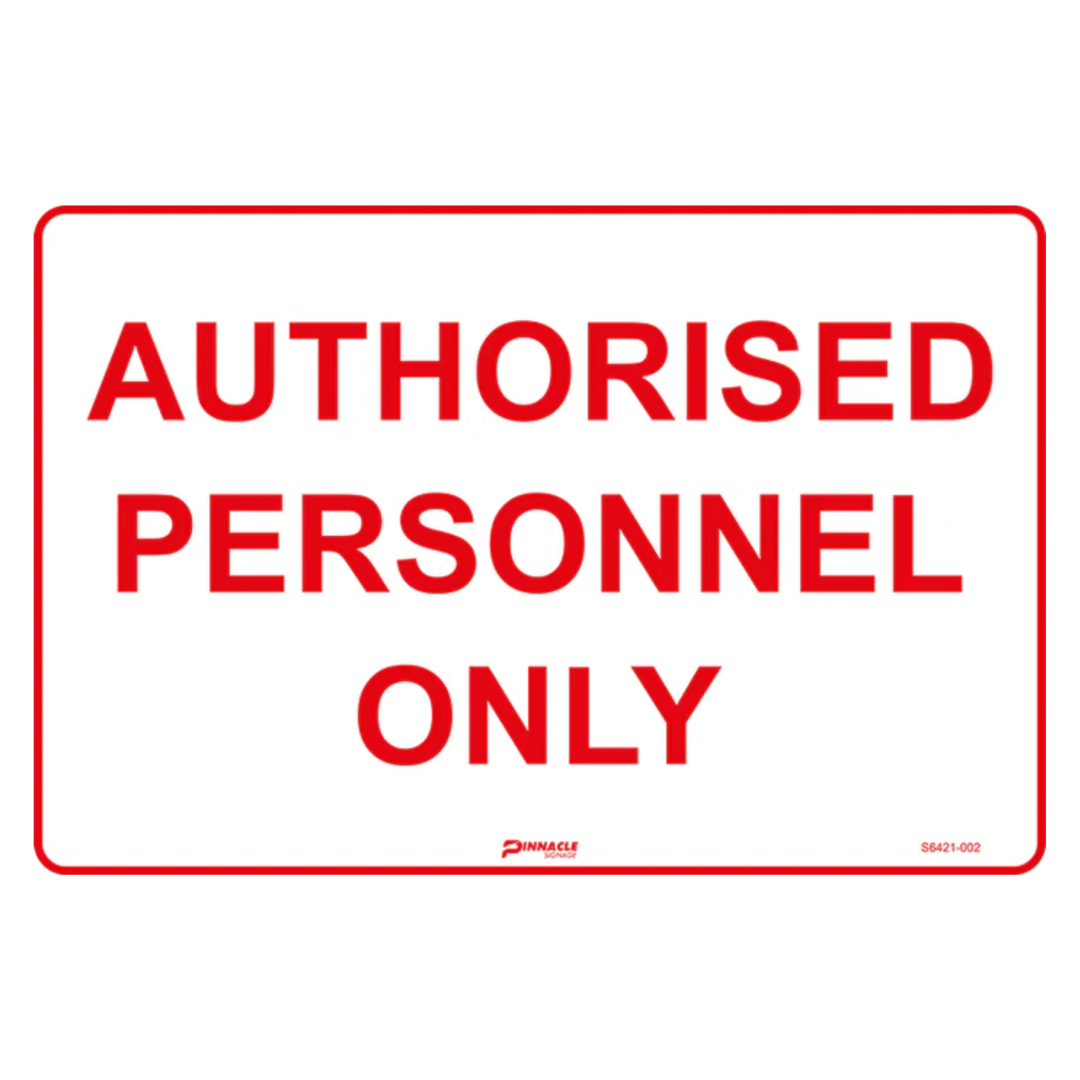
Restricted area signs are a direct form of access control door signage. Clear signs displaying 'Authorised Personnel Only' communicate that only designated individuals should proceed. For more ideas, see our article Top Authorised Personnel Only Signs: Upgrade Your VIP Access Zones Today.
Common messages include 'Do Not Enter', 'Authorised Personnel Only', 'Restricted Area', and 'Visitors Must Report to Office'. These signs come in various formats, including door decals, wall-mount options, and floor markers.
Elements of Effective Access Control Door Signage
Creating access control door signage that works requires more than just words on a sign. The most effective signs combine several key elements to ensure they are seen, understood, and acted upon.
- Clear messaging: Ambiguous wording creates confusion. A sign reading "Authorised Personnel Only" is direct and leaves no room for interpretation.
- Universal symbols: Internationally recognised pictograms bridge language barriers and communicate instantly, like the red circle with a diagonal line for "prohibited."
- High visibility: Bright, contrasting colours and appropriately sized fonts ensure your message stands out from its surroundings.
- Colour and contrast: Australian Standards specify colour combinations for different warnings. Good contrast ensures readability from a distance and in various lighting conditions.
- Strategic placement: Signs must be mounted at an appropriate height, remain unobstructed, and be positioned to catch the eye of anyone approaching the area.
- Material durability: Our signs are made from weather-resistant materials like aluminium and vinyl to withstand harsh Australian sun, rain, and heavy foot traffic, ensuring they remain effective for years.
For more tips, our article on 6 Bad Signage Mistakes and How to Prevent Them provides practical guidance.
Ensuring Compliance and Enhancing Safety
In Australia, creating safe workplaces is a legal requirement, and access control door signage helps you meet this obligation effectively.
- Australian Standard AS 1319-1994: This standard governs safety signs, ensuring consistency across Australian workplaces so workers immediately understand the visual language.
- Duty of care: Clear, compliant signage is crucial for fulfilling your duty of care to provide a safe working environment, reducing the likelihood of incidents.
- Hazard identification: A "Danger: High Voltage" sign clearly communicates a life-threatening hazard, helping to prevent accidents before they happen.
- Liability management: Should an incident occur, demonstrating that you used clear, compliant signage is a critical factor in managing your legal exposure.
- Accessibility considerations: Signage must be accessible to everyone, including those with visual impairments. Compliant signage ensures all individuals can access critical safety information.
For more guidance, see our Safety Signage Australia: Your Guide to Clear and Compliant Signs and Restricted Means Restricted: Top Picks for Area Safety Signs. Safework Australia also provides official guidance.
Integrating Signage with Your Security System
Modern security relies on layers of protection, and access control door signage is the crucial human interface for your technological security systems.

- Complementary security: Signage works with electronic systems to create comprehensive protection. A "Key Card Access Required" sign communicates expectations before someone tries to enter, reducing confusion.
- Visual deterrence: A prominent "CCTV in Operation" or "Alarmed Door" sign can be as powerful as a physical barrier, deterring troublemakers before they act.
- Policy reinforcement: Signage explains your electronic security measures. An "Authorised Personnel Only" sign clarifies the purpose of a biometric scanner, preventing innocent mistakes.
- System integration: Signage guides people on how to use security technology. "Scan Card Here" signs facilitate smooth operation, creating a robust, layered security approach.
Choosing and Implementing Your Signage Strategy
Getting your access control door signage right is about creating a comprehensive approach that protects your people and property while keeping operations running smoothly.
Selecting the Right Access Control Door Signage for Your Needs
Choosing the right signage is like selecting the right tool for the job. What works in one situation might be wrong for another.
- Conduct a risk assessment: Walk through your facility to identify high-risk zones, sensitive areas, and places where access needs to be controlled. This will determine if you need "Danger", "Notice", or "Authorised Personnel Only" signs.
- Know your audience: For diverse workforces or public areas, consider bilingual or custom language options to ensure everyone understands the message.
- Match materials to the environment: Outdoor signs need weather-resistant materials to withstand sun and rain. High-traffic indoor areas may require ultra-durable floor markers, while chemical facilities need signs that resist corrosion. We offer signs in robust aluminium, vinyl, and plastics for any Australian environment.
- Opt for custom messaging when needed: If standard signs don't cover your unique protocols or hazards, custom-designed access control door signage is the solution. Incorporate company branding, specific instructions, or unique warnings. We offer Customised Hazchem Signage and custom accessibility signage.
Common Mistakes to Avoid with Access Control Door Signage
Even well-intentioned signage efforts can fail with poor execution, creating more problems than they solve. Avoid these common mistakes:
- Unclear messaging: Vague signs like "Area Restricted" are ineffective. Be specific with messages like "Authorised Personnel Only - No Entry Beyond This Point."
- Poor placement: Signs hidden behind doors, mounted too high, or placed in poorly lit areas are useless. Ensure signs are at eye level and clearly visible to anyone approaching.
- Inadequate visibility: Tiny fonts, washed-out colours, or low-contrast designs make signs hard to read. Use bold, legible text and high-contrast colours.
- Non-compliant signs: Homemade or non-compliant signs can lead to legal issues. Using signs that meet AS 1319 standards is crucial for your legal protection.
- Neglecting maintenance: Faded, damaged, or dirty signs undermine your safety message. Invest in durable materials and conduct regular inspections.
- Failing to update: As your facility changes, so should your signage. Conduct regular audits to ensure your signs reflect current operations and hazards.
For more detailed guidance, check out our comprehensive article on 6 Bad Signage Mistakes and How to Prevent Them.
Your Partner in Facility Safety and Security
At Pinnacle Signage, we understand that effective access control door signage creates a culture of safety and security. As an Australian-owned business manufacturing in East Wagga Wagga, NSW, we are your local partner for quality, durable signage built for Australian conditions.
We cater to all needs, from single signs to comprehensive systems for large industrial complexes, offering bulk order solutions for businesses and competitive margins for resellers. Most orders are dispatched within 48 hours, with fast delivery across Australia.
Access control door signage is your first line of communication. Let us help you get it right with clear, compliant, and durable solutions.
Ready to upgrade your facility's access control? Explore our range of Restricted Area signs, view our First Aid Signage collection, or contact our team for a custom quote.