

Beyond the Icon: Understanding Safety Symbols
More Than Just a Picture
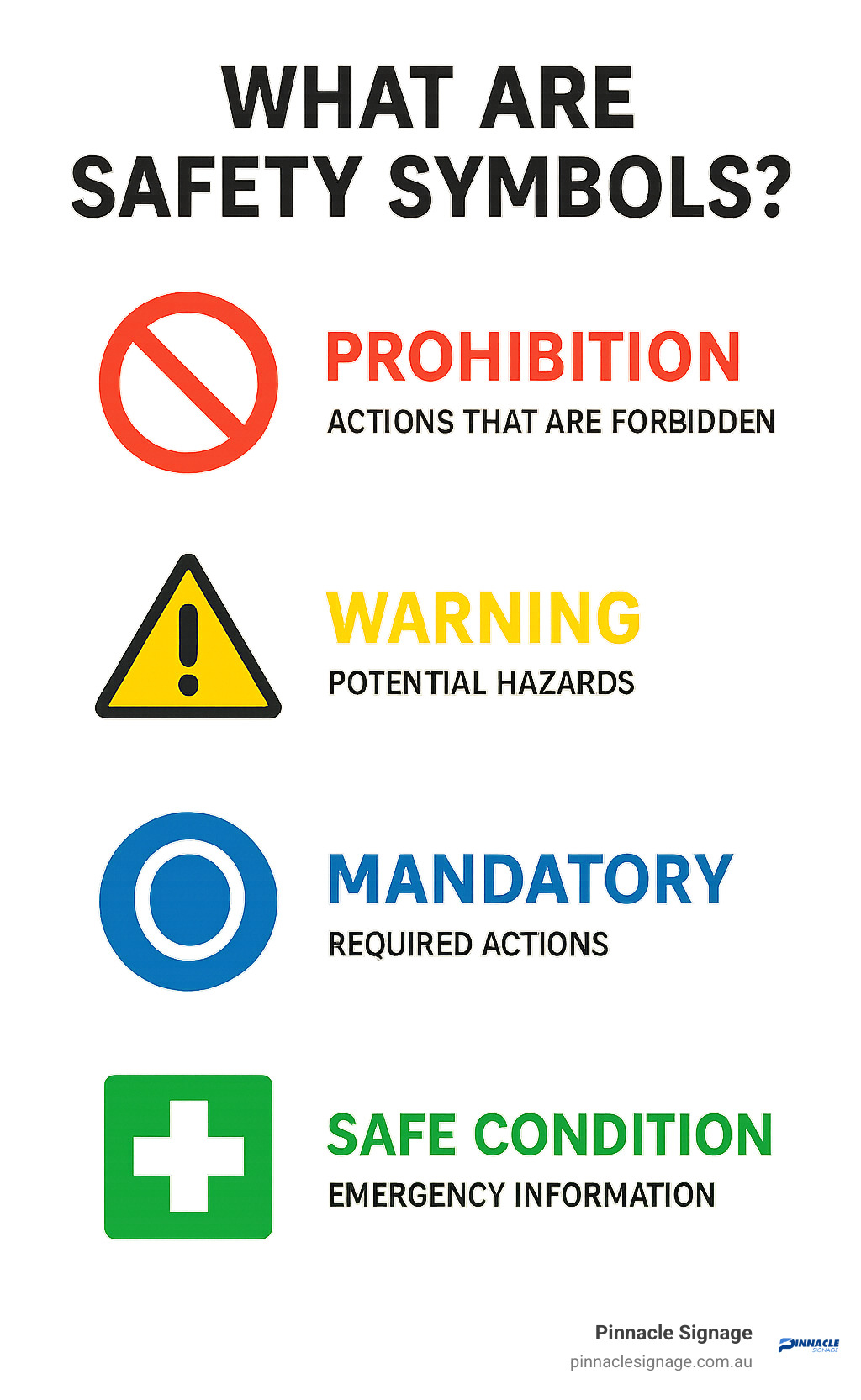
What are safety symbols and why do they matter in your workplace? Safety symbols are standardised visual icons designed to communicate hazards, mandatory actions, prohibitions, and emergency information without relying on words. These universal symbols transcend language barriers and provide instant recognition of potential dangers, required safety measures, and emergency procedures.
Quick Answer: The Four Main Types of Safety Symbols
- Prohibition Signs (Red circle with diagonal line) - Actions that are forbidden
- Warning Signs (Yellow triangle) - Potential hazards requiring caution
- Mandatory Signs (Blue circle) - Required actions or protective equipment
- Safe Condition Signs (Green square/rectangle) - Emergency exits, first aid, safety equipment
Safety symbols serve as the universal language of workplace protection. From construction sites in Perth to manufacturing facilities in Melbourne, these visual cues help prevent accidents, save lives, and ensure regulatory compliance. They're not just decorative elements—they're critical safety tools that communicate essential information in seconds, regardless of literacy levels or language barriers.
The research consistently shows that safety signs and symbols are widely recognised industry practices for preventing injuries and accidents. They function as immediate visual alerts, helping workers quickly identify hazards like high voltage equipment, chemical dangers, or mandatory protective gear requirements. Whether it's a simple "No Smoking" prohibition or a complex chemical hazard pictogram, these symbols create awareness and guide safe behaviour.
Through our years in the safety and industrial supply space, we've seen how critical proper safety signage is for Australian workplaces. Understanding what are safety symbols and implementing them correctly has been central to helping businesses protect their teams while meeting compliance requirements.
What are safety symbols word guide:
The Visual Language of Safety: What are Safety Symbols and How to Read Them
When we ask what are safety symbols, we're really exploring the visual language that keeps workplaces safe across Australia. These symbols are far more than simple pictures—they're carefully designed communication tools that speak to everyone, regardless of their background or native language.
Think of safety symbols as the workplace's universal translator. They cut through language barriers, literacy challenges, and cultural differences to deliver one clear message: how to stay safe. This universality isn't just convenient—it's absolutely critical in our diverse Australian workplaces where teams might speak dozens of different languages.
The genius of safety symbols lies in their standardised approach. International standards for safety colours and signs recognise a compelling need to create safety information that relies as little as possible on words. This makes perfect sense when you consider that in an emergency, people need to understand critical information instantly.
The Four Main Categories of Workplace Safety Signs
Understanding what are safety symbols starts with grasping the four fundamental categories that form the backbone of workplace safety communication. Each category has its own distinct colour and shape, creating an instant visual code that your brain learns to recognise in milliseconds.
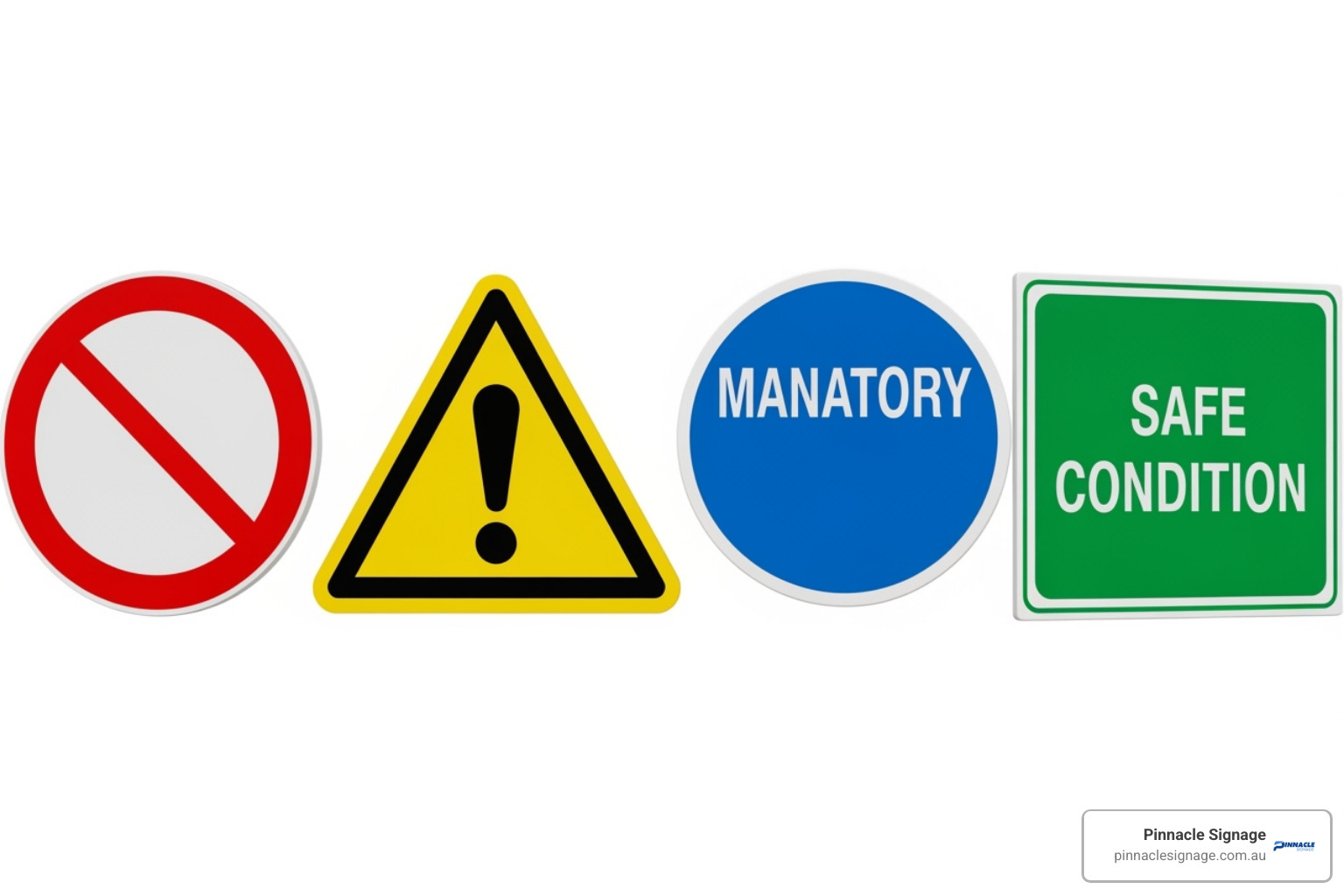
Prohibition signs are the workplace's firm "no" — and they mean business. These red circular signs with their distinctive diagonal slash tell you exactly what's forbidden. You'll spot them as "No Smoking" signs near fuel storage, "No Entry" warnings around hazardous areas, or "Do Not Touch" alerts on dangerous equipment. The red colour isn't arbitrary—it's psychologically linked to danger and stopping, making these signs impossible to ignore.
Warning signs are your workplace's early warning system. These yellow triangular signs act like a friend tapping you on the shoulder, saying "heads up, be careful here." Whether it's a "Caution: Wet Floor" sign in a busy corridor, a "Warning: High Voltage" alert near electrical equipment, or "Beware: Forklift Traffic" in warehouse areas, these bright yellow symbols prepare you for potential risks so you can take the right precautions.
Mandatory signs are the blue-backgrounded instructions that tell you what you must do to stay safe. These aren't suggestions—they're requirements. When you see "Wear Eye Protection", "Safety Helmet Must Be Worn", or "Foot Protection Required", you're being told exactly what protective equipment is needed. The blue colour creates a sense of authority and instruction, making it clear that compliance isn't optional.
Emergency signs use green to guide you to safety when things go wrong. These "Emergency Exit" signs, "First Aid" locations, and "Emergency Shower" markers become lifelines during incidents. Green's association with safety and life makes these signs guides of hope when you need them most.
For more detailed information about how these categories work within Australian requirements, our guide on A Guide to Australian Safety Signs provides comprehensive insights.
Decoding Chemical Dangers: An Introduction to GHS Pictograms
When we explore what are safety symbols in chemical handling environments, we enter the Globally Harmonised System (GHS). This international standard ensures that a chemical hazard symbol means exactly the same thing whether you're in Perth, Paris, or Pittsburgh.
GHS pictograms are the chemical world's danger alerts, and they're distinctly different from general workplace safety symbols. While a standard warning sign might alert you to a slippery floor, GHS pictograms specifically communicate the unique risks that chemicals pose to human health and the environment.
These nine pictograms appear in distinctive red diamond-shaped borders with black symbols on white backgrounds. You might see several pictograms on a single chemical container because many substances present multiple types of hazards.
The Health Hazard pictogram shows a person with a starburst on their chest, warning of serious long-term effects like cancer, reproductive harm, or organ damage. The Flame symbol is straightforward—it means fire risk from flammable, self-heating, or pyrophoric materials. An Exclamation Mark indicates less severe but still important hazards like skin irritation or harmful effects.
The Gas Cylinder pictogram warns of compressed gases that could explode or cause physical injury. Corrosion symbols show liquid eating away at both a hand and a surface, indicating substances that can cause chemical burns or corrode materials. The Exploding Bomb is unmistakable—it means explosive or highly reactive materials.
Flame Over Circle indicates oxidisers that can intensify fires or cause explosions with combustible materials. The Environment pictogram (showing a dead tree and fish) warns of substances hazardous to aquatic life and ecosystems. Finally, the Skull and Crossbones is the universal symbol for acute toxicity—substances that can cause death or severe poisoning even in small amounts.
For a deeper understanding of these critical symbols, explore our comprehensive Know Your Hazard Symbols: A Guide to Chemical Signage. You can also learn more about the Globally Harmonised System (GHS) itself.
What are safety symbols for specific hazards?
Beyond the main categories and chemical warnings, what are safety symbols that address the unique dangers found in specific Australian workplaces? These specialised symbols tackle everything from electrical hazards to biological risks, providing targeted warnings for specific situations.
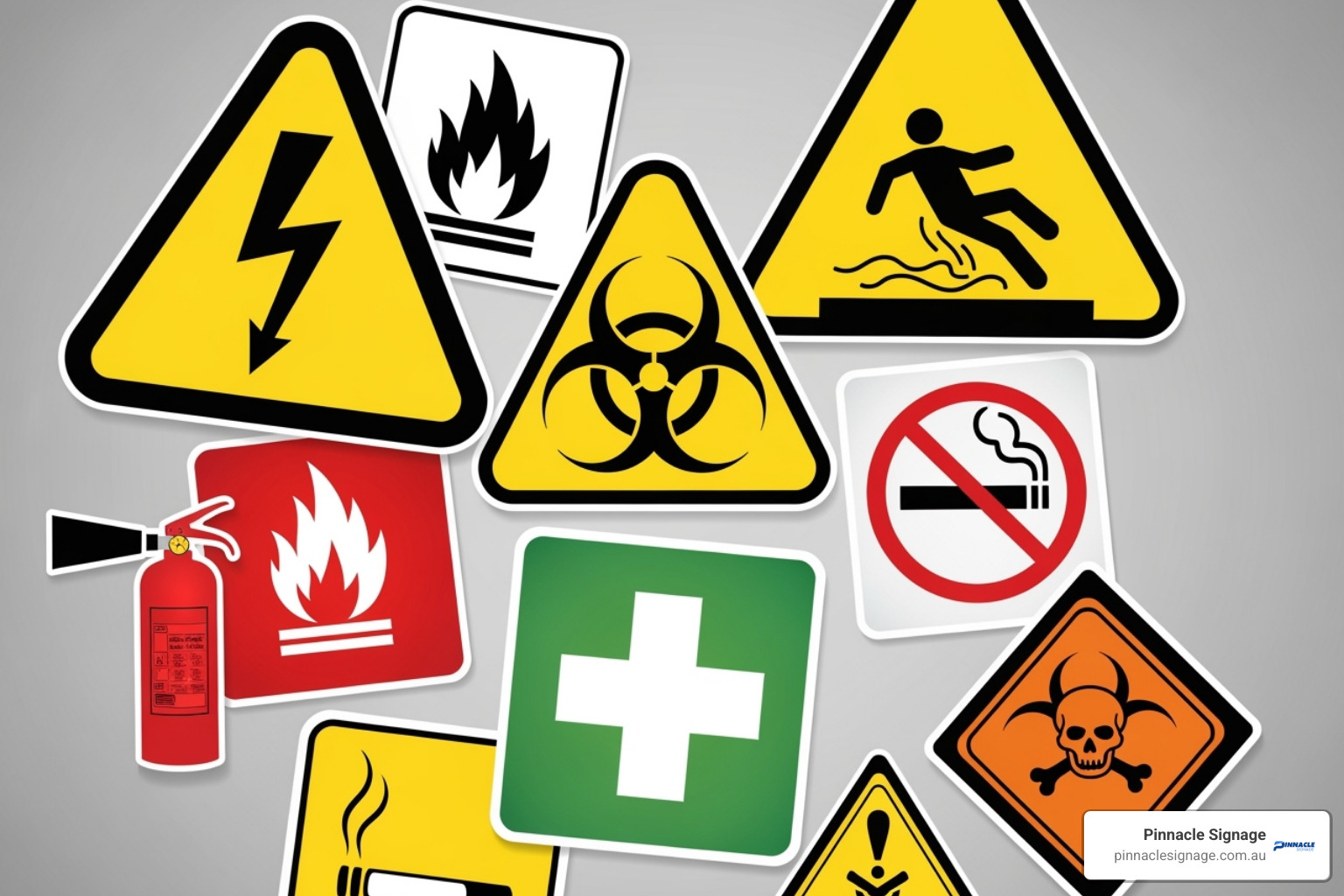
Electrical safety symbols demand respect because electricity doesn't give second chances. The lightning bolt warns of live electrical current, while "High Voltage" symbols (often featuring lightning bolts within triangles) alert you to potentially lethal electrical shock risks. You'll find earth terminal symbols showing where equipment needs proper grounding to prevent electrical hazards—critical around transformers, power panels, and industrial machinery.
Fire safety symbols go beyond the basic flame pictogram to address specific burning hazards. Hot surface warnings show a hand touching a steaming surface, common near machinery, ovens, or industrial equipment. No ignition source symbols prohibit matches, flames, or smoking in areas with flammable materials. Fire exit symbols featuring running figures point toward emergency escape routes—often illuminated and absolutely critical during emergencies.
Physical hazard symbols warn of environmental dangers that could cause immediate injury. Slippery surface warnings show a person falling, typically used for wet floor signs. Tripping hazard symbols indicate potential obstacles, while falling object warnings alert you to overhead dangers. Confined space symbols mark areas with limited entry and exit points that may contain hazardous atmospheres.
Specialised hazard symbols address unique workplace risks. The distinctive biohazard symbol with its three crescents warns of biological agents in laboratories, medical facilities, and pharmaceutical settings. Radiation symbols use the international trefoil design for ionising radiation from radioactive materials, while laser warnings feature starburst symbols indicating potential eye damage risks.
These specialised symbols create comprehensive safety coverage for Australian workplaces. For detailed guidance on implementing hazard and danger signage effectively, check out our resource: Warning: Your Ultimate Guide to Workplace Hazard and Danger Signs.
Putting Symbols into Practice: Ensuring Workplace Safety
Understanding what are safety symbols is only the beginning. The real magic happens when these visual guardians are properly implemented in your workplace. It's like having a conversation with your team that never stops—these symbols are constantly communicating vital safety information, but only if they're positioned right and everyone speaks the same language.
Best Practices for Using and Displaying Safety Signs
Getting safety signs right isn't just about slapping them on a wall and calling it done. There's a bit of science and a lot of common sense involved in making them truly effective.
Strategic placement is absolutely critical. Your signs need to be where people naturally look—at eye level and directly in the line of sight of whatever hazard or safety equipment they're highlighting. Think about it: a fire extinguisher sign tucked away behind a pillar isn't going to help anyone in an emergency. Similarly, that "Danger: Chemical Storage Area" warning needs to greet people at entry points, not hidden inside where someone might stumble upon hazards unexpectedly.
Visibility and legibility can make or break your safety program. Signs need to be large enough to be easily seen and understood from a distance. But here's something many workplaces get wrong: cramming too many signs together. When you cluster signs, you create visual noise that leads to "sign blindness"—that phenomenon where people become so overwhelmed or familiar with warnings that they stop seeing them altogether.
Lighting conditions matter more than you might think. A perfectly designed sign is useless if it's sitting in a shadowy corner. Emergency exit signs often need to be illuminated for good reason—they're literally life-savers when visibility is compromised.
Here's a clever insight from safety experts: periodically rotating non-permanent signs can actually combat sign blindness. When that "Caution: Wet Floor" sign appears in a slightly different spot, it catches the eye again instead of fading into the background.
Regular maintenance is where many safety programs fall down. Australia's harsh conditions—from blazing sun to industrial chemicals—can fade, crack, or damage even the best signs. A faded "High Voltage" warning isn't just ineffective; it's potentially deadly. Schedule regular inspections and replace compromised signage promptly.
Before you even think about which signs to install, conduct a comprehensive risk assessment. This ensures every sign serves a genuine purpose in addressing identified hazards rather than just ticking compliance boxes.
For deeper insights on effective hazard identification through signage, check out The Definitive Guide to Safety Sign Hazard Identification.
What are safety symbols without understanding? The Role of Employee Training
Here's the truth: what are safety symbols if your team doesn't truly understand them? Even the most perfectly placed, brilliantly designed safety sign is just decorative if people don't grasp its meaning or importance.
Comprehensive training transforms symbols from mysterious pictographs into clear, actionable communication. Every new employee should receive a thorough orientation on the specific safety symbols in their work environment. But don't stop there—regular refresher training keeps this knowledge sharp and current, especially as new symbols are introduced or roles change.
The most effective training goes beyond rote memorisation. When employees understand the why behind each symbol—the real consequences of ignoring that respiratory protection requirement or the genuine danger that high voltage warning represents—compliance becomes natural rather than forced.
Fostering a strong safety culture means creating an environment where people feel comfortable asking questions about unclear signage and actively participating in safety discussions. Short, regular toolbox talks can highlight specific symbols relevant to daily tasks, keeping safety awareness fresh and top-of-mind.
This integrated approach of clear signage plus ongoing education creates a resilient safety framework that actually works. Learn more about building this kind of comprehensive safety communication in Workplace Safety Signs That Speak Louder Than Words.
The Consequences of Ignoring the Signs
The stakes couldn't be higher when it comes to understanding what are safety symbols and acting on that knowledge. Australian businesses have a legal obligation to maintain workplace health and safety standards, and the consequences of falling short extend far beyond compliance issues.
Workplace accidents and injuries represent the most immediate and heartbreaking cost of ignored safety symbols. That overlooked "High Voltage" warning can result in severe electrocution. Missing the "Respirator Required" sign in a hazardous atmosphere can cause permanent respiratory damage. Chemical hazard pictograms that are misunderstood or ignored can lead to burns, poisoning, or serious long-term health effects.
Legal liability in Australia is substantial and getting more stringent. Employers who fail to provide adequate safety signage—or ensure their teams understand it—face significant fines, legal action, and potential prosecution. These aren't just slaps on the wrist; they're business-threatening financial penalties.
Property damage often follows safety failures. Ignoring a "No Ignition Sources" sign near flammable materials could trigger devastating fires or explosions. The resulting damage to machinery, equipment, and infrastructure creates costly operational downtime that can cripple a business.
Reputational damage spreads quickly in today's connected world. Workplace accidents, especially preventable ones, erode trust with employees, clients, and the broader community. This damage to your business relationships and future opportunities often outlasts the immediate costs of an incident.
Even your insurance premiums suffer when safety protocols fail. A history of workplace incidents signals a higher risk to insurers, leading to increased operational costs that compound over time.
At Pinnacle Signage, we've seen how proper signage prevents these devastating consequences. Quality, durable safety signage isn't just good practice—it's essential protection for lives and livelihoods.
For more insights into the real dangers of inadequate signage, read Signs of Trouble: Understanding Danger Labels and Safety Signage.
Protect your team and business with our comprehensive safety signage solutions: