

Building Site Signs: Essential Requirements for Construction Safety
Why Clear Signage is Your Site's First Line of Defence
Building site signs are essential safety tools that communicate hazards, enforce rules, and protect everyone on a construction site. They are your first line of defence in a dangerous, constantly changing environment.
From heavy machinery and falling materials to electrical risks and unstable ground, clear signage provides instant, vital information. These signs are critical for:
- Risk Communication: Alerting people to dangers like falling objects or high voltage.
- Safety Enforcement: Mandating the use of personal protective equipment (PPE).
- Access Control: Restricting entry to unauthorised personnel.
- Emergency Response: Guiding people to first aid, fire equipment, and exits.
- Legal Compliance: Helping you meet Australian workplace health and safety requirements.
Effective signage is not just about compliance; it's about creating a safety-first culture. When workers and visitors can quickly identify hazards and understand safety protocols, accidents decrease and productivity improves. At Pinnacle Signage, we deliver reliable, compliant signage that Australian construction sites depend on to keep people safe.
The Language of Safety: Decoding Building Site Signs
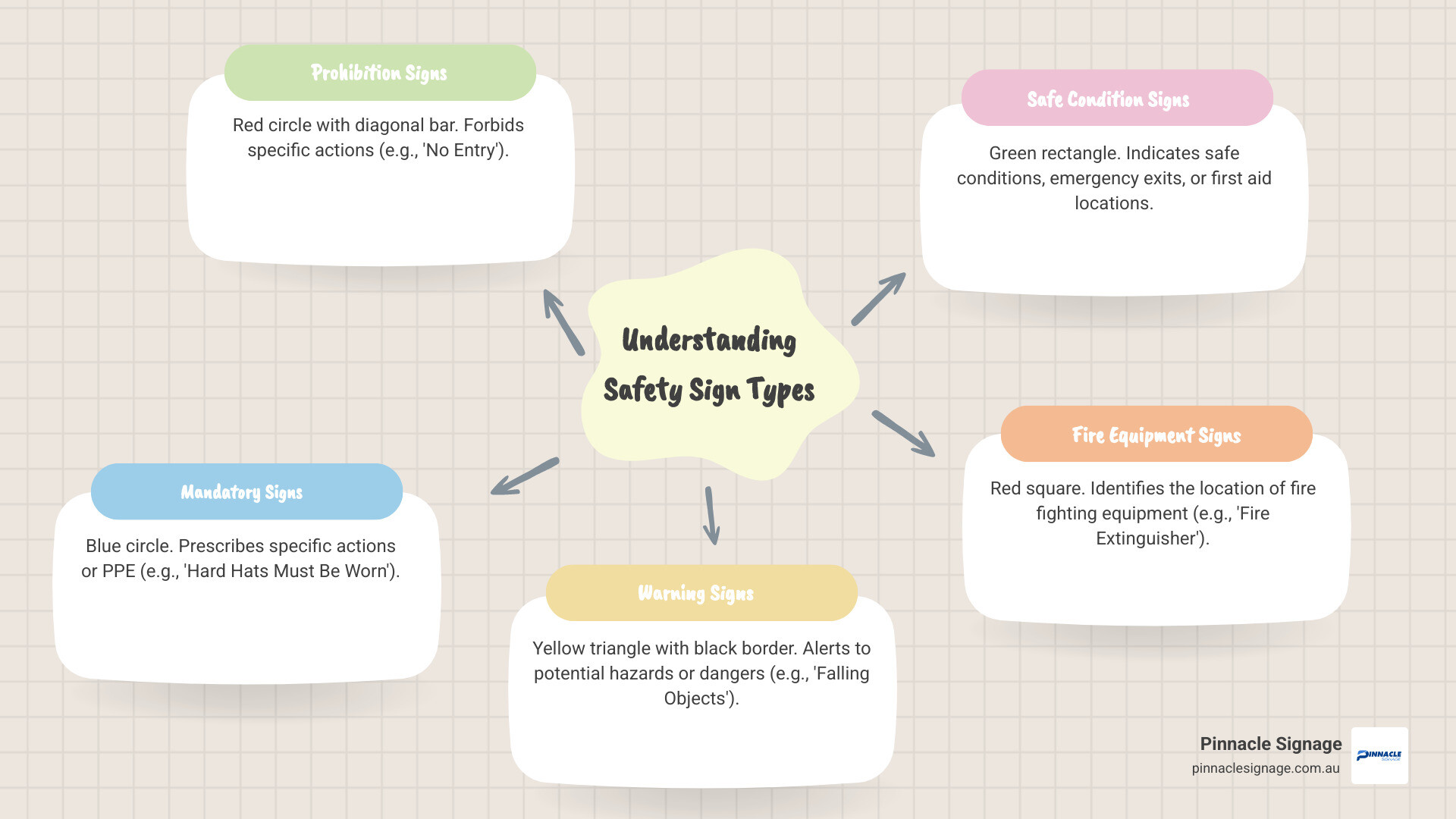
Think of safety signs as a universal language. By using standardised shapes, colours, and symbols, building site signs deliver critical information in seconds, cutting through language barriers and literacy challenges. This simple, visual system is designed to be understood instantly.
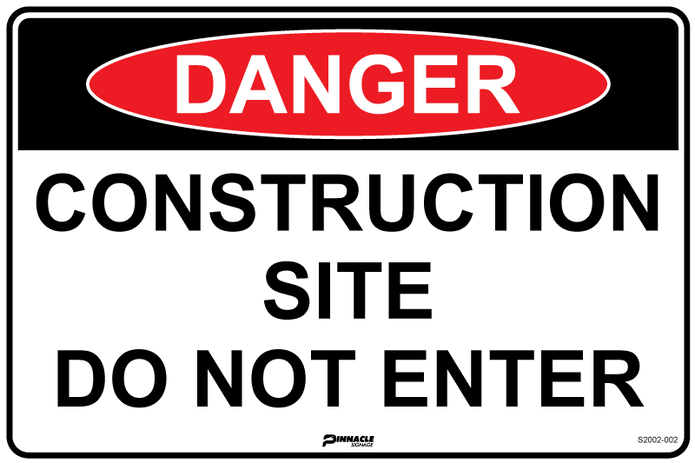
A red circle with a line through it means something is forbidden. A blue circle means an action is required. It's that straightforward.
Key Categories of Building Site Signs and Their Meanings
Australia follows international conventions for safety signage, creating five distinct categories. Each has a unique shape and colour for instant recognition.
- Prohibition Signs: These red circular signs with a diagonal line say "absolutely not." They forbid actions like "No Smoking" or "No Unauthorised Entry" to prevent dangerous behaviour.
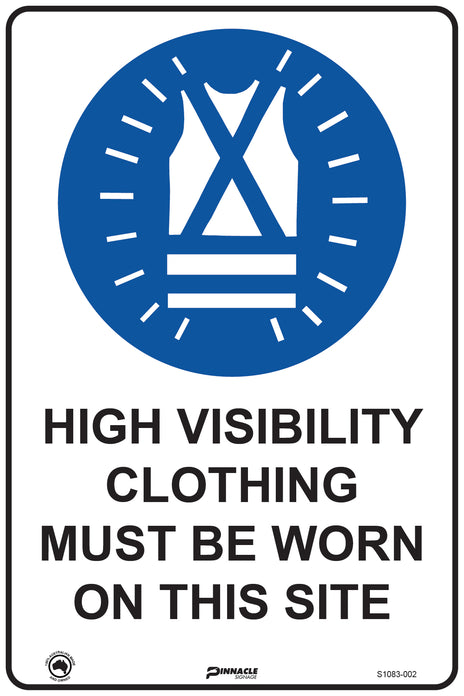
- Mandatory Signs: These blue circular signs tell you what you must do to stay safe. Common examples include "Wear Hard Hats" and "Eye Protection Must Be Worn."
- Warning Signs: With their distinctive yellow triangular shape, these signs alert you to potential hazards that might not be obvious, such as "Danger: Falling Objects" or "High Voltage."
- Safe Condition Signs: These green rectangular signs are your guide to safety in an emergency. They mark the location of first aid stations, emergency exits, and assembly points.
- Fire Equipment Signs: These bright red square signs point to the location of fire extinguishers, alarms, and hose reels, ensuring they can be found quickly in an emergency.
This systematic approach ensures consistency across all Australian worksites. For a deeper look at identifying hazards, see our The Definitive Guide to Safety Sign Hazard Identification.
Common Examples You'll See On-Site
On any construction site, you'll find a range of building site signs working together to keep everyone safe.
- Warning Signs: "Danger: Falling Objects" is essential near cranes and scaffolding. "Caution: Wet Floor" prevents serious slips, and "Danger: High Voltage" warns of fatal electrical risks.
- Mandatory Signs: The iconic "Hard Hats Must Be Worn" sign is a non-negotiable on most sites. "Eye Protection Must Be Worn" is critical during cutting or grinding, while "High-Visibility Clothing Required" ensures workers are seen around vehicles.
- Prohibition Signs: "No Unauthorised Entry" keeps untrained individuals out of dangerous areas. "No Smoking" is crucial for fire prevention near flammable materials.
- Safe Condition Signs: In an emergency, "First Aid Station" and "Emergency Exit" signs guide people to help and safety. "Assembly Point" signs show where to gather after an evacuation.
- Fire Equipment Signs: "Fire Extinguisher" and "Fire Alarm Call Point" signs allow for a rapid response to fire, a constant risk in construction environments.
The Role of Roadside and Jobsite Entry Signs
Building site signs are also crucial for managing the boundary between your worksite and the public.
- Traffic Management: For road-adjacent projects, signs like "Road Work Ahead" and "Lane Ends Merge Ahead" are essential to manage traffic, warn drivers, and protect workers and the public.
- Site Security and Access Control: Signs at the entrance, such as "All Visitors Report to Site Office" and "Authorised Personnel Only," ensure everyone is inducted and that untrained individuals stay out.
- Public Safety: Signs like "Sidewalk Closed" or "Trucks Entering Highway" guide pedestrians safely and warn drivers of heavy vehicles, helping maintain good community relations.
Clear entry and roadside signage shows your project is well-managed and safety-conscious. For more on this topic, our Road Work Alert: The Ultimate Construction Ahead Road Sign Buying Guide has you covered.
From Selection to Site: A Practical Guide to Signage
Choosing the right building site signs involves more than just looks. It's about selecting materials that withstand harsh Australian conditions, placing them for maximum impact, and ensuring they keep your site safe and compliant.
Choosing the Right Materials for Building Site Signs
Matching the material to the environment and intended lifespan is key. Construction sites are tough, so your signs need to be tougher.
- Aluminium Composite (ACM): For long-term durability, 3mm ACM is the top choice. It's robust, weather-resistant, and won't rust or fade, making it perfect for permanent entrance signs and critical hazard warnings.
- Fluted Plastic (Corflute): This lightweight, waterproof material is excellent value for temporary or mobile signs. It's easy to move around the site as work progresses.
- Self-Adhesive Vinyl: Ideal for applying safety information directly onto machinery, vehicles, or existing smooth surfaces. It's surprisingly durable for daily wear and tear.
- Reflective Properties: For signs that must be visible at night or in low light, reflective finishes are a crucial safety feature. This is non-negotiable for roadside applications and critical warnings.
Custom signs allow you to address unique site-specific hazards, combine multiple messages onto a single board, or include company branding. This ensures your signage is perfectly custom to your project's needs.
Best Practices for Signage Placement and Compliance
Quality signs are only effective if they are placed correctly and maintained. Proper signage is a fundamental part of your duty of care under Australian workplace health and safety laws.
Effective signage is based on a thorough site risk assessment to identify all potential dangers. This proactive approach prevents injuries, reduces downtime, and builds a strong safety culture where everyone is empowered to protect themselves.
Key placement and maintenance strategies include:
- Proximity: Place signs as close as possible to the hazard they describe so the warning is timely.
- Visibility: Ensure signs are installed at an appropriate height, are well-lit, and are not obstructed. They must be readable from a safe distance.
- Clarity: Avoid "sign blindness" by not clustering too many signs together. Prioritise the most critical messages in high-traffic areas like site entrances.
- Maintenance: Regularly clean and inspect signs for damage or fading. A sign that is dirty or unreadable is useless.
When standard signs aren't enough, custom construction safety signs can address site-specific hazards, combine multiple warnings, or include bilingual text for diverse workforces. The goal is always clarity and simplicity, using recognisable symbols and colours.
Find the Right Signage for Your Project
At Pinnacle Signage, we understand that every construction project brings its own challenges and requirements. Whether you need standard compliance signs or completely bespoke solutions, our focus is on delivering quality materials with the fast delivery that keeps your project moving.
Our commitment goes beyond just manufacturing signs - we're about helping you create safer, more compliant worksites with signage that stands up to Australian conditions and gets your safety message across clearly.
Where to Find Resources and Training
Staying informed on safety signage and workplace health and safety (WHS) is an ongoing commitment. Fortunately, many excellent Australian resources are available to help.
- Safe Work Australia: Your primary source for national WHS policies, codes of practice, and legal guidelines. Visit www.safeworkaustralia.gov.au for comprehensive information.
- State and Territory WHS Regulators: Bodies like SafeWork NSW and WorkSafe Victoria provide specific local legislation and resources. They are your go-to for state-based requirements and training provider lists.
- Industry Associations: Organisations such as the Master Builders Association offer WHS advice and training custom to the construction industry's unique challenges.
- Registered Training Organisations (RTOs): RTOs offer accredited WHS courses covering hazard identification, risk assessment, and the correct use of safety signs. These are often essential for site managers and safety officers.
- Expert Signage Providers: A knowledgeable provider like Pinnacle Signage can offer practical advice on selecting the right building site signs for your needs. We regularly publish guides to help customers with compliance and best practices.
By using these resources, employers and employees can build a stronger safety culture, ensuring a safer and more compliant work environment for everyone.
Shipping & Pick Up
We deliver building site signs Australia-wide using a reliable courier network, including partners like FEDEX.
Delivery Information
- Address: Please provide a valid daytime street address, as couriers cannot deliver to PO Boxes.
- Signature Required: A signature is needed upon receipt to ensure safe delivery. Re-delivery charges will apply if you are not available to sign.
- Contact Number: Including a daytime phone number helps us resolve any delivery issues quickly.
- Heavy Items: For items over 50kg delivered to residential addresses, a tailgate service to lower them to the ground is included at no extra cost.
Shipping Costs & Times
- Free Shipping: Orders over $100 receive free shipping Australia-wide (some exceptions apply).
- Bulky Items: For bulky items delivered to WA, North QLD, NT, TAS, or island areas, additional shipping costs may apply. Our team will contact you if this is the case.
- Production Time: Most orders are dispatched within 2-4 business days.
-
Estimated Delivery:
- 1-2 days: Sydney, ACT, Melbourne, Brisbane, Gold Coast
- 2-4 days: Rest of NSW & VIC
- 3-6 days: SA, North QLD, Perth
- 5-9 days: TAS, NT, WA
Local Pickup
- Location: Unit 4/28 Nagle Street, East Wagga Wagga NSW.
- Hours: 8am to 5pm, Monday to Friday (closed weekends and public holidays).
If you have any questions about your delivery, please contact us for assistance.