

Suppliers of Construction Traffic Signs in Wagga Wagga: A Profile on Pinnacle Signage
Suppliers of Construction Traffic Signs Near Wagga Wagga: Why Local Sourcing Matters
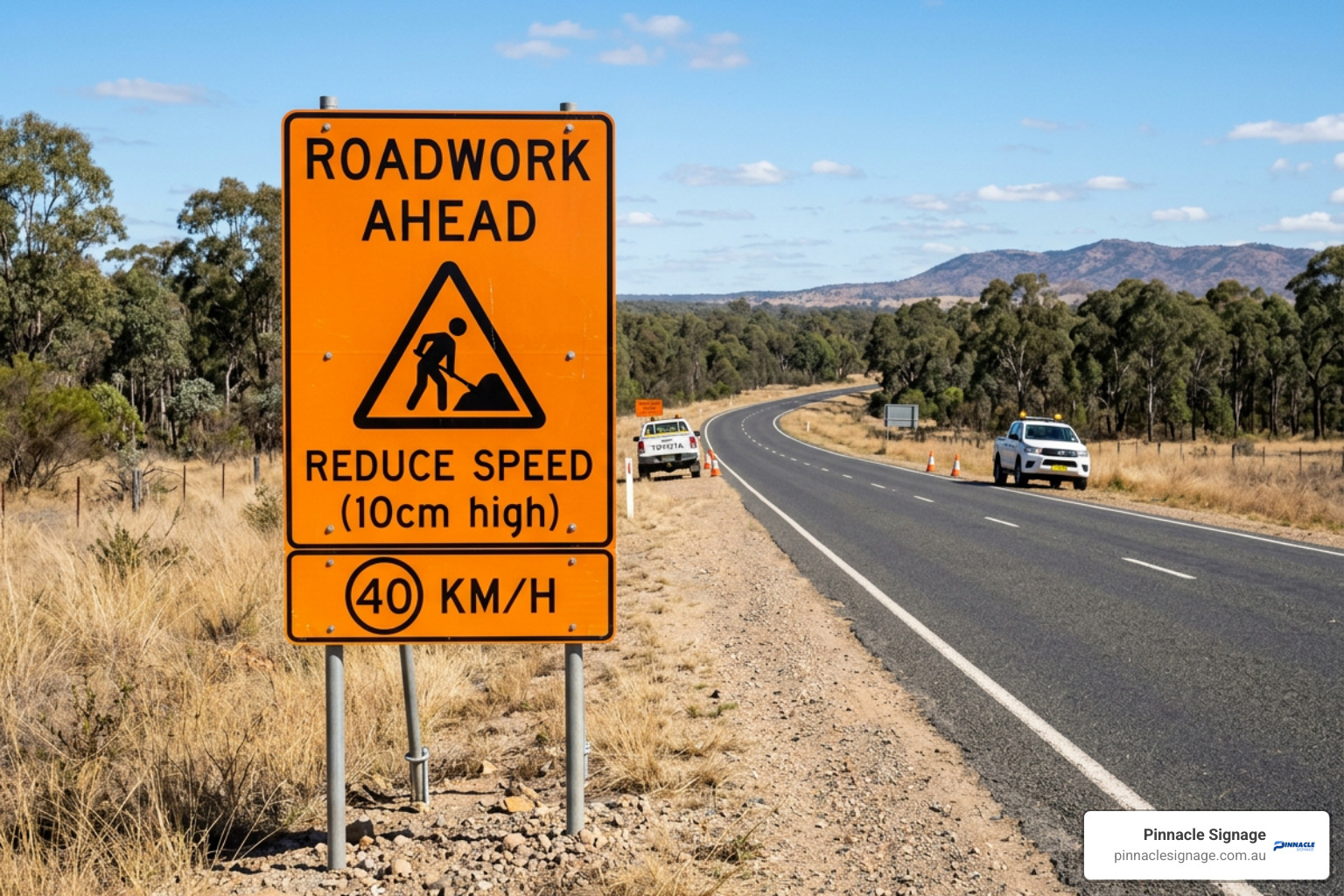
Construction traffic signs are a critical part of any roadwork or civil project in Australia - they protect workers, guide drivers, and keep everyone on site safe.
If you're planning a project near Wagga Wagga and need a reliable local supplier, here's what you need to know at a glance:
- What they are: Standardised signs used to warn, guide, and regulate traffic through temporary work zones
- Who needs them: Construction supervisors, civil contractors, councils, and facilities managers
- Key types: Road Work Ahead, Lane Closed, Flagger Ahead, Be Prepared to Stop, and distance plaques
- Australian standard: Signs must comply with AS 1742.3 and use Class 1 retro-reflective sheeting for visibility day and night
- Recommended sizes: 600mm x 600mm for low-volume roads, 900mm x 900mm for highways and high-speed zones
- Where to source locally: Pinnacle Signage, based in East Wagga Wagga NSW, manufactures and dispatches compliant construction traffic signs Australia-wide with a 48-hour turnaround
Whether you're managing a short-term road maintenance job or a large-scale civil works project, getting the right signs from a dependable local source is not just convenient - it's a safety obligation.
I'm Doug Lindqvist, General Manager of Pinnacle Signage, and my background in the safety and industrial supply space has given me an understanding of the challenges construction teams face when sourcing compliant construction traffic signs quickly and reliably. In the sections below, I'll walk you through everything you need to know about construction traffic signage - from Australian standards and common sign types, to why sourcing locally in the Wagga Wagga region makes a real difference on the ground.
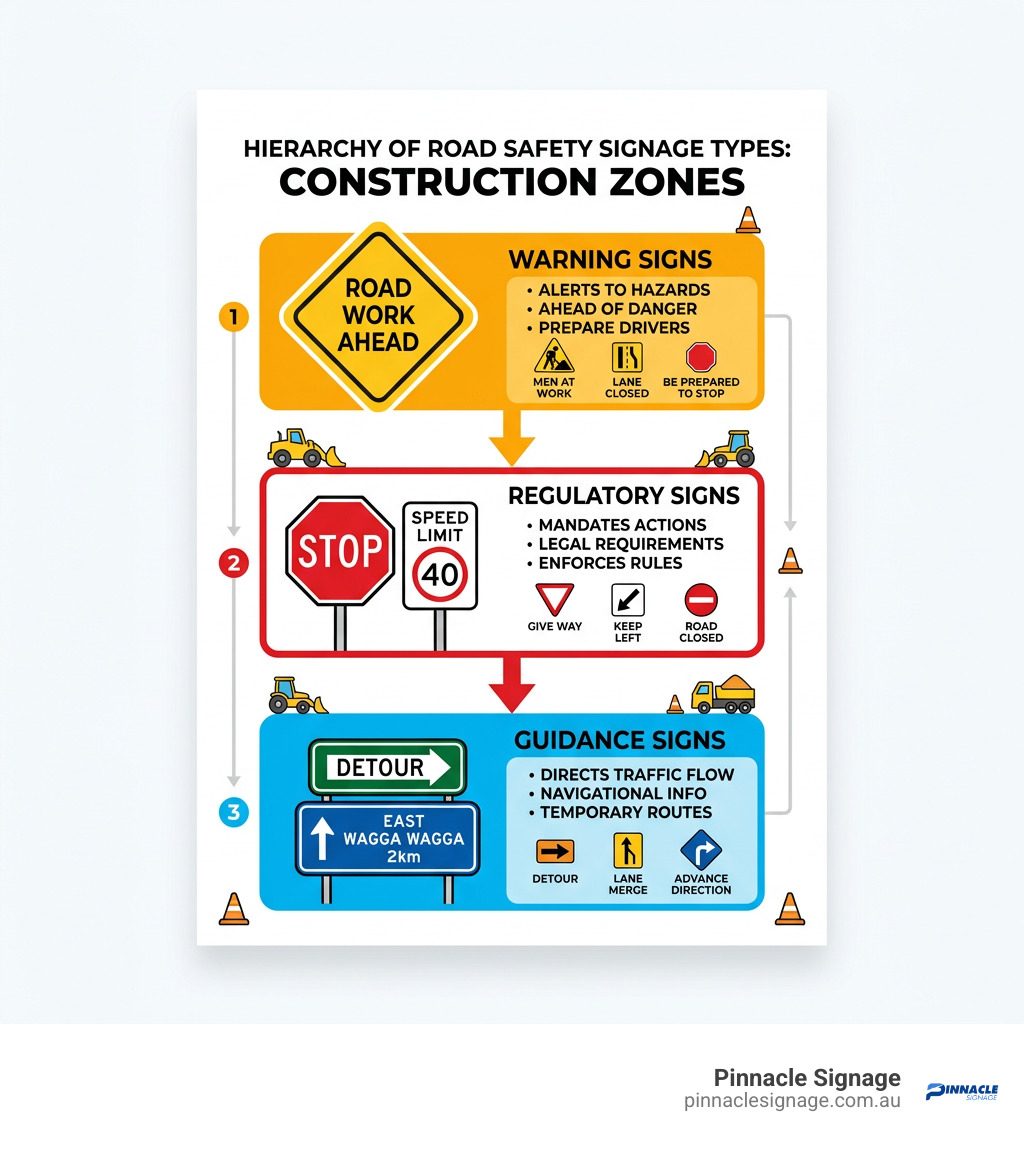
Construction traffic sign terms simplified:
The Role of High-Visibility Signage in Worksite Safety
In the high-risk environment of a construction site, communication is the first line of defence. Whether it is a major highway upgrade or a minor suburban street repair, the presence of a construction traffic sign serves as a silent guardian for both the workforce and the public. We view signage not merely as a regulatory requirement, but as a cornerstone of a robust safety culture.
Effective risk management relies on the ability to provide clear, unambiguous instructions to road users. When a driver encounters a well-placed, high-visibility safety panel, it triggers an immediate adjustment in behaviour - slowing down, increasing alertness, and preparing for changes in road conditions. This proactive communication is essential for accident prevention.
For workers, these signs create a buffer zone. By managing the flow of traffic and providing pedestrian guidance around heavy machinery and open excavations, we significantly reduce the likelihood of site-related incidents. Our objective is to ensure that every individual on-site returns home safely at the end of the day. You can find more detailed insights on this in our guide on construction traffic signs 101.
Key safety objectives of construction signage include:
- Alerting motorists to upcoming changes in road surfaces or lane configurations.
- Providing sufficient warning to allow for safe braking distances.
- Protecting vulnerable road workers from high-speed traffic.
- Ensuring clear navigation for pedestrians and cyclists around work zones.

Standard Specifications for Australian Construction Traffic Sign Manufacturing
In Australia, the manufacturing of a construction traffic sign is governed by strict standards, primarily AS 1742.3 (Manual of uniform traffic control devices). These standards ensure that regardless of where a sign is placed, it remains legible and effective under all conditions.
One of the most critical specifications is the use of Class 1 reflective material. This high-intensity retro-reflective sheeting is designed to bounce light back to its source, such as a vehicle's headlights, making the sign clearly visible during the night or in poor weather. At Pinnacle Signage, we use premium materials, including high-grade reflective sheeting, to ensure our products exceed basic durability requirements.
The choice of substrate material also plays a role in the longevity and application of the sign. While temporary signs might use lighter materials, permanent or long-term construction signage often requires heavy-duty .080-inch aluminium or high-impact poly.
Durability is further enhanced through the use of UV-resistant inks. Given the harsh Australian sun, signs that are not properly treated will fade quickly, losing their safety effectiveness and requiring frequent replacement. By utilising advanced printing technology, we ensure our signs maintain their high-contrast orange and black colours for years. For more information on these technical requirements, see our article on road construction signage requirements.
External research into road safety materials highlights that the science behind retro-reflectivity is constantly evolving, and we stay at the forefront of these developments to provide Wagga Wagga projects with the best possible protection.
Essential Types of Temporary Traffic Control
Temporary traffic control (TTC) zones are dynamic and require a flexible approach to signage. We supply a wide range of solutions, from rigid aluminium signs for long-term projects to lightweight options for rapid deployment.
Multi-message sign frames are particularly popular for regional roadwork near Wagga Wagga. These frames allow for multiple legends to be displayed in a single, portable unit, making it easy for crews to update messages as the work zone changes. These are often used in conjunction with swing stands and boxed edge signs for maximum stability in windy conditions.
Common materials used in our manufacturing process include:
- Aluminium: The industry standard for rigid, long-lasting signs.
- Corflute: Ideal for very short-term, lightweight applications.
- Polypropylene: A durable, flexible alternative that resists cracking and impact.
- Vinyl (Roll-up): Perfect for emergency or mobile works where space is at a premium.
For a deeper look into selecting the right signs for your project, check out our resource on construction ahead road signs.
Essential Construction Traffic Sign Legends and Meanings
Understanding the specific "legends" or text on a construction traffic sign is vital for compliance and safety. Each message is designed to convey a specific instruction or warning:
- Road Work Ahead: The primary advance warning sign, alerting drivers that they are entering a work zone.
- Flagger Ahead: Indicates that a traffic controller is present and drivers must be prepared to stop or follow hand signals.
- Lane Closed: Crucial for highway work, this sign tells drivers they need to merge early to avoid a bottleneck or hazard.
- Be Prepared to Stop: Used when traffic flow is interrupted, ensuring drivers are not caught off guard by stationary vehicles.
- Detour: Guiding traffic away from closed sections of road. You can learn more about understanding detour signs to ensure your routes are easy to follow.
Distance plaques (e.g., "500m" or "1km") are frequently used under these signs to provide motorists with a clear timeline of when they will encounter the hazard.
Maximising Visibility with a Construction Traffic Sign
Simply having the signs is not enough; they must be deployed strategically to be effective. Placement and spacing are determined by the approach speed of the road. For example, on a high-speed freeway, signs must be placed much further in advance than on a quiet suburban street in Wagga Wagga.
Transport for NSW provides clear guidelines on traffic signs and their placement. We recommend that site managers conduct a "drive-through" of their signage setup to ensure there are clear sightlines from a driver's perspective. If a sign is obscured by a tree, a bend in the road, or another vehicle, its safety value drops to zero.
Night visibility is another critical factor. Even with Class 1 reflective sheeting, signs must be angled correctly to catch headlight beams. Regular inspections should be carried out to ensure signs remain upright and clean, as dust and mud can significantly reduce reflectivity. For more on identifying potential road risks, see our guide on road hazard signs.
Sourcing Locally: Pinnacle Signage in East Wagga Wagga
When you are looking for a supplier of construction traffic signs for a project near Wagga Wagga, sourcing locally offers unmatched advantages. As a manufacturer based right here in East Wagga Wagga, NSW, we understand the specific needs of regional contractors and councils.
Buying direct from the manufacturer means you are not paying middleman markups. It also means you have direct access to our expertise. If you need a custom sign with specific site contact details, emergency phone numbers, or your company logo, we can handle that in-house. Our customisation options allow for tailored text, colours, and dimensions to suit any site-specific risk.
For larger projects, our bulk order capabilities are a primary focus. We offer:
- 48-Hour Dispatch: We know that delays on-site are expensive, so we move quickly.
- Local Pickup: Save on shipping costs by picking up directly from our warehouse in East Wagga Wagga (Monday to Friday, 8 am to 5 pm).
- Regional Expertise: We are familiar with NSW road standards and the environmental conditions signs must endure in our region.
If you are wondering where to buy temporary road signs, look no further than your own backyard.
Frequently Asked Questions about Construction Signage
What are the standard sizes for road work signs in Australia?
In Australia, the size of a construction traffic sign is determined by the speed and volume of the road. Typically, 600mm x 600mm signs are used for local streets and low-speed environments. For highways and high-speed regional roads, 900mm x 900mm or even 1200mm x 1200mm signs are required to ensure they are legible from a distance.
How do I customise a sign with specific site contact details?
Customisation is a straightforward process with us. You can provide your company name, emergency contact numbers, and even your logo. We use high-quality digital printing to integrate these details into the sign design, ensuring they meet the same durability and reflectivity standards as our stock signs. You can explore our custom signage options online.
Are these signs available for local pickup in Wagga Wagga?
Yes! We encourage local businesses and contractors to take advantage of our warehouse pickup in East Wagga Wagga. We are open Monday to Friday, from 8 am to 5 pm. This is often the fastest way to get your project moving, and it allows you to speak directly with our team about any specific requirements you might have.
Conclusion and Regional Distribution
Choosing the right construction traffic sign is about more than just compliance; it is about protecting the people who build and maintain our regional infrastructure. By sourcing your signage from a local manufacturer like Pinnacle Signage, you are investing in high-quality, Australian-made products that are built to last in our unique environment.
From our 48-hour dispatch to our convenient East Wagga Wagga pickup, we are dedicated to supporting the Wagga Wagga construction community with reliable, durable, and compliant safety solutions. Whether you need a single "Road Work Ahead" sign or a complete suite of multi-message frames for a major bypass project, we have the capacity and the regional expertise to deliver.
Ready to secure your site? You can search our road construction products to find exactly what you need, or contact our local team to discuss your bulk requirements.