

Corrosive Substance Signs: Selecting the Right Warning Symbol
Your Guide to Corrosive and Acid Safety Signage
An acid sign is a crucial warning label that identifies hazardous corrosive substances, helping to prevent chemical burns and serious injuries in the workplace. These signs use standardised symbols and colour coding to quickly communicate the level of danger:
- Danger Signs: Red background with white text - for life threatening hazards like concentrated acids
- Warning Signs: Orange background with black text - for substances that could cause injury
- Caution Signs: Yellow background with black text - for mild acids or diluted solutions
- WHS Pictogram: Diamond-shaped symbol showing a hand and surface being corroded
Corrosive substances are a significant risk in many Australian workplaces, from battery charging areas to chemical storage facilities. The right signage is your first line of defence, creating a clear visual warning that protects your team from life-threatening hazards and helps ensure you meet compliance requirements.
Proper hazard communication can prevent serious injuries. The right acid sign placement and design can be the difference between a safe workday and a workplace emergency.
Understanding the Risks of Acids in the Workplace
Acids and other corrosive substances are common in Australian workplaces, including laboratories, manufacturing plants, and cleaning services. They are defined by their ability to damage materials and human tissue on contact. The danger level depends on the concentration; concentrated acids are highly corrosive and can cause severe burns, while even dilute acids can cause harm.
Understanding the specific risks of the materials you handle is the first step towards safety. For a deeper dive into the science of acids, you can refer to educational resources like the BBC Bitesize guide on Acids in the laboratory. For a broader understanding of hazard symbols, explore our guide on Know Your Hazard Symbols: A Guide to Chemical Signage.
The Role of Clear Signage in Hazard Prevention
In any environment with corrosive substances, clear signage is a critical part of hazard prevention. These visual warnings are the first line of defence, alerting workers to potential dangers. Effective signage mitigates risk by:
- Providing immediate warnings: A well-placed acid sign or corrosive substance sign quickly conveys the presence of a hazard.
- Guiding safe practices: Signs can instruct on necessary personal protective equipment (PPE) or safe handling procedures.
- Ensuring compliance: Meeting Australian standards and OHS laws through proper signage protects your business and demonstrates a commitment to safety.
- Preventing serious incidents: By clearly marking hazardous areas, signage reduces the likelihood of accidental exposure and severe injuries.
Our signs are designed to cut through confusion, ensuring that crucial safety messages are understood by everyone on site. For more insights into the importance of safety labels, check out our article on Signs of Trouble: Understanding Danger Labels and Safety Signage.
A Guide to Choosing the Right Acid Sign
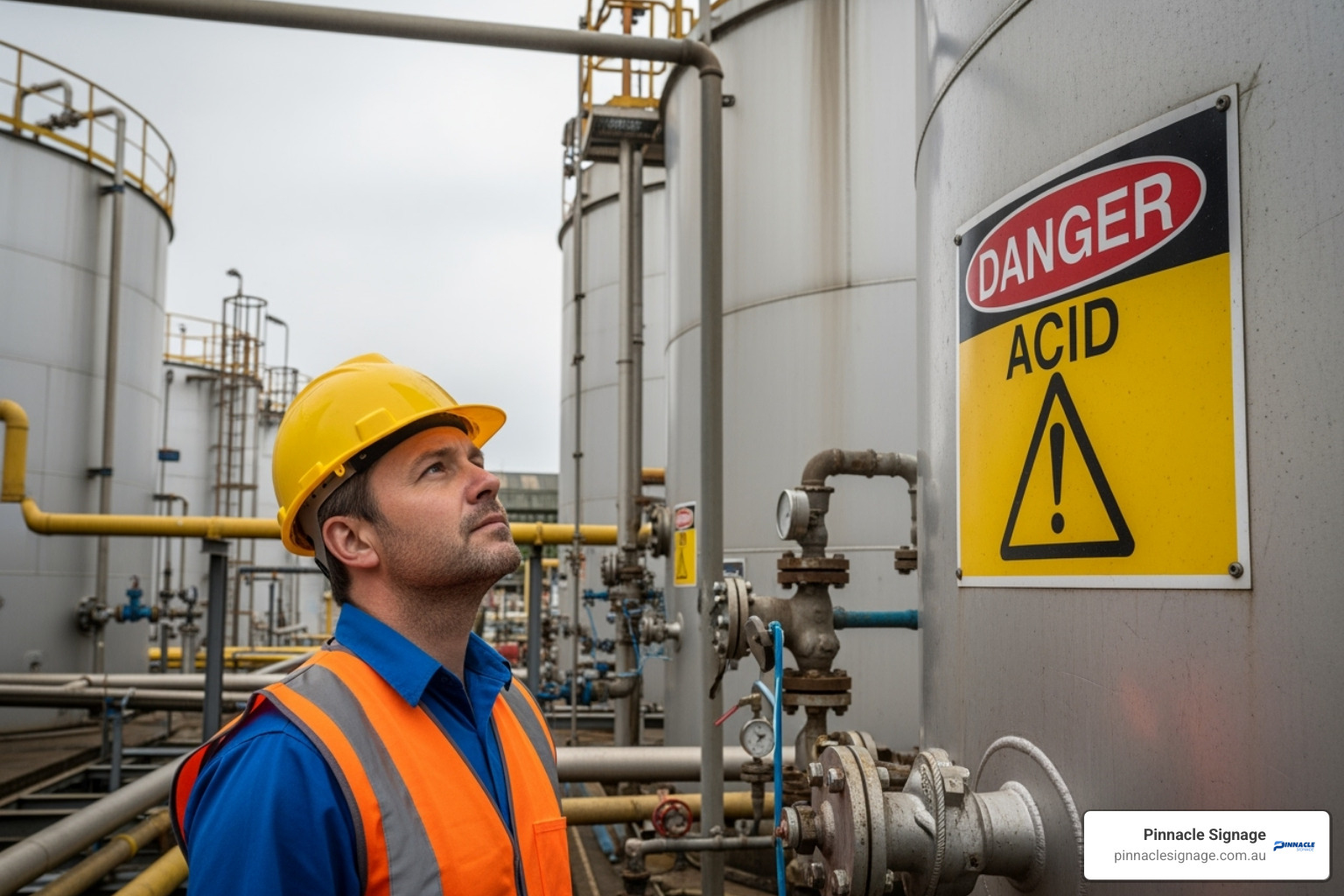
Selecting the correct acid sign is a crucial step in safeguarding your workplace. The right sign depends on the specific hazard, its severity, and the environment. It’s about precise communication, not just a generic warning. We offer a range of solutions, including customisable options, to meet your unique operational needs. For a comprehensive overview, see our article on Hazardous Chemicals Sign Requirements 101.
1. Decoding Hazard Levels: Danger, Warning, and Caution
Understanding the distinctions between Danger, Warning, and Caution is fundamental. Each signal word indicates a different level of hazard, guiding the appropriate response.
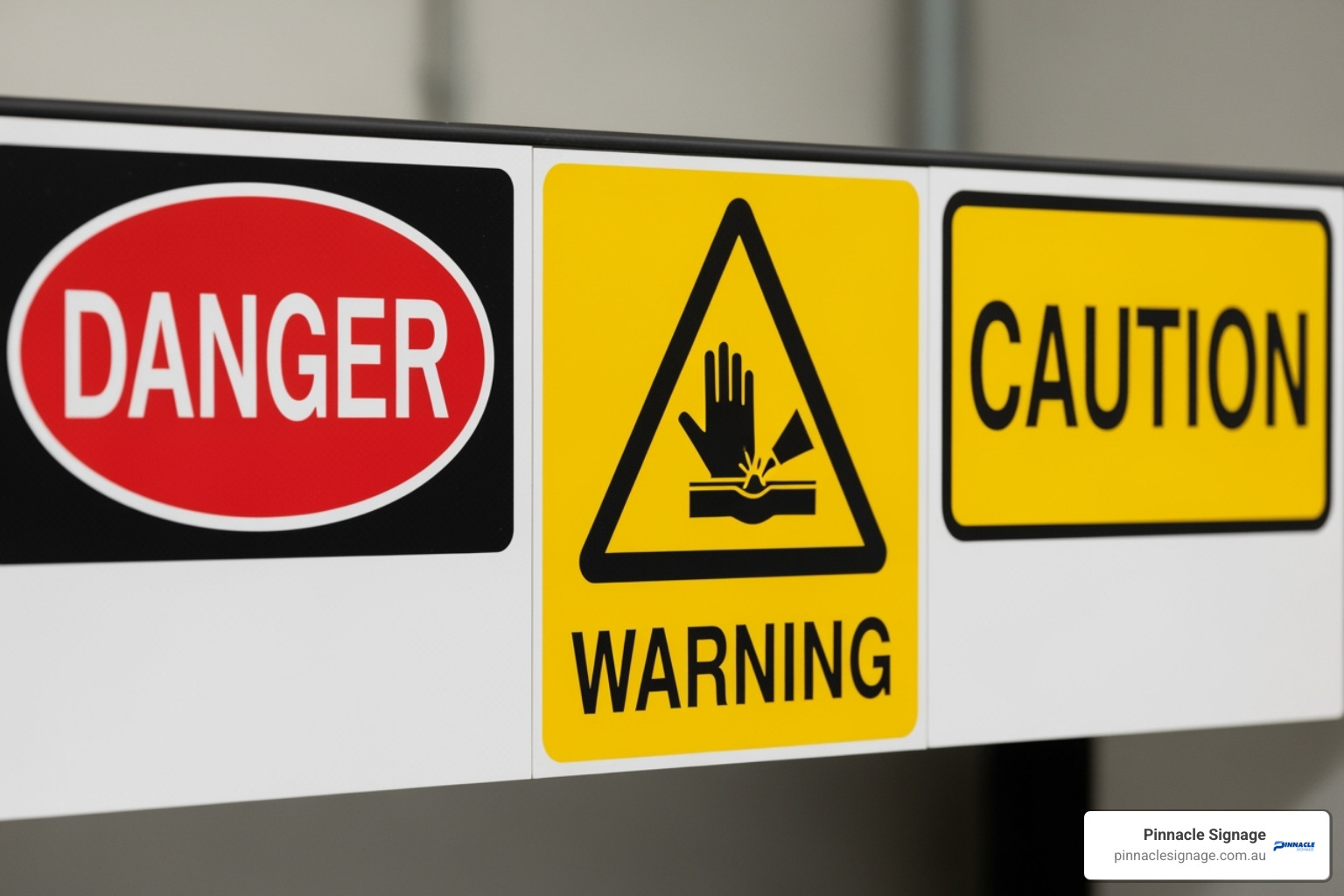
Danger Signs: Indicate an imminent hazard that will result in death or serious injury. They are reserved for the most extreme situations. For example, a "Danger Hydrochloric Acid" sign communicates that improper contact will cause severe harm. We offer a comprehensive range of Danger Safety Signs in Australia for these critical situations.
Warning Signs: Indicate a potentially hazardous situation that could result in death or serious injury. The hazard is significant but not as immediate as a "Danger" situation.
Caution Signs: Indicate a potentially hazardous situation that could result in minor or moderate injury. They are used for less severe hazards, like dilute acid solutions.
It's crucial to select the correct sign to accurately reflect the risk. For a comprehensive breakdown, read our guide on Caution vs. Danger vs. Warning: What's the Difference?.
2. What Information Should an Acid Sign Include?
An effective acid sign must convey critical information quickly. Following Australian workplace safety regulations is essential for clear communication. A comprehensive sign should include:
- Signal Word: "DANGER", "WARNING", or "CAUTION", indicating the hazard severity.
- WHS Pictograms: The corrosive pictogram (a hand and a surface being corroded) is essential for identifying substances that cause skin corrosion or serious eye damage. Learn more about the Corrosive Symbol.
- Hazard Statement: A concise statement describing the hazard, like "Causes severe skin burns and eye damage."
- Precautionary Statement: Instructions on prevention, response, storage, and disposal.
- Personal Protective Equipment (PPE) Requirements: Clear symbols or text indicating required PPE.
WHS compliant signs integrate these elements for a complete safety message. We specialise in Compliant Chemical Signage Made Simple and can help you select signs with all necessary information.
3. Choosing Durable Materials for Corrosive Environments
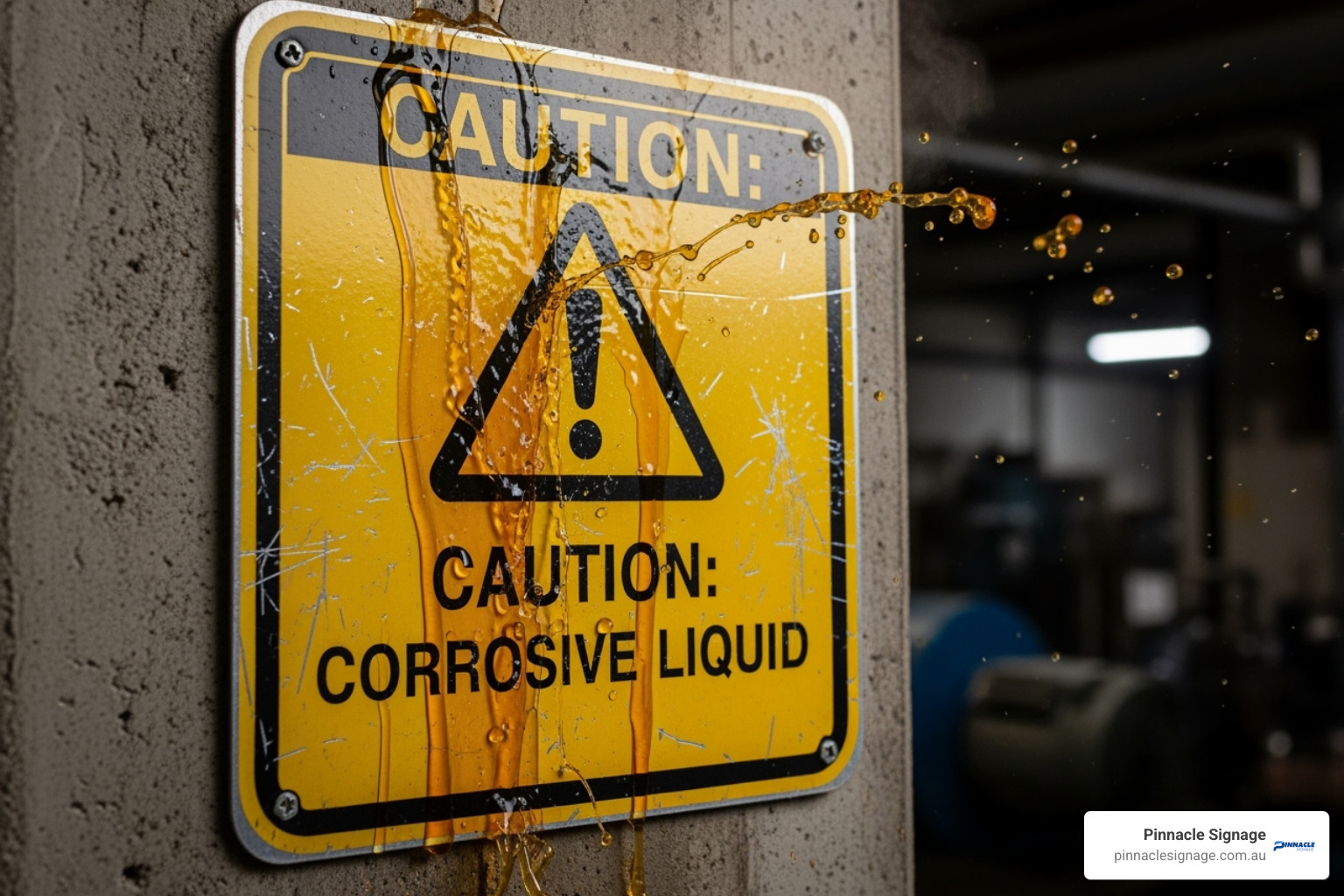
The material of your acid sign is as critical as its message, especially in harsh environments with chemical splashes and frequent cleaning. At Pinnacle Signage, we manufacture our signs from durable, weather-resistant materials designed for long-lasting performance. We primarily use:
- Aluminium Signs: Inherently resistant to chemicals and abrasion, aluminium never rusts, making it ideal for areas with chemical spills and varying weather.
- Polypropylene Signs: A tough, flexible plastic offering good chemical resistance, particularly against many acids.
- Self-Adhesive Vinyl: Suitable for labelling containers or for indoor use, high-quality vinyl with a protective laminate can resist moisture and abrasion.
The goal is to ensure your sign remains clear and intact for years. For more on materials, consult our Ultimate Guide to Identifying Corrosive Material Signs.
4. Where to Place Signs for Maximum Effectiveness
An acid sign is useless if it's not seen. Strategic placement is paramount to ensure everyone is aware of hazards before they encounter them. Consider these guidelines:
- Entry Points: Place signs at all entrances to areas where corrosives are used or stored.
- Storage Areas: Clearly mark cabinets, shelves, and containers holding acids.
- Point of Use: Position signs directly at workstations where acids are handled.
- Eye-Level Visibility: Mount signs between 1.5 to 1.8 metres from the ground.
- Unobstructed Views: Ensure signs are not blocked by equipment or other objects.
Poor placement increases the risk of accidents. For practical advice, read our article on Chemical Handling Signage Made Simple: No Chemistry Degree Required.
5. Are There Specific Acid Sign Designs for Different Hazards?
Yes, specific acid sign designs are available for different hazards, as a generic "Acid" sign may not be sufficient. Specificity ensures the warning is precise and actionable. Our range includes signs for:
- Strong Acids: Such as "Danger Nitric Acid" or "Danger Sulfuric Acid."
- Hot Acids: For processes involving heated corrosive liquids.
- Battery Charging Areas: Signs often include specific procedures for handling battery acid.
- Acid Storage: To clearly mark storage locations.
- Specific PPE: Signs that integrate PPE requirements, like "Danger Acid Area Eye Protection Required."
We offer a wide selection of Hazchem and WHS compliant signs to address every potential acid-related hazard. Explore our full range of Hazchem Signage and Chemical Safety Signage.
6. The Benefits of Bilingual and Multilingual Signage
In Australia's diverse workforce, bilingual or multilingual acid signs are key to ensuring universal understanding and safety.
- Diverse Workforce: Ensures safety messages are understood by everyone, regardless of their primary language.
- Universal Understanding: Reinforces pictograms and reduces misinterpretation.
- Improved Safety Outcomes: Decreases the risk of accidents when everyone understands the hazards.
- Inclusivity and Respect: Shows a commitment to the well-being of all employees.
We can help you create custom bilingual or multilingual signs to meet your team's needs. Request a quote for custom multilingual signs to ensure your safety messages resonate with everyone.
Find the Right Corrosive Substance Signage Today
When it comes to corrosive substances and acid sign solutions, there is no room for compromise. Poor signage can lead to devastating chemical burns, irreversible health damage, and significant business penalties. A faded, poorly placed, or generic sign is a risk you can't afford.
At Pinnacle Signage, we understand that protecting your team is the top priority. We manufacture our signs from premium, durable materials designed to withstand Australia's harsh conditions. Whether you need standard WHS pictograms or custom multilingual signage for a major industrial facility, we have the expertise to get it right.
For organisations looking to standardise safety across multiple sites, we offer competitive bulk pricing and custom solutions.
Ready to Upgrade Your Safety Standards?
Don't wait for an accident. Browse all acid signs online to find what you need, or contact us for bulk orders and custom solutions. Our team in East Wagga Wagga NSW is ready to help you create a safer workplace.
Shipping & Pickup Information
Production & Shipping Times: Most items are dispatched within 48 hours. Estimated delivery times are:
- 1 - 2 days: Sydney, ACT, Melbourne, Brisbane, Gold Coast
- 2 - 4 days: Rest of NSW, Rest of VIC
- 3 - 6 days: SA, North QLD, Perth
- 5 - 9 days: TAS, NT, WA
Delivery Details: We use courier services and cannot deliver to PO Boxes. A signature is required upon receipt, and re-delivery charges may apply if you are not available. For items over 50kg, a tailgate delivery may be required for residential addresses.
Free Shipping: Free shipping is available for orders over $100 AU Wide. For some bulky items, additional shipping costs may apply to WA, North QLD, NT, and TAS. Our staff will contact you if these charges apply.
Warehouse Pickup: Pickup is available at our warehouse at Unit 4/28 Nagle Street, East Wagga Wagga NSW, from 8am to 5pm, Monday to Friday (closed on weekends and public holidays).