

Don't Be That Person: A Guide to Emergency Exit Alarm Signs
Do "Emergency Exit Only - Alarm Will Sound" Signs Actually Work?

Emergency exit only alarm will sound signs are a genuine warning - not a bluff. In most commercial and public buildings across Australia, these signs indicate a real, functioning alarm system connected to the door. Here's what you need to know at a glance:
- The alarm is usually real. Most emergency exit doors in commercial buildings, cinemas, offices, and warehouses have active alarm systems installed.
- The alarm is loud and local. When triggered, a siren sounds immediately at the door - loud enough to alert nearby staff and occupants.
- It can escalate. In some buildings, the alarm is connected to a security firm or fire monitoring service, which may respond directly.
- Some alarms are disabled. In certain locations, alarms are switched off if the door is used as a regular exit - but you cannot assume this is the case.
- The sign itself is a deterrent. Even where an alarm exists, the sign is the first line of defence against unauthorised use.
The short answer: treat every "Emergency Exit Only - Alarm Will Sound" sign as if the alarm is fully active - because in most cases, it is.
Opening an emergency exit door without a genuine reason can set off a loud local siren, trigger a security response, or even escalate to a fire service callout. For facilities managers and site supervisors, understanding how these signs and alarm systems work together is essential - not just for security, but for fire safety compliance and the integrity of your building's evacuation routes.
I'm Doug Lindqvist, General Manager of Pinnacle Signage, and through years of working in the safety and industrial supply space, I've seen how the right signage - including clear "emergency exit only alarm will sound" warnings - can make a real difference in deterring unauthorised access and keeping evacuation routes functional when they matter most. The following details everything you need to know about these signs, from how the alarm systems work to choosing compliant, durable signage for your site.
Emergency exit only alarm will sound terms to know:
Understanding the Purpose of Emergency Exit Alarm Signs
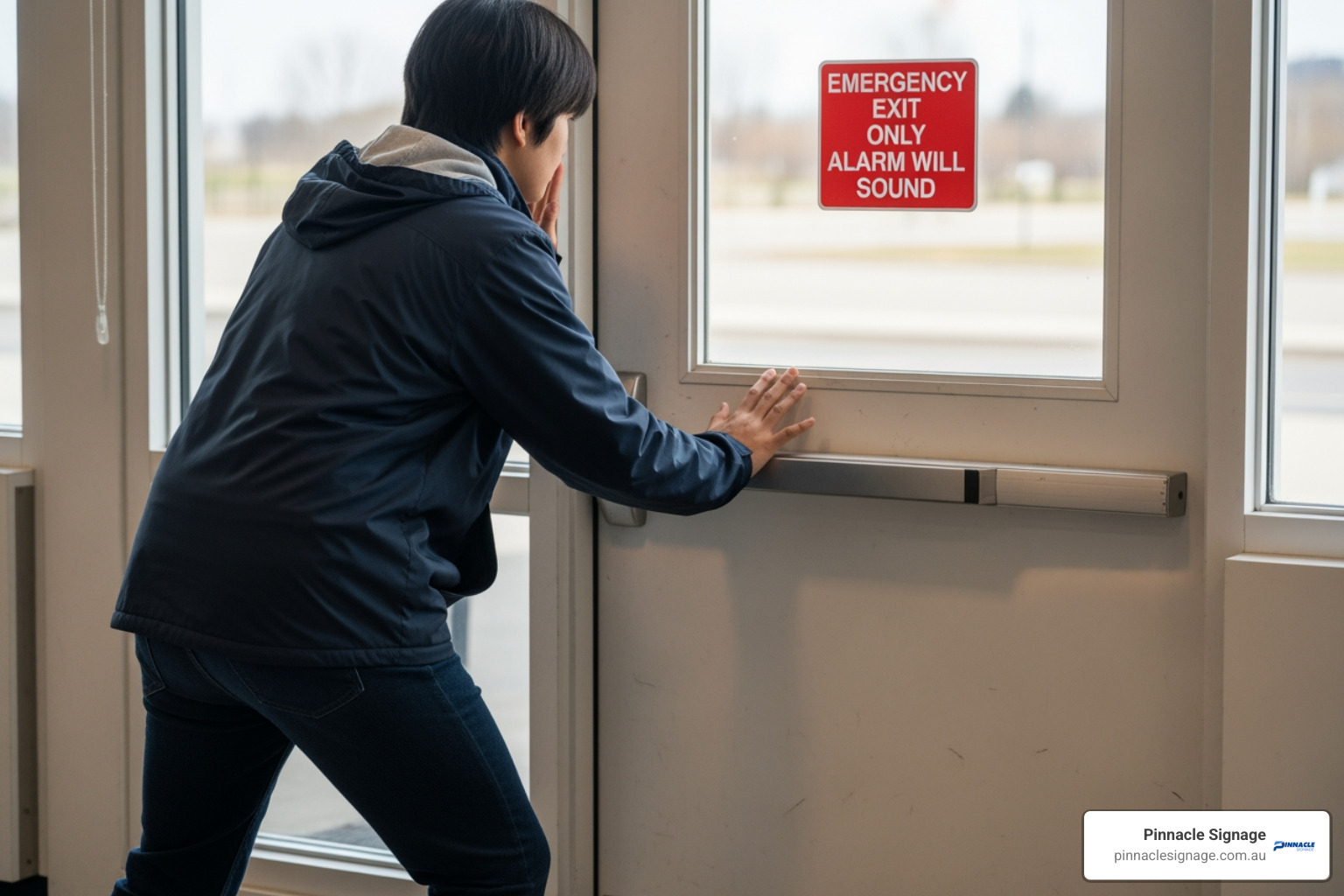
When you see a sign stating emergency exit only, an alarm will sound, it serves a dual purpose: it is a functional safety instruction and a powerful security deterrent. These signs are strategically placed to manage how people move through a building, ensuring that specific doors are reserved exclusively for life-threatening situations.
Unauthorised use of these doors is a significant headache for site managers. Whether it is a visitor trying to find a shortcut to the car park or an employee nipping out for a break, using an emergency exit for non-emergency reasons compromises the building's security and safety protocols.
What the Sign Indicates to Occupants
To a visitor or employee, the sign is a clear "hands-off" warning. It indicates that the door is not a general thoroughfare. The presence of the word "ALARM" creates an immediate psychological barrier. Most people do not want the embarrassment of a 100-decibel siren drawing attention to them, which is why these signs are so effective at maintaining exit and entry signage integrity.
Why These Signs Are Essential for Site Managers
For those of us managing sites in New South Wales and across Australia, these signs are about more than just noise. They are essential for:
- Preventing Theft: In commercial environments, emergency exits are often targeted by unauthorised individuals because they lead directly outside. An alarmed door prevents a "dash and grab" scenario.
- Maintaining Fire Safety: If a door is used frequently for non-emergencies, it may be propped open, which violates fire safety codes and allows smoke to spread during a fire.
- Monitoring Egress Points: Knowing exactly when an external door is opened allows security teams to respond to potential breaches immediately.
How Emergency Exit Alarms Function in Australian Workplaces
The technology behind an emergency exit only alarm will sound system varies depending on the age and size of the building. In modern Australian workplaces, these systems are often integrated into the wider building management or fire security network.
Types of Alarms on an Emergency Exit Only Alarm Will Sound Door
There are several ways an alarm can be configured on an exit door:
- Battery-Powered Units: These are common in smaller facilities. They use a standard 9V battery and are self-contained within the door hardware. They are easy to install but require regular maintenance to ensure the battery hasn't died.
- Hardwired Systems: These are connected to the building’s power supply (often using a 24VDC regulated power supply). These systems are more reliable as they don't rely on batteries and can be linked to a central security desk.
- Exit Alarm Kits (ALK): High-end hardware, such as the Von Duprin ALK, is an industry standard. These kits can be added to existing panic bars. Interestingly, some older power supplies like the PS9 have been discontinued and replaced by more efficient models like the PS902, which can run multiple kits simultaneously.
If you find a door that is emergency exit only not alarming, it is often due to a simple maintenance oversight, such as a flat battery or a key switch that hasn't been armed.
What Happens When the Alarm is Triggered
When that push bar is pressed, a few things happen in quick succession. First, a local siren sounds. This is designed to be loud enough to startle the person opening the door and alert anyone in the immediate vicinity.
In many commercial settings, the alarm also sends a signal to a remote monitoring station. If the building has a high security requirement, this might trigger a security guard's arrival or even an automated notification to the fire service. Because of the potential for fire signage to be part of a larger life-safety system, some alarms are designed to escalate to a full building evacuation if the alarm isn't reset within a specific timeframe (usually 1-2 minutes).
Legal Requirements and Compliance for Exit Signage
In Australia, we don't just put signs up wherever we feel like it. There are strict Australian Standards and building codes (such as the National Construction Code) that dictate how emergency exits must be marked.
Visibility and Placement Standards
To stay on the right side of a safety audit, you need to follow a few key rules regarding compliant exit and entry signage:
- Mounting Heights: Generally, the bottom of an exit sign should be no more than 2030mm above the floor. For floor-proximity signs used in smoke-filled environments, they should be mounted between 150mm and 450mm from the floor.
- Contrasting Colours: The text must stand out. Red and white or green and white are the standard, depending on the specific type of exit or fire sign.
- Clear Messaging: The wording "EMERGENCY EXIT ONLY - ALARM WILL SOUND" must be legible from a distance. For more details on the basics, check out our guide on entry and exit signs 101.
Consequences of Non-Compliance
Ignoring these standards isn't just a safety risk; it's a financial one. During a WorkSafe inspection or a local council fire safety audit, missing or incorrect signage can lead to:
- Safety Audits: Being flagged for a follow-up inspection, which takes up valuable time.
- Potential Fines: Substantial penalties for failing to maintain a safe path of egress.
- Insurance Implications: If an incident occurs and your signage was found to be non-compliant, your insurance provider might have grounds to dispute a claim.
Choosing the Right Materials for Your Emergency Exit Only Alarm Will Sound Sign
At Pinnacle Signage, we know that a sign is only as good as the material it’s printed on. An emergency sign that fades or peels after six months in the Australian sun is a liability. When evaluating the ultimate guide to exit fire signs, material selection is a critical factor.
Material Options for Different Environments
- Rust-Free Aluminium: This is the gold standard for industrial and outdoor use. Our AL-Plus aluminium composite is thicker and stiffer than standard sheets, offering a 10-year outdoor durability rating. It handles temperatures from -40 to 82 C without breaking a sweat.
- Rigid Plastic (PVC): A great, cost-effective option for indoor environments like office hallways or warehouse stockrooms. It’s lightweight and easy to mount with pre-drilled holes.
- Flexible Vinyl: Perfect for flat, smooth surfaces. High-quality adhesive vinyl can be applied directly to the door itself.
- Photoluminescent (Glow-in-the-Dark): These are essential for power outage scenarios. They absorb light during the day and glow brightly if the lights go out, guiding occupants to safety even in total darkness.
Sizing and Customisation for Bulk Orders
Signs come in various sizes to suit different viewing distances, ranging from small labels to large signs for high-ceiling warehouses. If you have a specific requirement, such as adding a company logo or specific instructions, custom signage is the way to go. We can tailor the text, colours, and dimensions to meet your site's unique needs.
Troubleshooting Your Emergency Exit Only Alarm Will Sound System
Even the best systems can run into issues. If your alarm is sounding for no reason (false alarms) or failing to sound when it should, it’s time for some basic maintenance.
Common Issues and Quick Fixes
- Vibration Interference: Sometimes, the vibration from the alarm's own horn can cause the internal cylinder to turn, shutting the alarm off after just a minute or two. This is usually due to a misplaced spring on the circuit board.
- Battery Replacement: If the alarm is beeping intermittently (like a smoke detector), the 9V battery is likely low.
- Cylinder Alignment: If the key switch feels "mushy" or won't arm the system, the mortise cylinder might be misaligned. Ensure you are using a 1 1/4" cylinder with a straight cam for most standard kits.
Ensuring Long-Term Reliability
Don't wait for an emergency to find out your system is broken. We recommend:
- Regular Testing: Use the key switch to test the alarm monthly. Some systems require a 20-second wait after arming before you test the push bar.
- Cleaning Sensors: Dust and grime can interfere with magnetic sensors on the door frame.
- Updating Signage: If your signs are peeling or faded, replace them immediately to ensure clear communication. For more tips on maintaining your egress routes, see our exit strategy top picks.
Frequently Asked Questions about Emergency Exit Alarms
Do these signs always mean an alarm is active?
While the sign is a powerful deterrent on its own, you should always assume it is active. In many cases, even if a local siren isn't visible, the door is monitored by a magnetic contact connected to the building's main security panel. Testing it "just to see" is a great way to meet your local security guard very quickly.
What are the fines for unauthorised use of an emergency exit?
There isn't a single "fine" for opening a door, but the costs can add up. Many security firms charge a "call-out fee" for false alarms. Furthermore, if your actions cause a fire service escalation, the "false alarm" fine from the fire department can be thousands of dollars. Internally, most workplaces treat unauthorised use of emergency exits as a serious safety breach, which can lead to disciplinary action.
Where can I purchase compliant emergency exit signs?
For convenience, many of our standard Pinnacle Signage products are available at Bunnings Warehouse both in-store and online, across Australia. If you need something more specific or are looking to place a large bulk order for a new construction site or warehouse fit-out, you can order directly through our website for fast dispatch.
Alarmed Exits Are There for a Reason
At Pinnacle Signage, we take pride in manufacturing high-quality, durable signage right here in Australia. Whether you are managing a small office in Wagga Wagga or a massive industrial site in Sydney, having clear, reliable emergency exit only alarm will sound signage is a non-negotiable part of your safety system.
Our products are designed to withstand the harsh Australian climate, with options for UV stability and chemical resistance. We offer fast dispatch (within 48 hours) and free shipping on orders over $100 (excluding bulky items) across Australia. If you need a custom solution or want to discuss bulk pricing for your next project, our team is ready to help.
Contact our team for bulk orders or visit our warehouse in East Wagga Wagga NSW between 8am and 5pm, Monday to Friday. Let's make sure your site stays safe, secure, and compliant.