

Eye Wash Signs Explained: Keeping Your Workplace Clear and Safe
Why Eye Wash Signs Are Critical for Australian Workplace Safety
Eye wash signs are vital safety markers that identify the location of emergency eyewash stations where employees face potential exposure to hazardous chemicals or particles. They serve as crucial visual guides during emergencies, helping workers find life-saving equipment when every second counts.
Key Elements of Effective Eye Wash Signs:
- A green and white colour scheme for instant recognition
- Clear directional arrows to guide workers to stations
- Universally recognised symbols for instant identification
- Multiple visibility options including flat, V-style, L-style, and hanging signs
- Durable materials suitable for industrial environments
- Glow-in-the-dark features for low-light emergency situations
Across Australian industries, from mining sites to manufacturing facilities, eye wash signs are a key part of emergency response. When a worker suffers eye contamination, these signs reduce panic by providing clear, immediate direction to the nearest eyewash station. Starting treatment within 10 seconds of exposure can be the difference between a minor incident and permanent eye damage.
While emergency eyewash stations must deliver a continuous flush for at least 15 minutes, this equipment is only effective if workers can find it immediately. Well-placed eye wash signs ensure that even in high-stress situations, the path to safety remains clear and obvious. When it comes to emergency safety equipment, there is no room for compromise on visibility, durability, or compliance.
Why Clear Eyewash Signage is a Non-Negotiable for Workplace Safety
In Australian workplaces with chemical or particle hazards, an emergency eyewash station is essential. However, this equipment is useless if workers can't find it in an emergency.
Imagine a worker is splashed with a corrosive agent. Panic sets in, vision may be compromised, and the risk of permanent damage increases every second. Eye wash signs cut through the chaos by providing instant, clear direction to safety. Immediate identification of the station reduces panic and allows for a quick response, which can be the difference between a minor incident and a life-changing injury.
The industry standard 10-second rule requires eyewash stations to be within 10 seconds' walking distance (roughly 17 metres) of a hazard. Once there, a person needs to flush their eyes for a full 15 minutes. Without clear signage, these precious seconds are lost, increasing the risk of serious harm.
Eye wash signs are an integral part of your emergency response and first aid procedures, ensuring life-saving equipment is accessible under pressure. For more insights on how quality signage strengthens your overall safety approach, check out our guide on Making Your Workplace Safe and Secure with High-Quality Safety Signage.
The Critical Role in Emergency Response
In eye emergencies, speed is everything. Irreversible damage can begin in seconds, so eye wash signs must provide immediate, clear guidance to eliminate guesswork. When your team knows that emergency equipment is clearly marked and accessible, it builds confidence in your safety systems and fosters a culture where people feel protected.
Clear signage also makes your entire emergency response more efficient. Obvious visual cues minimise confusion and help everyone respond appropriately, whether it's the injured person or a colleague assisting them.
If your workplace handles corrosive materials, understanding the complete safety picture becomes even more important. You can learn more about corrosive material signs and how they work with eyewash signage to create comprehensive hazard identification.
Demonstrating a Commitment to Safety
Employers have a legal and ethical duty to provide a safe environment. Clearly marking eyewash stations with proper eye wash signs is a key part of demonstrating this commitment.
The core principle of workplace safety is to identify hazards, assess risks, and implement controls. Providing and clearly marking emergency eyewash facilities is a critical control measure. During safety inspections, effective signage is a key indicator of a well-managed safety system, showing you've taken proactive steps to protect your team.
Investing in quality eye wash signs is about protecting your people and showing you take your duty of care seriously.
A Guide to the Different Types of Eye Wash Signs
Choosing the right eye wash sign is about ensuring it works when needed most, not just compliance. The ideal sign depends on your workplace layout and environment, from industrial sites to laboratories. The goal is always maximum visibility from all angles, as a worker in an emergency may be approaching from any direction with impaired vision.
Flat and Projecting Signs (V-Style & L-Style)
- Flat signs are simple, cost-effective, and wall-mounted. They are perfect when an eyewash station is against a flat wall and approached from the front.
- V-style signs project from the wall at a 90-degree angle, making them visible from either direction down a corridor. They are excellent for hallways and areas with multi-angle approaches.
- L-style signs form a right-angled 'L' shape, ideal for positioning on corners or at the end of aisles to ensure visibility from the natural line of sight.
Projecting V-style and L-style signs dramatically improve visibility compared to flat signs in complex layouts.
3D, Hanging, and Floor Signs
For large, open spaces with high ceilings, you need signs that offer maximum visibility.
- 3-way and 4-way signs are visible from three or four directions, making them perfect for central locations in warehouses or open-plan floors.
- Hanging signs are suspended from the ceiling to remain visible over machinery, shelving, or other obstructions. They are highly effective on factory floors.
- Floor decals are durable signs applied directly to the floor. They are excellent for guiding personnel in high-traffic areas or warehouse aisles where wall space is limited.
Directional and Informational Signs
When an eyewash station isn't immediately visible, other signs become crucial.
- Arrow signs guide workers around corners or down corridors, which is vital in complex layouts.
- "Keep Area Clear" signs are a constant reminder to maintain an unobstructed path to the station, a critical but often overlooked requirement.
- Bilingual options improve safety in multicultural workplaces by ensuring clear communication for all employees during a stressful emergency.
Choosing the Right Materials and Features for Durability
Australia's harsh conditions, from scorching sun to coastal salt air and industrial pollutants, demand durable signage. Your eye wash signs must withstand our unique climate. True cost-effectiveness comes from investing in materials that ensure long-term visibility and functionality, not the cheapest upfront option.
Common Sign Materials and Their Benefits
Different environments call for different solutions:
- Polypropylene (Poly) is a popular choice in Australia, balancing durability and affordability. It resists moisture and many chemicals, making it ideal for indoor and sheltered outdoor areas.
- Aluminium is excellent for tougher environments like mining sites or coastal facilities. Its strength and corrosion resistance make it a smart long-term investment for demanding outdoor applications.
- Self-adhesive vinyl is highly versatile for applying signs to walls, doors, or equipment. Vinyl floor decals with protective layers can handle foot and forklift traffic.
- High-density polyethylene (HDPE) offers exceptional resistance to chemicals and physical impact, making it perfect for facilities with aggressive substances.
Essential Visual Elements for Effective eye wash signs
Durable materials are useless if a sign isn't understood quickly. Key visual elements make eye wash signs instantly recognisable and effective.
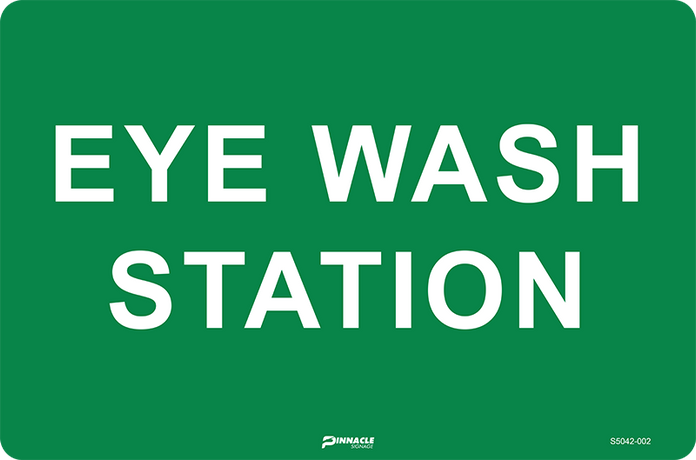
- The universally recognised symbol (green square, white cross, and eye) cuts through language barriers, which is crucial in multicultural workplaces.
- The green and white colour scheme is instinctively associated with safety and first aid in Australia, creating maximum visual impact.
- Clear text and bold fonts like "EYEWASH" reinforce the message, especially for someone under stress or with compromised vision.
- Directional arrows create a complete wayfinding system to guide people around obstacles.
Understanding how different safety symbols work together creates a more comprehensive safety environment. Our guide on Know Your Hazard Symbols: A Guide to Chemical Signage explores how these visual elements contribute to overall workplace safety.
Special Features for High-Risk Environments
Unique workplace challenges may require specialised sign features.
- Glow-in-the-dark (photoluminescent) signs are invaluable during power outages or in low-light conditions. They absorb ambient light and emit a visible glow in the dark, ensuring stations remain findable.
- High-resistance signs are engineered to be fade, abrasion, and weather-resistant, maintaining clarity after years of exposure to sunlight, cleaning, and physical wear.
- Chemical resistance ensures signs stand up to splashes and vapours that would degrade standard materials, protecting your investment and your workforce.
Best Practices for Installing and Maintaining Your Signage
The right eye wash signs are only effective with proper installation and ongoing maintenance. A sign that is hidden, dirty, or faded is useless in an emergency. The goal is to ensure maximum visibility and accessibility so signs can serve their life-saving purpose.
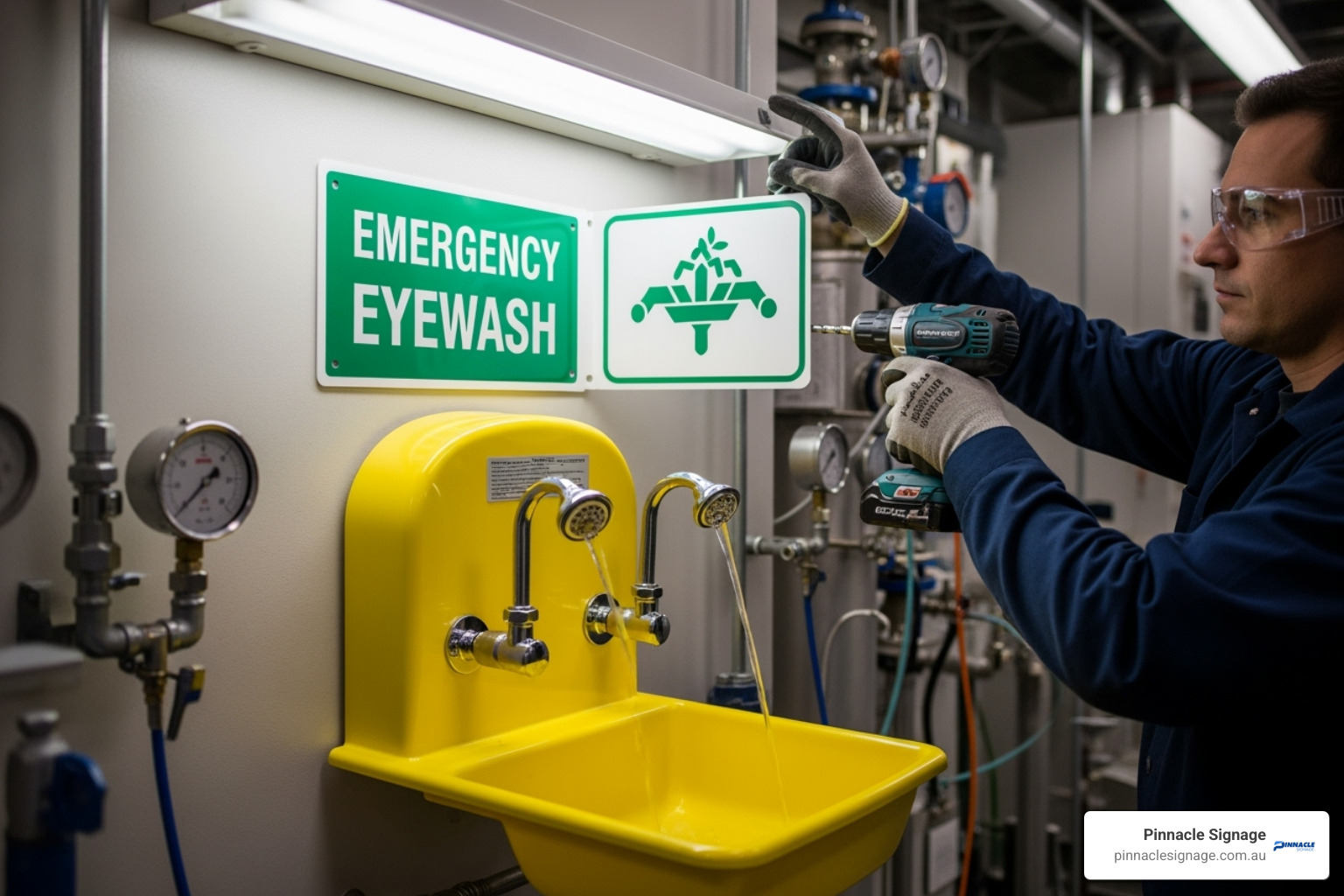
Locating Your Signs for Maximum Impact
Proper placement is critical. Follow these key principles:
- Position directly above the station to create an immediate visual link to the equipment.
- Ensure a clear line of sight from all likely approaches. Check that machinery or storage doesn't block the view.
- Keep the pathway unobstructed. Use directional signs to guide personnel along the clearest route.
- Use well-lit areas for normal visibility. Glow-in-the-dark signs are a backup, not a primary solution for daytime hours.
- Maintain consistent placement across all stations to prevent confusion.
- Adhere to the 10-second rule: The station and its sign must be within 10 seconds' walking distance of the hazard.
For more insights into effective safety signage placement, explore our article on Workplace Safety Signs That Speak Louder Than Words.
Mounting and Installation Tips for eye wash signs
- Mounting Height: Position the sign high enough to be seen over obstructions but low enough to be clearly associated with the eyewash unit.
- Secure Fixing: Use appropriate anchors for your wall or ceiling type. A fallen sign is a hazard.
- Floor Applications: For floor decals, ensure the surface is clean and dry before applying firm pressure to prevent edges from lifting.
Ensuring Ongoing Effectiveness
Installation is just the first step. Ongoing maintenance is essential.
- Regular Inspections: Check for damage, fading, or dirt during routine safety audits. Quarterly checks are standard, but high-dust or chemical areas may need monthly inspections.
- Cleaning: Keep signs clean to maintain visibility. Use cleaning methods appropriate for the sign's material.
- Damage Assessment: Replace cracked, peeling, or faded signs immediately.
- Staff Training: Train staff on the location of stations and the importance of keeping signs and pathways clear.
- Safety Audits: Incorporate sign inspection into all safety audits and document your findings.
By following these practices, you can ensure your eye wash signs will perform their critical role when it matters most. For comprehensive safety coverage, also consider reviewing our guide on An Essential Guide to Choosing the Right First Aid Signage.
Frequently Asked Questions About Eye Wash Signs
Business owners and safety managers across Australia often have questions about eye wash signs, reflecting concerns about correct placement, requirements, and features. Here are answers to the most common queries about creating safer environments with effective signage.
How high should an eyewash sign be mounted?
While no specific height is mandated in Australian regulations, best practice principles ensure maximum visibility. The ideal approach is to mount the eye wash sign directly above the station, creating an unmistakable visual link. The height should be practical: high enough to be seen over obstructions like equipment or people, but not so high that it loses its clear association with the station.
Do I need directional arrow signs for my eyewash station?
Yes, if the eyewash station isn't immediately visible from all areas where eye hazards exist. Directional arrow signs are crucial for guiding people to safety in complex layouts, such as around corners or down long corridors. They eliminate guesswork and panic by creating a clear path to the station when every second counts.
Are glow-in-the-dark eye wash signs required?
Glow-in-the-dark eye wash signs are not always mandatory but are a highly recommended best practice. These photoluminescent signs are critical in environments prone to power failures or in areas that could become dimly lit. They absorb ambient light and then glow in the dark, ensuring the eyewash station remains findable even when visibility is compromised. For high-risk workplaces, they offer an essential layer of protection.
Conclusion
In Australian workplace safety, eye wash signs are more than a compliance item; they are a critical investment in emergency preparedness and team protection. When an eye injury occurs, the speed at which a worker can find an eyewash station can mean the difference between a minor incident and permanent damage.
The right signage, from a simple flat sign to a photoluminescent option, can transform your emergency response. Durable materials like aluminium and versatile floor decals are designed to withstand harsh Australian conditions and keep pathways clear. Effective eye wash signs can prevent a workplace incident from becoming a tragedy.
Proper installation and maintenance are the foundation of an effective safety system. Regular inspections and clear pathways ensure your eye wash signs can fulfil their life-saving purpose when seconds count. Emergency preparedness is about planning for the worst, and quality signage is a crucial investment in your people, your operations, and your peace of mind.
Explore our complete range of first aid signage to ensure your workplace is prepared for any emergency that might arise.