

Ready to Respond: A Comprehensive Guide to First Aid and AED Training
Why First Aid AED Signs Are Critical for Emergency Response
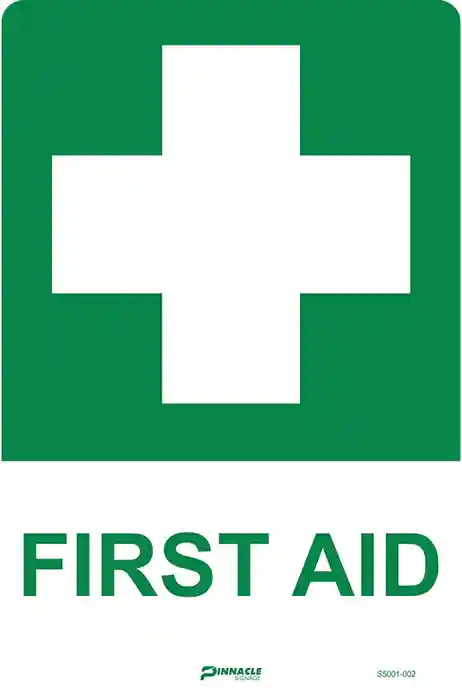
A first aid aed sign is essential emergency equipment that marks the location of an Automated External Defibrillator, a life saving device used during cardiac arrest. When seconds count, clear and compliant signage ensures staff, visitors, and emergency responders can locate the AED immediately.
Key Facts About First Aid AED Signs:
- Standard Design: In Australia, AED signs must comply with AS 1319, featuring white symbols on a green rectangular background
- Universal Symbol: The redesigned UK standard (adopted internationally) includes a stylised ECG heart trace and a supine person showing pad placement
- Material Options: Available in durable, weather resistant materials including luminous and projection formats for different environments
- Strategic Placement: Should be mounted at eye level with clear sightlines, often supplemented with directional arrows in corridors
- Compliance: While not always legally mandated, clear AED signage demonstrates duty of care and supports Public Access Defibrillation programs that significantly improve survival rates from out of hospital cardiac arrest
Research shows that fewer than half of adults recognised the previous AED sign design, prompting a redesign in 2015 that emphasised clarity and encouraged public use. The updated signage now features the text "Defibrillator, Heart Restarter" alongside visual cues showing proper pad placement, making it immediately recognisable even to those without first aid training.
At Pinnacle Signage, we manufacture compliant AED signage that is now available both through our direct channels and at Bunnings stores nationwide.

The Role of the First Aid AED Sign in Cardiac Emergencies
When a sudden cardiac arrest occurs, the clock starts ticking immediately. Every minute that passes without defibrillation reduces the chance of survival by about 10 per cent. This is where the first aid AED sign plays its most vital role. It is not just a piece of durable material on a wall, it's a beacon that guides a rescuer to the only tool that can restart a heart.
Public Access Defibrillation (PAD) programs have been a game changer for out of hospital cardiac arrests. By placing AEDs in workplaces, shopping centres, and community hubs, we empower the lay public to take action. However, an AED is only useful if people know where it is. Rapid response is the cornerstone of the "Chain of Survival." Clear visibility ensures that even in a high stress, panicked environment, a bystander can look up, spot the green and white sign, and fetch the device without losing precious seconds.
In many cases, the person suffering the emergency may be unresponsive and not breathing when an AED is available: learn first aid protocols to ensure the device is used effectively. Beyond the device itself, the signage acts as a constant silent reminder to employees and visitors that the facility is heart safe and prepared. For those looking to audit their current safety markers, you can find more info about first aid signage on our dedicated collection page.
Design Elements of a First Aid AED Sign
The design of the first aid AED sign has evolved significantly to better serve the public. Historically, many signs featured a simple lightning bolt. However, research conducted in 2015 found that this symbol was often misunderstood or failed to convey the life saving nature of the device.
The modern, internationally recognised design now includes several key visual cues:
- Stylised ECG Heart Trace: This icon more accurately represents cardiac health and the function of the "heart restarter."
- Supine Person Icon: A small graphic showing a person lying down helps the user immediately associate the equipment with a medical emergency.
- Pad Placement Visual: One of the most effective additions to the Guidance: Standard sign for AEDs is the depiction of where the electrodes should be placed on the chest.
These universal symbols are designed to transcend language barriers. In a multicultural workplace in New South Wales, a clear pictogram ensures that everyone, regardless of their primary language, understands that help is nearby.
Paediatric Considerations and Specialised Labels
While AEDs are designed for use on adults, they can and should be used on children over the age of one if a cardiac emergency occurs. However, there are specific paediatric considerations that should be reflected in your first aid training and signage.
For children aged one to eight years, paediatric pads (which reduce the energy of the shock) are ideal. If these are not available, standard pads can be used, but the placement must be adapted. Instead of the usual "top right, bottom left" chest placement, one pad should be placed in the centre of the child’s chest and the other in the centre of the back. Signage or labels near the AED should ideally indicate if paediatric pads are stored within the unit.
We also provide a variety of specialised AED labels to ensure every aspect of your emergency response is covered:
- AED Inside Label: Perfect for placing on glass doors or windows to show that equipment is located within the room.
- Face Adhesive Labels: Designed to be stuck on the inside of a window to be read from the outside.
- AED on Site Decals: These can be placed on company vehicles or at facility entrances to signal cardiac readiness.
- Notice: AED on Children: A specific instructional label to remind rescuers of the age appropriate procedures.
Australian Standards and Design Requirements
In Australia, the design of safety signage is governed by the Australian Standard AS 1319. For a first aid AED sign, this falls under the category of "Emergency Information Signs." These signs are used to indicate the location of, or directions to, emergency related facilities.
Compliance with AS 1319 is essential for maintaining a professional and safe workplace. The standard specifies:
- Colour Scheme: A green rectangular background with white symbols or text.
- Format: The sign must be rectangular to distinguish it from "Danger" or "Caution" signs.
- Legibility: The text and icons must be of a size that is easily readable from the intended viewing distance.
Ensuring your workplace meets these standards is a key part of first aid signs Australia keeping your workplace safe and compliant. Using compliant signage not only helps in an emergency but also protects the business during safety audits.
Optimal Placement for a First Aid AED Sign
Even the best designed sign is useless if it is hidden behind a door or a potted plant. Strategic placement is what turns a sign into a life saving tool.
We recommend following these best practices for placement:
- Eye Level: Signs should generally be mounted at eye level (approximately 1.5 to 1.8 metres from the floor) so they are within the natural line of sight.
- Directional Arrows: In long hallways or large warehouses, a single sign at the AED location isn't enough. Directional signs with arrows should be used to guide rescuers from high traffic areas to the device.
- Unobstructed Views: Ensure that the sign is visible from all angles in a room. This is where 2 way or 3 way projection signs become invaluable.
- Proximity: The sign should be located directly above or adjacent to the AED cabinet.
For a deeper dive into where and how to mount your safety markers, refer to our a practical guide to first aid safety sign requirements.
Selecting Materials and Sign Types for Your Facility
Every facility has different environmental challenges. A sign in a clean office hallway has different needs than one in a dusty Wagga Wagga workshop or an outdoor sporting complex. At Pinnacle Signage, we manufacture our signs from durable, weather resistant materials to ensure they remain legible for years.
Common sign types include:
- Projection Signs: These are fantastic for hallways. They fold into a triangle shape (3D projection) so that the first aid AED sign can be seen by someone walking from either direction.
- Durable Industrial Signs: Ideal for outdoor areas or industrial sites where durability is the top priority.
- Luminous Signs: In the event of a power failure, these signs remain visible, ensuring that the AED can be found even in the dark.
- Adhesive Decals: Great for sticking directly onto AED cabinets or glass surfaces.
For the convenience of our customers, a wide range of our standard safety products is now available at Pinnacle Signage at Bunnings. This partnership makes it easier than ever for small business owners and site managers to grab compliant signage during their regular supply runs.
Customisation for Specific Workplace Needs
While standard signs cover most situations, some facilities require a more tailored approach. You might need a sign that includes your company logo, specific directional text (e.g., "AED located in Staff Canteen"), or dimensions that fit a unique architectural space.
Custom signage is particularly useful for:
- Large industrial sites with specific zone names.
- Schools that want to include their branding alongside safety messages.
- Facilities that require bilingual instructions to suit their workforce.
We offer a range of customisation options, including custom text, colours, and logos. If you have a specific requirement, you can find more info about custom signage on our website, where you can easily search for custom solutions.
Strategic Placement and Maintenance Protocols
Installing the sign is only half the battle. To remain compliant and ready for an emergency, you must implement a maintenance protocol. An AED that has a flat battery or expired pads is a liability, and the same goes for a sign that has fallen down or become obscured.
We recommend using:
- Inspection Tags: These are weather resistant tags attached to the AED or its cabinet. They allow safety officers to log monthly checks of the battery and pad status.
- Maintenance Logs: Keeping a central record of when equipment and signage were last inspected.
- "Do Not Block" Zones: Use floor graphics or wall signs to ensure that the area in front of the AED remains clear of furniture, boxes, or equipment.
A well rounded safety station should also include an AED and CPR Poster, Quick Reference Guide for Emergencies. These posters provide step by step visual instructions that can assist a rescuer who may be feeling overwhelmed during the crisis. For more tips on building a complete safety system, check out an essential guide to choosing the right first aid signage.
Frequently Asked Questions about AED Signage
Can anyone use an AED without prior training?
Yes! Modern AEDs are designed to be used by anyone. Once turned on, the device provides clear voice prompts that guide the user through every step, including where to place the pads and when to perform CPR. While training is always beneficial for confidence and speed, the lack of it should never stop someone from using an AED to save a life.
What are the legal requirements for AED signs in Australian workplaces?
While specific legislation varies between states, Safe Work Australia and various state WHS bodies generally require that first aid equipment be clearly identified. Using a first aid AED sign that complies with AS 1319 is the best way to meet your duty of care obligations. It ensures that the equipment is "readily accessible" as per most workplace health and safety regulations.
How often should AED signage and equipment be inspected?
We recommend a monthly visual inspection. Check that the AED's status indicator is green (showing the battery is functional), ensure the pads are within their expiry date, and verify that all signage is still securely mounted and clearly visible from all intended angles.
Ready to Secure Your Facility?
Emergency preparedness is about being ready before the crisis hits. By investing in high quality, compliant first aid AED sign products, you are taking a proactive step toward protecting your most valuable asset: your people.
At Pinnacle Signage, we pride ourselves on being a reliable Australian made supply partner. Whether you are a small business owner needing a single sign or a large corporation looking for bulk orders across multiple sites, we have the capacity to deliver. Our warehouse in East Wagga Wagga, NSW, is geared for fast turnaround, and we offer competitive margins for resellers and distributors.
Why Choose Pinnacle Signage?
- Bulk Ordering: We specialise in high volume orders for councils, construction firms, and health sectors.
- Fast Australia wide Shipping: Most items are dispatched within 48 hours.
- Bunnings Partnership: You can find our products in store and online at Bunnings for maximum convenience.
- Quality Guaranteed: Durable, weather resistant materials designed for the harsh Australian environment.
Don't leave your emergency response to chance. View the first aid signage collection today and ensure your facility is ready to respond.
Shipping & Pickup Information
Production & Shipping Times: We dispatch most items within 48 hours of receiving your order and payment confirmation. Delivery times are estimated as follows:
- 1 to 2 days: Sydney, ACT, Melbourne, Brisbane, Gold Coast
- 2 to 4 days: Rest of NSW, Rest of VIC
- 3 to 6 days: SA, North QLD, Perth
- 5 to 9 days: TAS, NT, WA
Delivery Details: For most deliveries within Australia, we use courier services such as FEDEX. Please note that couriers cannot deliver to PO Boxes, so provide a valid daytime delivery address. To ensure safe delivery, a signature is required upon receipt. You must be available to accept courier deliveries, redelivery charges will apply if you are not present. Include a daytime phone number with your shipping details if we need to contact you about your delivery. For items weighing over 50kg, a tailgate delivery is usually required for residential addresses. This service is included in our standard shipping. Alternatively, you can choose to pick up the item from a nearby depot.
Free Shipping: Free shipping is available for orders over $100 AU wide. This applies to most items on the site. However, for some bulky items, additional shipping costs will apply for deliveries to WA, North QLD, NT, TAS, and island areas. Our staff will reach out to you after your order if these charges apply.
Warehouse Pickup: Pickup is available at our warehouse, located at Unit 4/28 Nagle Street, East Wagga Wagga NSW. The warehouse is open from 8am to 5pm, Monday through Friday, and is closed on weekends and public holidays.