
First Aid Post Sign Types: Everything You Need to Know
Why First Aid Post Signs Are Critical for Emergency Response
First aid post signs are essential safety markers that identify the location of first aid equipment, personnel, and emergency procedures in workplaces across Australia. These signs serve as critical wayfinding tools during medical emergencies, helping people quickly locate life-saving resources when every second counts.
Key Types of First Aid Post Signs:
- Station & Kit Signs - Mark exact locations of first aid supplies
- Directional Signs - Guide people to first aid areas with arrows
- AED Location Signs - Identify automated external defibrillator placement
- Emergency Eyewash Signs - Mark decontamination stations
- First Aider Information Signs - Display trained personnel contact details
- Projecting Signs - Improve visibility in corridors and warehouses
- Floor Graphics - Mark clearance areas and pathways
- Emergency Procedure Signs - Outline specific response steps
The importance of clear first aid signage cannot be overstated. In an emergency, many people may not know how to respond, especially when faced with severe injuries. This highlights why visible, well-placed signage is crucial for guiding untrained individuals to essential emergency resources during critical moments.
Quality first aid post signs can make the difference between confusion and swift action during workplace emergencies. A focus on reliable, compliant signage stems from understanding that when lives are on the line, there's no room for delays or substandard products.
First aid post signs terms you need:
Why Clear First Aid Signage is a Workplace Essential
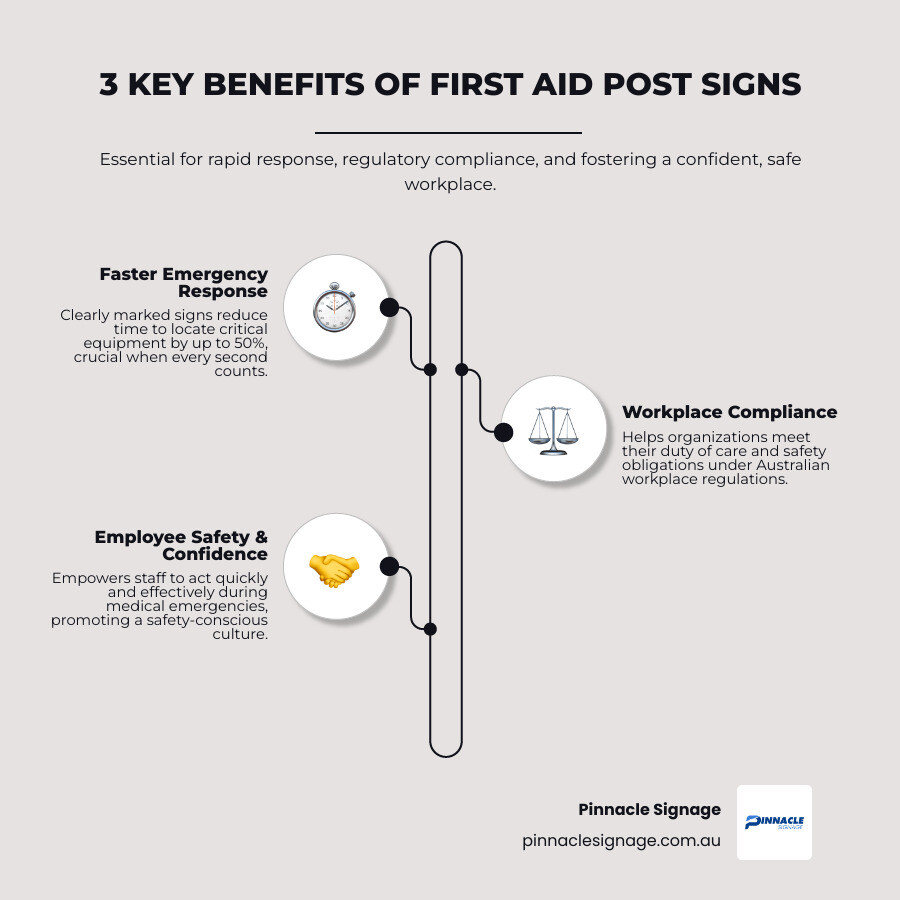
When someone collapses at work or there's a serious injury, panic often takes over. In those critical moments, first aid post signs become lifelines that cut through confusion and guide people to exactly what they need. It's not just about having first aid supplies—it's about making sure everyone can find them quickly when every second matters.
Picture this: an employee suffers a heart attack in your warehouse. Without clear signage pointing to the nearest AED, precious minutes tick by as colleagues frantically search for life-saving equipment. This scenario plays out far too often in Australian workplaces, which is why reducing confusion through proper signage isn't optional—it's essential.
Saving critical time is perhaps the most compelling reason for investing in quality first aid signage. When medical emergencies strike, the difference between a good outcome and a tragic one often comes down to how quickly help arrives. Clear, visible signs eliminate guesswork and enable immediate action, even from people who aren't familiar with your workplace layout.
From a legal duty of care perspective, Australian employers have obligations to provide adequate first aid provisions, and that includes making sure people can actually locate them. While we won't dive into specific regulations, it's worth noting that accessible, well-marked first aid resources are fundamental to meeting workplace safety requirements.
Beyond compliance, there's something powerful about boosting employee confidence through visible emergency preparedness. When your team can see that first aid stations are clearly marked and emergency procedures are posted, they feel more secure. This confidence translates into a safety-conscious culture where people are empowered to act rather than freeze during emergencies.
The ripple effect extends throughout your entire organisation. Employees who feel protected and prepared are more engaged, productive, and likely to stay with your company. Visitors and contractors also notice when a workplace takes safety seriously—it speaks volumes about your values and professionalism.
For comprehensive insights into creating a safer work environment, explore our guide on Making Your Workplace Safe And Secure With High Quality Safety Signage. Quality signage isn't just about meeting requirements—it's about creating workplaces where everyone can focus on their job, knowing that help is clearly marked and easily accessible if needed.
6 Key Types of First Aid Post Signs for Every Workplace
When it comes to emergency preparedness, one size definitely doesn't fit all. Different workplace situations call for different types of signage, and that's exactly why we've developed a comprehensive range of first aid post signs to cover every scenario you might encounter.
Whether you're managing a small office, a sprawling warehouse, or a chemical processing facility, the right combination of these eight essential sign types will ensure your workplace is properly equipped for any emergency that might arise.
1. First Aid Station & Kit Identification Signs
Let's start with the bread and butter of first aid signage. These first aid post signs do exactly what their name suggests – they mark the precise location where your first aid supplies are stored. It sounds simple, but you'd be surprised how often we hear stories of people frantically searching for a first aid kit during an emergency.
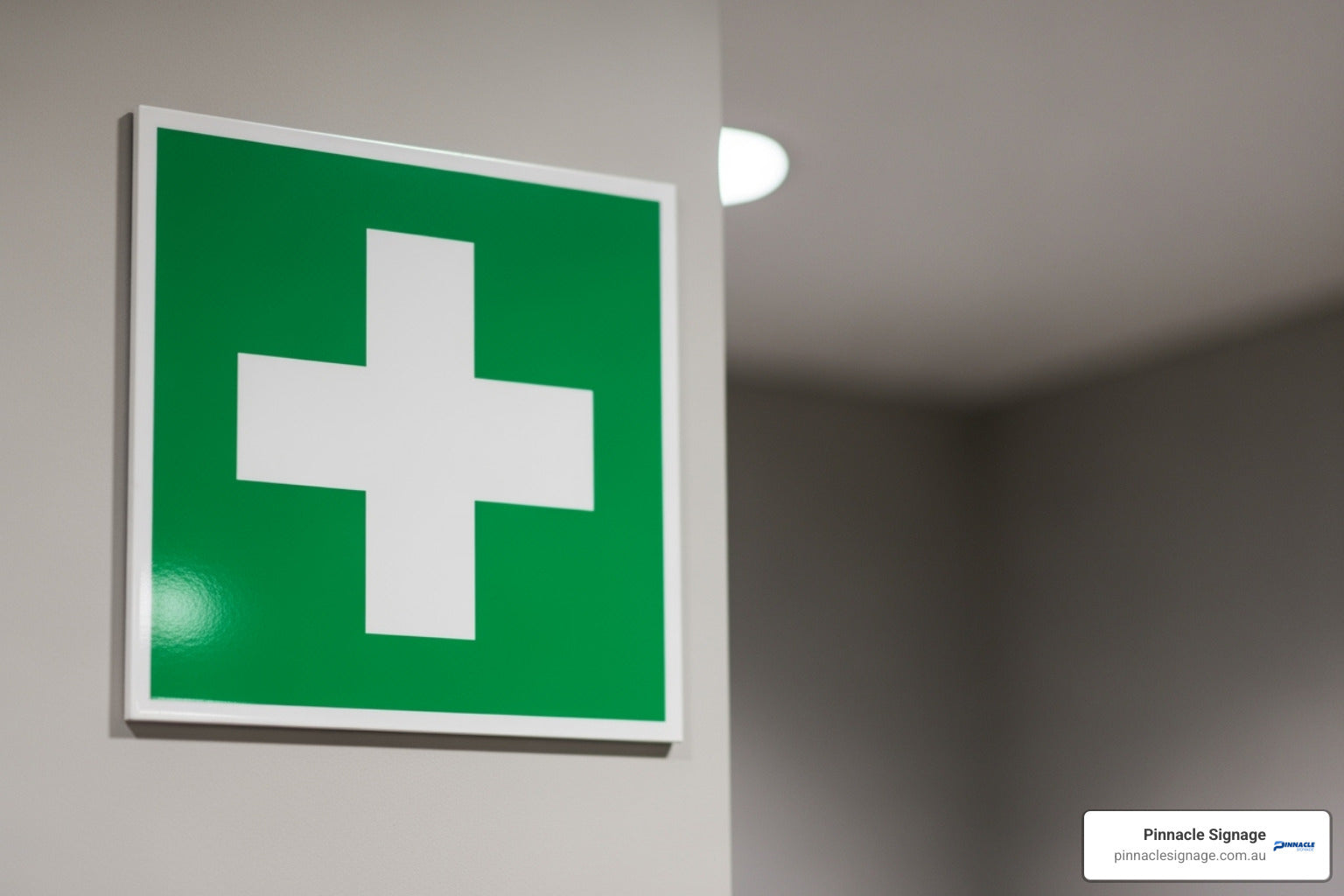
The beauty of these signs lies in their universal recognition. That familiar white cross on a green background speaks a language everyone understands, regardless of their background or training level. Whether you're marking a compact wall-mounted kit in your office kitchen or a fully stocked first aid room in your factory, these signs eliminate any guesswork about where to find help.

2. Directional First Aid Signs
Now, knowing where the first aid station is located is one thing, but actually getting there is another matter entirely. This is where directional signage becomes your best friend, especially in larger or more complex workplaces.
Think about your typical warehouse or multi-storey office building. When someone's injured and adrenaline is pumping, even familiar surroundings can feel like a maze. Directional first aid post signs with clear arrows act as a breadcrumb trail, guiding people from any point in your facility straight to the help they need.
We position these signs strategically at corridor intersections, building entrances, and anywhere people might need to make a decision about which way to turn. The goal is to create an intuitive path that anyone can follow, even under pressure.
For more detailed guidance on selecting the right signage for your specific workplace layout, have a look at our Essential Guide To Choosing The Right First Aid Signage.
3. Automated External Defibrillator (AED) Location Signs
Sudden cardiac arrest doesn't discriminate – it can happen to anyone, anywhere, at any time. When it does, having an AED nearby can literally mean the difference between life and death. But here's the catch: that life-saving device is only useful if people can find it immediately.
AED location signs serve a very specific but crucial purpose. They feature that distinctive heart and lightning bolt symbol that's become universally recognised as the mark of defibrillator equipment. Unlike general first aid supplies, AEDs require their own dedicated signage because time is so absolutely critical in cardiac emergencies.

4. Emergency Eyewash & Shower Signs
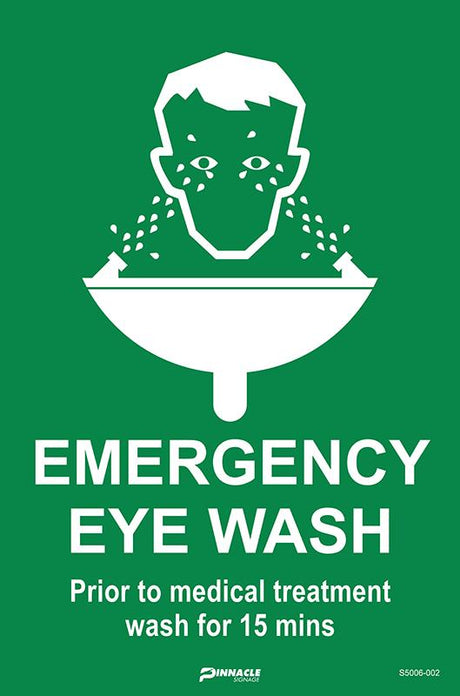
If your workplace involves chemicals, industrial processes, or even something as common as cleaning products, emergency eyewash and shower stations are essential safety equipment. But like all emergency equipment, they're only effective if people can locate them instantly when disaster strikes.
These specialised first aid post signs are particularly important in laboratories, manufacturing facilities, workshops, and anywhere hazardous substances are present. When someone gets a chemical splash in their eyes or on their skin, every second of delay increases the potential for serious, permanent injury.
The signs clearly mark decontamination stations, ensuring that in those crucial first moments after exposure, people can find relief immediately rather than wasting precious time searching.
5. First Aider Information Signs
Having trained first aid officers on your team is fantastic, but it's not much help if nobody knows who they are or how to reach them during an emergency. This is where first aider information signs prove their worth.
These customisable signs display the names, photos, and contact details of your designated first aid officers. We design them with flexible fields that make it easy to update information when staff changes occur or new people complete their training.
Position these signs in high-traffic areas like staff rooms, reception areas, and near main entrances. When someone needs help, they can quickly identify who to call and how to reach them, creating a direct link between the emergency and your trained responders.
6. Emergency Procedure Signs
Sometimes knowing where to find first aid supplies isn't enough – people also need to know what to do once they get there. Emergency procedure signs bridge this knowledge gap by providing clear, step-by-step instructions for various emergency situations.
These first aid post signs might display emergency contact numbers like 000, outline basic CPR instructions, or provide site-specific procedures for dealing with particular hazards common to your workplace. They can also include information about how to report incidents or who to notify within your organisation.
By combining location information with procedural guidance, these signs empower people to take appropriate action rather than simply standing by helplessly while waiting for professional help to arrive. In many emergency situations, the actions taken in those first few minutes can significantly impact the final outcome.
Best Practices for Effective First Aid Signage
Having the right types of first aid post signs is just the beginning. What truly makes the difference between effective and ineffective signage comes down to thoughtful design and strategic placement. Over the years, we've seen how small details can dramatically impact whether a sign serves its purpose when it matters most.
Think about it this way: in an emergency, people are stressed, potentially panicked, and operating under time pressure. Your signage needs to cut through that chaos and provide crystal-clear guidance. This section covers the crucial elements that transform ordinary signs into life-saving navigation tools.
Key Design Elements for Effective First Aid Post Signs
The foundation of any effective first aid post signs lies in its design. We've found that certain elements are absolutely non-negotiable when it comes to creating signage that works under pressure.
Universal symbols form the backbone of effective first aid signage. The internationally recognised white cross on a green background isn't just a design choice – it's a language that everyone understands, regardless of their background or native tongue. This symbol follows internationally recognised standards, ensuring that your signs communicate effectively with anyone who might encounter them. It's worth noting that this is completely different from the red cross emblem, which is a protected symbol of the Red Cross organisation and shouldn't be used for general workplace signage.
The green and white colour scheme isn't arbitrary either. These colours have been specifically chosen because they're easily distinguishable and associated with safety and medical assistance across cultures. When someone's looking for help, these colours instantly signal that they're in the right place.
Clear, legible text works hand-in-hand with symbols to reinforce the message. We ensure our signs use fonts that remain readable even when viewed quickly or from a distance. There's no point having beautiful signage if people can't actually read it when they need it most.
Pictograms take this concept even further, providing visual representations that transcend language barriers entirely. Whether someone speaks English as a first language or not, a well-designed pictogram communicates instantly. This is particularly important in diverse Australian workplaces where people from many different backgrounds work together.
The materials we use make all the difference in longevity and effectiveness. Our signs are crafted from durable materials like polypropylene and aluminium composite panel that can handle the demands of Australian conditions. Whether you're dealing with harsh sunlight, humidity, or the wear and tear of a busy workplace, these materials ensure your signs remain vibrant and readable for years to come.
For deeper insights into how thoughtful design impacts workplace safety, our article on Workplace Safety Signs That Speak Louder Than Words explores this topic further.
Strategic Placement for Maximum Impact
Even the most beautifully designed first aid post signs won't help anyone if they're not positioned where people can actually see them. Strategic placement is where the rubber meets the road in terms of real-world effectiveness.
High-visibility locations should be your first priority. This means choosing spots in open areas, main walkways, and places where people naturally look. Think about the flow of your workplace – where do people's eyes naturally go when they're moving through the space?
When it comes to above equipment placement, this is absolutely critical for identification signs. There should be no guesswork involved in connecting a sign to its corresponding first aid kit, AED, or eyewash station. The visual link needs to be immediate and obvious.
Eye-level mounting might seem like common sense, but you'd be surprised how often we see signs placed too high or too low. The sweet spot is typically between 1.4 and 1.7 metres from the floor, ensuring they're easily spotted without people having to crane their necks or look down.
Common areas like kitchens, staff rooms, and reception areas deserve special attention because they're natural gathering points. People spend time in these spaces and are more likely to notice and remember sign locations. Plus, accidents often happen in these high-traffic areas.
Intersections and junctions are perfect locations for directional signage. When someone's trying to find their way to a first aid station, these decision points are exactly where they need guidance most. A well-placed arrow at the right moment can save precious minutes.
The importance of keeping signs well-lit and unobstructed cannot be overstated. A sign hidden behind an open door or obscured by equipment might as well not exist. Regular checks to ensure clear sightlines are part of maintaining an effective safety system.

Common Mistakes to Avoid
In our experience, certain mistakes crop up again and again, undermining even the best intentions when it comes to first aid signage. Learning to avoid these pitfalls can make the difference between signage that works and signage that fails when it's needed most.
Placing signs behind doors or equipment is perhaps the most common error we encounter. It seems obvious when pointed out, but in practice, it happens more often than you'd think. An open door or a piece of machinery can completely hide a critical sign, rendering it useless during an emergency.
Poor lighting is another frequent issue. A sign tucked away in a dimly lit corner might meet technical requirements on paper, but it won't help anyone in practice. Good lighting isn't just about compliance – it's about ensuring your signs can actually be seen when someone needs them.
Incorrect mounting height often stems from a one-size-fits-all approach. What works in a warehouse might not work in an office environment. Taking the time to consider the specific context and user needs of each location pays dividends in effectiveness.
We regularly encounter worn or faded signs that have been forgotten over time. A sign that's barely legible doesn't just fail to help – it can actually create confusion and delay. Regular maintenance and replacement schedules ensure your signage remains effective over time.
Not using directional signs in large areas is a mistake that becomes painfully obvious during an actual emergency. In a sprawling facility, simply marking where the first aid station is located isn't enough – people need to know how to get there from wherever they happen to be.
The reality is that effective first aid post signs require ongoing attention and strategic thinking. They're not a "set and forget" solution, but rather an integral part of your workplace safety system that deserves regular review and maintenance.
Frequently Asked Questions about First Aid Signage
When it comes to first aid post signs, we hear the same questions time and again from our customers. These are understandable concerns – after all, getting your emergency signage right isn't just about compliance, it's about creating a workplace where people feel genuinely safe and prepared.
What is the universal symbol for first aid?
The universally recognised symbol for first aid is a white cross on a green background, and there's a good reason it's used worldwide. This symbol is specified under internationally recognised standards, making it instantly understandable regardless of language or cultural background. When someone sees that green and white combination, they immediately know they're looking at emergency medical resources.
Here's something that catches many people off guard: this symbol is completely different from the Red Cross emblem you might be thinking of. The Red Cross symbol – a red cross on white background – is actually a protected symbol of the International Federation of Red Cross and Red Crescent Societies. Using it for general workplace signage isn't just inappropriate, it can actually land you in legal trouble. Stick with the green and white, and you'll be following the right path.
Do first aid signs need to be illuminated?
While illumination isn't always a strict legal requirement, we strongly recommend photoluminescent (glow-in-the-dark) signs for most workplaces, particularly in areas where lighting might fail or be limited during emergencies.
Power outages, smoke, or simply working in dimly lit areas like warehouses or car parks can make even the best-placed signs invisible when you need them most. Photoluminescent first aid post signs continue to glow for hours after being charged by normal lighting, creating a reliable guide that guides people to safety even in complete darkness. It's a small investment that can make an enormous difference when seconds count.
What are the best places to install first aid post signs?
Strategic placement can make or break the effectiveness of your emergency signage. The golden rule is simple: signs should be where people naturally look when they need help, not tucked away where they'll be finded by accident.
Directly above first aid equipment is your starting point – whether that's kits, cabinets, AEDs, eyewash stations, or emergency showers. This creates an immediate visual connection between the sign and the resource, eliminating any guesswork during a crisis.
At the entrances to first aid rooms ensures anyone approaching knows exactly what they've found, while highly trafficked common areas like staff lunchrooms, main corridors, and reception areas maximise the number of people who'll know where to go before an emergency even occurs.
For larger or more complex buildings, directional signs at hallway intersections and junctions become crucial. These guide people through the maze of corridors that can seem impossibly confusing when someone's injured and stress levels are high. We particularly recommend this approach for shopping centres, hotels, universities, and large manufacturing facilities.
Don't forget about high-risk areas either. If certain parts of your workplace pose greater dangers – workshops, chemical storage areas, or heavy machinery zones – ensure first aid post signs are prominently displayed nearby. The goal is making signs conspicuous and unobstructed, easily visible from multiple angles and distances, so help is never more than a glance away.
Conclusion: A Small Investment for a Safer Workplace
When you step back and look at the bigger picture, first aid post signs represent something much more significant than simple workplace accessories. They're your first line of defence in an emergency, silent guardians that can mean the difference between confusion and swift action when someone's wellbeing is on the line.
Throughout this guide, we've explored how proper signage improves your safety culture by empowering every person in your workplace – from seasoned employees to first-time visitors – to respond effectively during medical emergencies. These signs ensure rapid response when every second counts, changing potential chaos into organised, life-saving action.
The investment in quality first aid signage is remarkably small when you consider what's at stake. A comprehensive signage system that clearly identifies equipment locations, guides people through your facility, and provides essential emergency information creates immeasurable value in terms of safety, legal compliance, and genuine peace of mind for everyone who walks through your doors.
At Pinnacle Signage, we've built our reputation on understanding exactly what Australian businesses need to create safer workplaces. From our manufacturing facility in Wagga Wagga, NSW, we produce first aid post signs that stand up to our harsh conditions while maintaining crystal-clear visibility year after year. Our complete range covers everything from basic kit identification signs to sophisticated directional systems for complex facilities.
What sets us apart is our commitment to getting it right the first time. We offer customisable options because we know that every workplace has unique needs, and our fast turnaround times mean you won't be left waiting when safety is the priority. When you choose Pinnacle Signage, you're partnering with a team that genuinely cares about making your workplace safer and more prepared for whatever comes your way.
Explore our complete range of First Aid Signage and take the next step towards creating a workplace where everyone feels protected and prepared.