
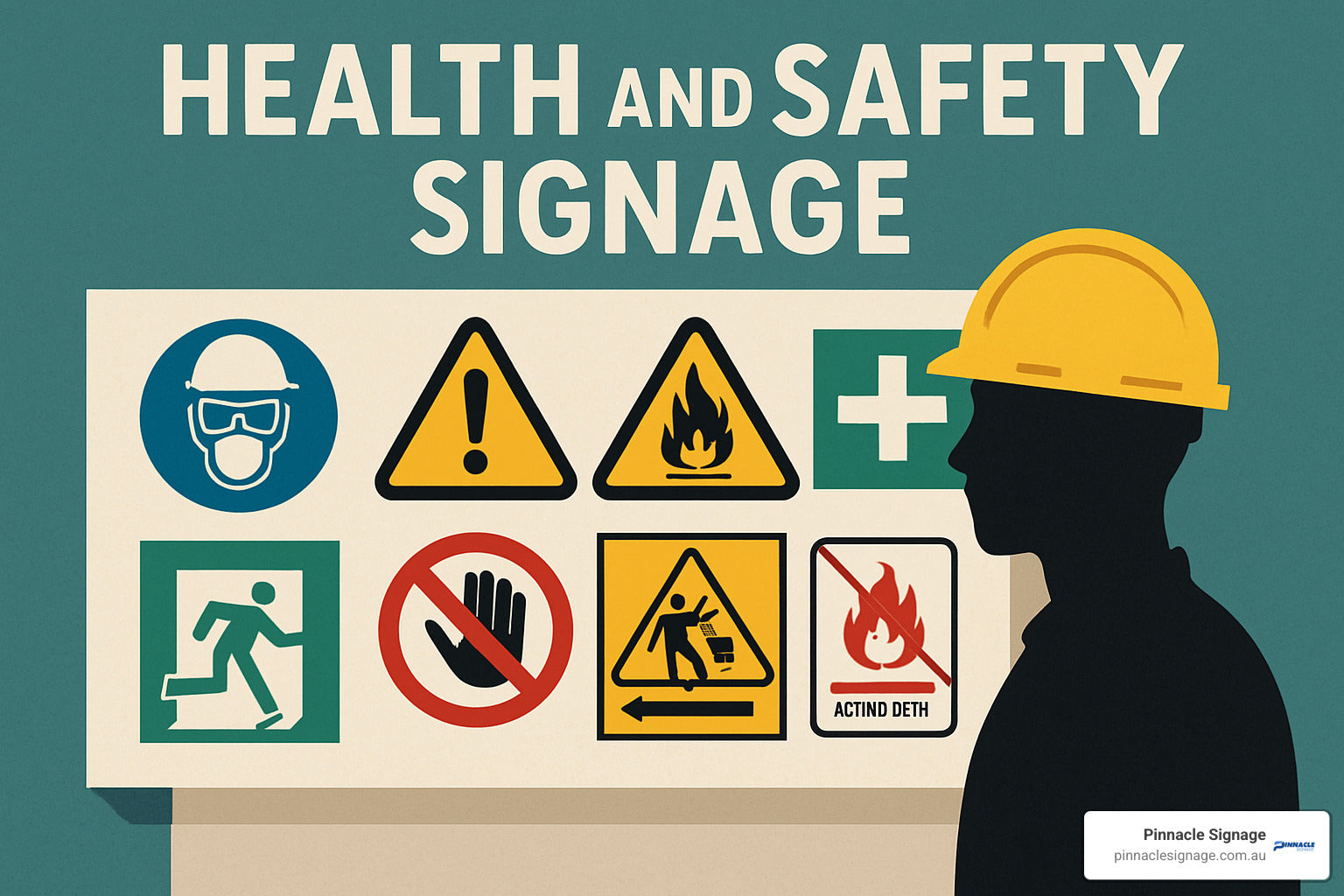
Top Industries That Rely on the Right Health & Safety Signage
Why the Right Signage is Non-Negotiable
Effective Health and Safety Signage is the quickest way to warn, instruct and guide people on site. In Australia it is also a legal requirement under state and territory Work Health and Safety (WHS) laws. The right sign can:
- Prevent injuries by alerting workers and visitors to hazards
- Support compliance and reduce the risk of fines or prosecution
- Provide clear instructions where language or literacy may be a barrier
- Direct people during an emergency when every second counts
Five standard categories cover almost every situation you will face on site:
- Prohibition – red circles that say “do not”.
- Mandatory – blue circles that state a required action.
- Warning – yellow triangles that flag possible hazards.
- Safe condition – green rectangles that point to first-aid, exits or other safe areas.
- Fire safety – red rectangles that show the location of fire-fighting equipment.
Each industry applies this system in different ways. Construction focuses on moving plant and falling objects, retail on slips and customer evacuation, and healthcare on chemicals and infection control.
I’m Doug Lindqvist. At Pinnacle Signage we work with Australian businesses that cannot afford confusion when it comes to safety. Our job is to supply tough, compliant signage – fast – so you can keep people safe and operations running.
The Universal Language of Safety: How Signs Communicate Instantly
A well-placed sign can be understood faster than text or spoken instructions. That speed matters on busy Australian worksites where crews are multicultural and time-pressured.
Colours and Shapes that Trigger Action
- Red circles stop unsafe behaviour (no entry, no smoking) and identify fire equipment.
- Yellow triangles slow us down and signal caution (overhead work, slippery surface).
- Blue circles carry authority – they state what must be done (wear a hard hat, wash hands).
- Green rectangles provide reassurance and directions to safety (first-aid kit, emergency exit).
Circle = instruction, triangle = hazard, rectangle = information. Because this system is standardised under AS 1319, a sign means the same thing in Wagga Wagga as it does in Perth.
Pictograms Beat Language Barriers
Standard ISO pictograms – for example a hard-hat icon or a flame symbol – cut through literacy and language differences. They are processed by the brain in milliseconds, giving workers more time to react. For a deeper dive into chemical symbols, see our guide on hazard symbols and chemical signage.
The result is a common safety language everyone can follow, even if it’s their first day on site.
Essential Health and Safety Signage for the Construction Industry

Australian construction remains one of the highest-risk sectors, so signage must be clear, durable and easy to move as the build evolves.
High-Impact Warnings: Danger vs Caution
- Danger (red/black) – stop immediately; serious injury or death is likely (high voltage, crane loading zone).
- Caution (yellow) – proceed carefully; a hazard exists but can be managed (wet concrete, low overhead).
Choosing the wrong level can either cause unnecessary delays or, worse, underplay a deadly risk. See our explainer on Danger, Caution and Warning signs.
Mandatory Instructions for a Safer Site
Blue mandatory signs remove doubt about PPE and access:
- Hard hat area
- High-vis clothing required
- Eye and hearing protection zones
- Authorised personnel only
Place them at entry points and anywhere conditions change. For a full checklist, review our construction site signage guide.
Keeping Customers and Staff Safe: Signage in Retail and Hospitality
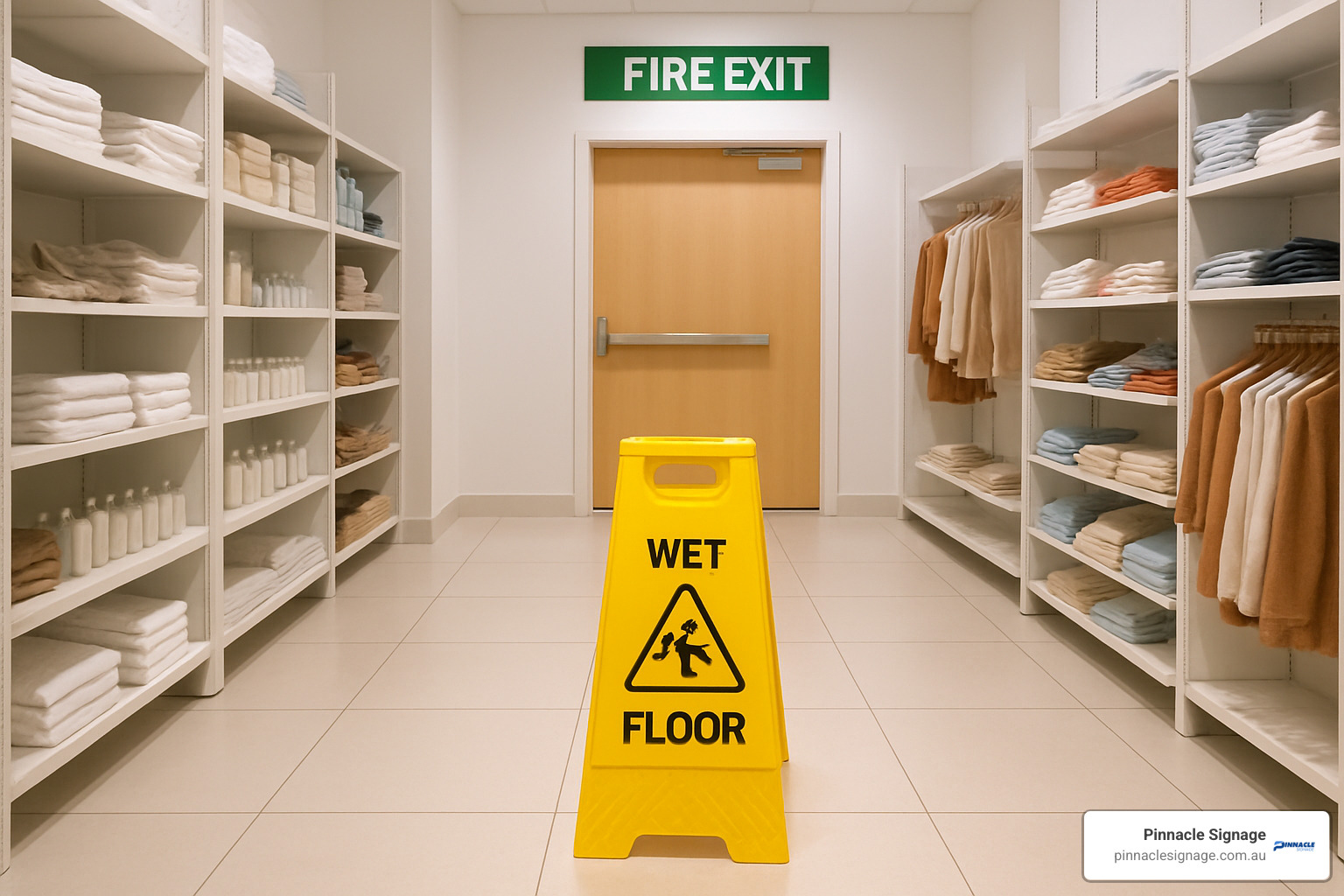
In public-facing venues you must protect two groups: trained staff and customers who may never have read a WHS sign before. Clear, non-technical language and obvious symbols are essential.
Guiding People in an Emergency
- Fire exit signs (green) must be visible from everywhere in the store.
- Assembly point signs stop people scattering and speed up headcounts.
- First-aid signage directs staff to supplies when seconds matter.
Need a refresher? Check our fire and safety signs guide.
Everyday Hazards that Cause Most Injuries
- Yellow slippery surface signs for spills and cleaning.
- Red no smoking prohibition signs, especially near entries.
- Staff only or authorised access signs for back-of-house.
- Trip hazard or work in progress signs during refits.
- Maximum capacity notices for compliance with fire regulations.
Done well, these signs blend into the shopping experience without creating clutter.
Critical Signage in Healthcare and Manufacturing Environments
Hospitals, labs and factories combine chemicals, biological agents, power, heat and moving machinery. Signage must be detailed enough for specialists yet instantly recognisable in an emergency.
Chemical and Biological Risks
- GHS diamonds quickly describe flammable, toxic or corrosive substances.
- The biohazard symbol warns of infectious materials.
- Clear labels on hazardous waste help staff follow disposal rules.
Find practical tips in our guide to corrosive material signs.
Accident-Prevention Tags
Tags are temporary, high-visibility warnings:
- Lockout/Tagout tags during maintenance stop accidental restarts.
- Do Not Operate tags flag unsafe plant.
- Service due tags support preventive maintenance.
Think of tags as dynamic signage that travels with the hazard until it is removed or resolved.
Navigating Compliance: Australian Standards for Health and Safety Signage
AS 1319-1994 sets out colours, shapes and wording so every worker recognises a sign the moment they see it. Under the WHS Act, employers must provide “adequate” signage where risks remain after other controls.
Key steps:
- Risk assessment – identify hazards, then decide where signs add value.
- Select compliant designs – colours and symbols must follow AS 1319.
- Install for visibility – eye level, well lit, not hidden behind stock or plant.
- Maintain – replace faded, damaged or outdated signs.
- Train workers – signage only works when people understand it.
For more detail see our breakdown of Australian Standards for safety signs.
Frequently Asked Questions about Health and Safety Signage
Where should signs be placed?
At normal eye level, close to the hazard but not part of it. Keep lines of sight clear and ensure signs remain visible under all lighting conditions.
How often do signs need replacing?
Inspect at least quarterly. Replace if colours fade, text is illegible, or workplace changes make the message inaccurate.
Can I order custom signs?
Yes. Custom wording, multiple languages or your company logo can all be included, provided colours and symbols still meet AS 1319. Pinnacle Signage offers fast, fully compliant custom solutions.
Conclusion: Partner with the Experts
Clear, durable and compliant Health and Safety Signage protects people and keeps your business on the right side of WHS law. Whether you run a construction site, shopfront or medical lab, signage must suit your hazards and Australian conditions.
Pinnacle Signage manufactures premium signs in Wagga Wagga, ships Australia-wide and turns jobs around quickly. When you are ready to lift safety standards – or simply need advice on what sign goes where – we are here to help!