
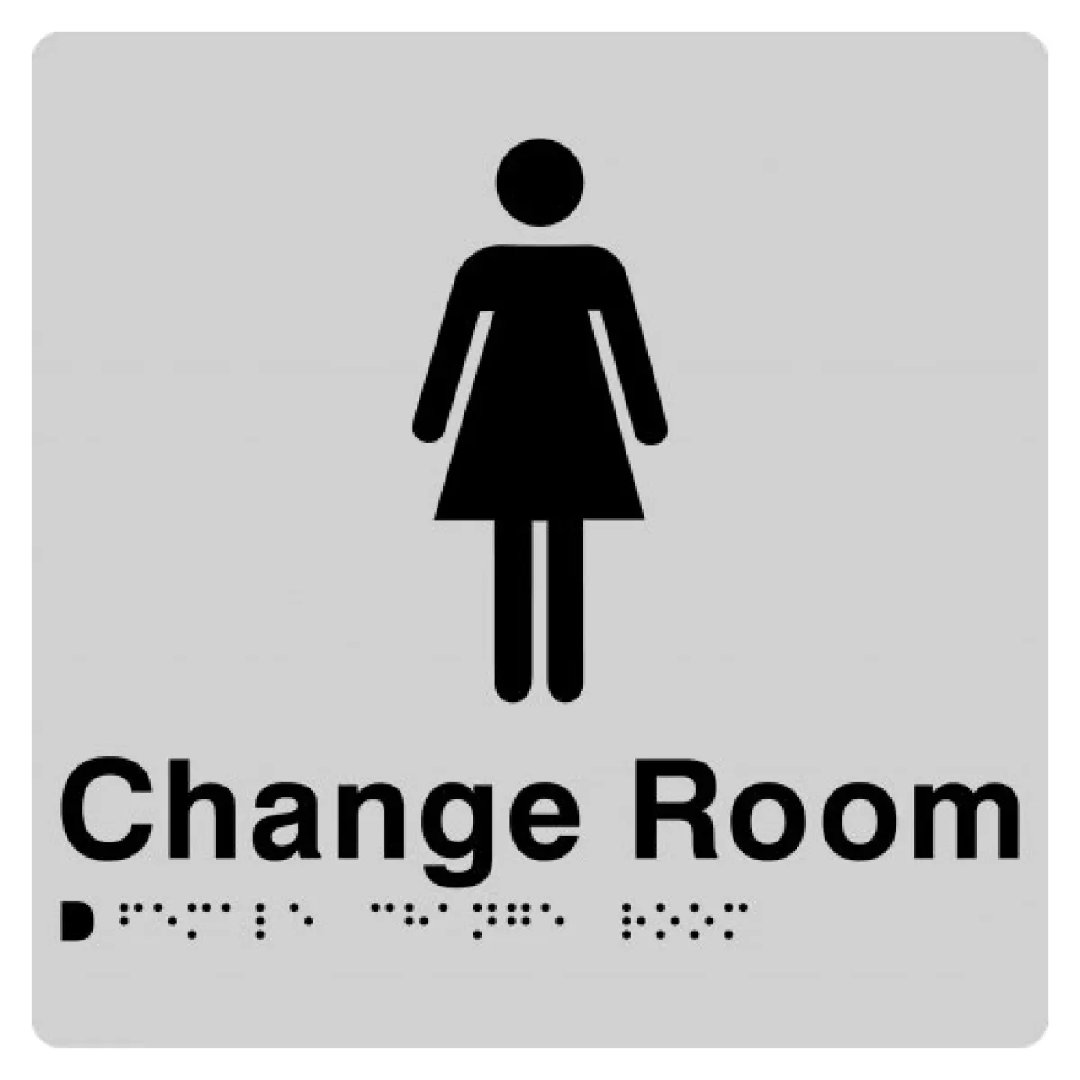
What Are Braille Tactile Signs? A Simple Guide to Accessibility
Understanding Braille Tactile Signs: A Foundation for Accessibility
Braille tactile signs are specialised signs featuring raised letters, symbols, and Braille dots, designed to be read by touch. They play a crucial role in making public and commercial spaces accessible and navigable for people who are blind or have low vision.
Here’s a quick overview:
- Purpose: To provide information and directions via touch for individuals with visual impairments.
- Components: Typically include raised text, tactile pictograms, and Braille dots.
- Function: Enables independent wayfinding and access to essential information in a wide range of environments.
Ensuring public spaces are accessible to everyone is not just a regulatory requirement; it's a fundamental aspect of inclusive design. For individuals who are blind or have low vision, navigating unfamiliar environments can be a major challenge. This is where Braille tactile signs become indispensable, acting as silent guides that provide critical information through the sense of touch.
These signs are a bridge to independence, safety, and equal access. They transform a potentially confusing space into an understandable one, allowing individuals to identify rooms, locate facilities, and understand important instructions without relying on sight. From a simple restroom sign to complex directional information, tactile and Braille signage empowers users to move freely and confidently.
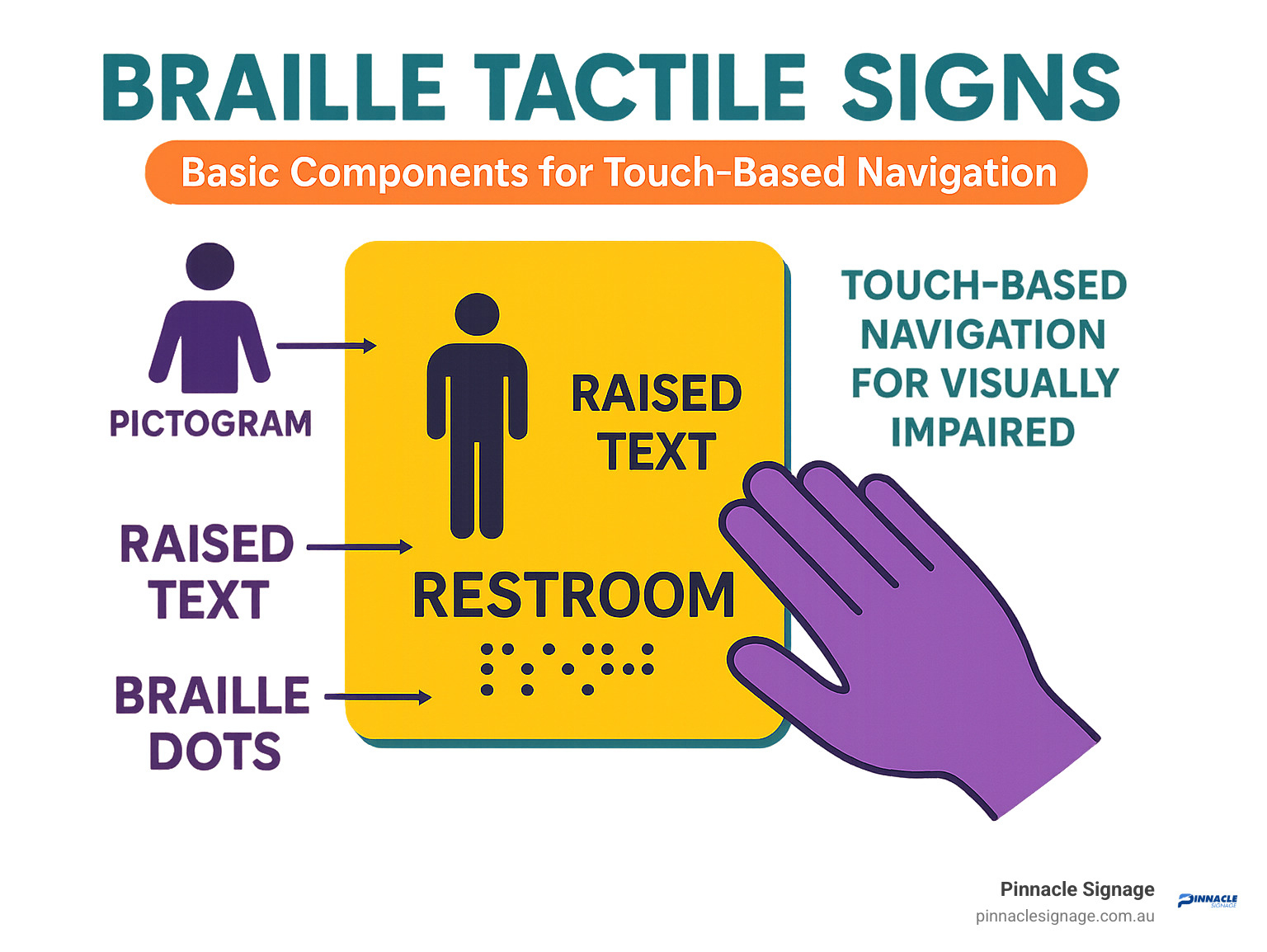
Basic Braille tactile signs terms:
What Are They and Why Do They Matter?
Imagine trying to find a specific room in a large building, or even the nearest restroom, without being able to read any of the signs. For people with visual impairments, this is a daily reality if buildings aren't equipped with proper accessible signage. Braille tactile signs provide crucial information that sighted individuals take for granted, offering navigation cues and safety warnings in a format that can be read by touch.
Thanks to a growing understanding of universal design, these signs have become a fundamental part of modern architecture and public spaces. They are not an optional extra; they are a legal and ethical necessity that ensures everyone, regardless of their visual ability, can safely and independently use a building.
For instance, an 'EXIT' sign with tactile lettering and Braille provides vital information during an emergency. Beyond emergencies, they offer everyday independence, allowing someone to confidently locate a lift, identify a toilet, or find their way to a meeting room. This fosters a sense of dignity and inclusivity that is invaluable.
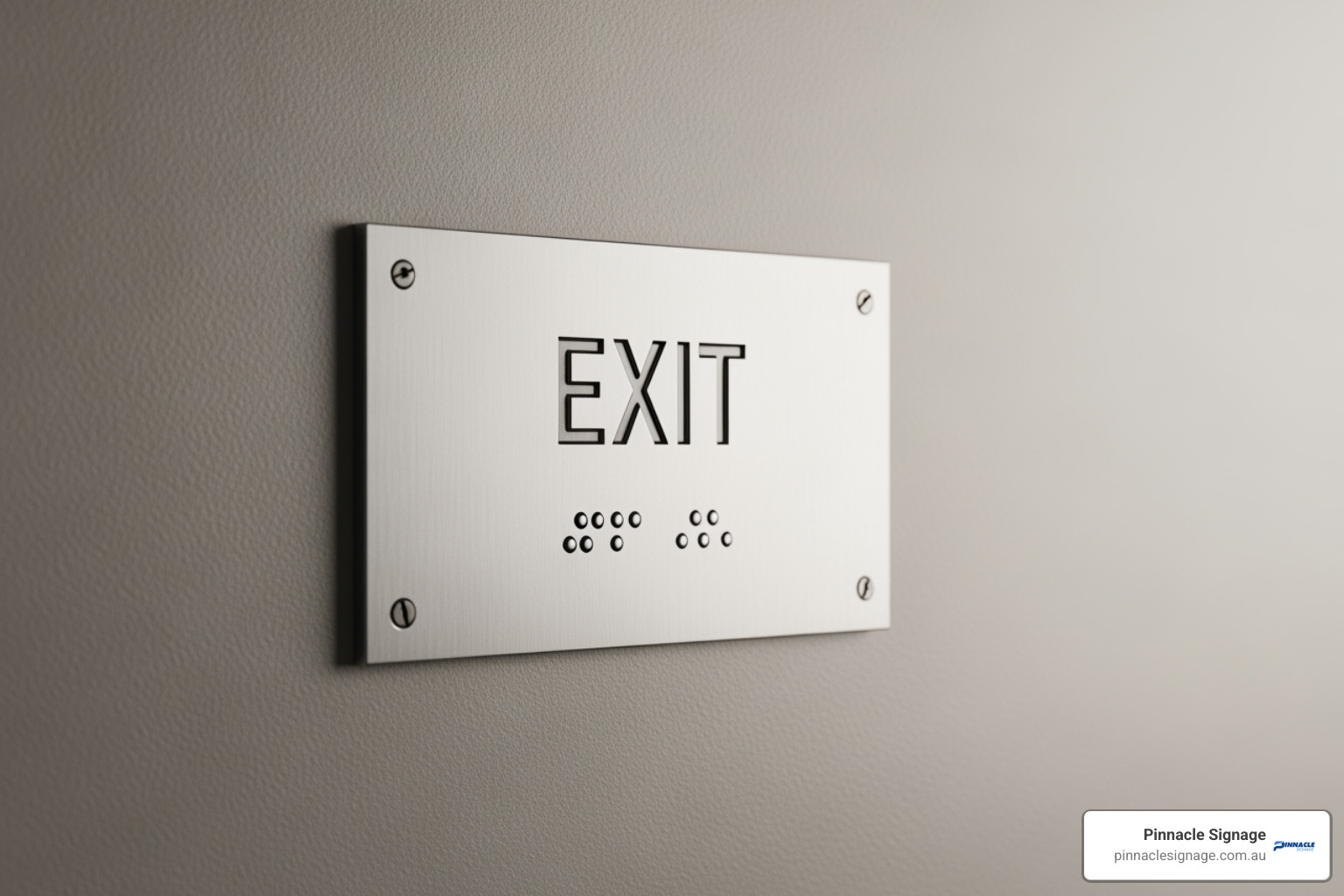
These signs are essential for:
- Navigation: Guiding individuals through complex environments.
- Independence: Enabling self-reliance without constant assistance.
- Safety: Providing critical information during emergencies or about hazards.
- Inclusivity: Ensuring everyone has equal access to public and commercial spaces.
- Legal Responsibility: Meeting the requirements for accessible design in Australia.
For more on safety, explore An Essential Guide to Fire and Safety Signs: Types & Meanings.
Tactile vs. Braille: What's the Difference?
While often used interchangeably, "tactile" and "Braille" refer to distinct features on accessibility signs, designed for different user needs. Both are read by touch, but their composition and primary audience differ.
Tactile Signage refers to signs with raised letters, numbers, or symbols that can be traced with a finger. These are primarily for individuals who have lost vision later in life and may still recognise the shapes of letters by touch.
Braille Signage uses a system of raised dots arranged in specific patterns to represent letters and numbers. This is a complete reading system learned and used by individuals who are blind or have very low vision. The standard in Australia is Unified English Braille (UEB).
Here's a simple breakdown:
-
Tactile Signs:
- What: Raised alphabetical letters, numbers, or symbols.
- Who: Primarily for people with acquired vision loss who can still recognise letter shapes by touch.
- How: Read by tracing the raised shapes.
-
Braille Signs:
- What: Raised patterns of dots representing characters in the Braille code.
- Who: Primarily for people who are blind or have very low vision and have learned Braille.
- How: Read by sweeping fingertips across the dots.
Often, Braille tactile signs combine both features, such as raised text with Braille dots below it. This dual approach ensures maximum accessibility for a wider range of visual impairments.
For more detailed information on Braille guidelines, you can refer to resources like the Braille Signage Guidelines | Braille Authority of North America.
Key Features of Effective Braille Tactile Signs
Creating effective Braille tactile signs goes beyond simply adding raised elements. Specific design considerations ensure readability, durability, and compliance.
Here are the essential features:
Raised Characters: Letters and symbols must be raised sufficiently from the sign's surface to be easily felt and traced with fingertips. Sans-serif fonts in all-uppercase letters are standard for their clarity and simplicity.
Braille Dots: Braille dots must be rounded or domed, not pointy, for comfortable reading. Their size and spacing are precisely controlled to ensure legibility. The Braille must also be located in a consistent position and separated from other tactile elements to avoid confusion.
Finish and Contrast: The sign's surface should have a matte or non-glare finish to prevent reflections. There must be a strong colour contrast between the characters and the background (e.g., dark on light, or light on dark) to assist those with low vision.
Durability: Signs must be robust enough to withstand constant touching, cleaning, and environmental factors. Materials like high-quality acrylic or injection-moulded plastic are ideal as they prevent Braille dots from wearing away or being picked off.
Adhering to these principles ensures the signs are truly usable. Our manufacturing process carefully follows these standards, ensuring every Braille tactile sign we produce is accurate and reliable.
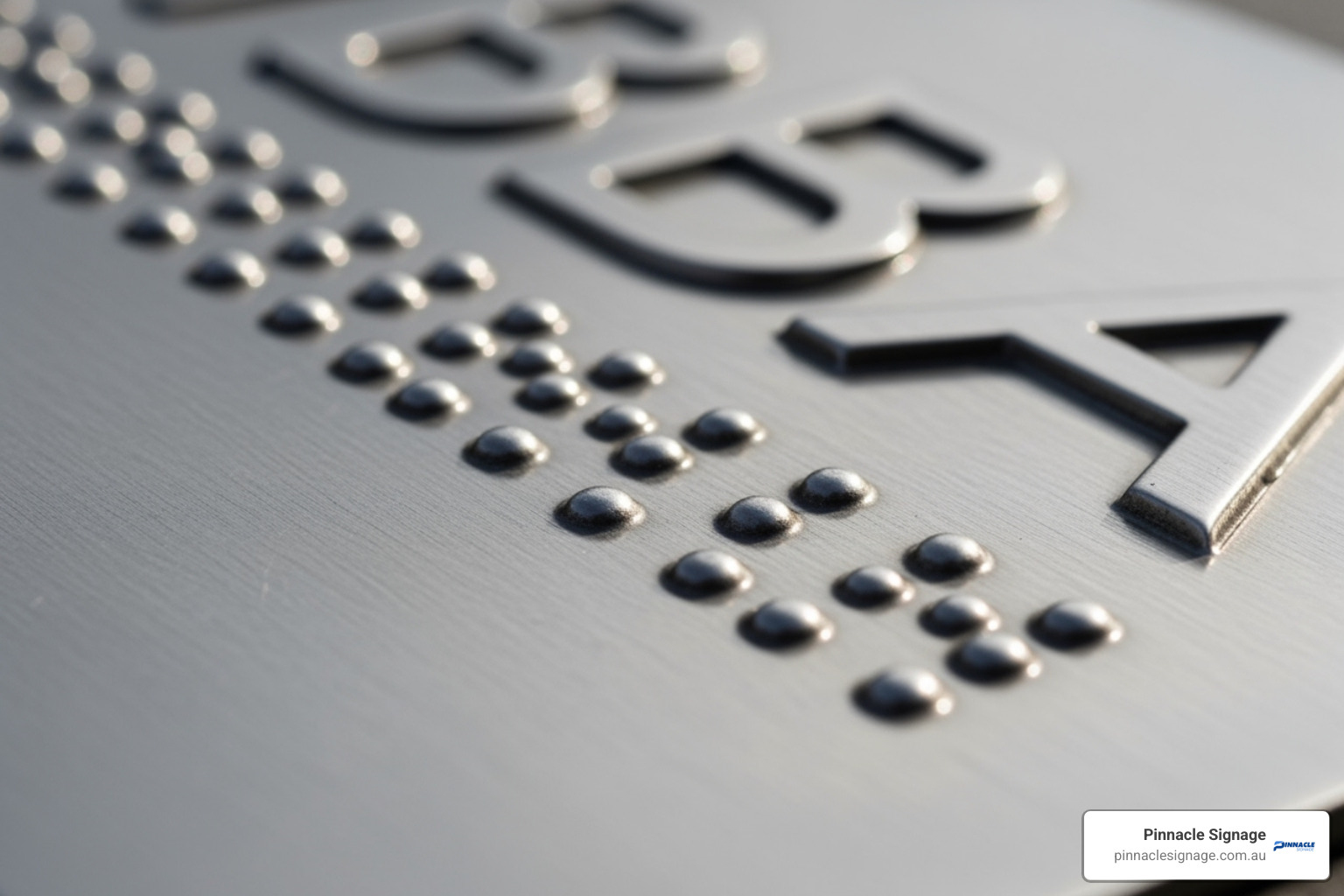
Where Are These Signs Typically Needed?
Braille tactile signs are a necessity in a wide range of public and commercial environments across Australia, ensuring visually impaired individuals can steer spaces confidently.
Common locations where these signs are required include:
- Restrooms and Changing Facilities: To identify male, female, unisex, accessible, and baby change facilities.
- Lifts and Elevators: For floor designations, control buttons, and emergency communication.
- Stairways and Exit Paths: To mark exit routes for safety and emergency evacuation.
- Room Numbers and Names: For permanent rooms like offices, meeting rooms, and hotel rooms.
- Public Telephones and Communication Devices: To identify accessible communication equipment.
- Permanent Spaces: Any space with a fixed purpose, such as a cafeteria, library, or mechanical room.
Proper installation is also critical. Signs must be placed at a consistent, reachable height and have a clear floor space around them, allowing a person to approach and read the sign without obstruction.
For more insights into entry and exit signs, explore our guide on Entry and Exit Signs 101. We help clients determine the exact locations and types of Braille tactile signs needed for their premises, ensuring comprehensive coverage.
Ensuring Quality and Inclusivity
When it comes to Braille tactile signs, quality isn't just about ticking a compliance box. It's about creating signs that work for the people who need them. A sign that can't be read properly or falls apart after a few months is a barrier to independence.
Choosing High-Quality, Durable Signage
Poorly made signs don't last. Braille tactile signs are touched constantly, cleaned regularly, and, if outdoors, exposed to Australia's harsh weather. Choosing durable, high-quality signage from the start is essential.
Material quality is where it begins. We use materials like high-grade acrylics and injection-moulded plastics that are built to last, maintaining their colour, shape, and tactile properties over years of use.
One of the best innovations is continuous surface encapsulated Braille. Instead of having dots that can be picked off or worn down, the Braille is integrated directly into the sign's surface, making it far more durable.
Weather resistance is crucial in Australia. Our signs are designed to handle UV rays, rain, and general wear and tear. They are also built to resist vandalism and graffiti in busy public spaces.
The long-term value of investing in quality is clear. While a cheaper sign might seem like a bargain, the cost and hassle of early replacement far outweigh any initial savings. Quality Braille tactile signs pay for themselves through reliability and longevity.
For more insights on the importance of durable signage, have a look at our article on Workplace Safety Signs That Speak Louder Than Words.
Creating a Welcoming Space with Compliant Braille Tactile Signs
Installing quality Braille tactile signs sends a clear message: everyone is welcome. It's not just about meeting legal requirements; it's about creating an environment where people with visual impairments can steer with confidence and dignity.
This commitment to accessibility builds a positive brand image. Customers and visitors recognise you as a business that genuinely cares about all members of the community, positioning you as thoughtful, inclusive, and socially responsible.
The improved customer experience speaks for itself. When someone can easily find their way without needing help, their entire interaction with your business improves. This independence reduces anxiety and fosters positive sentiment.
From a business perspective, accessible environments open doors to broader markets. Removing barriers is not just the right thing to do—it's also smart business.
Safety and confidence go hand in hand with good Braille tactile signs. Knowing that anyone can independently locate emergency exits or identify hazards creates peace of mind for everyone.
At Pinnacle Signage, we manufacture our signs in Wagga Wagga, New South Wales, ensuring quality control and supporting local Australian manufacturing. Our approach is about partnering with you to create genuinely inclusive spaces. Whether you're fitting out a new building or upgrading existing facilities, we're here to guide you with practical advice and quality products.
For more information on creating safe and welcoming environments, check out our guide on Making your workplace safe and secure with high-quality safety signage.
Conclusion
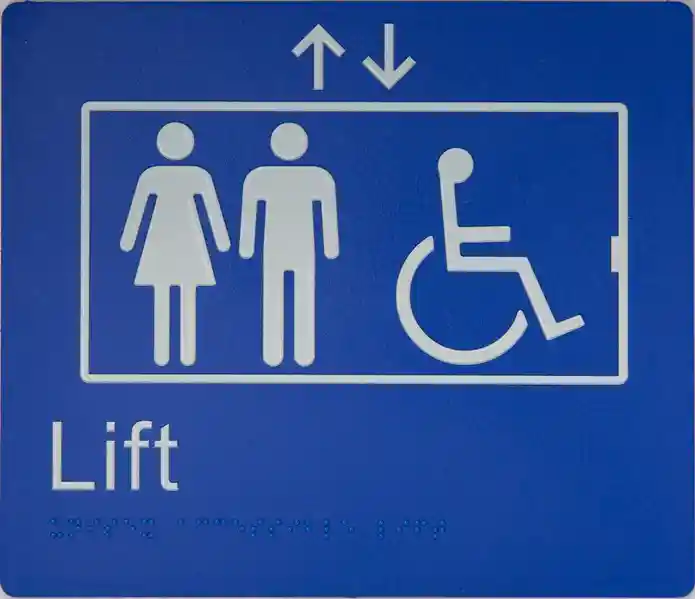
Braille tactile signs are fundamental tools that foster independence, improve safety, and build genuine inclusivity. By providing crucial information through touch, these signs empower individuals who are blind or have low vision to steer public and commercial spaces with confidence and dignity.
We've covered the key differences between tactile and Braille signage, the essential features that make them effective, and the critical locations where they are needed. Most importantly, we've highlighted why choosing high-quality, durable signs is a smart investment that ensures your facilities remain accessible for years to come.
At Pinnacle Signage, we are passionate about helping Australian businesses create environments that are accessible to everyone. Our expertise in manufacturing compliant, durable Braille tactile signs means you can trust us to provide solutions that don't just meet standards, but actively improve the experience for every visitor. Let's work together to make Australia a more accessible place, one clear, guiding sign at a time.