

No Alcohol Allowed: Choosing the Right Prohibition Signage
What Is a Drinking Prohibited Sign, and Do You Actually Need One?
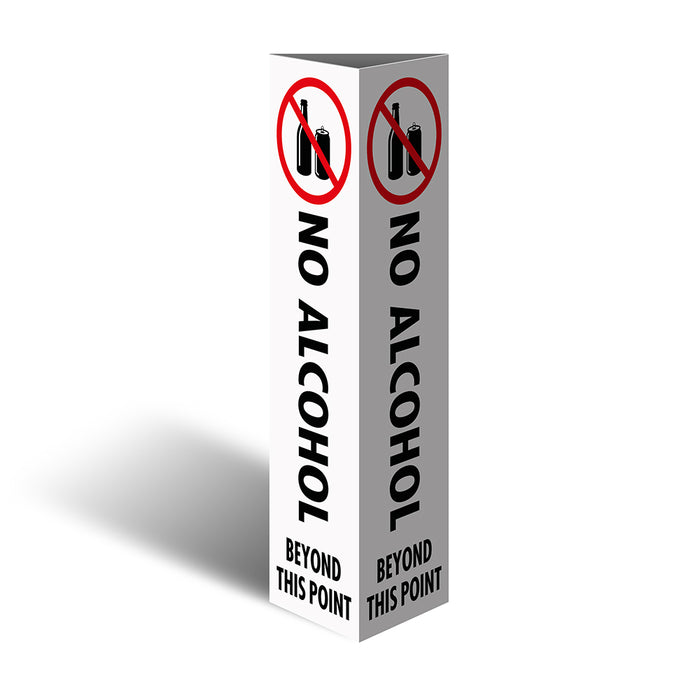
A drinking prohibited sign is a standardised safety sign used to show that consuming beverages, alcoholic or otherwise, is not allowed in a specific area. Here is a quick overview:
- What it looks like: A circular sign with a white background, red border and diagonal slash, and a black pictogram of a drinking action
- What it means: No drinking allowed in this area, whether that is alcohol, tap water, or any liquid
- Who needs it: Workplaces, construction sites, public parks, hospitality venues, laboratories, agricultural facilities, and hazardous zones
- Why it matters: Clear prohibition signage can help reduce avoidable incidents and support stronger site compliance in industrial, agricultural, and public settings
- Australian standard: Compliant signs follow AS 1319, which governs the design and use of prohibition signage across Australian workplaces
Whether you manage a construction site, food venue, farm, warehouse, processing facility, or public recreation area, getting the right sign in the right place is part of your duty of care and helps people understand site rules straight away.
Alcohol consumption in shared spaces can lead to disruptive or unsafe behaviour. In workplaces with chemical, hygiene, or physical hazards, any liquid consumption can create contamination or safety risks. A clear, compliant sign is one of the simplest ways to communicate that rule across a site, especially where staff, contractors, visitors, and delivery drivers move through regularly.
I'm Doug Lindqvist, General Manager of Pinnacle Signage, an Australian-owned manufacturer based in East Wagga Wagga, NSW. At Pinnacle, we manufacture durable, compliant drinking prohibited signs locally for Australian businesses, councils, farms, and multi-site operators. We also support bulk orders, reliable dispatch, and straightforward local service. In this guide, I'll explain what these signs mean, where they are used, and how to apply them effectively across your site.
If you need site-ready prohibition signage, you can explore our Prohibition Signage Collection or browse Pinnacle Signage at Bunnings for in-store and online access.

Understanding the drinking prohibited sign and Its Design
At a glance, a drinking prohibited sign is simple. That is the whole point. In safety signage, if someone has to stop and decode the message, the sign has already done half a job.
In Australia, prohibition signs are designed to be recognised quickly. The familiar format is a black symbol on a white background, covered by a red circle and diagonal slash. If you would like a refresher on how prohibition signage works across different settings, our guide to Understanding Prohibition Signs in the Workplace and Public Spaces is a helpful companion.

A drinking prohibited sign typically shows:
- A cup, glass, bottle, or drinking action as the central pictogram
- A red annulus and diagonal slash to indicate the action is not permitted
- Strong contrast for fast recognition
- Minimal wording, or no wording at all, when the symbol alone is enough
This standardised look matters because people notice patterns before they read text. In a noisy work zone, a park entrance, or a processing area, that split-second recognition can be the difference between compliance and confusion.
Visual Standards for a drinking prohibited sign
For Australian workplaces, AS 1319 is the key design reference for prohibition signs. In practical terms, that means the sign should be clear, high-contrast, and visually consistent with other safety signage on site.
A compliant drinking prohibited sign will generally include:
- A white background
- A red circular border and diagonal slash
- A black pictogram showing drinking
- Proportions and colours that make the prohibition obvious
Depending on where the sign is used, the substrate can vary. For indoor locations, non-reflective self-adhesive vinyl or poly often does the job well. For outdoor or heavy-duty areas, metal options are usually the better choice. If the sign needs to be seen in lower light or from further away, reflective materials may be appropriate.
For sites needing durable Australian-made options, our Prohibition Signage Collection covers common workplace and public-area applications.
Standardised Symbols and Their Benefits
Standardised prohibition symbols are one of the quiet achievers of site safety.
They help because they:
- Cross language barriers
- Support quick identification from a distance
- Keep signage consistent across multiple sites
- Reduce reliance on lengthy wording
- Make inductions easier, because the symbols repeat from site to site
That last point is easy to underestimate. A worker, contractor, visitor, or member of the public may not read every sign in detail, but they will usually recognise a red slash over a black symbol. That consistency builds safer habits.
We cover this broader system in our article on Prohibition Signs.
Why Alcohol Prohibition Signage is Essential for Site Safety
A drinking prohibited sign is not just there to fill empty wall space. It communicates a site rule clearly, visibly, and immediately.
Clear prohibition signage supports safer behaviour, better site communication, and stronger compliance outcomes. In Australian workplaces and public-facing environments, the practical lesson is simple, when restrictions are obvious, people are more likely to follow them.

This matters in places where:
- Alcohol consumption could affect judgement or reaction time
- Beverage consumption could contaminate a hazardous or controlled area
- Public drinking restrictions need visible enforcement support
- Site operators need to demonstrate reasonable steps under their duty of care
- Farms, packing sheds, workshops, and processing areas need clear rules that workers can recognise quickly
Compliance with Australian Standards
In NSW and across Australia, employers and site controllers have a duty to provide safe systems of work. Signage is only one part of that system, but it is an important one.
A drinking prohibited sign helps support compliance when it is used alongside:
- Site policies
- Staff inductions
- Risk controls
- Physical supervision or access restrictions where needed
AS 1319 guides the design and application of safety signs in workplaces, including prohibition signs. For broader official guidance, Safe Work Australia provides practical information on communicating workplace risks clearly and using suitable control measures.
If you want a broader view of how mandatory and prohibition signs fit together, see Mandatory Signs: What They Are, Why They Matter, and How to Spot Them.
Reducing Workplace Incidents
There is a practical reason these signs are common in higher-risk settings. Drinking, especially alcohol consumption, can affect concentration, coordination, and decision-making. In areas with moving plant, traffic, chemicals, tools, livestock operations, or hygiene controls, that is a genuine issue.
Even where the concern is not alcohol, general beverage consumption can still be a risk in:
- Laboratories
- Chemical storage areas
- Food processing zones
- Biosecurity-sensitive facilities
- Areas with contamination hazards
- Agricultural handling and packing areas
A visible sign reinforces expectations before a problem starts. It also helps supervisors and managers maintain a consistent rule across the site.
For related context on safety messaging systems, our article The A to Z of Mandatory Safety Signs explains how different sign categories work together on site.
If you are managing multiple work areas or ordering in volume, you can view our Prohibition Signage Collection or browse Pinnacle Signage at Bunnings.
Common Applications for the drinking prohibited sign
The exact meaning of a drinking prohibited sign depends on the environment. That is why context matters.
Common places we see these signs used include:
- Construction sites
- Warehouses and factories
- Chemical handling areas
- Laboratories
- Public parks and reserves
- Beaches and foreshore zones
- Sporting venues
- Schools and community facilities
- Hospitality back-of-house zones
- Farms, sheds, and agricultural processing areas
- Restricted or controlled areas on private property
In some settings, the sign is about banning alcohol specifically. In others, it is about preventing any drinking because of contamination, hygiene, or safety risks.
If you are reviewing site rules across multiple areas, the Prohibition Signage Collection is a useful starting point for matching signs to workplace and public-facing applications.
Differentiating Between No Alcohol and drinking prohibited sign Variations
This is one of the most common points of confusion.
A drinking prohibited sign usually means the act of drinking is not allowed in that area. That can include water, soft drink, coffee, sports drinks, and alcohol. It is often used where contamination or hazard exposure is the main concern.
A "no alcohol" sign is narrower. It focuses specifically on alcoholic beverages, often in public spaces, workplaces, or private properties where alcohol is banned but water or other drinks may still be allowed.
A "no eating or drinking" sign is broader again. It is commonly used in laboratories, biohazard areas, and chemical zones where ingestion risks exist.
There are also related signs that should not be confused with drinking prohibited signs, such as:
- Non-potable water signs
- Tank water not for human consumption signs
- Do not drink water signs for unsafe outlets
- Alcohol prohibited on premises signs
So, if the issue is behaviour, use a drinking prohibited or no alcohol sign. If the issue is the water source itself, use the correct non-potable water warning. Those are different messages and should be treated that way.
For workplace sign categories more broadly, see our Prohibition Signs article.
Public Spaces and Community Safety
Outside the workplace, drinking prohibition signage often supports public order and community safety. In parks, beaches, streets, and family recreation areas, visible alcohol restrictions can help reduce disturbances and make rules easier to enforce.
These signs are especially useful in areas where councils, site managers, or facility operators need to show that drinking is restricted in the interest of:
- Child and family safety
- Reducing antisocial behaviour
- Lowering litter and broken glass risks
- Supporting local alcohol control policies
- Making public rules obvious to visitors
If you need alcohol-related prohibition signage for public-facing environments, our Prohibition Signage Collection is the best place to start.
Selecting Durable Materials for Australian Conditions
Australian weather is not known for being gentle on signage. Sun, dust, moisture, temperature swings, and general site wear all matter. If a sign fades fast or curls at the edges, it stops doing its job.
That is why material choice matters, especially for businesses ordering across several locations or fitting out larger sites.
The right material depends on where the sign will live:
- Indoors on smooth surfaces
- Outdoors in full sun
- Wet or washdown areas
- Temporary site fencing
- Permanent perimeter installations
- Farms, yards, and exposed regional worksites
Well-made outdoor signs with a suitable durability rating can reduce replacement frequency compared with lower-grade alternatives. For businesses managing multiple sites, that practical durability matters.
You can also browse the broader Pinnacle range through Pinnacle Signage at Bunnings, which is useful for customers who want in-store access as well as online ordering.
Material and Size Options
The most common material options for a drinking prohibited sign are:
- Self-adhesive vinyl, good for smooth indoor surfaces
- Poly, lightweight and practical for many internal applications
- Metal or aluminium, ideal for outdoor durability and long-term use
Typical sizes vary based on viewing distance and location. Smaller formats may suit doors, entry points, and indoor rooms. Larger formats are better for gates, fences, plant areas, and public spaces where the sign needs to be seen from further away.
Common practical sizes include:
- 300 x 225mm for closer viewing
- 600 x 400mm for outdoor visibility and perimeter placement
As a rule, the further away the audience, the bigger the sign should be.
For examples of durable site-ready formats, see Pinnacle 600 x 400mm Metal Danger Sign.
Lamination and Printing Techniques
Durability is not only about the base material. Printing and finishing matter too.
Good-quality prohibition signs often use:
- UV-stable inks
- Protective lamination
- Scratch-resistant surfaces
- Clear, high-contrast printing methods
Lamination helps signs resist abrasion, moisture, and fading. On outdoor signs, that can make a noticeable difference over time.
Latex and similar modern printing techniques also help produce vivid, durable graphics, particularly where symbol clarity is important. For an example of a practical, durable sign format, see Pinnacle 300 x 225mm Poly First Aid Sign.
Installation and Maintenance Best Practices
Even the best sign is ineffective if it is hidden behind a pallet, mounted too low, or installed where nobody actually looks. Installation is where site rules become visible in day-to-day operations.
For related placement principles, our The Ultimate Guide to No Smoking Signs covers many of the same fundamentals.
A few practical installation methods include:
- Pressure-sensitive adhesive for flat, clean indoor surfaces
- Screws or rivets for walls, fences, and rigid boards
- Tamper-resistant fixings in public or high-interference areas
- Posts or brackets for freestanding outdoor installations
Before installing, check that the surface is:
- Clean
- Dry
- Stable
- Free from peeling paint, dust, or grease
Strategic Placement for Maximum Visibility
Placement should match the behaviour you are trying to control.
For drinking prohibited signs, the best positions are usually:
- Entry points to restricted areas
- Gates and perimeter fencing
- Doors to laboratories or controlled rooms
- Staff amenities boundaries where rules change
- High-traffic zones where people make quick decisions
- Access points to sheds, yards, and processing areas on farms or regional worksites
As a general guide, mount signs:
- At eye level where possible
- Facing the direction of travel
- With an unobstructed line of sight
- Before the person enters the restricted area, not after
If an area has multiple access points, use multiple signs.
If you need help matching sign size, material, and placement to your site, get in touch via Contact Pinnacle Signage. We dispatch within 48 hours, offer free shipping over $100 Australia-wide (exceptions apply), and warehouse pickup is available in East Wagga Wagga NSW, Monday to Friday, 8am to 5pm.
You can also browse Pinnacle Signage at Bunnings for convenient in-store and online access.
Maintenance and Replacement Cycles
Once installed, signs should be checked as part of regular site inspections.
Look for:
- Fading
- Cracking
- Graffiti
- Peeling edges
- Damage from impact
- Obstruction from stored items or vegetation
Cleaning is usually straightforward:
- Wipe with a soft cloth
- Use mild detergent if needed
- Avoid harsh solvents that may damage print or laminate
Outdoor signs with a proper durability rating generally provide reliable service, but lifespan still depends on exposure and handling. Coastal, chemical, or high-traffic environments may shorten life, so inspection matters just as much as initial quality.
If signs are no longer easy to read from their intended distance, replace them.
You can browse replacement options in our Pinnacle Signage Collection.
Frequently Asked Questions about Drinking Prohibited Signs
What is the difference between no alcohol and no drinking signs?
A no alcohol sign bans alcoholic beverages specifically. A drinking prohibited sign usually bans the act of drinking any beverage in that area. The first is often about behaviour and public order, the second may be about hygiene, contamination, or site safety. In some locations, a combined message is best.
Are these signs required by law in NSW workplaces?
The sign itself is not a one-size-fits-all legal requirement for every workplace. However, NSW employers and site operators do have a duty of care to identify risks, communicate rules, and implement suitable controls. Where drinking or alcohol creates a safety, contamination, or behavioural risk, a compliant prohibition sign can be an important part of that control system. AS 1319 guides the design and use of workplace safety signs, and SafeWork guidance supports clear hazard communication.
How long do outdoor prohibition signs last?
That depends on the material, exposure, and finish. A well-made aluminium or metal sign with UV-stable print and protective lamination can commonly last around 5 years outdoors. Poly and vinyl can also perform well in the right setting, especially indoors or in sheltered areas, but metal is usually the better choice for harsh Australian conditions.
Last Call on Drinking Prohibited Signs
A drinking prohibited sign may be a small item, but it carries a clear message. It helps protect workers, visitors, and the public by making site rules visible before problems start. It also supports safer behaviour, stronger compliance, and more consistent site management across workplaces, farms, hospitality venues, and community spaces.
At Pinnacle Signage, we manufacture durable, Australian-ready signage locally in East Wagga Wagga NSW, with fast turnaround, customisable options, and dependable service for single sites and bulk orders alike. We dispatch within 48 hours, offer free shipping over $100 Australia-wide (exceptions apply), and provide warehouse pickup locally Monday to Friday, 8am to 5pm.
You can explore the range through Pinnacle Signage at Bunnings or view our dedicated Prohibition Signage Collection.