

The A to Z of Mandatory Safety Signs
An Introduction to Mandatory Signs
What are mandatory signs?
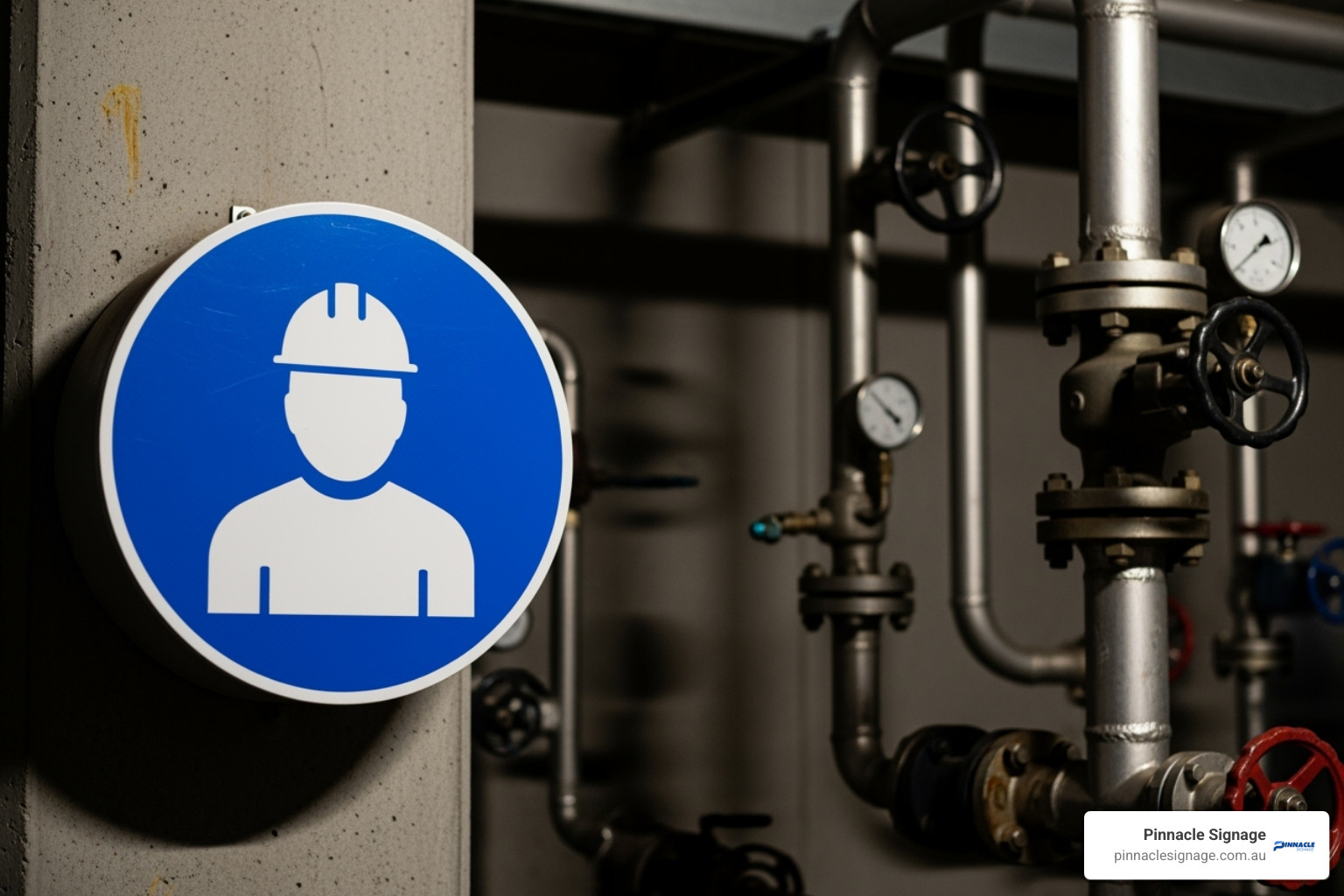
They are safety signs that give a specific instruction that must be followed to ensure workplace safety and compliance. Featuring a distinctive blue circular background with a white pictogram or text, they clearly communicate required actions, such as wearing personal protective equipment (PPE) or following hygiene procedures.
Key characteristics of mandatory signs:
- Colour: Blue background with white symbols or text.
- Shape: Circular for easy recognition.
- Purpose: To indicate an action that MUST be performed.
- Location: Commonly found in workplaces, construction sites, and industrial areas.
Mandatory signs are different from other safety signage. While prohibition signs (red) tell you what NOT to do and warning signs (yellow) alert you to hazards, mandatory signs instruct what you MUST do to stay safe.
In Australian workplaces, these signs are crucial for preventing accidents by providing clear, visual instructions that everyone can understand. Whether it's wearing a hard hat on a construction site or washing hands in a food preparation area, mandatory signs ensure safety requirements are understood at a glance.
Important What are mandatory signs terms:
What are mandatory signs and how are they used?
Mandatory signs serve as clear, non-negotiable instructions designed to keep everyone safe. Unlike other types of safety signs that warn of dangers or prohibit actions, mandatory signs specifically direct individuals on actions they must take to avoid risks and ensure compliance with safety regulations.
The Core Purpose: What Mandatory Signs Tell Us to Do
At their heart, mandatory safety signs are about directing compulsory actions. They are the "must-dos" of safety signage, designed to promote compliance, minimise risks, and prevent accidents.
Their primary purpose is to ensure that everyone, whether staff or visitor, understands and follows necessary safety protocols without constant instruction. They don't just suggest; they command, ensuring that actions like wearing personal protective equipment (PPE) or following specific operational procedures become second nature. This contributes significantly to creating a proactive safety culture.
For a deeper dive into how signage contributes to overall site safety, check out Your Comprehensive Guide to Site Safety Signs.
Common Examples You'll See in Australian Workplaces
Across Australian workplaces, you’ll encounter a wide array of mandatory signs, each serving a specific purpose to guide behaviour and ensure safety. These signs are particularly prevalent in environments where specific actions are critical to prevent injury or maintain hygiene.
Some of the most common examples include:
- PPE Signs: These are perhaps the most widespread. You’ll see "Wear Head Protection," "Wear Eye Protection," "Wear Hearing Protection," or "Wear High-Visibility Clothing" on construction sites and in manufacturing plants.
- Hygiene Signs: Critical in food preparation areas, medical facilities, and public restrooms, these signs mandate actions like "Wash Hands" or "Sanitise Hands."
- Operational Signs: These signs dictate specific procedures for equipment or areas. Examples include "Refer to Instruction Manual," "Keep Locked," or "Use Handrail."
- Emergency Procedure Signs: While often green, some emergency-related actions can be mandatory, such as "Follow Emergency Exit Route."
A general list of essential mandatory signs for a typical Australian worksite would include:
- Wear Hard Hat
- Wear Safety Glasses
- Wear Hearing Protection
- Wear High-Visibility Clothing
- Wear Safety Footwear
- Wash Hands
- Keep Clear
- Use Handrail
- Fire Door Keep Closed
Mandatory vs. Other Safety Signs: A Clear Comparison
Understanding the differences between the various types of safety signs is crucial for effective workplace communication. Mandatory safety signs are easily distinguishable from their counterparts by their unique design and purpose.
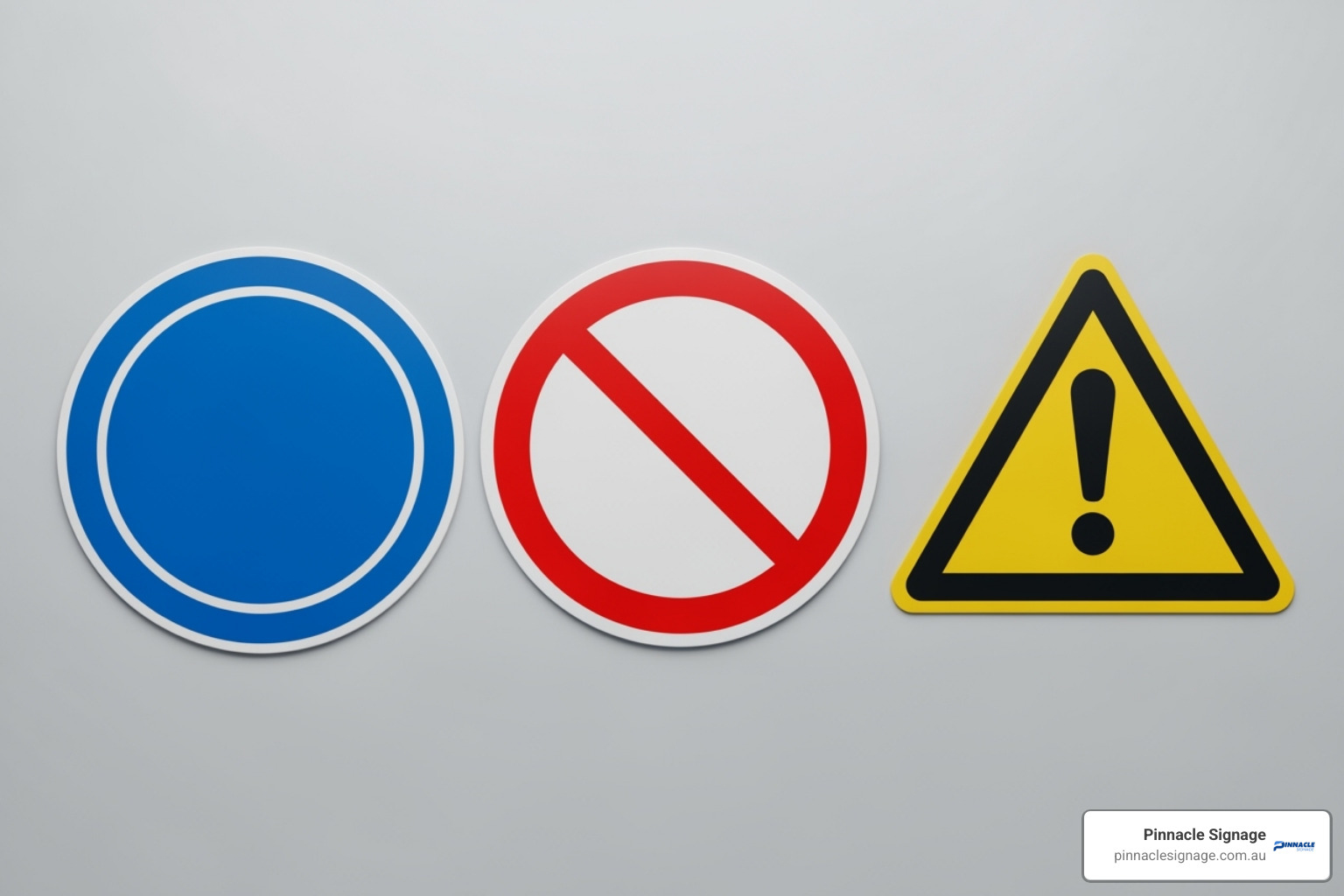
Let's break down how mandatory signs compare to other common safety signs:
-
Mandatory Signs (Blue Circle, White Pictogram):
- Purpose: To indicate an action that must be carried out.
- Examples: "Wear Eye Protection," "Foot Protection Must Be Worn," "Wash Hands."
-
Prohibition Signs (Red Circle with Diagonal Slash, Black Pictogram):
- Purpose: To indicate an action that must not be carried out.
- Examples: "No Smoking," "No Entry," "Do Not Touch." For more details, refer to Understanding Prohibition Signs in the Workplace and Public Spaces.
-
Warning Signs (Yellow Triangle, Black Pictogram):
- Purpose: To alert people to potential hazards or dangerous conditions.
- Examples: "Wet Floor," "Caution: Forklift Traffic," "Dangerous Goods."
-
Danger Signs (Red Oval, Black Text on White, Black Border):
- Purpose: To indicate an immediate and life-threatening hazard.
- Examples: "Danger: High Voltage," "Danger: Confined Space."
-
Emergency Information Signs (Green Square/Rectangle, White Pictogram):
- Purpose: To provide information about emergency exits, first aid, or safety equipment.
- Examples: "Emergency Exit," "First Aid Station," "Assembly Point."
The distinction between these sign types is critical. While a warning sign might tell you "Beware of Forklifts," a mandatory sign would instruct "Wear High-Vis Vest" in that same area.
Implementing Mandatory Signage for a Safer, Compliant Workplace
Implementing mandatory safety signs correctly is about more than just compliance; it's about creating a workplace where safety is second nature. When used thoughtfully, these signs guide behaviour and protect your team every day.
Why Correct Placement and Maintenance Matter
Mandatory signs are only effective if they are seen, understood, and trusted.
- High visibility is crucial. Position signs where they naturally catch the eye, such as at entry points to hazardous areas or beside specific equipment.
- Correct height matters. Signs mounted at eye level (typically 1.8 to 2.4 metres from the floor) are within a natural line of sight.
- Clear sightlines are essential. Regularly check that signs are not obscured by equipment, materials, or other workplace clutter.
- Regular maintenance ensures signs remain effective. A faded, dirty, or damaged sign loses its authority. Inspect signs as part of your routine safety checks, cleaning them regularly and replacing any that are worn out.
For practical strategies on maximising your signage effectiveness, have a look at How to Use Health and Safety Signs in the Workplace Effectively.
What are mandatory signs' role in building a positive safety culture?
Mandatory safety signs help transform abstract safety policies into concrete, daily actions. They actively shape how people think about safety and their role in maintaining it.
Constant, visual reinforcement helps embed safety into the workplace routine, making safe actions automatic. The signs also empower individuals by giving them the information needed to make safe choices independently, building a sense of shared responsibility.
Properly implemented mandatory signs are also a key part of meeting your safety obligations, showing that you've taken clear steps to communicate requirements to your team. This universal language of safety helps everyone understand their responsibilities quickly and clearly.
To explore how signage can strengthen your safety message, check out Workplace Safety Signs That Speak Louder Than Words.
Find the Right Mandatory Signs for Your Business
Every Australian workplace is different. At Pinnacle Signage, we understand that one size doesn't fit all when it comes to mandatory signage.
We manufacture high-quality, durable signs that can handle the Australian climate while maintaining clarity and compliance. Our customisable options mean you can get signs that speak directly to your unique workplace procedures.
With Australia-wide delivery, location is never a barrier to getting the right signage promptly.
Beyond mandatory signs, we offer a full range of safety communication solutions, including:
- Fire Signage to mark emergency equipment and exits.
- First Aid Signage to help locate medical assistance.
- Notice Signage for general information and operational instructions.
Our combination of durable materials, thoughtful design, and reliable service helps keep your safety communication clear and effective.
Common Mistakes to Avoid When Implementing Mandatory Signage
Even with the best intentions, businesses can make mistakes when implementing what are mandatory signs. These common oversights can undermine safety efforts, create compliance issues, and put people at risk.
- Poor placement: This is the biggest culprit. Signs placed too high, too low, or in dimly lit areas are easily missed. If you have to search for a sign, it’s in the wrong place.
- Mixing up sign types: Each safety sign has a specific job. A yellow warning sign saying "Caution: Hard Hat Area" is not a substitute for a blue mandatory sign stating "Head Protection Must Be Worn." Mandatory signs give direct instructions, so don't dilute the message with the wrong type.
- Neglecting maintenance: Australian conditions are tough on signage. Sun, rain, and dust can cause signs to fade, crack, or become dirty. A barely legible sign sends the wrong message about your commitment to safety. Regular inspections and prompt replacements are essential.
- Using non-standard signs: Using signs that don't follow the familiar blue circle and white symbol format can cause confusion. People expect to see a consistent design for safety instructions. Stick with professionally manufactured signs to ensure your message is clear and instantly recognisable.
- Sign overload: Covering every surface with signs can lead to "sign blindness," where people start to ignore them all. Focus on the most critical mandatory actions for each area and place signs strategically.
- Failing to update signage: As your workplace evolves with new equipment or procedures, your signage must be updated too. Outdated signs are not just useless; they are confusing.
By avoiding these common pitfalls, you can ensure your mandatory signs effectively guide safe behaviour and contribute to a safer workplace.
Partner with Pinnacle Signage for Your Safety Signage Needs
Understanding what mandatory safety signs is the first step. The next is implementing high-quality, durable signs that are strategically placed to be effective and keep everyone safe.
From our manufacturing base in Wagga Wagga, New South Wales, we help businesses across Australia solve their safety signage challenges. We understand the unique demands of Australian workplaces and environments.
Our mandatory signs are built to last, withstanding harsh sun and coastal conditions to ensure your safety messages remain clear. If you have specific requirements, our team can create custom mandatory signs that perfectly match your needs. With fast turnaround times and Australia-wide delivery, we ensure you get the signs you need without delay.
Proper mandatory signage reduces accidents, improves productivity, and strengthens your safety culture. When your team and visitors can clearly see and understand what is required of them, everyone benefits.
Ready to improve your workplace safety? Our expert team is here to help you find the right solutions for your business.