

Equip for Emergencies: Best Fire Hose Reels and Shower Stations Reviewed
The First Line of Defence: Understanding Fire Hose Reels
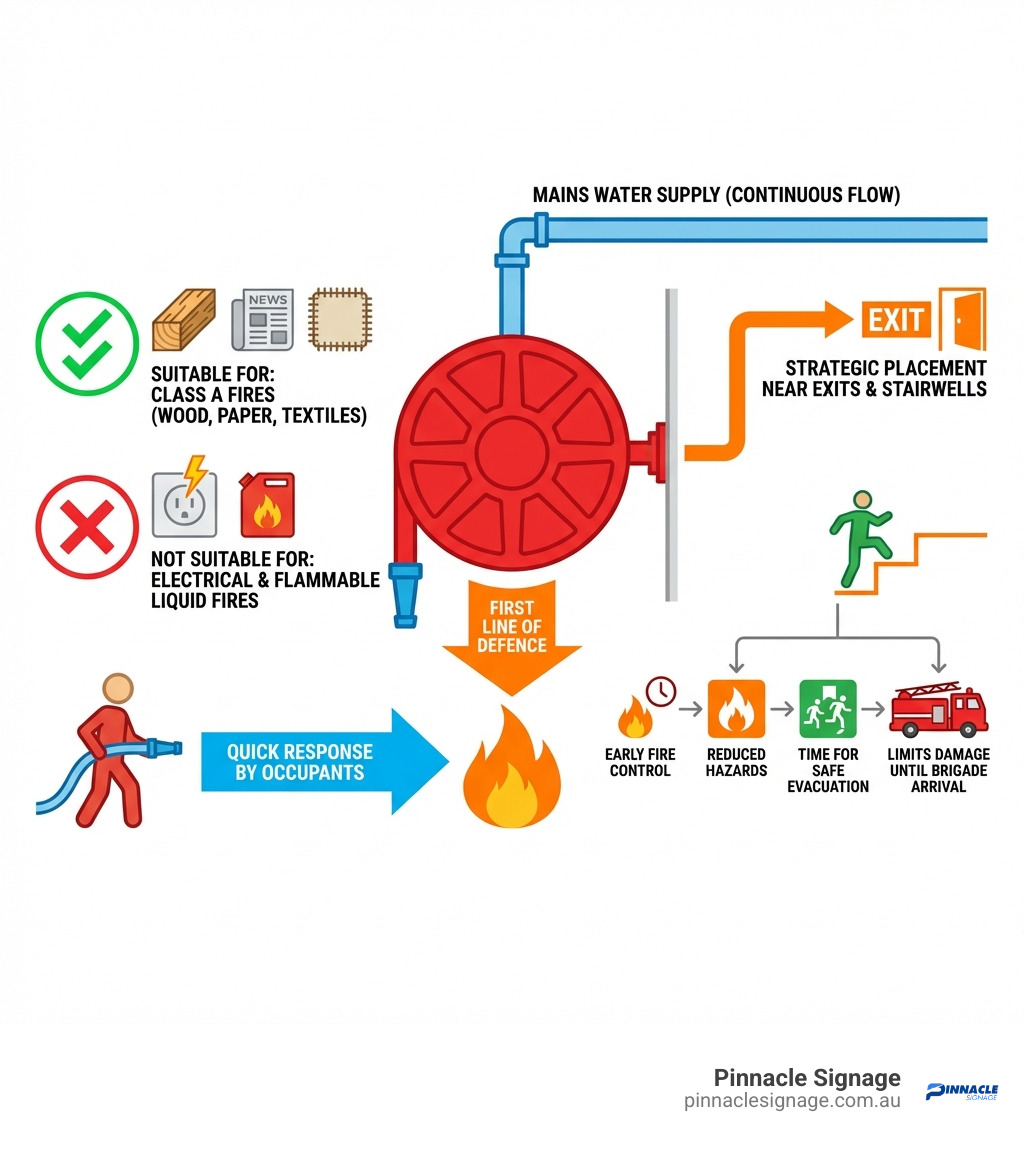
A fire hose reel is a first-attack piece of firefighting equipment designed for quick response by occupants to control fires in their early stages. These systems consist of a non-kinking hose permanently connected to the building's mains water supply, a control nozzle, a main turn on/off valve, and a hose guide mounted on a drum. Fire hose reels are most effective on Class A fires (paper, textiles, wood, plastics, and rubber) but must never be used on electrical fires due to the risk of electrocution.
Key Fire Hose Reel Facts:
- Purpose: Initial fire attack by building occupants.
- Standard Length: 36 metres.
- Hose Diameters: 19mm or 25mm.
- Minimum Performance: 0.45 litres per second at 220kPa (AS/NZS 1221).
- Maintenance: Inspected every 6 months (AS1851).
- Suitable For: Class A fires (wood, paper, textiles).
- NOT Suitable For: Electrical fires or flammable liquids.
Fire hose reels play a vital role in building safety by allowing occupants to fight fires before they escalate. This reduces hazards, provides crucial time for safe evacuation, and limits structural damage until the fire brigade arrives. When installed strategically near exits with unobstructed access, these systems are an essential part of a broader fire safety system that also relies on clear, well-placed fire signage.
Pinnacle Signage manufactures durable fire signage that helps people locate hose reels, extinguishers and other emergency equipment quickly. These signs are available Australia-wide through Bunnings Warehouse or directly via the Pinnacle Signage website for bulk and custom orders.
What is a Fire Hose Reel?
At its core, a fire hose reel is a crucial piece of firefighting equipment designed as the first line of defence against small fires. Its primary purpose is to provide a readily accessible and controlled supply of water, enabling trained personnel to combat fires in their infancy. As an easily deployed, continuous water source, it can tackle a potential fire risk before it grows out of control.
These systems are permanently connected to a building's mains water supply, ensuring a virtually unlimited flow of water, which sets them apart from fire extinguishers. A typical fire hose reel consists of a main turn on/off valve, a non-kinking hose, a hose guide, and a nozzle to control the water stream. This simple design makes it a quick-response tool for fighting fires in their early stages.
How Fire Hose Reels Improve Building Safety
The presence and proper functioning of fire hose reels significantly improve building safety by empowering occupants to take immediate action. By enabling an initial attack on a fire, they can dramatically reduce the immediate hazard and limit its spread.
This immediate response also buys precious time for a safe and orderly evacuation. By controlling or extinguishing small fires quickly, they can prevent flames from reaching structural elements, reducing repair costs and business downtime. Furthermore, these reels assist the fire brigade by containing the fire until professional help arrives, making their job safer and more efficient.
They are an integral part of a comprehensive fire safety plan, working with other equipment like extinguishers, alarms and clearly visible fire signs. For more information on how clear signage supports your emergency response, explore our guide on More info about fire signs.
Anatomy of a Fire Hose Reel: Components and Variations
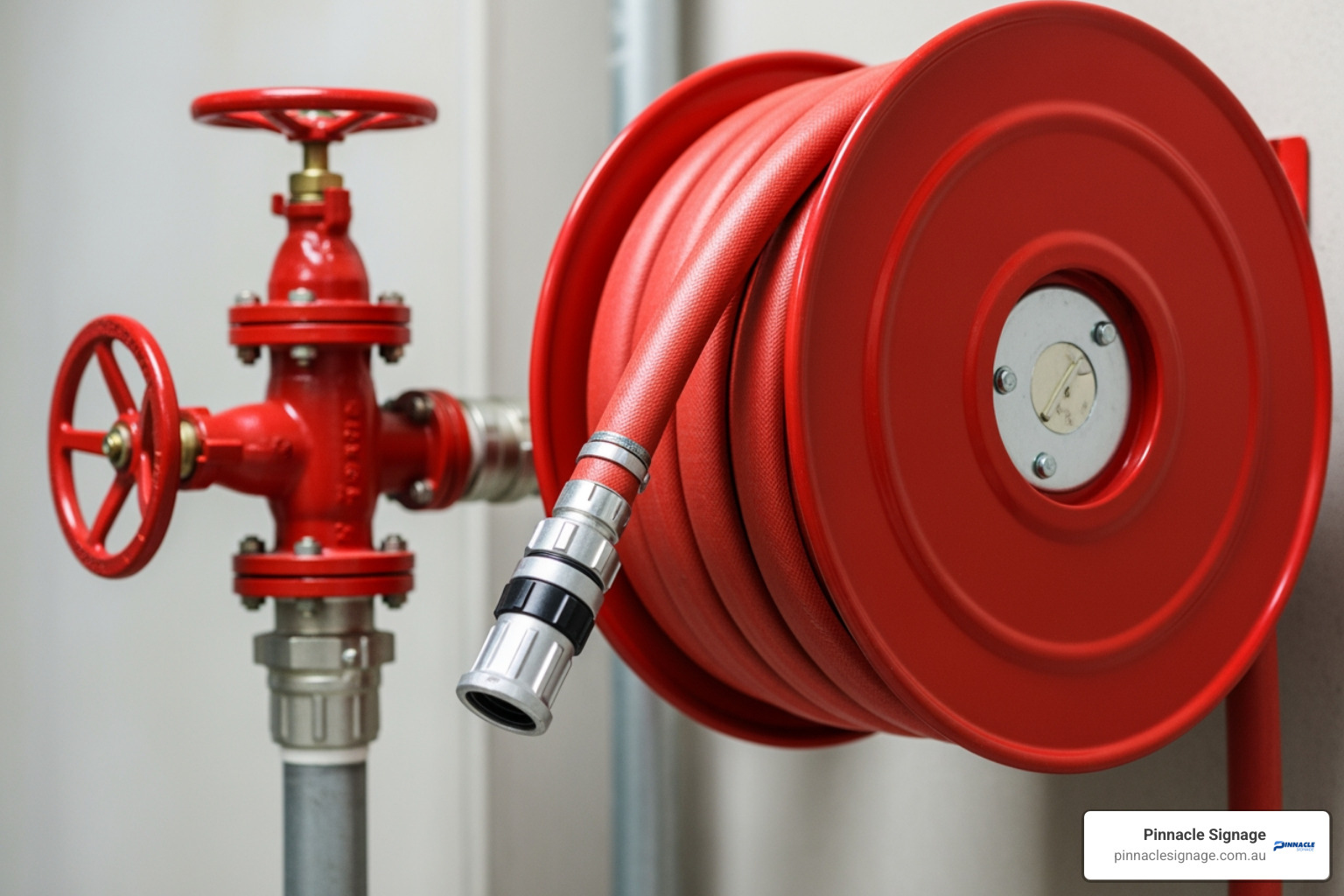
Understanding the components and variations of a fire hose reel is key to its effective use. While the basic function is consistent, different designs and materials cater to various environments.
Essential Components of a Fire Hose Reel System
A fire hose reel system is an engineered unit where each part is vital for effective operation. The essential components include:
- Main Turn On/Off Valve: The primary control to activate or shut off the water supply to the hose.
- Non-Kinking Hose: A specially designed hose that resists twisting to ensure continuous water flow.
- Control Nozzle: Allows the operator to direct the water stream and adjust the flow from a jet to a spray.
- Hose Guide: Ensures the hose unwinds and rewinds smoothly, preventing tangles.
- Drum or Spool: The central cylinder that securely stores the hose.
- Mounting Bracket: A robust bracket that secures the reel assembly to a wall or support.
Clear, compliant fire hose reel signs help people find this equipment quickly in an emergency. Pinnacle Signage offers a wide range of fire equipment location signs through Bunnings Warehouse, suitable for commercial, industrial and community facilities.
Common Types of Fire Hose Reels
Fire hose reels come in several configurations to suit different building layouts and accessibility needs.
- Fixed Reels: The most common type, mounted directly to a wall, offering a robust and straightforward solution.
- Swing Reels: Mounted on a pivot, allowing the reel to swing out from the wall, often up to 180 degrees, ideal for corners or tight spaces.
- Recessed Reels: Partially or fully built into a wall cavity for a more discreet installation that maintains a building's aesthetic.
- Concealed Reels: Completely hidden within a cabinet, often chosen for high-end architectural environments.
Reels can also feature manual valves, which are operated by hand, or automatic valves that activate the water supply as the hose is unwound.
Materials, Capacities, and Hose Sizes
The materials and dimensions of fire hose reels are critical for durability and performance.
Materials for Durability:
- Heavy Gauge Steel: A popular choice for its strength, often powder-coated for corrosion protection.
- Stainless Steel: Preferred for corrosive environments like marine settings or industrial kitchens due to its resistance to rust.
Capacities and Hose Sizes:
- Hose Lengths: The standard length in Australia is 36 metres, with other options like 30m and 50m used for different coverage needs.
- Hose Diameters: Typical diameters are 19mm and 25mm, balancing water delivery with ease of handling.
Understanding these specifications is useful when you are planning fire protection for your site, however the reel is only one part of the system. Matching it with clear, durable identification such as fire hose reel signs, Fire extinguisher signs or combined emergency panels from Pinnacle Signage helps create a clear, easy-to-follow emergency response layout across your facility.
Compliance and Installation in Australia

In Australia, the installation and maintenance of fire hose reels is guided by local standards so that the equipment is effective and reliable when it is needed. For most businesses, the practical goal is simple: make sure people can see the reel, reach it quickly and use it safely.
Navigating Compliance: Key Australian Standards
Adhering to Australian Standards is both a legal and practical obligation. These standards provide a framework for the manufacture, installation and maintenance of fire hose reels without requiring facilities managers to become technical experts.
Commonly referenced standards include:
- AS/NZS 1221: Covers the design, construction and performance of fire hose reels.
- AS2441: Outlines general requirements for installation, including location and accessibility.
- AS1851: Sets out routine servicing, inspection and testing requirements to help ensure ongoing reliability.
These standards align with the National Construction Code (NCC), which requires that firefighting equipment in buildings be installed so occupants can make an initial attack on a fire. For more details, you can refer to the Part E1 Fire fighting equipment section of the NCC.
From a signage point of view, the main priority is that your hose reels, extinguishers and exits are all clearly identified. Pinnacle Signage provides a broad range of compliant fire equipment and exit signs, available nationally through Bunnings Warehouse for straightforward replenishment and bulk rollouts.
Strategic Placement: Location and Installation Guidelines
The effectiveness of a fire hose reel depends heavily on its placement. Guidance from the NCC and AS2441 helps ensure these devices are accessible and functional in an emergency.
Key considerations for location include:
- Accessibility: Reels are typically located near exits and stairwells with unobstructed access. Allowing clear space around the reel helps staff access it quickly.
- Coverage Area: The hose length, commonly 36 metres, needs to be sufficient to reach likely fire hazards within the area it serves.
- Building Type: Placement will depend on the building's size, use and overall fire hazard level.
- Clear Signage: The location must be clearly marked with compliant signage so people can find it rapidly in an emergency. Pinnacle fire safety signs are designed for fast recognition, and are available both direct from Pinnacle and through Bunnings Warehouse for convenient Australia-wide access.
Proper installation ensures the fire hose reel can deliver its required performance, but without correct placement and clear signage, even the best equipment can be difficult to use when time is critical. For practical tips on planning your emergency signage, read our guide on An essential guide to fire and safety signs: types, meanings.
Proper Use and Maintenance of Your Fire Hose Reel
Knowing how to properly use and maintain a fire hose reel is as important as having one installed. Misuse or neglect can turn a life-saving device into a liability.
Using a Fire Hose Reel Safely and Effectively
A fire hose reel is a powerful tool, but it is important to understand its limitations to use it safely.
Suitable for Class A Fires Only: Fire hose reels are designed for Class A fires, which involve ordinary combustible materials like paper, textiles, wood and most plastics. They work by cooling the burning material below its ignition point.
DO NOT Use on Electrical or Flammable Liquid Fires: It is critical that you DO NOT use a fire hose reel on electrical fires. Water conducts electricity, posing a severe risk of electrocution. Similarly, they should not be used on flammable liquid fires. For these types of fires, a suitable fire extinguisher, such as CO2 or dry chemical, must be used.
How to Operate a Fire Hose Reel
In an emergency, the correct procedure is to first alert everyone nearby, activate any alarms, and call 000. Before approaching the fire, turn on the main valve to activate the water supply. Pull the hose towards the fire, making sure it unwinds smoothly; a two-person operation is often safer and more effective. With the nozzle initially closed, approach the fire and then open the nozzle to release water. Direct the stream at the base of the fire, sweeping from side to side. It is crucial to know when to withdraw. If the fire becomes too large or spreads rapidly, evacuate the area immediately, as personal safety is the top priority.
To support this, many workplaces use clear, durable instructional signs near their hose reels and extinguishers so staff have a quick visual reminder of what to do. Pinnacle Signage offers a range of fire and emergency information signs suitable for this purpose.
Maintenance and Servicing for Reliability
Regular maintenance is required to ensure a fire hose reel functions correctly in an emergency. In Australia, these requirements are described in AS1851, Routine servicing of fire protection systems and equipment.
Key Maintenance Requirements:
- Inspection Every 6 Months: AS1851 sets out that fire hose reels should undergo a professional inspection and test every six months. This includes checking for leaks, testing nozzle function and examining hose integrity.
- Annual Reporting: Inspection results are usually compiled into an annual report for the building's Annual Fire Safety Statement.
- Maintenance Record Tag: Each reel should have a tag indicating the last service date and the next one due.
Regular servicing helps ensure your fire hose reel works the first time, every time. For more insights into making safety information easier to follow across your workplace, explore our article on Workplace safety made easy: How to implement fire safety signs.
Reel Specifications and Limitations
Selecting the right fire hose reel for a project usually involves fire engineers or building designers, but there are some basic considerations that facilities managers should understand.
Key Considerations:
- Environment: The choice of material, for example, standard steel or stainless steel, depends on whether the setting is a standard office or a corrosive environment.
- Coverage: Hose length, for exampl,e 36m, and diameter, 19mm or 25mm, must be appropriate for the area to be protected.
- Reel Type: Fixed, swing, recessed or concealed reels are chosen based on space and architectural needs.
Fire Hose Reel vs Washdown Hose Reel: It is crucial to distinguish between a fire hose reel and a general-purpose washdown reel. A fire hose reel is built to specific Australian Standards for emergency fire suppression and should not be used for cleaning tasks, as this can cause wear and compromise its reliability.
Performance Requirements: As per AS/NZS 1221, a standard 19mm fire hose reel must deliver a minimum of 0.45 litres of water per second at 220kPa when fully extended. This helps ensure it has sufficient force to combat a Class A fire effectively.
To complement your equipment, ensure the reel, extinguishers and emergency exits are all clearly identified with fire and exit signage. Pinnacle Signage products are available through Bunnings Warehouse for quick replacement or expansion across multiple sites.
Beyond the Reel: Essential Accessories and Emergency Stations
While the fire hose reel is a cornerstone of fire safety, a comprehensive approach includes key accessories, clear identification and complementary safety stations for other hazards such as chemicals.
Fire Hose Reel Accessories and Signage
To keep your fire hose reel functional and visible, a few accessories and proper signage are indispensable.
- Protective Covers: Durable covers shield the reel from environmental damage, dust and UV exposure, helping to prolong its life.
- Replacement Nozzles: Having spare nozzles ensures water flow control remains effective if the original is damaged.
- Location Signs: Clear, compliant signage is required to indicate the reel's location. These signs are critical for instant recognition in an emergency, guiding people to the equipment and saving valuable time. Without proper signage, a reel can be difficult to locate when seconds matter.
Pinnacle Signage supplies a wide range of fire equipment and emergency signs that support these systems, including Fire hose reel, Fire extinguisher and Fire equipment markers. You can find many of these products at your local Bunnings or by visiting the Pinnacle Signage brand page at Bunnings. For larger projects or custom layouts, you can also order directly from the Pinnacle Signage website.
For more details on how hose reel identification fits into a broader fire safety system, read our article on Fire hose signs: Guiding the way to emergency equipment.
Emergency Shower and Eyewash Stations
Beyond fire, a comprehensive safety plan addresses other hazards like chemical splashes and contamination. This is where emergency shower and eyewash stations are invaluable.
These stations are critical for immediate decontamination after exposure to hazardous substances. Emergency showers provide a rapid deluge of water for the body, while eyewash stations deliver a gentle flow to flush chemicals from the eyes. They are a crucial first aid response for chemical exposure and demonstrate a strong commitment to workplace safety.
As with fire hose reels, clear signage is vital for locating these stations quickly. Our First Aid signage helps guide personnel to these areas and is designed to be easily understood in high-stress situations. You can also find high-quality first aid signs at your local Bunnings, such as the Pinnacle 300 x 225mm Poly First Aid Sign.
Frequently Asked Questions About Fire Hose Reels
How often do fire hose reels need to be serviced in Australia?
According to Australian Standard AS1851, fire hose reels must be inspected and tested every 6 months by a qualified technician, with records maintained for the annual fire safety statement.
Can I use a fire hose reel on an electrical fire?
No, you must never use a water-based fire hose reel on electrical fires. Water conducts electricity and using it on live equipment poses a severe risk of electrocution.
What is the minimum water flow rate for a fire hose reel?
As per AS/NZS 1221, a standard 19mm fire hose reel must be able to deliver a minimum of 0.45 litres of water per second at a pressure of 220kPa with the hose fully extended.
Find the Right Safety Solutions for Your Site
Ensuring your facility is equipped with the correct fire hose reels, emergency stations and clear, compliant signage is a critical step in protecting people and property. From initial attack firefighting equipment to first aid and chemical response stations, a comprehensive safety plan relies on clear communication as much as it does on hardware.
Pinnacle Signage supports this by providing durable, easy-to-read signs that clearly identify fire equipment, exits, first aid points and hazardous areas across your site. Many of these products are stocked nationally at Bunnings Warehouse, making it simple to standardise signage across multiple locations or to replace damaged signs quickly.
For businesses planning a larger rollout or needing custom messages, Pinnacle also offers custom sign options, such as site-specific fire equipment layouts, multi-language instructions or co-branded safety panels.
If you are coordinating signage for multiple properties, councils, or industrial sites, our team can help you choose consistent designs and plan bulk orders. For all your fire and safety signage needs, explore the extensive range from Pinnacle Signage online or at your local Bunnings Warehouse. For custom solutions, distributor enquiries or bulk orders, contact our team today.