

Sign of the Times: Decoding Explosive and Chemical Hazard Warnings
Why Explosive Material Signs Save Lives
Explosive material signs are critical safety tools that instantly communicate life-threatening hazards to workers, visitors, and emergency responders. These signs use standardised symbols, colours, and text to warn of materials that can detonate, deflagrate, or cause mass explosions.
Key types of explosive material signs in Australia:
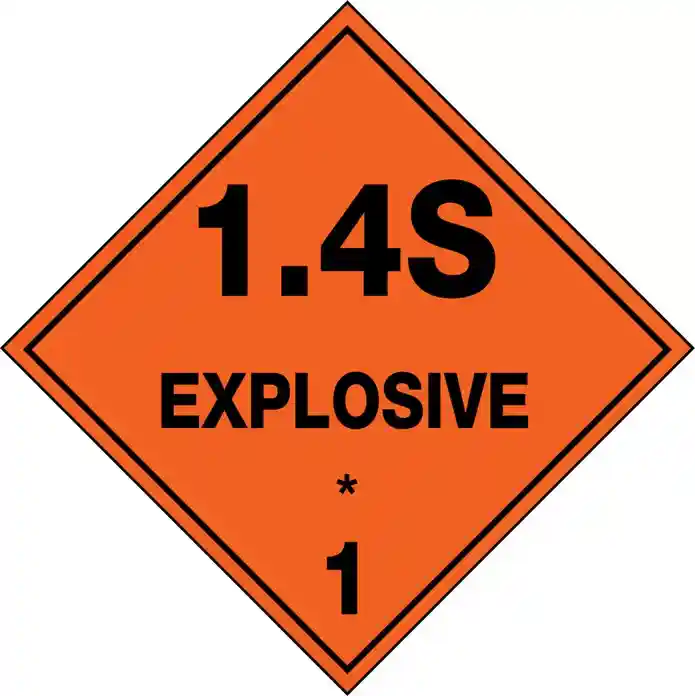
- ADG Class 1 Signs - Orange diamonds used for transporting explosives, divided into six divisions based on hazard severity (1.1 to 1.6)
- GHS Exploding Bomb Pictogram - Red-bordered diamond showing an exploding bomb, used for workplace safety signage
- Emergency Information Panels - Orange panels displaying hazchem codes and emergency contact numbers
- Substance-Specific Labels - Signs for self-reactive chemicals, organic peroxides, and other unstable materials
These signs prevent catastrophic accidents by ensuring everyone on site understands the risks they're working with and how to respond in an emergency. In the safety and industrial sector, proper signage can mean the difference between a near-miss and a tragedy. Clear hazard communication isn't just about compliance, it's about getting everyone home safely at the end of the day.
Explosive material signs vocab explained:
The Critical Role of Hazard Communication
In any workplace, especially those handling dangerous goods, effective hazard communication is paramount. Signs are not just decorative, they are a non-negotiable component of a robust safety system. They act as the first line of defence, providing immediate, visual warnings that can prevent accidents, protect our workers and first responders, and fulfil our legal and moral obligations. Clear signage significantly improves overall fire and life safety.
A picture truly is worth a thousand words, and in the context of fire protection and life safety, these symbols speak volumes. Standardised meanings of signs and symbols are crucial for effective communication in emergencies. For instance, the universal importance of clear symbols for fire safety and emergency information influences best practices globally.
We understand that knowing your hazard symbols is vital for safety. For a comprehensive guide, explore our article on knowing your hazard symbols.

The Purpose of Explosive Material Signs
The fundamental purpose of explosive material signs is to provide an immediate visual warning about the presence and nature of explosive hazards. These signs are designed to:
- Convey specific hazard types: They quickly tell you if a material poses a mass explosion risk, a projection hazard, or a fire hazard.
- Guide handling procedures: By indicating the type of hazard, they inform staff and visitors about necessary precautions, such as avoiding ignition sources or handling with extreme care.
- Inform emergency response strategies: First responders rely heavily on these signs to quickly assess risks and determine appropriate actions, whether that means evacuation, remote firefighting, or specialised containment.
- Aid in site evacuation: Clear, strategically placed signs can direct personnel away from immediate danger zones and towards safe assembly points.
Without these signs, critical seconds could be lost in an emergency, leading to potentially devastating outcomes.
The Consequences of Ignoring Warnings
The ramifications of not using or misinterpreting explosive material signs can be severe, leading to catastrophic accidents that impact lives, property, and the environment.
- Potential for catastrophic accidents: Explosive incidents can result in uncontrolled blasts, widespread fires, and secondary hazards.
- Severe injuries and fatalities: Workers and emergency responders are at high risk of death or debilitating injuries from explosions, burns, and shrapnel.
- Significant property and environmental damage: Buildings, equipment, and surrounding areas can be destroyed or contaminated, leading to immense financial losses and long-term environmental clean-up efforts.
- Legal ramifications: Employers and individuals can face hefty fines, legal prosecution, and even imprisonment for non-compliance with safety regulations.
- Reputational damage: Incidents can severely harm a company's reputation, leading to loss of trust and business.
It is crucial to understand that these consequences extend beyond just explosives. Any hazardous material, if mishandled due to a lack of proper signage, can lead to serious harm. Learn more about the dangers of other hazardous materials in our guide on identifying corrosive material signs.
A Guide to Australian Explosive Material Signs and Systems
Australia employs a robust system for identifying hazardous materials, drawing on both national and international standards. When it comes to explosive material signs, we primarily focus on the Australian Dangerous Goods (ADG) Code for transport, and the Globally Harmonised System (GHS) for workplace safety.
It's important to differentiate between transport and workplace signage. Transport signage, governed by the ADG Code, ensures the safe movement of dangerous goods on roads, rail, and sea. Workplace signage, often guided by GHS, focuses on the safe handling and storage of these materials on-site.
Navigating the requirements for hazardous chemicals can be complex. For an overview of essential signage, check out our guide on hazardous chemicals sign requirements 101.
The Australian Dangerous Goods (ADG) Code: Class 1 Explosives
The Australian Dangerous Goods (ADG) Code sets out the requirements for the safe transport of dangerous goods by road and rail in Australia. For explosives, this means clear and specific hazchem class diamonds. These signs, typically an orange diamond with the word 'EXPLOSIVE' and a pictogram of an explosion, are essential for communicating the immediate danger to anyone involved in transport or emergency response.
Australia uses a system of labelling for dangerous goods based on globally-recognised standards. There are 9 broad categories of dangerous and hazardous goods, with Class 1 specifically covering explosives. These are substances that pose a significant risk due to their potential to rapidly release energy. Modern explosives, while powerful, are generally stable and safe to handle by trained professionals, but proper signage remains critical.
Understanding Class 1 Divisions
Class 1 explosives are further categorised into six divisions, each indicating a different type and severity of hazard:
- Division 1.1: Mass explosion hazard. This includes substances and articles that have a mass explosion hazard, meaning the explosion affects almost the entire quantity instantaneously. Examples include dynamite and detonators.
- Division 1.2: Projection hazard. This division covers substances and articles that have a projection hazard but not a mass explosion hazard. Military grenades are an example.
- Division 1.3: Fire hazard with minor blast. These substances and articles have a fire hazard, a minor blast hazard, or a minor projection hazard, or a combination of these, but not a mass explosion hazard. Certain fireworks and signal devices fall into this category.
- Division 1.4: Minor hazard. This division includes substances and articles that present no significant hazard. The effects of any detonation or ignition are confined to the package. Cartridges and ammunition for weapons are typical examples.
- Division 1.5: Very insensitive substances. These are very insensitive substances that have a mass explosion hazard, but are so insensitive that there is very little probability of initiation or of transition from burning to detonation under normal conditions of transport. Blasting explosives used in mining and road construction often belong here.
- Division 1.6: Extremely insensitive articles. This division comprises extremely insensitive articles that do not have a mass explosion hazard. These substances are not commonly found in Australia.
Each division requires specific handling and emergency procedures, making accurate signage indispensable for safety.
The GHS 'Exploding Bomb' Pictogram
Beyond transport, workplace safety in Australia relies heavily on the Globally Harmonised System (GHS) of Classification and Labelling of Chemicals. A key element of GHS for explosives is the 'Exploding Bomb' pictogram. This red-bordered diamond with an exploding bomb symbol instantly communicates a severe fire and explosion hazard.
The 'Exploding Bomb' pictogram is specifically used for:
- Self-reactive substances and mixtures (Types A and B): These are thermally unstable substances that can undergo highly exothermic decomposition even without oxygen. Type A and B self-reactive substances present a severe explosion hazard.
- Organic peroxides (Types A and B): These are thermally unstable substances that contain the bivalent -O-O- structure and can undergo exothermic self-accelerating decomposition. Like self-reactive substances, Type A and B organic peroxides pose a significant explosion risk. Organic peroxides can also be highly reactive, igniting easily and burning rapidly.
- Unstable explosives: The 'Exploding Bomb' pictogram is universally recognised for materials that can detonate or deflagrate.
Products displaying this pictogram require stringent handling conditions, specialised training, and constant supervision due to their potential for significant injury and property damage. Always consult the Safety Data Sheet (SDS) for comprehensive hazard information and precautions for any product bearing this symbol.
Placement, Responsibilities, and Best Practices
Effective hazard communication goes beyond just having the right signs; it also means ensuring they are correctly placed, visible, legible, and well-maintained.
Understanding and implementing proper chemical handling signage is crucial for safety. Our article on chemical handling signage made simple offers further insights.
Where to Display Explosive Material Signs
The strategic placement of explosive material signs is as important as the signs themselves. To ensure maximum effectiveness and compliance, signs should be displayed in prominent and easily visible locations:
- Building entrances: Clearly mark buildings or facilities where explosives are stored or handled.
- Access points to rooms/areas: Each entry point to a room, area, or enclosure containing explosives should have appropriate signage.
- Exterior storage areas: Any outdoor storage facility for explosives must be clearly marked.
- On containers and tanks: Individual containers, stationary tanks, and non-bulk packaging holding explosive materials must carry the correct labels.
- On transport vehicles: Vehicles transporting explosives must display the relevant ADG Code placards on all four sides.
As a general guideline, signs should be posted at locations approved by the relevant authorities. Best practice often includes placing signs on at least two exterior walls of a building, at each access point to a room or area, and at the main entrances to exterior storage areas.
Roles and Responsibilities
Ensuring safety with explosive material signs is a shared responsibility across the supply chain:
- Manufacturer duties: Manufacturers are responsible for correctly classifying explosive materials, providing accurate labels, and supplying comprehensive Safety Data Sheets (SDS). The classification of self-reactive chemicals and organic peroxides into types (A-G) based on their decomposition potential is a critical step in this process.
- Employer duties: Employers must conduct thorough risk assessments, provide and maintain appropriate signage, and ensure all workers receive adequate training on the hazards and safe handling procedures. This includes understanding the meaning of various pictograms, like the 'exploding bomb', and the specific precautions required for products in self-reactive or organic peroxide categories.
- Employee duties: Employees have a duty to follow all established procedures, adhere to safety warnings on signs and SDS, report any hazards or incidents, and use appropriate personal protective equipment (PPE). For products with the 'exploding bomb' pictogram, employees must be trained to keep them away from heat, open flames, and incompatible materials, and to ensure proper grounding and bonding.
Failure to comply with dangerous goods transport regulations can lead to significant fines and even imprisonment.
Quality and Compliance for Hazard Signage
When it comes to explosive material signs and other hazard warnings, quality and compliance are non-negotiable. Signage must be clearly visible and durable enough to withstand the Australian environment, ensuring legibility for years to come. To meet safety obligations, signs should be designed and manufactured in accordance with the Australian Dangerous Goods (ADG) Code. Using signs made from durable, weather-resistant materials ensures longevity and performance in various conditions.
For a deeper dive into understanding hazard symbols, we recommend reading our article: Hazard label symbols demystified and where to get them.
Ensure Your Workplace is Safe and Compliant
Understanding hazard signs is not just a regulatory requirement; it's a fundamental aspect of creating a safe environment for everyone. By using clear, correct, and durable signage that complies with Australian standards, you can effectively communicate risks and prevent catastrophic incidents. Ensuring your facility uses appropriate Hazchem and GHS signage is key to meeting the highest safety standards.
Keep your people, site, and reputation protected by making sure your explosive and chemical hazard signs are clear, compliant, and easy to understand. If you are unsure what you need, reach out through our contact page for practical guidance on selecting the right signage for your workplace.
Prefer to pick up signs while you shop for other supplies? You can also find a range of Pinnacle Signage hazchem and safety signs at Bunnings. Explore the Pinnacle Signage range at Bunnings and get compliant signs in-store or online, fast.