

Decoding Restricted Access: A Comprehensive Look at Entry Signs
The First Line of Defence: Understanding Restricted Entry Signs

An entry restricted sign is a safety and security signage tool used to communicate that access to a specific area is prohibited or limited to authorised personnel only. These signs serve to prevent unauthorised entry, protect people from hazards, and safeguard property by clearly defining boundaries and communicating access rules.
Key Functions of Entry Restricted Signs:
- Prevent unauthorised access to hazardous, private, or sensitive areas
- Communicate safety hazards such as high voltage, deep excavations, or chemical storage
- Define boundaries on construction sites, farms, commercial premises, and industrial facilities
- Support legal and compliance obligations by demonstrating the duty of care
- Deter trespassing and reduce liability for property owners and site managers
Whether you're managing a construction site, securing a warehouse, protecting biosecurity zones on a farm, or controlling access in a commercial building, entry restricted signs are essential for clear communication and risk management. The right entry restricted sign can prevent incidents, reduce confusion, and strengthen site security across Australian workplaces. This guide will walk you through everything you need to know about choosing, using, and implementing effective entry restricted signs for your organisation.
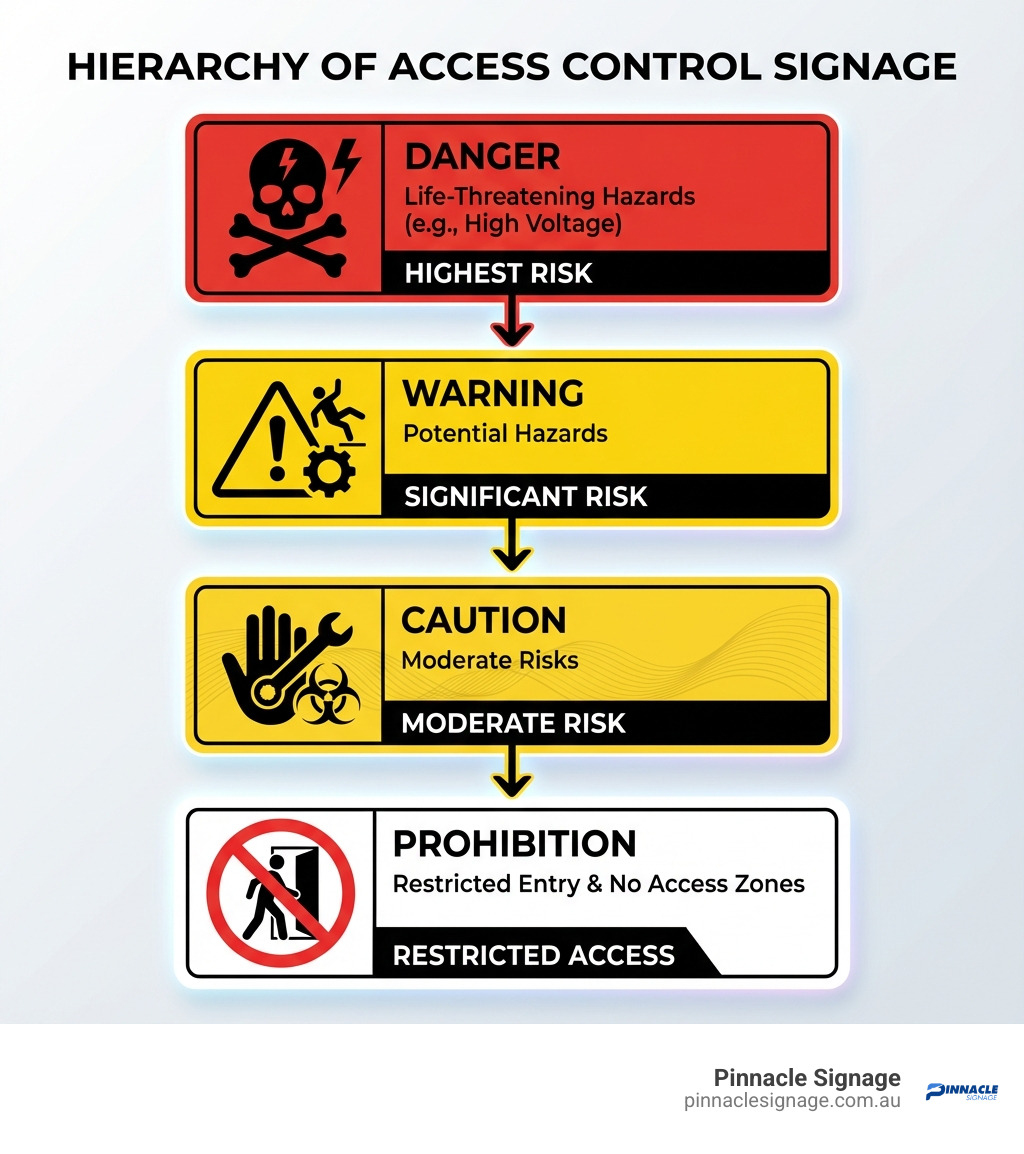
Entry restricted sign vocab to learn:
What is a restricted entry sign and what is its primary purpose?
At its core, a restricted entry sign is a clear, concise visual message designed to control who can enter a particular area. Its primary purpose is communication, ensuring that anyone approaching a designated zone immediately understands the access rules. This could mean complete prohibition, access only for specific individuals, or entry under certain conditions.
We understand that every workplace has unique safety needs and regulations. These signs are a critical component of safety communication, acting as an immediate visual cue that directs behaviour and prevents potential incidents. By clearly stating "No Entry" or "Authorised Personnel Only", these signs help to:
- Enforce Access Control: They are the frontline in managing who comes and goes, crucial for maintaining security and operational integrity.
- Prevent Unauthorised Entry: This protects sensitive equipment, confidential information, or hazardous materials from those without permission.
- Safeguard People and Property: By keeping untrained or unequipped individuals out of dangerous areas, these signs directly contribute to the safety of everyone on site and prevent damage to valuable assets.
- Limit Liability: In Australia, displaying appropriate entry restricted signs demonstrates due diligence and a commitment to safety, which can be vital in the event of an incident. It shows that reasonable steps were taken to warn individuals of restrictions and potential dangers.
The purpose extends beyond mere notification, it's about creating a safer, more secure, and more compliant environment for everyone.
How do these signs improve safety and security?
Entry restricted signs are not just pieces of plastic or metal, they are active participants in your safety and security protocols. Their impact on improving safety and security is multi-faceted:
- Visual Deterrent: The mere presence of a clear entry restricted sign acts as a powerful deterrent. When an individual views a restricted area sign, they immediately understand that that area is off limits. This can discourage casual trespassers or those who might unknowingly wander into danger.
- Hazard Communication: Often, restricted areas are restricted for a reason, such as the presence of machinery, chemicals, or other hazards. These signs can incorporate symbols and text that warn of these specific dangers, ensuring that even if someone ignores the "No Entry" message, they are still aware of the risks involved.
- Defining Boundaries: They establish clear physical and psychological boundaries. This helps both regular personnel and visitors understand the layout of a site and where they are permitted to be.
- Supporting Security Protocols: When combined with other security measures like fences, gates, or surveillance, entry restricted signs reinforce the message. They communicate that access is not just physically difficult but also formally prohibited, strengthening the overall security posture. Effective signage is a fundamental part of Restricted Area Signage Requirements 101.
- Promoting Awareness: These signs continuously remind everyone of the importance of restricted access, fostering a culture of safety and adherence to rules.
The Language of Access Control: Common Messages and Visuals
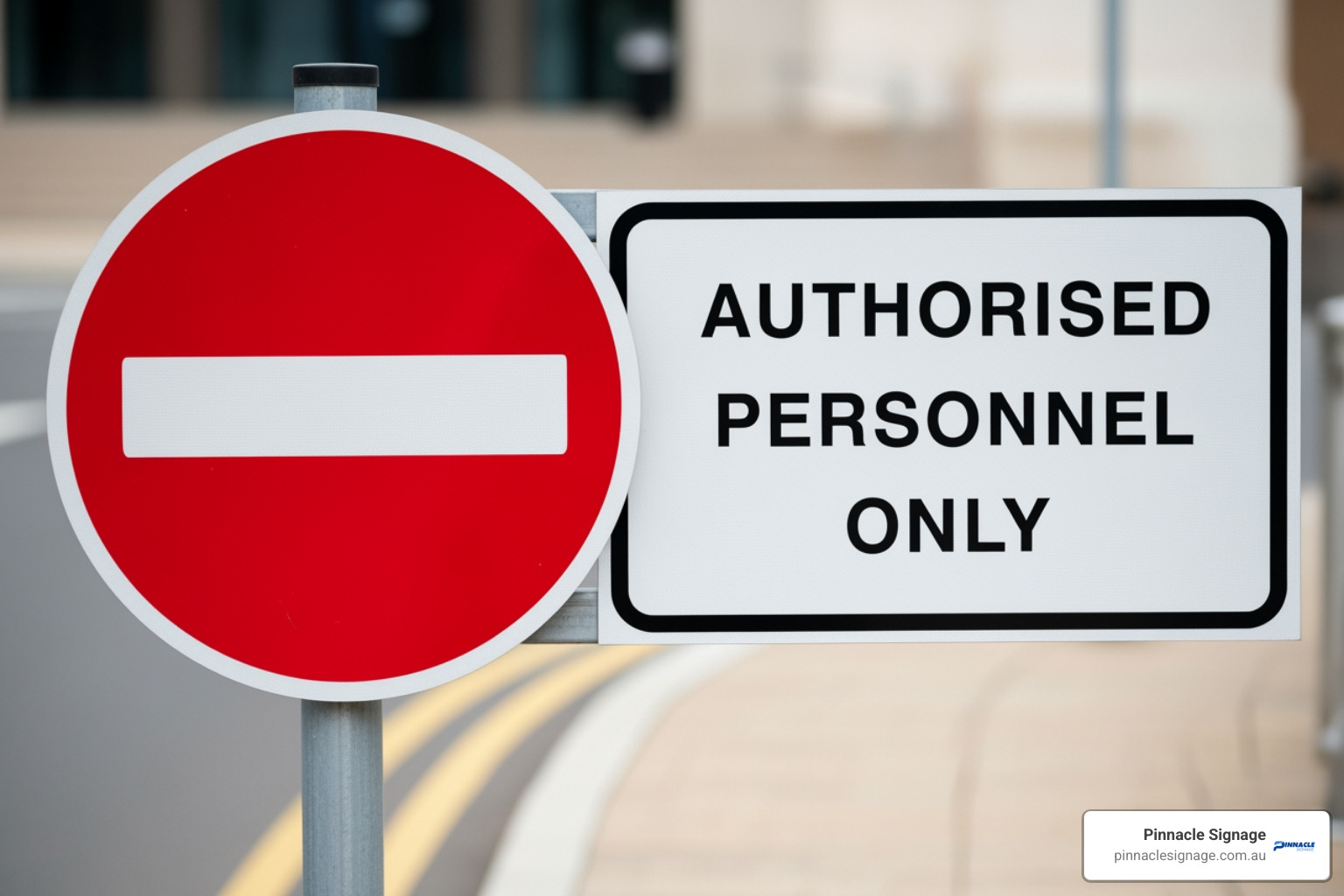
The effectiveness of an entry restricted sign lies in its ability to convey a message instantly and unambiguously. This is achieved through a combination of common legends and universally recognised visual characteristics.
Common Messages on Restricted Access Signs
The wording on restricted access signs is designed to be direct and leave no room for misinterpretation. Some of the most frequently encountered messages include:
- "No Entry": This is an absolute prohibition, typically used for areas where no one is allowed to pass. Our No Entry Signs Demystified guide offers more insights into this specific type of sign.
- "Authorised Personnel Only": This indicates that access is limited to individuals who have specific permission or training to enter.
- "Restricted Area": A general term signifying that the area has limitations on access, often elaborated by additional text or symbols.
- "Do Not Enter": Similar to "No Entry," this phrase is often used to prevent wrong-way traffic or entry into hazardous zones.
- "Keep Out": A straightforward and forceful command, commonly used on private property or construction sites.
- "Private Property": Clearly marks land owned by an individual or entity, restricting public access.
- "No Trespassing": Warns against unauthorised entry onto private land, often with legal implications.
- "Staff Only": Designates areas exclusively for employees.
- "No Unauthorised Entry": A comprehensive message that covers a broad range of restricted access scenarios.
These legends are carefully chosen to match the specific level of restriction required for a given area, ensuring clarity and compliance.
Visual Cues: Colours and Symbols That Demand Attention
Beyond the words, the visual design of an entry restricted sign plays a crucial role in its effectiveness. Australian standards, like AS 1319, dictate specific colours and symbols to ensure immediate recognition and understanding.
- Red Circle and Slash: This is the international symbol for prohibition. A red circle with a diagonal line through it instantly communicates "No" or "Do Not." This powerful visual is critical for signs like "No Entry." You can learn more about these universal symbols in our guide to Understanding Prohibition Signs in the Workplace and Public Spaces.
- Bold Lettering: Clear, sans-serif fonts in bold ensure readability from a distance and in various lighting conditions.
-
High-Contrast Colours: The combination of colours is chosen for maximum visibility.
- White on Red: Often used for absolute prohibitions, such as "No Entry" or "Do Not Enter," drawing immediate attention due to the strong contrast.
- Black on White: Commonly used for informational entry restricted signs or those designating specific personnel access, like "Authorised Personnel Only."
- Caution Yellow: While not strictly for restricted entry, yellow with black text or symbols is universally recognised for caution, often accompanying restricted areas with potential hazards.
- Universal Symbols (Pictograms): Simple, graphic images that transcend language barriers. Examples include a person with a diagonal line through them for "No Pedestrians," or a hard hat symbol for "Mandatory Head Protection."
These visual elements work in harmony to create a clear, unmistakable message, ensuring that the entry restricted sign effectively communicates its purpose at a glance.
Sign Variations: Types, Materials, and Customisation
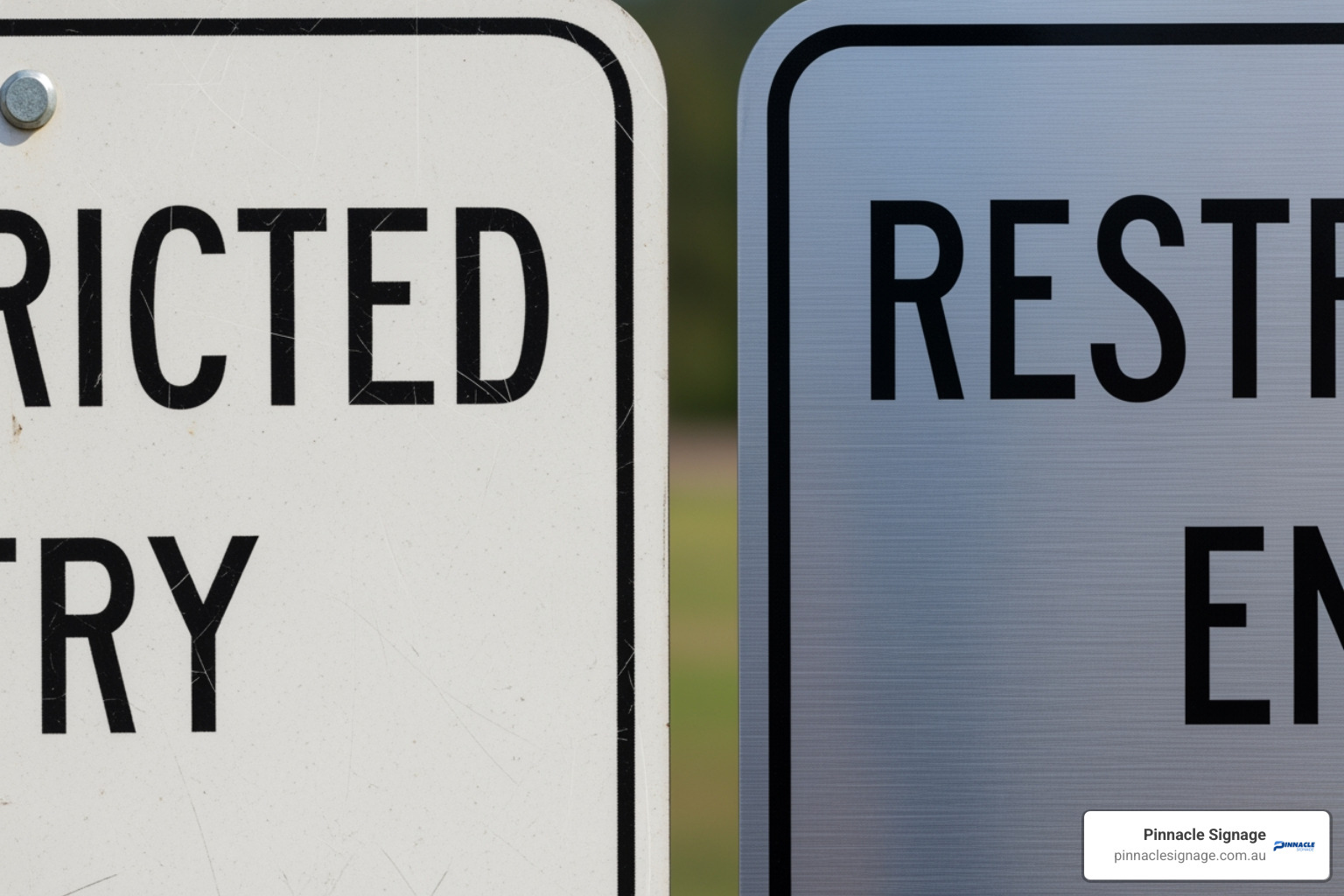
An appropriate entry restricted sign is selected based on the environment, durability requirements, and the specific needs of a site. Understanding the available variations is key to effective implementation. Our Access Signs Made Easy: Find Your Perfect Solution Today article provides further insights into this selection process.
Types of Restricted Access Signage
Entry restricted signs can be categorised to help identify the most suitable option for a specific situation:
- Prohibition Signage: These signs warn against certain things that might risk health or safety. They generally contain eye-catching colours like red or yellow, and in many cases have a red circle and slash pictogram for instant visual recognition. These are ideal for absolute "No Entry" or "No Trespassing" messages.
- Restricted Area Signage: These signs denote areas with limited access or where specific authorisation is required. They help maintain security and safety by clearly marking zones that are off-limits.
- Danger Signage: Danger signs are used to warn people about potentially life-threatening hazards or hazardous conditions. They generally have a red top panel, white lower panel, and black border. The word “DANGER” is often prominently featured in the top panel. These are reserved for the most severe hazards, such as high electrical voltage or radiation, which often accompany restricted access.
- Exit & Entry Signage: While some of these signs guide people into areas, they also play a crucial role in managing controlled entry points. They are essential for guiding individuals to designated exit points or entryways in buildings and facilities, and often include specific entry restrictions.
Sign materials are chosen based on the varied demands of Australian environments. Durable, weather-resistant materials are used to withstand harsh outdoor conditions, UV exposure, and general wear and tear, ensuring longevity and continued visibility. Signs come in various standard sizes to suit different viewing distances and placement locations, and for specific requirements, custom dimensions are readily available.
Custom Signage for Specific Needs
While standard entry restricted signs are effective, some situations demand a more tailored approach. Custom signage allows the message and design to be matched to unique site needs. Common customisations include:
- Adding Company Logos: Reinforce brand identity while maintaining safety standards.
- Including Site-Specific Instructions: Provide detailed information relevant only to a specific location, such as PPE requirements or contact numbers.
- Crafting Unique Messaging: Address particular hazards or access rules that aren't covered by standard signs.
- Ensuring Branding Consistency: Maintain a professional and uniform look across all signage.
Custom designs are available to create signs that are both effective and aesthetically aligned with an organisation's standards. This flexibility ensures an entry restricted sign is not only compliant but also highly effective for its specific environment.
Where Restricted Access is Key: Applications Across Australian Industries
Entry restricted signs are indispensable across a vast array of Australian industries, each with unique needs for controlling access and ensuring safety. From busy construction sites to serene agricultural properties, the clear communication provided by these signs is vital.
Construction and Work Sites
Construction sites are dynamic and inherently hazardous environments, making entry restricted signs absolutely critical. They are essential for:
- Public Safety: Keeping unauthorised individuals, especially curious passers-by, out of dangerous zones.
- High-Voltage Areas: Clearly marking electrical hazards where only qualified personnel should enter.
- Deep Excavation Warnings: Alerting workers and visitors to unstable ground or fall risks.
- Machinery Operation Zones: Designating areas where heavy machinery is in operation, preventing accidents involving pedestrians.
For instance, a robust Pinnacle 600 x 400mm Metal Danger Construction Site Do Not Enter Sign is a non-negotiable item on any building site, clearly communicating that access is prohibited. These signs, often made from durable, weather-resistant materials, are designed to withstand the harsh conditions of a construction environment while maintaining high visibility.
Agricultural and Biosecurity Applications
Australia's agricultural sector relies heavily on entry restricted signs for both property management and biosecurity. Farmers and agribusinesses use these signs to:
- Protect Livestock: Preventing visitors from disturbing or potentially harming animals, and protecting animals from external threats.
- Prevent Disease Spread: This is a critical biosecurity measure. Biosecurity Signs often include messages like "No Unauthorised Entry" or "Stop, Biosecurity Point" to control the movement of people and vehicles that could carry pathogens.
- Mark Private Property: Clearly delineating farm boundaries and deterring trespassers, especially in remote areas.
Our range of Stock & Farm Signs are designed with these specific needs in mind, offering clear and durable solutions for properties across regional Australia.
Beyond these, entry restricted signs are crucial in:
- Manufacturing Facilities: Designating hazardous production zones, machinery areas, or chemical storage sites.
- Warehousing and Logistics: Controlling access to loading docks, high-reach areas, or inventory storage.
- Commercial Buildings: Marking staff-only areas, plant rooms, or secure offices.
- Healthcare Facilities: Identifying restricted access to sterile zones, laboratories, or patient care areas where privacy and infection control are paramount.
In every scenario, the goal remains the same: to communicate limitations clearly, improve safety, and maintain security.
Beyond the Sign: Complementary Access Control Measures
While an entry restricted sign is your first line of defence, it's rarely the only measure needed for comprehensive access control. Effective security and safety systems often combine signage with other physical, technological, and personnel-based solutions. This integrated approach ensures multiple layers of protection and communication, reinforcing the message conveyed by the sign.
-
Physical Barriers: These are tangible obstacles that physically impede access.
- Fences: Form a perimeter, defining clear boundaries around a restricted area.
- Gates: Control vehicular and pedestrian entry points, often paired with "No Entry" or "Authorised Personnel Only" signs.
- Bollards: Prevent vehicle access to pedestrian zones or protect vulnerable areas.
- Barriers & Bunting: Provide temporary demarcation for hazard zones or crowd control. These barriers, when combined with appropriate signage, create a strong visual and physical deterrent.
-
Technological Solutions: Modern technology offers sophisticated ways to manage and monitor access.
- Key Card Systems: Electronic access control that permits entry only to individuals with valid credentials. This is often accompanied by door signage, as discussed in Beyond the Barricade: Decoding Access Control Door Signage.
- Security Cameras: Provide surveillance and a record of activity, acting as both a deterrent and an investigative tool.
- Alarms: Alert personnel to unauthorised breaches, enhancing rapid response.
- Biometric Scanners: Advanced systems that use fingerprints, facial recognition, or iris scans for highly secure access.
-
Personnel: Human oversight and interaction are invaluable components of access control.
- Security Guards: Provide a physical presence, monitor entry points, and respond to incidents.
- Reception Staff: Manage visitor access, issue passes, and direct individuals, ensuring that only authorised persons proceed.
- Site Managers/Supervisors: Oversee and enforce access rules within their designated areas, providing guidance and intervention when necessary.
When all these elements work together, an entry restricted sign becomes part of a robust system. The sign communicates the rule, the barrier physically enforces it, technology monitors it, and personnel manage any exceptions or breaches. This layered approach creates a much more secure environment than any single measure could achieve on its own.
Frequently Asked Questions about Entry Restricted Signs
We often receive questions about the nuances and practicalities of entry restricted signs. Here are some common inquiries and our expert answers.
What is the difference between a 'No Entry' and a 'Restricted Area' sign?
While both signs aim to control access, their implications differ slightly:
- 'No Entry': This is an absolute prohibition. It means no one is permitted to enter, regardless of their role or purpose, unless explicitly exempted by a specific, visible directive (e.g., "Except Emergency Services"). It's often used for one-way traffic, dangerous zones, or areas completely off-limits to everyone.
- 'Restricted Area': This implies that access is limited, but not necessarily entirely prohibited. It signifies that entry is possible only for authorised individuals. This could include staff, contractors with specific permits, or those with a valid reason to be there. The sign often serves as a warning that one needs proper credentials or permission to proceed.
The key distinction lies in the absoluteness of the prohibition. 'No Entry' is usually for everyone, while 'Restricted Area' implies selective access.
Do I still need a sign if I have a locked gate?
Absolutely, yes. A locked gate provides a physical barrier, but an entry restricted sign provides the crucial communication. Here's why it's essential:
- Clarity and Intent: A locked gate alone might not convey why entry is restricted. Is it broken? Is it private? A sign clarifies the reason for the restriction, whether it's "Private Property," "Danger - High Voltage," or "Biosecurity Area."
- Legal Reinforcement: In Australia, clear signage strengthens your legal position regarding trespassing or liability. If an incident occurs, demonstrating that you took reasonable steps to warn individuals, even with a locked gate, is vital for your duty of care.
- Communication of Hazards: A locked gate doesn't tell someone about the dangers behind it. An entry restricted sign can warn of hazards like unstable ground, aggressive animals, or hazardous chemicals, even if the gate is intact.
- Deterrence: Some individuals might attempt to circumvent a locked gate. A prominent sign reinforces the message that entry is not just physically difficult but formally prohibited and potentially dangerous, acting as an additional psychological deterrent.
Therefore, a locked gate and an entry restricted sign work hand-in-hand to provide both physical security and essential communication.
Where is the best place to install an entry restricted sign?
Strategic placement is paramount for the effectiveness of any entry restricted sign. The goal is to ensure the sign is seen and understood before someone enters the restricted zone.
- At the Point of Entry: This is the most crucial location. Install the sign directly on the gate, door, or entrance to the restricted area.
- Clearly Visible Before Entering: The sign should be visible from the approach to the restricted area, allowing individuals time to react and comply. Avoid placing it where it could be obscured by foliage, vehicles, or other objects.
- On Gates, Doors, and Fences: These are natural boundaries that signify a change in access.
- At Eye Level Where Possible: For optimal readability, place signs at a height that is easily seen by approaching individuals, whether on foot or in a vehicle. Consider the typical eye level of pedestrians and drivers.
- Where the Restriction Begins: If a restriction applies to a larger area, place signs at all common access points, not just the main entrance.
- Appropriate Distance: For traffic-related restrictions, consider visibility distances. For instance, a sign for a vehicle restriction needs to be seen far enough in advance for a driver to safely stop or reroute.
By carefully considering these factors, you can ensure your entry restricted sign effectively serves its purpose, enhancing safety and security on your premises.
Product Availability and Information
The selection of an appropriate entry restricted sign depends on the specific level of access control required, the environment it will be placed in, and any specific hazards or regulations that apply. High-quality, durable signage products are manufactured in Australia, with options for both standard entry restricted signs and custom solutions for exact specifications.
Pinnacle Signage products are available at Bunnings, both in-store and online across Australia. This provides access to a range of safety and access control signs. The full range can be explored on the Pinnacle Signage brand page on Bunnings or at local stores.
For custom requirements, bulk orders, or to discuss specific organisational needs, contact information is available. This allows for discussion on ensuring clarity, compliance, and safety with effective signage solutions.
Shipping & Pickup Information
We understand the importance of timely delivery for your signage needs. Pinnacle Signage dispatches most items within 48 hours of receiving your order and payment confirmation. Delivery times are estimated as follows:
- 1 - 2 days: Sydney, ACT, Melbourne, Brisbane, Gold Coast
- 2 - 4 days: Rest of NSW, Rest of VIC
- 3 - 6 days: SA, North QLD, Perth
- 5 - 9 days: TAS, NT, WA
For most deliveries within Australia, we use courier services such as FEDEX. Please note that couriers cannot deliver to PO Boxes, so provide a valid daytime delivery address. To ensure safe delivery, a signature is required upon receipt. You must be available to accept courier deliveries, re-delivery charges will apply if you are not present. Include a daytime phone number with your shipping details if we need to contact you about your delivery. For items weighing over 50kg, a tailgate delivery is usually required for residential addresses. This service is included in our standard shipping. Alternatively, you can choose to pick up the item from a nearby depot.
Free shipping is available for orders over $100 AU Wide. This applies to most items on the site. However, for some bulky items, additional shipping costs will apply for deliveries to WA, North QLD, NT, TAS, and island areas. Our staff will reach out to you after your order if these charges apply.
Pickup is available at our warehouse, located at Unit 4/28 Nagle Street, East Wagga Wagga NSW. The warehouse is open from 8am to 5pm, Monday through Friday, and is closed on weekends and public holidays.