

Hazard Label Symbols Demystified and Where to get them
Understanding Hazard Label Symbols for Workplace Safety
Hazard label symbols are standardised pictograms that instantly communicate chemical dangers and safety risks in Australian workplaces. Here are the essential hazard symbols you need to know:
- Exploding Bomb: Explosives and reactive substances
- Flame: Flammable gases, liquids, and solids
- Flame Over Circle: Oxidising substances that intensify fires
- Gas Cylinder: Gases under pressure
- Corrosion: Substances that damage skin or metals
- Skull and Crossbones: Acutely toxic materials
- Health Hazard: Long-term health effects like cancer
- Exclamation Mark: Irritants and less severe hazards
- Environment: Harmful to aquatic life
Australian workplaces, from offices to industrial sites, handle countless chemicals daily. Without clear communication, workers face risks ranging from skin irritation to serious health complications. Hazard label symbols provide an instant visual language that transcends literacy barriers and language differences, forming a crucial first line of defence against accidents.
When a busy facilities manager needs to quickly assess chemical risks or when construction workers encounter unfamiliar substances, these pictograms deliver critical safety information at a glance. The Globally Harmonised System (GHS) has standardised these symbols across Australia, making hazard recognition consistent whether you're in a Sydney warehouse or a Perth mining operation. Understanding these visual safety tools is essential for any organisation serious about protecting its workers and meeting Australian safety standards.
Basic hazard label symbols glossary:
A Guide to GHS and Australian Hazard Label Symbols
What is the Globally Harmonized System (GHS)?
Before the Globally Harmonized System, a warehouse manager receiving chemicals from different countries would face a confusing mix of hazard label symbols and safety instructions. One country's "toxic" could be another's "harmful," creating a recipe for workplace accidents.
The Globally Harmonized System of Classification and Labelling of Chemicals (GHS) solved this by creating a universal language for chemical safety. This international framework ensures that hazard label symbols and safety information are consistent globally. The GHS provides a standardised approach to defining and communicating the health, physical, and environmental hazards of chemicals.
Safe Work Australia oversees GHS implementation in Australia, integrating it into our work health and safety laws. This means every state and territory follows the same approach, ensuring consistency from Darwin to Hobart. The benefits are clear: emergency responders can immediately understand risks, and workers can confidently handle materials knowing the symbols are universal. For detailed guidance, Safe Work Australia provides comprehensive information. Our comprehensive range of GHS signage meets these essential international standards.
The 9 GHS Hazard Pictograms Explained
The core of the GHS is its nine distinctive hazard label symbols, or pictograms. Each features a black symbol on a white background within a red diamond border, designed to demand attention and convey a specific danger.
- Exploding Bomb: Warns of explosives, self-reactive substances, and organic peroxides that can detonate.
- Flame: Indicates flammable gases, aerosols, liquids, and solids, including substances that can spontaneously ignite.
- Flame Over Circle: Represents oxidising substances that release oxygen and can intensify or cause a fire.
- Gas Cylinder: Alerts to gases stored under pressure, which pose a physical hazard if the container is ruptured.
- Corrosion: Warns of substances that cause severe skin burns, eye damage, or are corrosive to metals.
- Skull and Crossbones: Indicates acute toxicity, meaning a substance can be fatal or cause severe harm with even small exposures.
- Health Hazard: Covers serious, long-term health effects, including carcinogens, mutagens, and reproductive toxicants.
- Exclamation Mark: Denotes less severe but still important hazards like skin and eye irritants or mild toxicity.
- Environment: Warns that the chemical is toxic to aquatic life and poses a risk to the ecosystem.
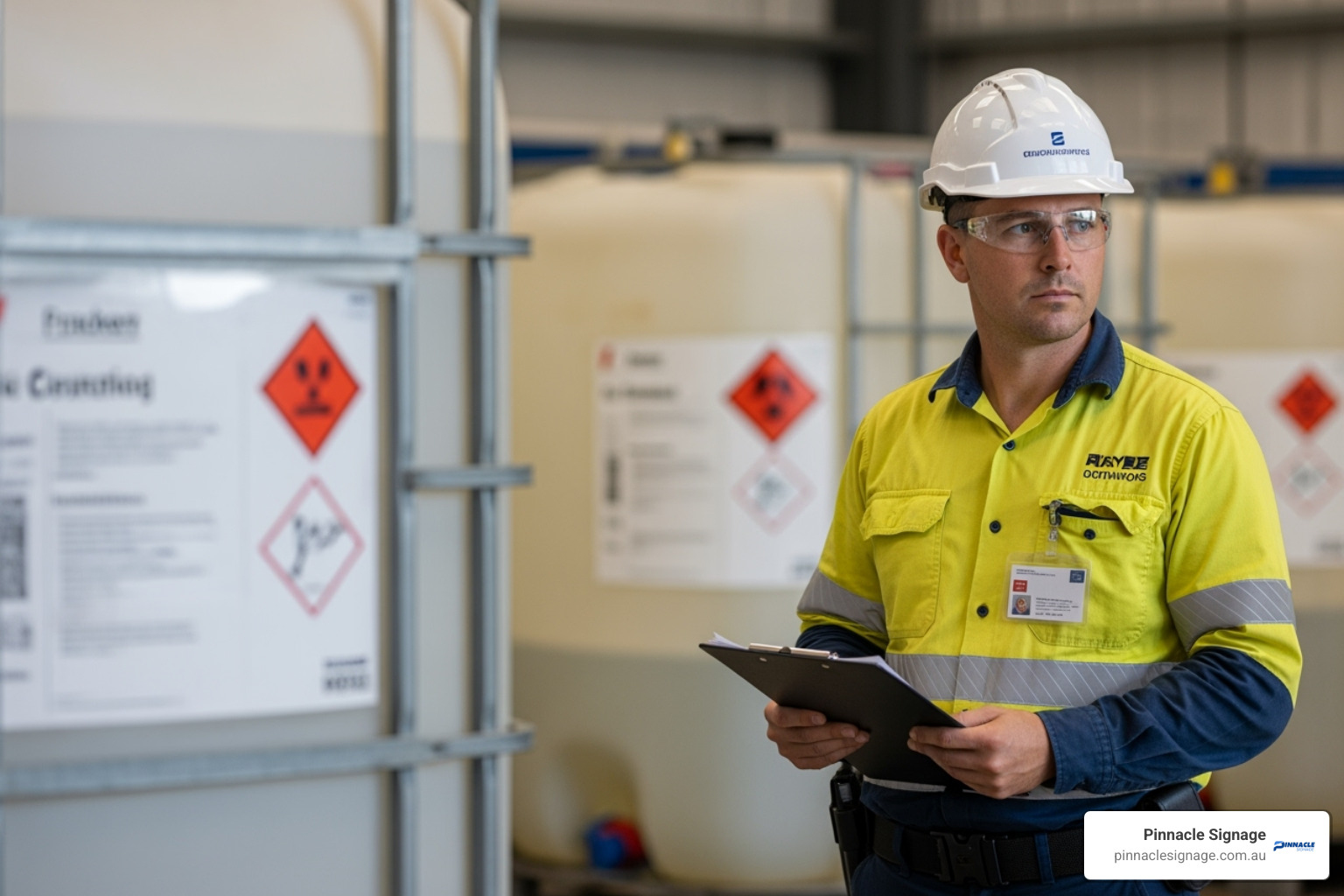
Understanding these nine hazard label symbols is fundamental to safe chemical handling. For a deeper dive, our comprehensive guide to chemical signage offers more practical insights. If you need specific corrosive signage, you can view our corrosive GHS signs.
Beyond the Pictogram: Other Key Label Elements
While hazard label symbols provide an instant warning, a complete GHS label includes several other key elements to ensure full comprehension.
- Signal Words: These indicate the severity of the hazard. "Danger" is used for more severe hazards, while "Warning" signifies less severe risks. A label will only ever use one, with "Danger" taking precedence. Our guide on Caution vs Danger vs Warning differences explains this further.
- Hazard Statements: Standardised phrases describe the specific nature of the risk, such as "Highly flammable liquid and vapour."
- Precautionary Statements: These provide instructions for prevention, emergency response, safe storage, and responsible disposal.
- Product Identifier: This links the label to the corresponding Safety Data Sheet (SDS) for more detailed information.
- Supplier Information: Contact details for the manufacturer or importer are included for inquiries or emergencies.
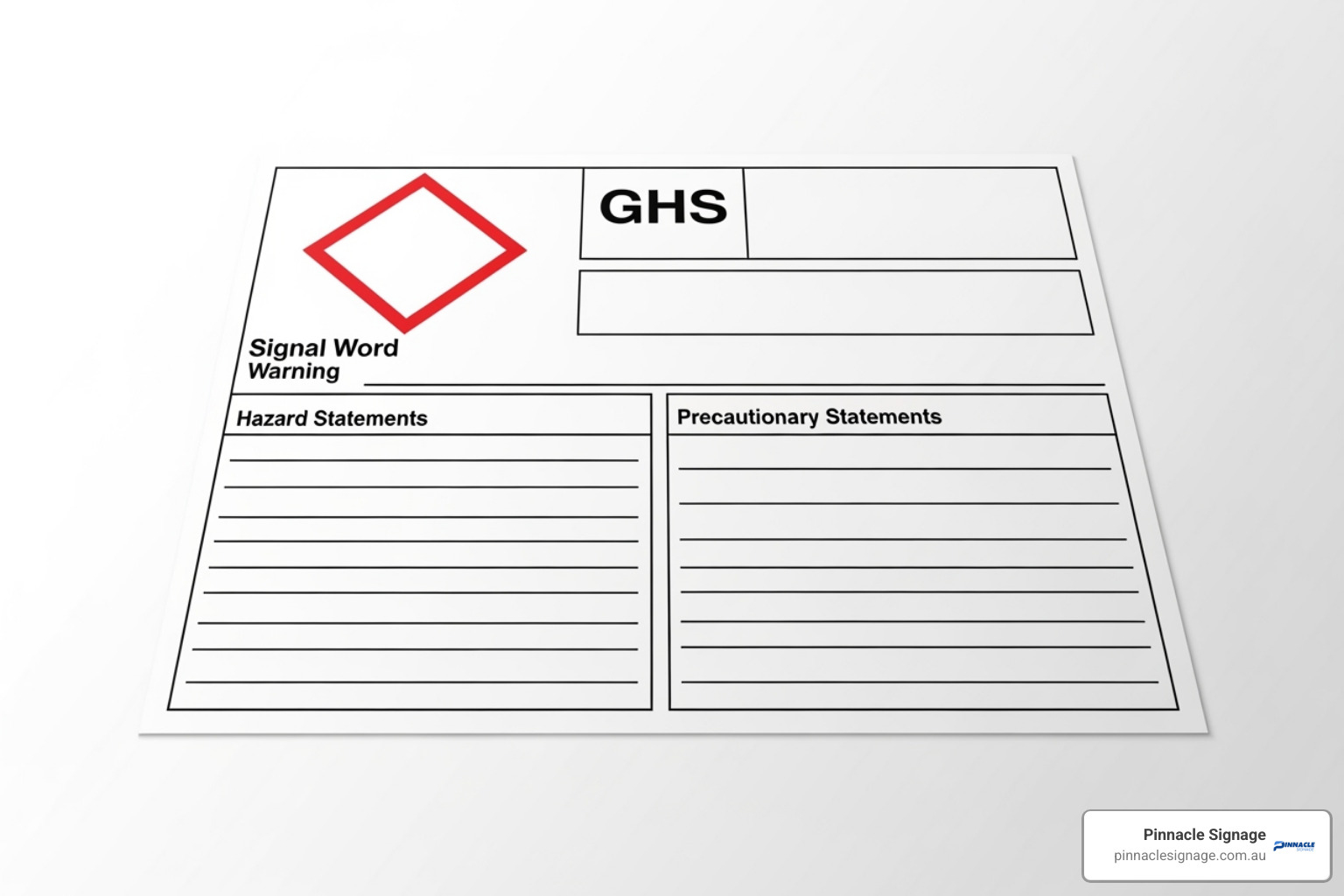
Together, these elements create a comprehensive safety system, offering both quick visual cues and detailed instructions for safe handling.
Workplace vs. Transport: Understanding the Difference in Hazard Label Symbols
Not all hazard label symbols look the same. The symbols used in a workplace differ from those used for transporting chemicals.
- GHS Workplace Pictograms: These are the red-bordered diamonds found on chemicals in storage and use within a facility.
- ADG Transport Labels: When chemicals are transported by road, rail, or sea, they must comply with the Australian Dangerous Goods (ADG) Code. These labels are solid-coloured diamonds with class numbers (1-9) at the bottom, designed for quick identification by emergency services from a distance.
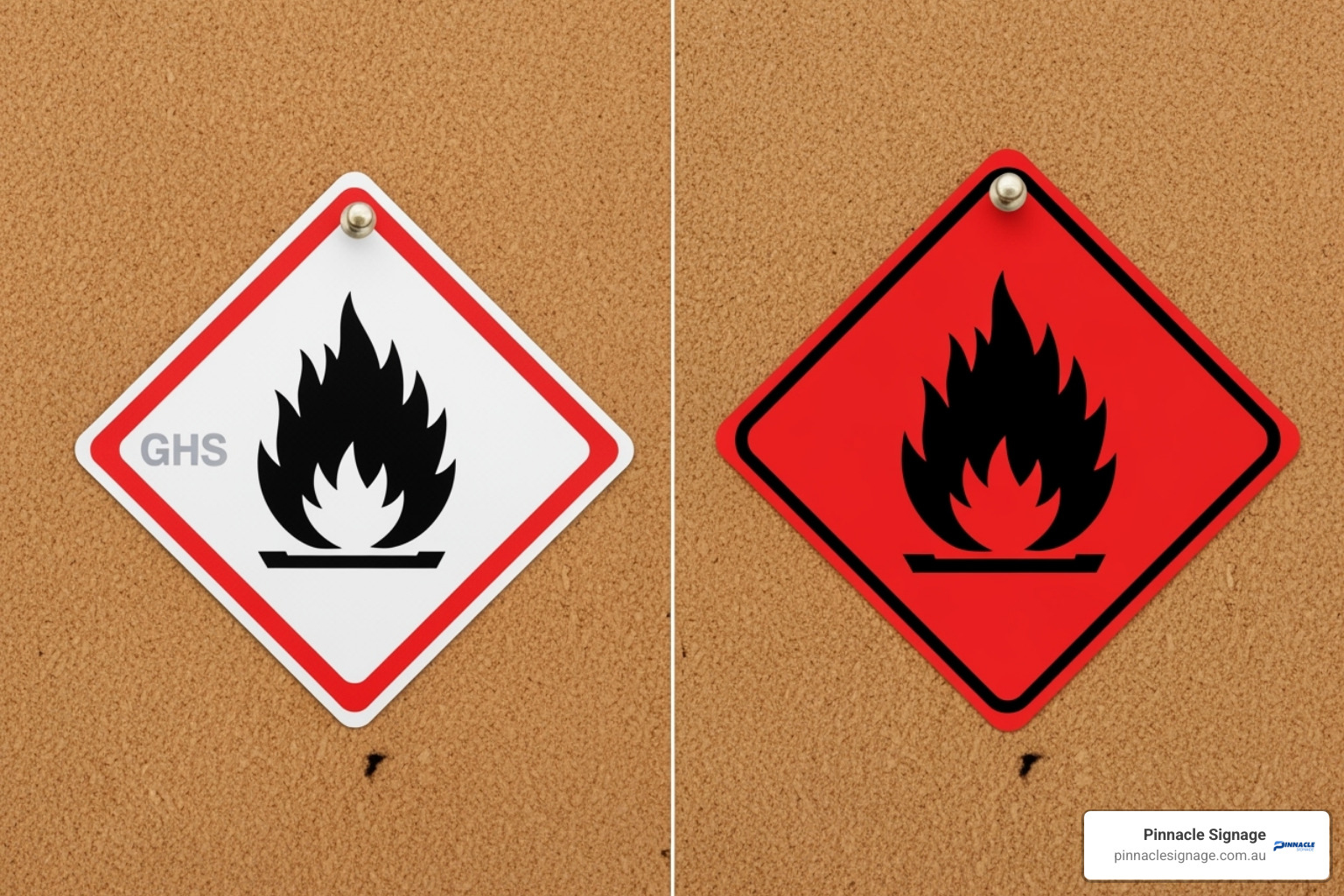
Many businesses require both GHS pictograms for storage areas and ADG-compliant placards for vehicles. Our comprehensive Hazchem signage range covers both workplace and transport needs.
From Old to New: The Transition to GHS in Australia
Before GHS, Australia used a patchwork of different hazard label symbols, creating confusion for businesses and workers handling both local and imported chemicals. This complicated international trade and posed challenges for emergency responders.
Australia's adoption of GHS harmonised chemical safety communication nationwide. By incorporating GHS into our work health and safety laws, we now have a single, consistent system. This transition has led to clearer communication, fewer workplace incidents, and more efficient trade. GHS is now Australia's current standard for classifying and labelling workplace hazardous chemicals, ensuring safety information is consistent and reliable. This aligns with the broader need to follow Australian Standards for Safety Signs to maintain a compliant and safe workplace.
Ensuring Safety and Compliance with the Right Signage
Effective hazard label symbols are a life-saving tool. In the critical seconds when a worker needs to assess risk, these symbols provide immediate information, preventing accidents and protecting health. They empower everyone in your workplace to make informed decisions about handling procedures and personal protective equipment.
For Australian businesses, proper signage is about more than just compliance. It's about creating a culture of safety where people can work confidently with chemicals. From construction sites to agricultural operations, clear hazard label symbols and supporting signage are the foundation of any robust chemical safety program, leading to fewer incidents and smoother safety audits.
Find Your Hazard and Chemical Safety Signage Solution
At Pinnacle Signage in East Wagga Wagga, we understand what Australian workplaces need for chemical safety. A sign is a critical safety tool that must perform reliably in harsh Australian conditions, from the scorching sun of a mining site to the daily wear of a busy warehouse.
We have a deep understanding of both GHS workplace requirements and ADG transport regulations. Our comprehensive range covers everything from GHS pictograms for storage areas to specialised Hazchem placards for dangerous goods transport, allowing you to source all your chemical safety signage from one trusted supplier.
We offer bulk ordering solutions with special distributor pricing for organisations managing multiple sites or large fleets. Our product range includes standard GHS pictogram signs, ADG Code-compliant transport diamonds, and fully customised signage with your specific text and logos, all without compromising safety compliance.
The investment in proper hazard label symbols and chemical safety signage pays dividends in reduced incident rates and a demonstrated commitment to workplace safety. It's a foundational measure that protects your team while supporting smooth business operations.
Ready to upgrade your chemical safety signage? You can Shop for GHS and Hazchem signs online or explore our ultimate guide to workplace hazard and danger signs. For custom requirements or bulk orders, Contact us for a custom quote. We deliver Australia-wide and make it simple to get the right solution for your needs.
Ready to Improve Your Chemical Safety Signage?
Your workplace deserves the peace of mind that comes with clear, compliant hazard label symbols and chemical safety signage. Whether you're managing a construction site in Darwin or a manufacturing plant in Adelaide, the right signage is about protecting your team and creating a safer work environment.
At Pinnacle Signage, we manufacture durable GHS labels and Hazchem placards that stand up to our harsh climate while delivering crystal-clear safety messages. Our custom solutions can address unique site-specific hazards, and we can handle orders of any size for facilities across the country.
Ready to upgrade your chemical safety signage? Our team is here to help you find the perfect solution. Contact us today to discuss your specific requirements, request our comprehensive catalogue, or inquire about special distributor pricing for resellers.
Shipping & Pickup Information
We know that when you need safety signage, timing matters. That's why Pinnacle Signage dispatches most items within 48 hours of receiving your order and payment confirmation. Our delivery network covers every corner of Australia, with estimated delivery times that keep your projects on track:
Major centres like Sydney, ACT, Melbourne, Brisbane, and Gold Coast typically receive orders within 1-2 days. The rest of NSW and Victoria can expect delivery in 2-4 days, while SA, North QLD, and Perth usually see their orders arrive within 3-6 days. For our colleagues in TAS, NT, and WA, delivery takes 5-9 days.
We use reliable courier services like FEDEX for most Australian deliveries, but there are a few things to keep in mind. Couriers can't deliver to PO Boxes, so make sure you provide a valid daytime delivery address. You'll need to be available to sign for your delivery; if you're not there, re-delivery charges will apply. Including a daytime phone number with your shipping details helps us contact you if needed.
For heavier items over 50kg, we include tailgate delivery service for residential addresses at no extra cost. Alternatively, you can choose to collect your order from a nearby depot if that works better for your schedule.
Free shipping kicks in for orders over $100 right across Australia, covering most items on our site. Some bulky items may attract additional shipping costs for deliveries to WA, North QLD, NT, TAS, and island areas, but our team will contact you after your order if these charges apply.
Prefer to pick up your order? Our warehouse at Unit 4/28 Nagle Street, East Wagga Wagga NSW is open from 8am to 5pm, Monday through Friday. We're closed on weekends and public holidays.