

Stay Current with the Best Electrical Hazard Warning Signs
Why Clear Electrical Hazard Signage is Non-Negotiable
When it comes to workplace safety, electrical hazard warning signs are non-negotiable. These crucial visual cues serve multiple vital purposes, helping to protect lives and ensure regulatory compliance across Australian workplaces.
Here's why they are so important:
- Alerting Personnel: They instantly warn employees, contractors, and visitors of potential electrical risks, such as high voltage or live wires.
- Preventing Accidents: By clearly communicating dangers, these signs significantly reduce the likelihood of electric shock, arc flash incidents, and other electrical injuries.
- Ensuring Compliance: Proper signage helps businesses meet their legal obligations under Australian work health and safety (WHS) regulations.
- Reducing Liability: Clear warnings demonstrate a commitment to safety, which can minimise a business's liability in the event of an incident.
- Guiding Safe Behaviour: Signs reinforce safe practices, such as "Authorised Personnel Only" or "Keep Out," directing individuals on how to interact safely with electrical equipment and areas.
A Guide to Selecting the Right Electrical Hazard Warning Signs
Electrical hazards are often invisible, which is why clear, effective electrical hazard warning signs are essential. They act as a guide, pointing out unseen dangers like electric shock, arc flash, and high voltage to keep everyone on site safer. Selecting the right signs means understanding their language and choosing materials that last.
Understanding the Language of Electrical Safety: Symbols, Colours, and Wording
Electrical hazard warning signs use a consistent language of symbols, colours, and words to be understood quickly. This system follows established safety guidelines, ensuring clarity and consistency across all workplaces.
-
Signal Words: These words indicate the severity of the danger.
- Danger: Indicates an immediate hazard that will cause death or serious injury if not avoided. Usually features red, white, and black.
- Warning: Signals a hazard that could cause death or serious injury.
- Caution: Suggests a hazard that might lead to minor or moderate injury. Often uses black text and symbols on a yellow background.
- Notice: Provides general safety information or instructions, not related to an immediate hazard.
-
Universal Symbols: These pictures allow for quick recognition.
- A lightning bolt signifies a high voltage or electric shock risk.
- A lightning bolt on a shoe sole warns of static electricity and explosion risks.
- A bolt with a downward arrow often indicates buried cables.
- A triangle with an exclamation mark is a general warning for electrical danger.
-
Colour Coding: Colours provide an instant clue about a sign's meaning.
- Red: Used for Danger signs to highlight immediate, life-threatening hazards.
- Yellow: Appears on Warning and Caution signs to alert you to potential hazards.
- Blue: Generally used for Mandatory signs, indicating a required action (e.g., "Wear PPE").
- Green: Used for Emergency signs, guiding people to safety equipment or exits.
By combining these elements, electrical hazard warning signs convey what the hazard is, the potential consequences, and how to stay safe.
For a deeper dive into these classifications, check out our guide on Caution vs. Danger vs. Warning: What's the Difference?.
Common Types of Electrical Hazard Warning Signs and Their Uses
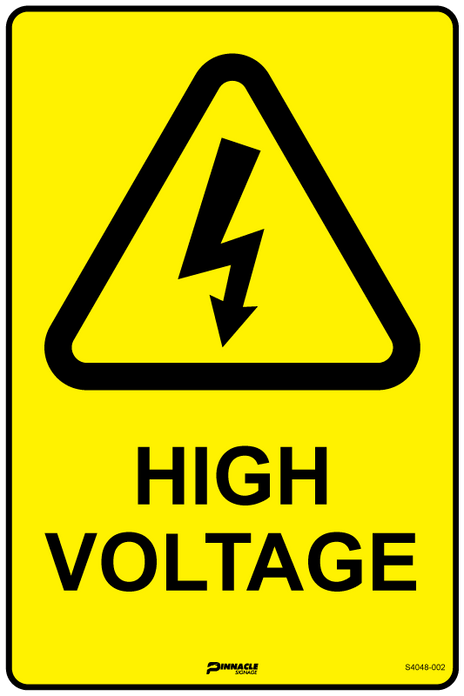
Different electrical risks require specific signs to deliver the right safety message at the right time.
Here are some common types and their typical uses:
-
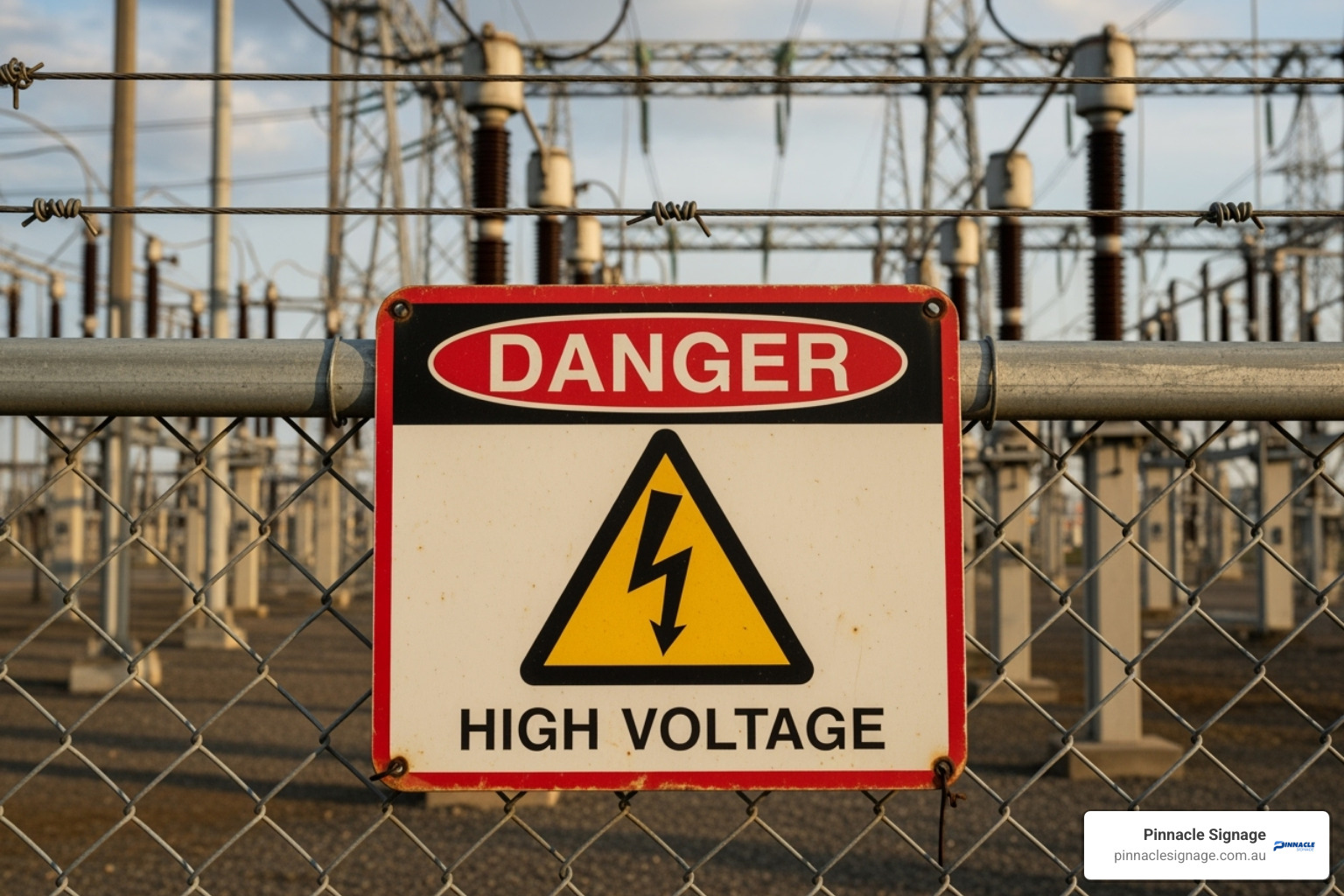
High Voltage Signs: Essential for areas with powerful electrical currents. They feature the lightning bolt symbol and signal words like "Danger" or "Warning."
- You'll find them: At substations, power plants, main electrical rooms, and on high-voltage equipment.
-
For example:
-
Arc Flash Signs: These vital signs warn of potential arc flash explosion zones and often specify the required Personal Protective Equipment (PPE).
- You'll find them: On electrical panels, switchboards, and equipment with an identified arc flash risk.
-
Lockout/Tagout (LOTO) Notices: Crucial for maintenance, these signs and labels show that equipment is de-energised and must not be operated.
- You'll find them: On machinery, control panels, and power sources during maintenance.
-
"Do Not Touch" / "Keep Out" / "Authorised Personnel Only" Signs: These signs restrict access, keeping untrained individuals away from dangerous electrical equipment.
- You'll find them: At entrances to electrical rooms, on control boxes, and in restricted areas.
-
Buried Cable Signs: Essential on construction sites, these signs help prevent accidental damage to underground electrical lines during excavation.
- You'll find them: Along the path of buried cables, in construction zones, and utility areas.
-
Electrical Panel and Switchboard Signs: These signs identify panels, show voltage ratings, or remind personnel to keep the area clear.
- You'll find them: On or near electrical panels and switchboards.
Consider placing electrical hazard warning signs in these key locations:
- Directly on or near hazardous electrical components
- On access panels, control boxes, and enclosures
- In visible spots before a worker could get close to the danger
- Following Lockout/Tagout (LOTO) and arc flash boundary procedures
- Near overhead power lines
- At the entrance to electrical rooms or substations
- On machinery with internal electrical hazards
- To identify main electrical disconnect points
- To warn about electric fences
- To indicate areas sensitive to electrostatic discharge (ESD)
While following local safety regulations is essential, it's also a global best practice to post signs near any electrical hazard to protect workers—a standard we strongly advocate for.
To learn more about specific voltage warnings, explore An Essential Guide to High Voltage Labels.
Choosing Durable Materials for Australian Conditions
Australian conditions demand tough electrical hazard warning signs. From scorching sun to heavy rain, a sign must remain clear and intact to be effective. At Pinnacle Signage, we provide exceptionally tough and durable signs designed to last.
We offer a range of high-quality materials suited to Australia's unique conditions:
- Vinyl Signs: Backed with strong adhesive, these flexible, fade-resistant signs are easy to apply to clean, dry surfaces, including curved ones.
- Plastic Signs: Made from strong polypropylene, these rigid signs are durable and fade-resistant. They can be supplied with tape or pre-drilled holes for easy installation.
- Aluminium Signs: The ultimate choice for durability, especially outdoors or in demanding industrial environments. They resist weather, UV rays, chemicals, and wear.
- Adhesive Polyester Signs: These labels offer excellent adhesion and durability, often used directly on equipment for clear, lasting information.
- Magnetic Signs: Perfect for temporary placement on metal surfaces, these signs can be easily moved or removed as needed.
Our signs for industrial, energy, and manufacturing environments are made from high-durability materials that withstand moisture, chemicals, and UV light. Optional lamination or our special Duroshield Topcoat adds extra longevity, saving you money on replacements over time.
Ensuring Compliance and Safety with Your Signage Strategy
Choosing durable electrical hazard warning signs is a great start, but a smart strategy for placement and maintenance is essential for ensuring safety and compliance.
Best Practices for Placing and Maintaining Your Signs
Effective placement is crucial. Signs must be seen and understood before a person approaches a potential electrical danger. For maximum impact, visibility is key. Place signs on or near the hazard itself, ensuring a clear line of sight from all approach directions. Adequate illumination is also vital, so signs are readable in all conditions. Proper placement reinforces training and acts as a final line of defence.
Maintenance is an ongoing task. Conduct regular inspections to check for and address:
- Faded signs: UV exposure can make signs unreadable.
- Damaged signs: Cracks or peeling compromise the message.
- Dirty signs: Grime or dust can obscure the warning.
Establish clear cleaning procedures and a proactive replacement schedule. Outdated or missing signs are a serious safety and compliance risk.
For more insights on identifying hazards effectively, refer to The Definitive Guide to Safety Sign Hazard Identification.
What to Look for in an Australian Signage Supplier
Choosing the right signage partner is as important as choosing the right signs. You need a supplier who understands Australian workplaces and provides compliant, effective solutions.
Here’s what to look for in a top-tier Australian signage supplier:
- Local Knowledge: A supplier who understands local safety requirements ensures your signs are compliant.
- Customisable Options: Look for a supplier who can tailor signs with specific text, symbols, and materials to match your unique hazards and rules.
- High-Quality Materials: Your supplier must use robust, long-lasting materials that resist UV rays, moisture, and wear in Australian conditions.
- Fast Turnaround and Australia-Wide Shipping: Safety can't wait. Look for a supplier offering fast production and reliable delivery across Australia, like our service from Wagga Wagga, NSW.
- Positive Reviews and Reliable Customer Service: Check testimonials for feedback on product quality, ordering ease, and responsive support. A partner who is easy to reach is invaluable.
At Pinnacle Signage, we are that partner. We manufacture durable, high-quality signage with customisable options, fast turnaround, and reliable Australia-wide delivery, backed by excellent customer service.
Final Check: Are Your Electrical Hazard Warning Signs Up to Standard?
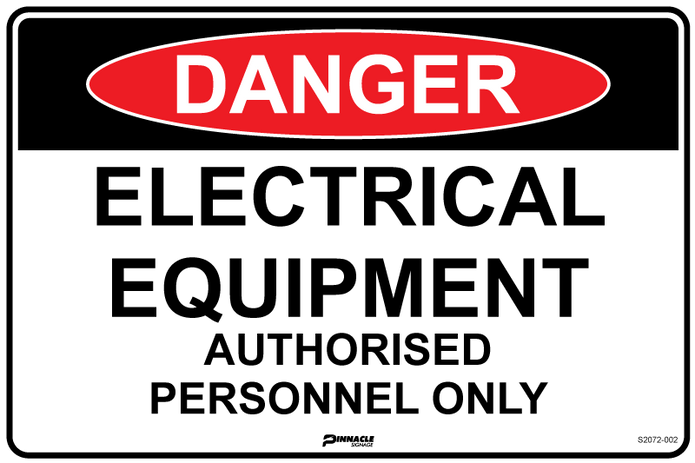
Electrical hazard warning signs are critical tools in your safety plan. They protect your team from injury, ensure your business meets its legal obligations, and minimise liability.
To ensure your workplace is as safe as possible, take a proactive look at your current signage. Ask yourself these questions:
- Are our electrical hazard warning signs clearly visible and easily understood by everyone?
- Do they reflect the specific electrical dangers present in each area of our site?
- Are they made from tough, durable materials that can handle our unique Australian environmental conditions?
- Are any of our signs looking faded, damaged, or outdated?
- Are we fully compliant with current workplace safety requirements for electrical safety signage?
If you hesitated on any of these questions, it's time for an update. Investing in high-quality, compliant electrical hazard warning signs is an investment in your people's safety and your business's success. A safe workplace is a productive one, and we can help you ensure your signage is up to standard.
Don't forget to explore our range and ensure comprehensive safety coverage for your premises.