

The Complete Guide to Understanding Prohibition Signs
What Are Prohibition Signs? A Quick Answer
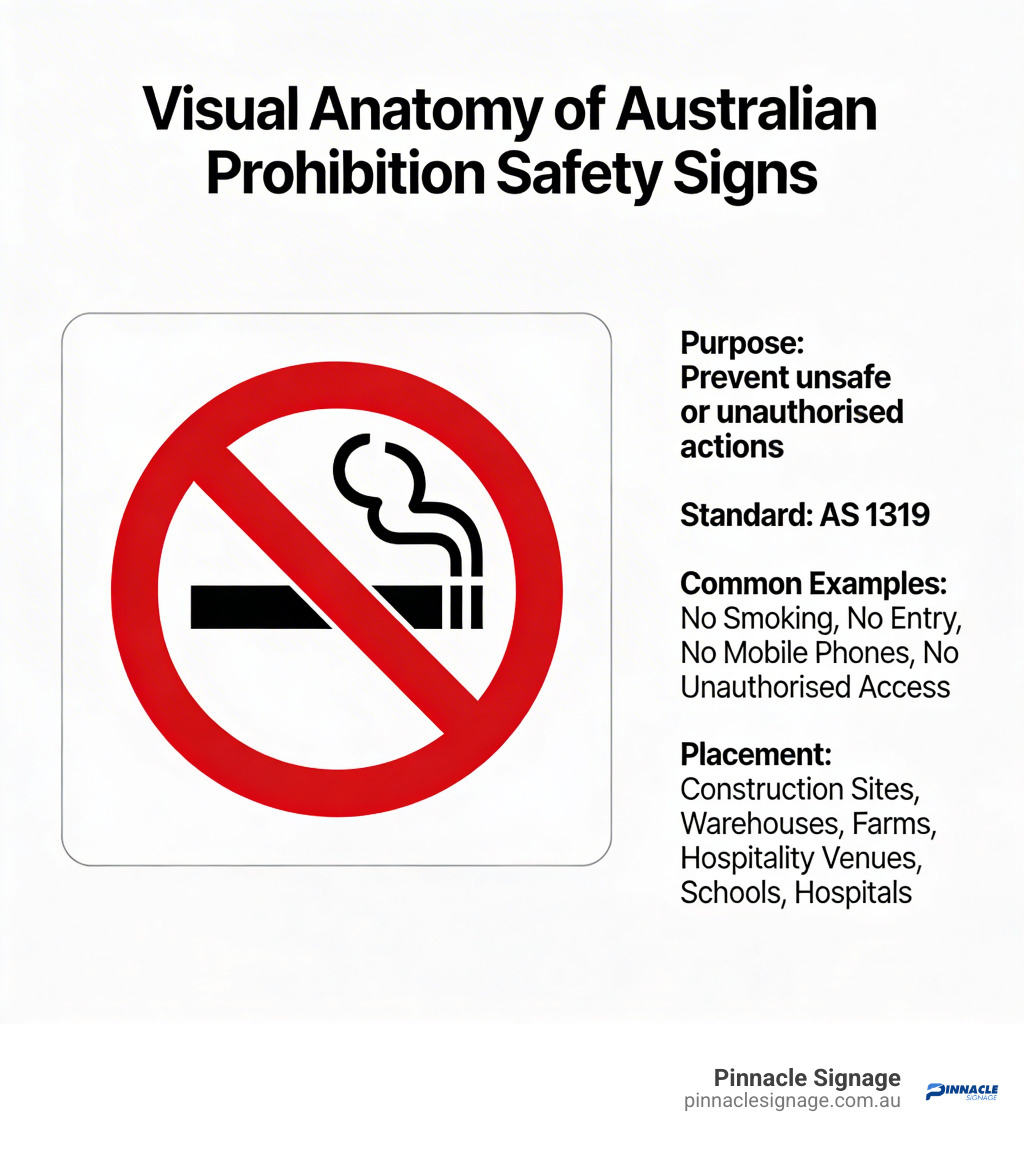
Prohibition signs are safety signs that communicate actions, behaviours, or activities that are not permitted in a given area. They are one of the most recognisable sign types in Australian workplaces, public spaces, and industrial sites.
At a glance:
- Purpose: To prevent unsafe or unauthorised actions that could cause injury, illness, or damage
- Appearance: White background, red circle with a diagonal red slash, black pictogram
- Standard: Designed in accordance with Australian Standard AS 1319
- Common examples: No smoking, no entry, no mobile phones, no unauthorised access
- Where you'll find them: Construction sites, warehouses, farms, hospitality venues, schools, hospitals
Whether you manage a busy warehouse, oversee a construction site, or run a commercial property, prohibition signs are one of the simplest and most effective tools you have for communicating what is not allowed before an incident occurs. They cut through language barriers, work at a glance, and help keep people safe in environments where the wrong action can have serious consequences.
This guide covers everything you need to know about prohibition signs in the Australian context, from how they are designed and what they mean, to where they should be placed and what materials work best in different environments.
I'm Doug Lindqvist, General Manager of Pinnacle Signage, and through my background in the safety and industrial supply space, I've seen firsthand how the right prohibition signs can make a real difference to site safety and compliance. Let's break it all down.
Essential prohibition signs terms:
What are Prohibition Signs and Their Primary Purpose?

In any shared space, whether it is a bustling factory floor in Wagga Wagga or a retail space in Sydney, clear communication is the backbone of safety. Prohibition signs serve a very specific and vital role: they tell us what we must not do. Unlike warning signs that alert us to a hazard, or mandatory signs that tell us to wear certain gear, prohibition signs are about hard boundaries.
The primary purpose of these signs is safety communication and accident prevention. By clearly marking out prohibited actions, we can significantly reduce the risk of workplace incidents. For instance, a sign prohibiting smoking near a chemical storage area is not just a suggestion, it is a critical fire prevention tool. Beyond immediate safety, these signs play a massive role in liability reduction. If an unauthorised person enters a dangerous zone that was clearly marked with a "No Entry" sign, the business has a stronger case that it fulfilled its duty of care.
We often think of these signs as simple markers, but they are actually sophisticated tools for understanding prohibition signs in the workplace and public spaces. They modify behaviour by providing an instant visual cue that overrides the need for constant supervision.
The role of prohibition signs in risk management
In risk management, we talk a lot about hazard control. One of the most effective ways to control a hazard is to keep people away from it. This is where site safety signs become indispensable. By marking restricted areas, we implement an administrative control that prevents exposure to danger.
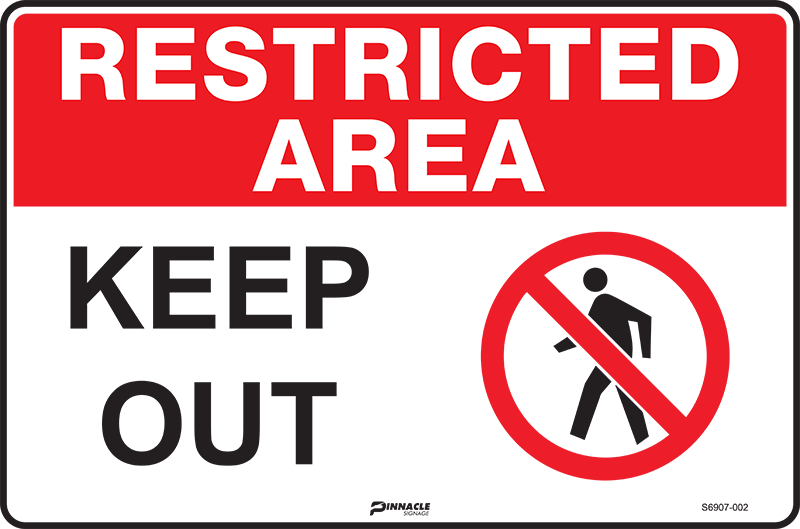
For example, keep out why restricted access signs are your first line of defence is a concept every site manager should embrace. Whether it is a deep excavation on a construction site or a high voltage area in a plant, a prohibition sign acts as the first barrier between a person and a potential injury.
Beyond the sign: Creating a culture of compliance
A sign is only as good as the culture that supports it. While we manufacture high quality, durable signage, we always remind our clients that signs should be part of a broader safety protocol. This starts with employee induction. When a new team member starts, they should be walked through the site and shown what the various prohibition signs mean and why they are there.
To truly understand the impact, you can look into restricted area signage requirements 101, which outlines how these markers integrate into a larger compliance framework. When everyone on site understands that a "No Admittance" sign is there to protect their mates and themselves, you create a culture of compliance that goes far beyond just following rules.
Identifying prohibition signs: Design and Australian Standards
In Australia, safety signage is not a "choose your own adventure" design project. To ensure universal recognition, we follow Australian Standard AS 1319. This standard ensures that whether you are in a mine in Western Australia or a school in New South Wales, the signs look and mean the same thing.
A standard prohibition sign must feature:
- A White Background: This provides the highest contrast for the other elements.
- A Red Annulus (Circle): This is the bold outer ring that signals "stop" or "danger."
- A Diagonal Slash: The slash runs from the top left to the bottom right, crossing over the symbol.
- A Black Pictogram: The symbol representing the prohibited action is always black and placed behind the red slash.
This design is intended to overcome language barriers. Even if someone cannot read English, the "No Smoking" symbol with a cigarette and a red line through it is instantly understood. For more detailed information on how these signs fit into the broader safety landscape, you can consult the Safe Work Australia guidance on safety signs.
Standardised colours and shapes
The use of the red circle and diagonal crossbar is not accidental. Red is the universal colour for "stop" and "prohibition." By using high contrast black on white with a vibrant red overlay, we ensure maximum visual clarity even in low light or high stress situations. This consistency is what allows our brains to process the message in milliseconds, which is often the time difference between a safe action and an accident.
Why high-quality prohibition signs matter for compliance
Compliance is not just about having the right picture on the wall, it is about that picture staying visible and legible for years. We use durable, weather-resistant materials to ensure that our signs can handle the harsh Australian sun and rain. A faded sign that no one can read is a major compliance risk.
For business owners looking for a quick and reliable way to get compliant, you can find our range at the Pinnacle Signage brand page at Bunnings. Having these standard signs available at Bunnings means you can pick up what you need during your regular hardware run, ensuring your site is never without the necessary safety markers.
Common Examples of Prohibition Sign Symbols and Meanings
There are dozens of standard pictograms used on prohibition signs, each with a specific meaning. Some of the most common ones we produce for Australian businesses include:
- No Smoking: Perhaps the most famous, used in offices, fuel stations, and public parks.
- No Entry: Essential for keeping unauthorised people out of dangerous or private areas.
- No Parking: Used to keep emergency access ways clear and manage traffic flow.
- No Mobile Phones: Often seen in hospitals, near sensitive electronic equipment, or in areas where distraction is dangerous.
- No Forklifts: Critical for pedestrian only zones in warehouses.
For a deeper dive into specific types, we recommend checking out the ultimate guide to no smoking signs or seeing how no entry signs demystified can help secure your premises.
Common examples of prohibition signs in the workplace
In a workplace setting, these signs are often about maintaining "Authorised Personnel Only" zones. This is especially true in manufacturing and construction. For example, a Pinnacle 600 x 400mm metal danger construction site do not enter sign is a staple for any building project. It combines the "Danger" header with a clear prohibition message to ensure bystanders stay safe.
You can also find more specialised options like top authorised personnel only signs upgrade your vip access zones today to help manage access to server rooms, laboratories, or high value storage areas.
Specialised prohibitions for industrial and agricultural sites
In the agricultural sector, which is a huge part of our local community in Wagga Wagga, prohibition signs take on a different flavour. Here, we might see an entry restricted sign specifically for biosecurity protocols to prevent the spread of pests or diseases.
Machinery operation is another big one. Signs that prohibit cleaning or oiling machinery while it is in motion are literal lifesavers. You can browse our full range of these specialised markers in the Pinnacle Signage prohibition collection.
Applications Across Australian Industries
Every industry has its own unique set of "don'ts." While a hospital might care most about "No Mobile Phones," a construction site is focused on "No Unauthorised Entry."
- Construction Sites: Focus on keeping the public out and ensuring workers do not enter hazardous zones without the right permits.
- Agricultural Properties: Focus on biosecurity, chemical safety, and livestock protection.
- Hospitality Venues: Focus on "No Smoking" and "No Alcohol Beyond This Point" signs to comply with liquor licensing laws.
- Commercial Warehouses: Focus on separating pedestrians from heavy machinery, such as forklifts.
Managing safety on agricultural properties
For our mates on the land, signage is a key part of property management. It is not just about keeping people out, it is about keeping the operation running smoothly. For instance, a Pinnacle 300 x 200mm poly danger chemical storage sign is essential for any shed where fertilisers or pesticides are kept. It serves as a warning and a prohibition against unauthorised handling.
Enhancing security in commercial and retail spaces
In retail, prohibition signs are often your first line of defence against theft and unauthorised access. Signs that prohibit entry to "Staff Only" areas or forbid the use of cameras in certain zones help maintain security and privacy. Our restricted area collection offers various styles that fit professional environments while still delivering a clear, firm message.
Materials and Placement for Maximum Effectiveness
A sign is only effective if it can be seen and if it lasts. When we talk about durable materials, we are talking about signs that can withstand the Australian environment. For outdoor use, especially in high traffic or industrial areas, we often recommend metal or high grade poly materials. These are weather-resistant and won't crack or fade quickly under UV exposure.
In some cases, you might need reflective tapes or reflective backgrounds. This is particularly important for signs that need to be seen at night, such as "No Entry" signs on gates or "No Parking" signs in dark loading bays. To ensure your signs stay exactly where you put them, we also offer a full range of Pinnacle Signage fixings and hardware.
Choosing the right material for the environment
While we offer a variety of materials, the choice usually comes down to where the sign is going:
- Poly Signage: Great for general indoor and outdoor use, very durable and flexible.
- Metal Signs: The gold standard for longevity in harsh outdoor conditions or industrial sites.
- Corflute: Perfect for temporary use, such as short-term construction projects or events.
If you are unsure which material is best for your specific site, our team is always happy to provide advice based on your local environment.
Strategic placement for visibility
Placement is just as important as the sign itself. A "No Smoking" sign hidden behind a door is useless. We recommend:
- Eye Level: Signs should be mounted between 1.5m and 1.8m from the ground.
- Unobstructed Views: Ensure no plants, equipment, or doors will block the sign.
- Entry Points: Always place prohibition signs at the point of entry to a restricted zone, not halfway through it.
If you have a unique site layout, Pinnacle Signage customisation options allow you to create signs with custom text or dimensions to fit your specific space perfectly.
Frequently Asked Questions about Prohibition Signs
What is the difference between a prohibition sign and a mandatory sign?
This is a common point of confusion. Think of it this way: Prohibition signs are about what you must not do (red circle), while mandatory signs are about what you must do (blue circle). For example, "No Entry" is prohibition, whereas "Eye Protection Must Be Worn" is mandatory. You can see the difference clearly in our Pinnacle Signage mandatory collection.
Are "no smoking" signs legally required in Australian workplaces?
Yes, in almost all Australian jurisdictions, smoke-free environment laws require businesses to display clear signage at entrances and within the premises. Failing to do so can result in significant fines for the business owner. Always check with Safe Work Australia or your state's health department for the specific wording and placement required in your region.
Can I customise a prohibition sign with my own text?
Absolutely. While standard pictograms cover 90% of needs, sometimes you have a site-specific hazard that needs a unique message. We can add custom text, company logos, or specific instructions to any prohibition design. This is a popular choice for large industrial sites or farms that need to reference specific site names or safety procedures. You can explore these options through our custom signage services.
Next Steps: Choosing and Ordering the Right Prohibition Signs
At Pinnacle Signage, we take pride in being an Australian made and operated company. We understand the local landscape, the regulations, and the challenges businesses face in keeping their people safe. Whether you need a single sign for a commercial property or a bulk order for a multi-state construction project, we have the capacity and expertise to deliver.
Our products are built to last, using durable materials that stand up to the Australian sun. For your convenience, many of our most popular signs are available nationwide through our partnership with Bunnings. You can browse the Pinnacle Signage brand page at Bunnings to find stock ready for immediate pickup.
If you need something a bit more specific, or if you are looking for bulk distributor pricing, we invite you to Contact the Pinnacle Signage team directly. You can also visit us at our warehouse in East Wagga Wagga, NSW, to discuss your project in person.
Shipping & Pickup Information
We know that when you need a safety sign, you usually need it yesterday. That is why we aim to dispatch most items within 48 hours of receiving your order.
Estimated Delivery Times:
- 1 to 2 days: Sydney, ACT, Melbourne, Brisbane, Gold Coast
- 2 to 4 days: Rest of NSW, Rest of VIC
- 3 to 6 days: SA, North QLD, Perth
- 5 to 9 days: TAS, NT, WA
We offer free shipping for orders over $100 across most of Australia, though some bulky items to remote areas may incur additional charges. For those nearby, warehouse pickup is available from 8am to 5pm, Monday to Friday, at Unit 4/28 Nagle Street, East Wagga Wagga NSW.
Stay safe, stay compliant, and reach out to our team if you have any questions about implementing prohibition signs on your site.