

Restricted Area Signage Requirements 101
Understanding Restricted Area Signage in Australian Workplaces
Restricted area signage is used to clearly mark zones where access is limited to authorised personnel only. These signs help prevent accidents, protect valuable assets, reduce liability, and maintain security across industrial, commercial, and agricultural sites.
Key purposes of restricted area signage:
- Prevent unauthorised access to hazardous or sensitive areas
- Reduce workplace accidents and liability claims
- Communicate clear warnings like 'Authorised Personnel Only', 'No Trespassing', or 'Do Not Enter'
- Meet Australian workplace safety requirements
- Protect equipment, stock, and confidential operations
Restricted area signage is commonly used in factories, construction sites, warehouses, hospitals, private properties, and farming operations. Signs are available in durable materials like aluminium, plastic, and vinyl, with options for reflectivity to ensure visibility in low-light conditions. Whether you need standard designs or custom signs with specific branding and messaging, the right signage helps maintain order and safety on your site.
As a leading Australian supplier of safety and industrial signage, we have helped countless businesses implement quality restricted area signage that meets local standards. Throughout this guide, we will walk you through the essentials of choosing, designing, and using restricted area signs effectively.
Easy restricted area signage glossary:
A Guide to Effective Restricted Area Signage
Getting restricted area signage right is about more than just putting up a sign. It involves choosing the right message, materials, and placement to keep people safe and your site secure. Let's walk through what makes restricted area signage effective.
Key Messages and Types of Signs
Effective restricted area signage starts with a clear message. These signs act as visual gatekeepers, telling people where they can and cannot go, and why.
Common messages include:
- Authorised Personnel Only: This is a first line of defence for areas with sensitive equipment, confidential information, or hazards requiring specialist knowledge. It clearly states that only those with specific training or clearance should enter.
- No Trespassing: Used widely on private properties, construction sites, and agricultural land, this message is a direct, legally recognised prohibition of unauthorised entry.
- Do Not Enter: This straightforward message is reserved for areas where entry poses an immediate danger or would compromise operations, such as active machinery zones or hazardous chemical storage areas.
Often, the most effective signs combine access control with a specific hazard warning, such as "Restricted Area: Hazard Area, No Unauthorised Personnel Beyond This Point," to reinforce the seriousness of the restriction.
Beyond the message, signs are categorised by their function and design:
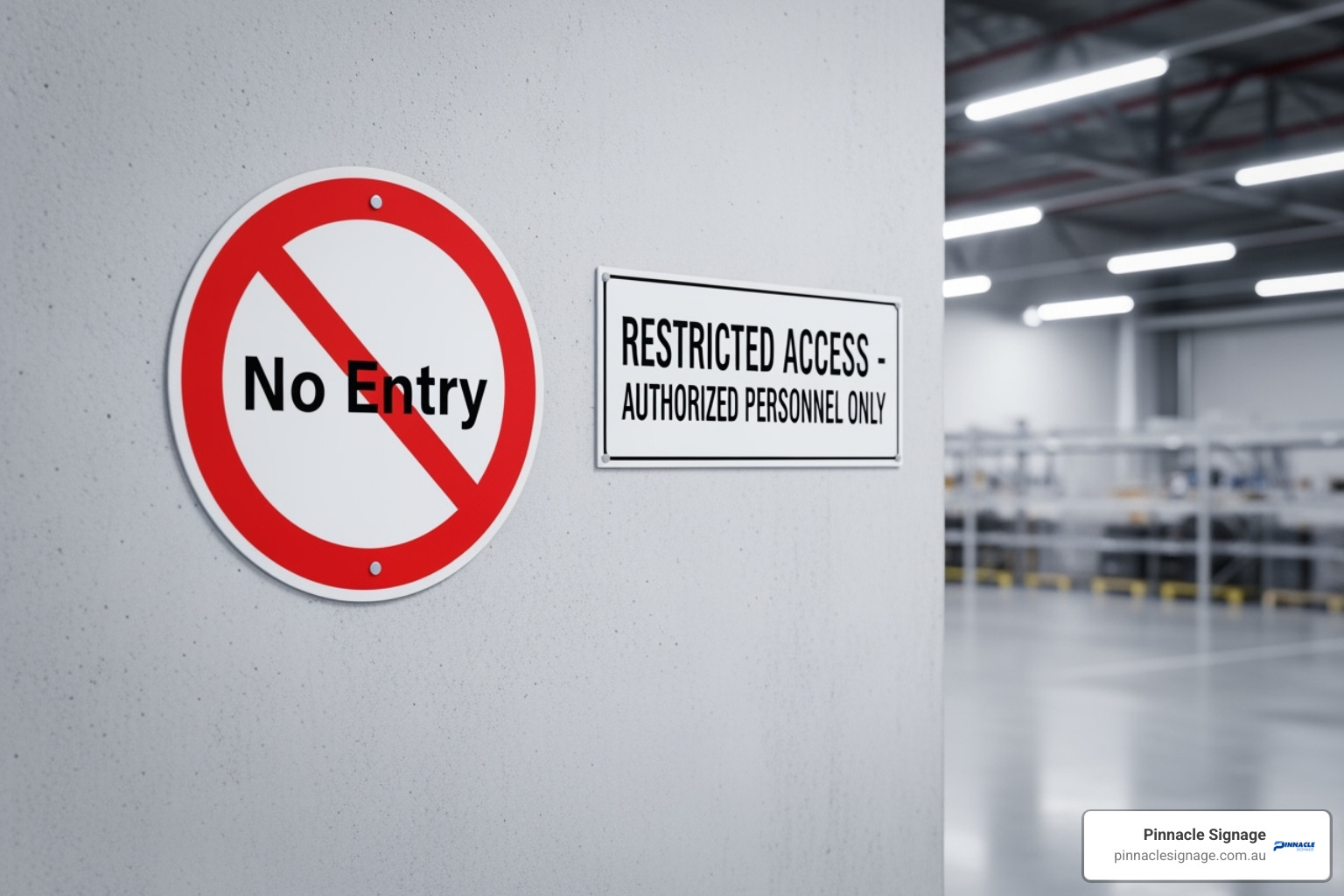
- Standard signs use universally recognised symbols and concise text for quick comprehension, like the classic 'No Entry' sign.
- Prohibition signs use an eye-catching red circle and slash to warn against actions that risk health or safety. Learn more in our guide to understanding prohibition signs in the workplace and public spaces. You can also check out our selection of prohibition signs over at Bunnings.
- Danger signs are reserved for life-threatening hazards like high voltage or radioactivity, using a distinctive red panel to signal an urgent alert. Our ultimate guide to custom danger signs covers these in detail.
- Notice signs use a blue and white design for less critical communications, such as housekeeping rules or general instructions.
- Custom signs are the solution when standard options don't fit. We can design signs with your specific text, logos, and colours to address your exact needs, ensuring your restrictions are communicated with clarity.
Choosing the Right Materials and Design
A sign is only effective if it can withstand its environment and be seen clearly. The right materials and design are just as important as the message itself.
Australian conditions, from scorching sun to coastal salt spray, demand durable signage. We focus on tough, weather-resistant materials like metal, plastic, and adhesive vinyl that are proven to last. Whether for a construction site, factory, or farm, choosing a material that resists rust, impacts, chemicals, and UV rays ensures your investment endures.
Visibility is another critical factor. A sign that cannot be seen is a sign that does not work. Consider these design elements:
Sign Size: A good guideline is to have one inch of text height for every 25 feet of viewing distance. If a sign needs to be read from 100 feet away, the text should be at least four inches high. Larger sites like farms or industrial complexes often require extra-large signs to be effective.
Reflectivity: For a sign to work around the clock, it needs to be visible in low-light conditions. Reflective materials ensure your restricted area signage remains effective after sunset or during poor weather. Different grades of reflectivity are available to suit various needs, from non-critical applications visible from a distance to high-intensity options needed for traffic control or dangerous areas.
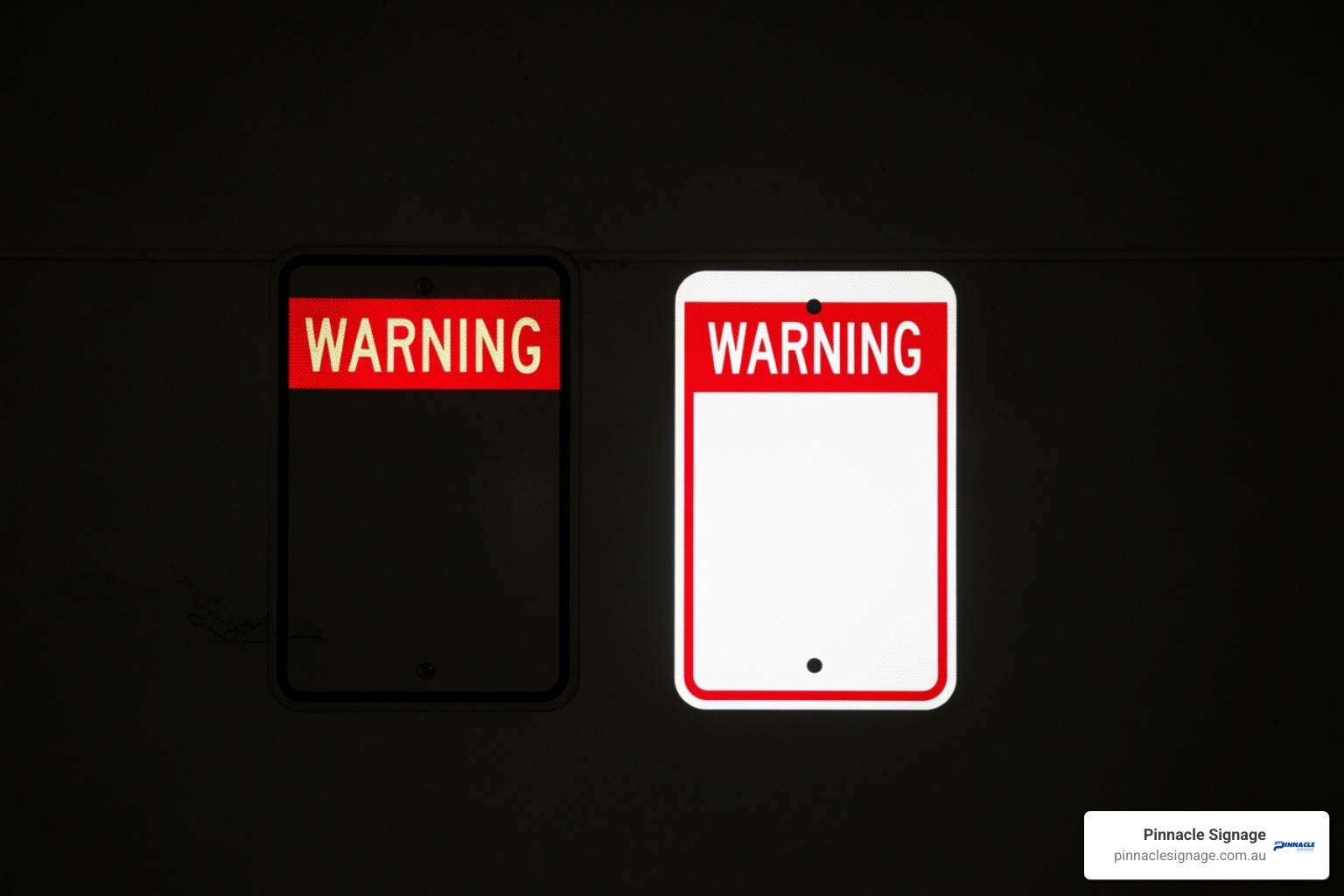
Getting the right combination of material, size, and reflectivity ensures your signs command attention and communicate effectively, day or night. For more guidance, our article on safety signage Australia: your guide to clear and compliant signs covers the essentials.
Ensuring Compliance and Effectiveness with Restricted Area Signage
Properly implemented restricted area signage is a cornerstone of a safe workplace and a protected business. In Australia, AS 1319 provides guidance on the design and use of safety signs. Our products are manufactured to meet these requirements, ensuring clear and unambiguous warnings.
An effective sign relies on:
- Clear Messaging: Simple language and universal symbols that can be understood in seconds.
- Appropriate Classification: Correctly using danger, warning, notice, or prohibition signs helps people instantly assess the situation's seriousness.
- Proper Placement: Signs must be clearly visible, unobstructed, and placed at appropriate heights. Consider viewing distances, lighting, and potential distractions.
- Regular Maintenance: Inspect signs regularly for fading or damage. A sign that is no longer legible is no longer effective and should be replaced.
For maximum impact, place signs at all entry points, along perimeter fencing for large areas, and within the normal line of sight. The legal benefits are significant, as clear signage demonstrates you have taken reasonable steps to fulfil your duty of care. In the event of an incident, well-placed "No Trespassing" or "Authorised Personnel Only" signs can be crucial in reducing your liability. From a Workplace Health and Safety (WHS) perspective, compliant signage is a fundamental part of a robust safety system. Our article on workplace safety signs that speak louder than words explores this further. For broader context, Transport for NSW provides more on Australian traffic signs.
The Advantages of Custom Restricted Area Signage
While standard restricted area signage is suitable for many situations, custom-designed signs offer custom solutions for unique site requirements.
Every site has specific risks and protocols that generic warnings may not cover. Custom signs allow you to provide detailed instructions relevant to your environment, such as "Restricted Area: High Voltage Equipment, Do Not Touch." This removes ambiguity and provides clear guidance. If your site has a unique hazard, custom text or imagery can communicate that risk effectively.
For agricultural businesses, biosecurity protocols are critical. Custom signs can detail specific entry requirements, like "All Visitors Must Report to Farm Office and Disinfect Footwear," protecting livestock and crops in a way that generic signs cannot. We offer a comprehensive range of biosecurity signage, with custom designs available.
Custom signs also improve company branding and professionalism. Incorporating your logo and colours reinforces your brand identity and conveys a sense of order and authority, signalling that safety is a priority. This is particularly useful on farms, where custom signs can address specific zones like a bull paddock, machinery area, or chemical storage with precise warnings.
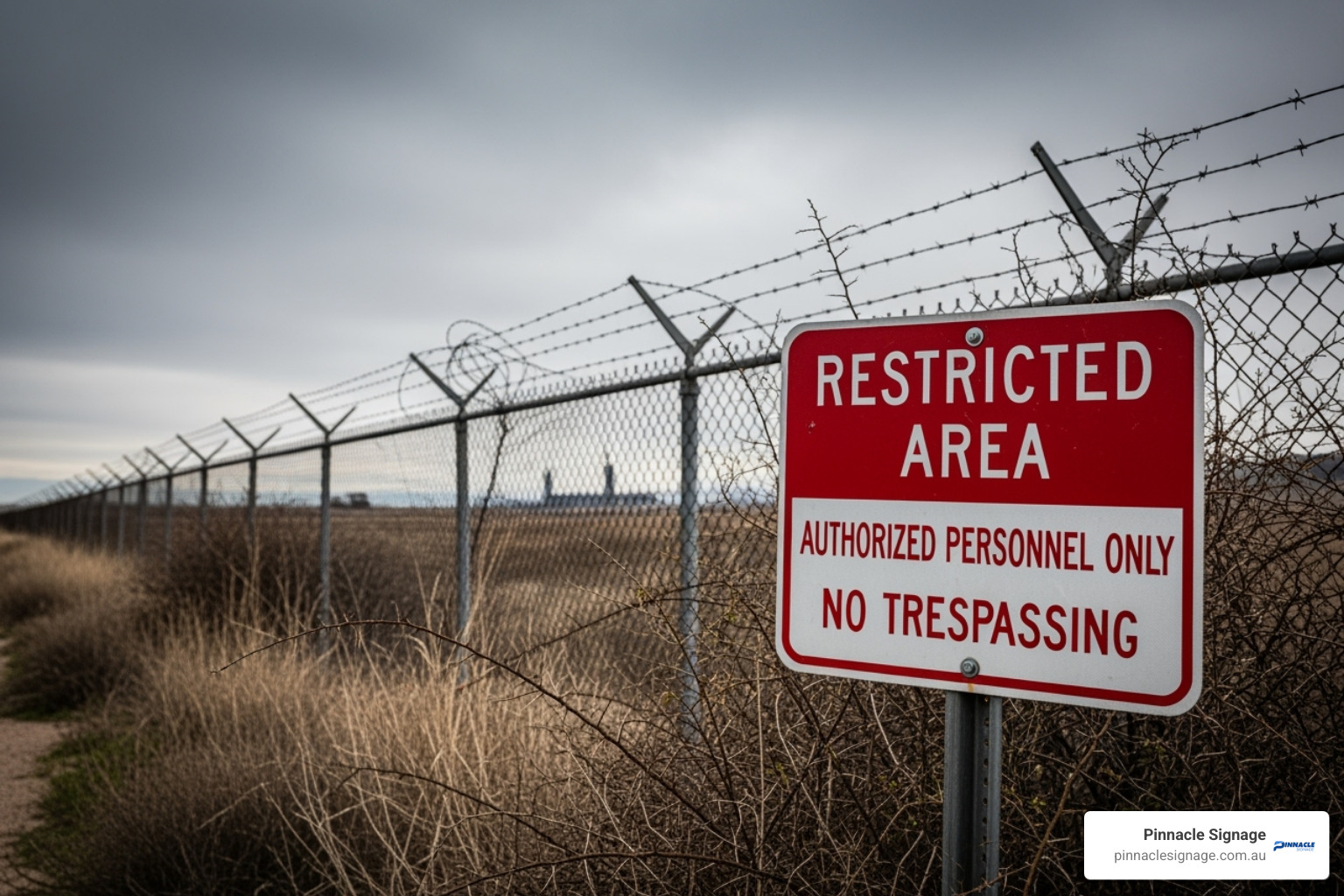
We make access signs easy by providing customisable solutions for any scenario. Our expertise also extends to decoding access control door signage, ensuring your specific needs are met with clarity.
Find Your Ideal Signage Solution
When it comes to protecting your site, restricted area signage isn't just a nice-to-have, it's essential. Throughout this guide, we've covered how the right signs prevent accidents, reduce your liability, secure valuable assets, and keep operations running smoothly across all Australian industries. From construction sites to farms, commercial properties to hospitals, clear and effective signage makes all the difference.
At Pinnacle Signage, we take pride in manufacturing high-quality, durable, and Australian-made signage products designed specifically for our unique environmental challenges. Whether you're dealing with scorching summer heat, coastal salt spray, or dusty rural conditions, our signs are built to last. We understand that every business is different, which is why we offer both standard options for quick deployment and fully customisable solutions for those unique situations that need a custom approach.
We know you need signs quickly, so we've streamlined our production to dispatch most items within 48 hours of receiving your order and payment confirmation. Whether you're ordering a single custom sign or placing a bulk order for an entire facility, we're set up to handle projects of all sizes with the same commitment to quality and service.
Our restricted area signage solutions serve businesses across Australia in industries including construction (marking hazardous zones and site boundaries), agriculture (protecting livestock areas and chemical stores with biosecurity protocols), commercial property (securing plant rooms and tenant-specific zones), health (designating sterile areas and hazardous waste zones), and retail (restricting access to stockrooms and staff-only areas).
If you're looking for proven designs that work, explore our top picks for area safety signs. For custom requirements, unique site conditions, or bulk orders with competitive pricing, our team is ready to work with you to create the perfect solution.
Contact our team for a custom quote today, and let's discuss how we can help improve safety and security on your site. For more of our signage options, check our our page on the Bunnings' website.
Shipping & Pickup Information
Getting your signs to you quickly and safely is a priority. We dispatch most items within 48 hours of receiving your order and payment confirmation. Delivery times vary depending on your location: 1-2 days to Sydney, ACT, Melbourne, Brisbane, and the Gold Coast; 2-4 days to the rest of NSW and Victoria; 3-6 days to SA, North QLD, and Perth; and 5-9 days to TAS, NT, and WA.
We use trusted courier services like FEDEX for most Australian deliveries. Please provide a valid daytime delivery address, as couriers cannot deliver to PO Boxes. A signature is required upon receipt to ensure safe delivery, so you'll need to be available to accept the delivery (re-delivery charges apply if you're not present). Including a daytime phone number with your shipping details helps us contact you if needed. For items over 50kg being delivered to residential addresses, tailgate delivery is usually required, and this service is included in our standard shipping. Alternatively, you can arrange to pick up the item from a nearby depot.
Free shipping is available Australia-wide for orders over $100, covering most items on our site. For some bulky items, additional shipping costs apply to WA, North QLD, NT, TAS, and island areas, and our staff will contact you after your order if these charges apply.
If you'd prefer to collect your order, warehouse pickup is available at Unit 4/28 Nagle Street, East Wagga Wagga NSW. We're open 8am to 5pm, Monday through Friday (closed weekends and public holidays).