

Wet Floor Signage: Essential Types, Placement, and WHS Compliance
Why Wet Floor Signage is Essential for Australian Workplaces
Wet floor signage is one of the simplest yet most effective safety tools for Australian businesses. These bright yellow signs are critical for preventing workplace accidents and helping you meet Work Health and Safety (WHS) obligations.
Essential wet floor signage types and their applications:
- A-frame signs - Portable, double-sided visibility for temporary spills and cleaning
- Safety cones - Highly visible markers for larger wet areas and outdoor use
- Self-adhesive floor graphics - Permanent solutions for areas with ongoing moisture issues
- Wall-mounted signs - Space-saving options for narrow corridors and doorways
Key placement principles:
- Position signs prominently at all approach angles to wet areas
- Use a triangular arrangement for large spills (minimum 3 signs)
- Ensure visibility from a safe distance
- Remove immediately once surfaces are dry
WHS compliance requirements:
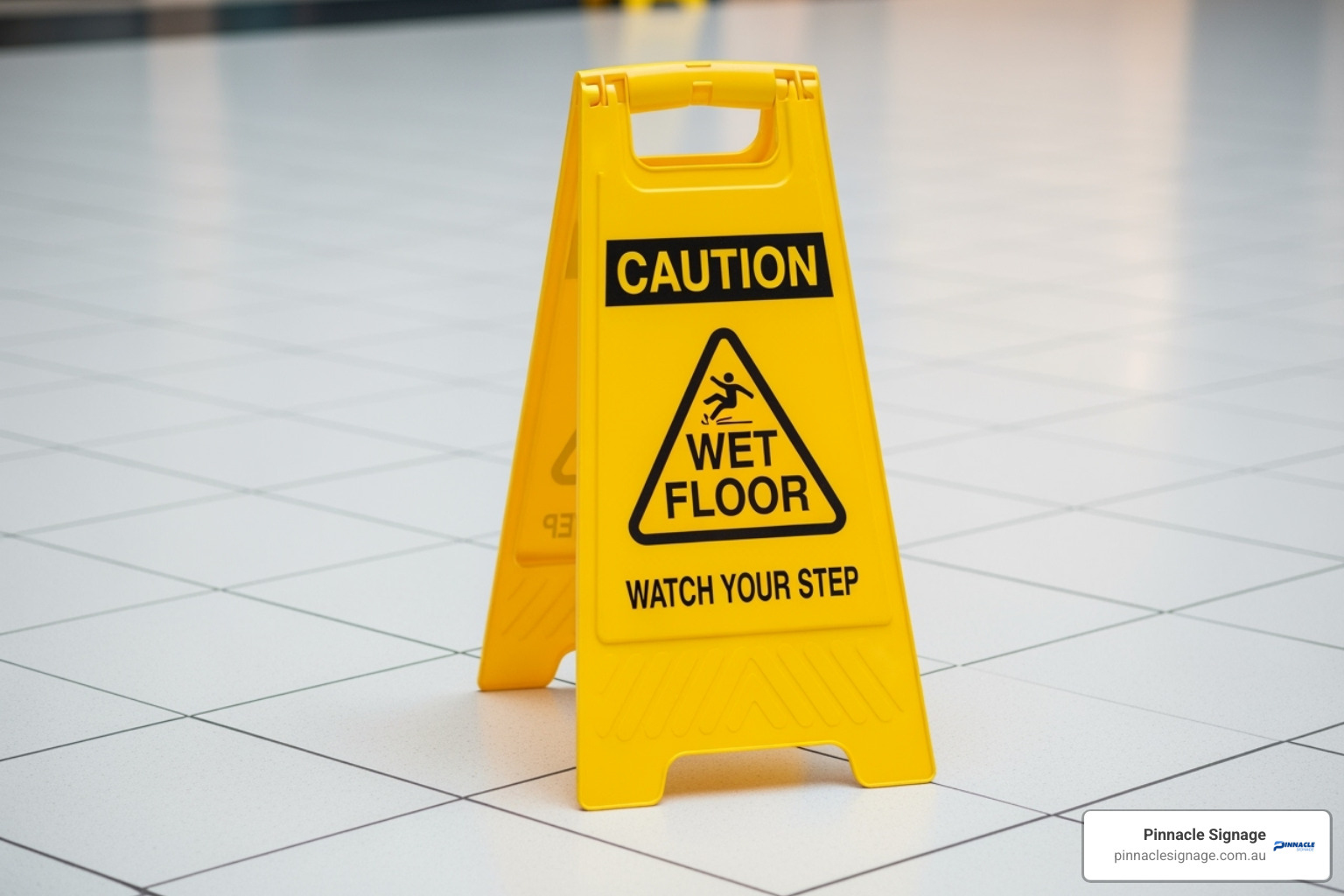
- Yellow background with black text and pictograms (as per AS 1319)
- Clear "CAUTION" messaging with a slip hazard symbol
- Adequate quantity and strategic placement as part of your duty of care
Slip, trip, and fall incidents are a major cause of workplace injuries in Australia. Using wet floor signs correctly can dramatically reduce these accidents, protecting your team and your business from potential legal and financial consequences.
A Comprehensive Guide to Wet Floor Signage
A freshly mopped floor, a visitor in a hurry, and no warning sign. It’s a common scenario that often ends in a preventable slip and fall. Across Australia, these incidents are a major workplace hazard, but proper wet floor signage offers a simple and effective solution.
Slips, trips, and falls are among the most common workplace accidents, sometimes leading to serious injuries. The good news is that most can be avoided with the right safety strategies, and effective wet floor signage is a key part of this.
The Primary Purposes of Wet Floor Signs
Wet floor signage is a cornerstone of workplace safety, serving several key functions:
- Accident Prevention: The most immediate benefit. A visible sign prompts people to slow down and walk carefully, preventing injuries.
- Hazard Communication: The universal slipping pictogram transcends language barriers, ensuring everyone understands the risk.
- Demonstrating Duty of Care: Using signs shows you are proactively managing hazards to keep employees and visitors safe, which is a key legal and ethical obligation.
- WHS Compliance: Wet floors are a recognised hazard. Signage is a fundamental control measure required to meet WHS regulations.
- Building a Safety Culture: Consistent use of safety signage reinforces the message that your organisation prioritises its people's wellbeing.
For deeper insights into effective hazard identification strategies, explore our guide on From Blind Spots to Bright Ideas: How to Identify Hazards Effectively.
Choosing the Right Type of Wet Floor Sign
Matching the sign to the environment is key to its effectiveness. Here are the main types:
- A-frame signs: The classic choice. Portable, double-sided, and ideal for temporary spills or routine cleaning in offices and retail spaces. They are made from durable materials and fold flat for easy storage.
- Safety cones: Highly visible and stable, perfect for larger wet areas or outdoor use. Their height makes them hard to miss when cordoning off car parks or areas affected by weather.
- Self-adhesive floor graphics: A permanent solution for areas with ongoing moisture, like building entrances or around water fountains. They apply directly to the floor, eliminating a trip hazard.
- Wall-mounted signs: A space-saving option for narrow corridors or doorways where floor signs would cause an obstruction.
When choosing, consider durability, portability, and visibility to ensure the sign is easy for staff to use and easy for everyone to see.
For a comprehensive overview of caution signage options, refer to our guide on All About Caution Signage: Options and Tips.
Effective Placement Strategies for Maximum Safety
Even the best sign is useless if it’s not seen. Follow these placement principles for maximum impact:
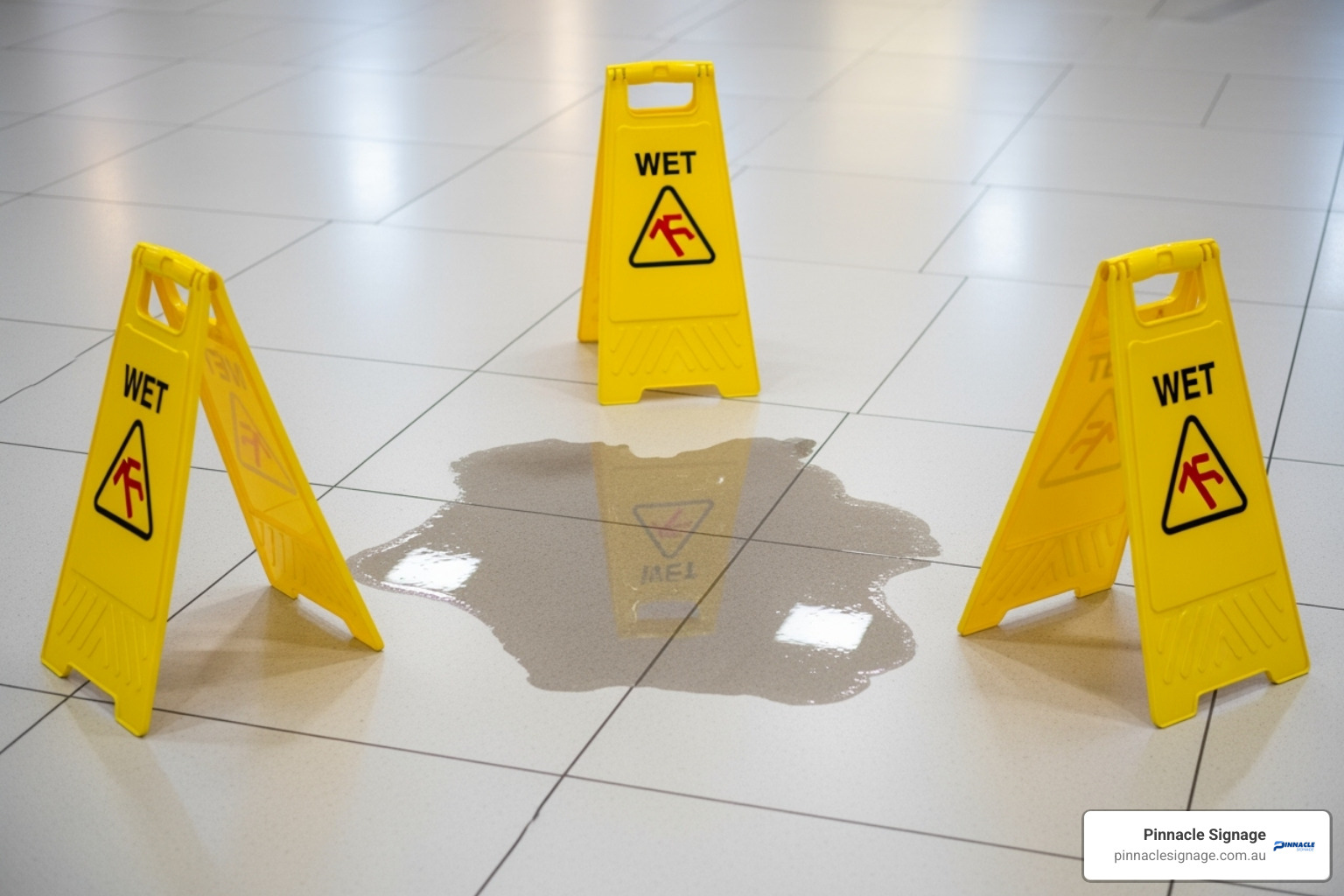
- Cover All Angles: Place signs so they are visible from all possible directions of approach.
- Use the Triangle Method: For large spills, use at least three signs to form a triangle around the hazard, clearly marking the entire area.
- Ensure Visibility: Position signs in well-lit areas where they won't be hidden by furniture, pillars, or other objects.
- Avoid Obstructions: Never block walkways, doorways, or emergency exits with your signs.
- Think About Corners: Place signs before blind corners, not right after them, to give people enough time to react.
- Remove Promptly: Take signs away as soon as the floor is dry and safe. Leaving them out desensitises people to the warning.
WHS Compliance and Standards for Wet Floor Signage
While there isn't a specific regulation just for wet floor signs, their use is a fundamental part of meeting your broader obligations under Work Health and Safety (WHS) laws.
- Duty of Care: Businesses have a duty of care to ensure a safe environment. Since wet floors are a foreseeable hazard, using signs is a reasonable step to prevent injury.
- Hazard Control: WHS regulations require businesses to identify and control hazards. Signage is a key administrative control for the risk of slips.
- Australian Standard AS 1319: This standard outlines the design for safety signs. For wet floors, it specifies a "caution sign" format: a yellow background with black text and the universally recognised pictogram of a person slipping.
Compliance isn't just about owning signs; it's about having enough of them, training staff on their correct use, and ensuring they are well-maintained.
For comprehensive information about Australian safety sign standards, explore our detailed guide on Understanding Australian Standards for Safety Signs.
Common Mistakes to Avoid When Using Wet Floor Signs
Avoid these common pitfalls to ensure your signage is effective:
- Delayed Placement: The sign must go out the moment the floor gets wet. A delay of even a few minutes is a risk.
- Incorrect Positioning: A sign hidden behind a pot plant or tucked in a corner is useless. Ensure clear lines of sight.
- Leaving Signs Out: This causes 'sign blindness,' where people start ignoring the warnings. Remove signs as soon as the hazard is gone.
- Using Worn or Damaged Signs: A broken or dirty sign looks unprofessional and may not be visible, undermining your safety message.
- Not Using Enough Signs: A single sign is often not enough for a large area. Use multiple signs to cover all approaches.
- Lack of Staff Training: Ensure all team members know where to find signs and how to use them correctly.
For broader guidance on avoiding signage pitfalls, read our article on 6 Bad Signage Mistakes and How to Prevent Them.
Beyond 'Wet Floor': Other Essential Floor Safety Signage
Comprehensive floor safety goes beyond just wet surfaces. Consider these other types of signage:
- Trip Hazard Signage: Warns of uneven surfaces, steps, or temporary cables.
- Forklift Traffic Warnings: Essential in warehouses to manage the interaction between vehicles and pedestrians.
- Pedestrian Walkway Markers: Clearly defines safe walking paths in industrial or busy environments.
- Hazardous Area Delineation: Marks boundaries around chemical storage, high-voltage equipment, or other restricted zones.
- Anti-slip Products: Tapes and coatings can be used alongside signs to improve traction on inherently slippery surfaces like ramps and stairs.
By implementing a complete floor safety system, you create a safer environment and demonstrate a strong commitment to protecting everyone in your workplace.
Explore our complete range of floor safety solutions at Prevent Accidents Before They Happen: Explore Floor Safety Signage with Pinnacle, and find how forklift-specific signage can improve warehouse safety with Forklift Floor Signs: Keeping Your Warehouse Safe and Sound.
Find the Right Safety Signage for Your Business
A safe workplace protects your people and your business. Quality wet floor signage is a foundational part of any safety strategy, and at Pinnacle Signage, we help Australian businesses get it right.
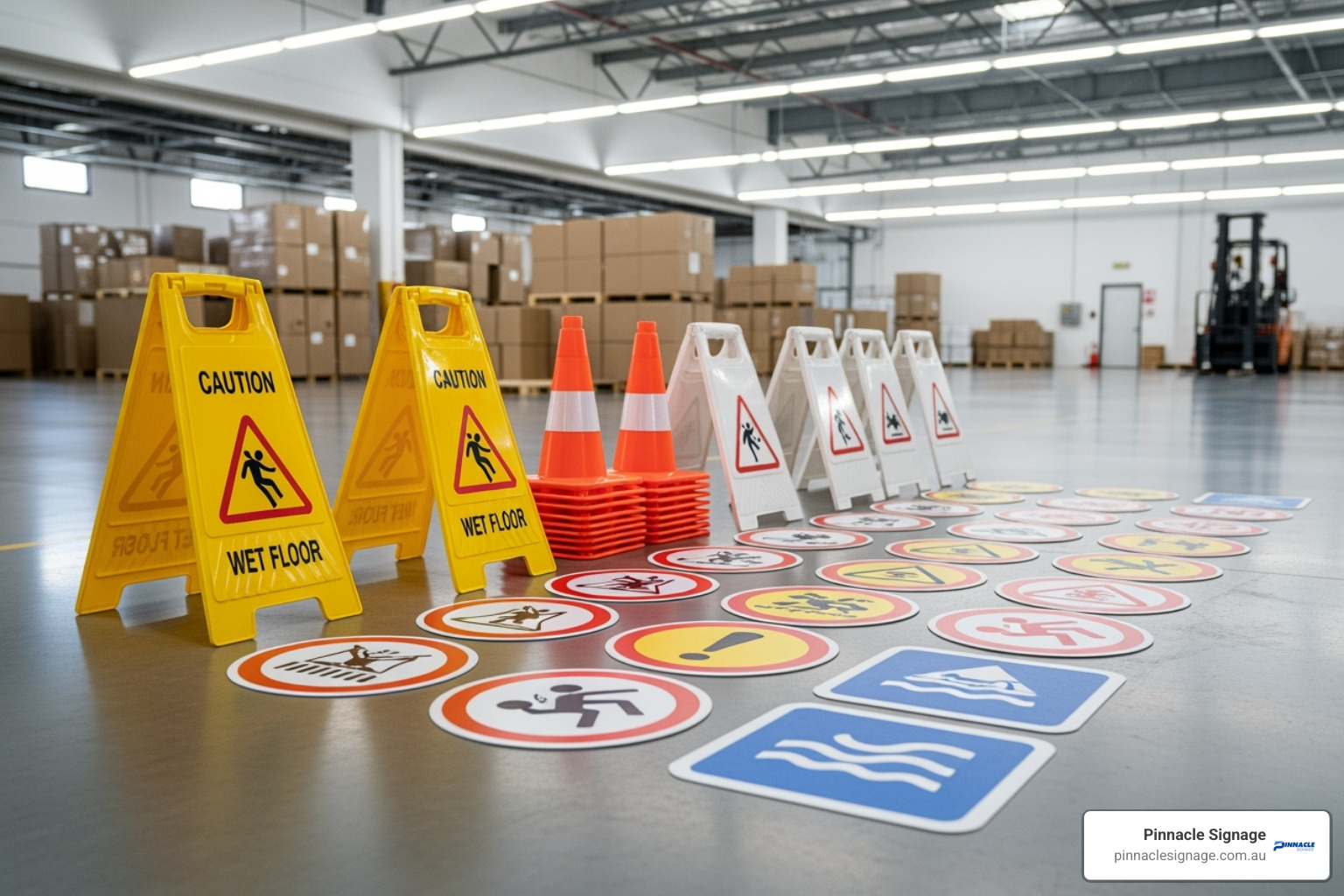
Every workplace has unique safety challenges. Our comprehensive range includes everything from classic A-frame wet floor signs to safety cones and custom floor graphics, all designed to meet Australian Standards and withstand local conditions.
Our signs are crafted from durable, weather-resistant materials for clear visibility and long life. As an Australian supplier, we understand local needs and offer customisable options with your text, logos, and colours.
Need bulk orders? We have the capacity and experience to deliver at scale. We supply comprehensive signage solutions to retail chains, industrial facilities, and other businesses Australia-wide, ensuring consistent safety standards across all your locations.
Ready to Improve Your Workplace Safety?
Explore our full range of caution and wet floor signage solutions: Pinnacle Signage Caution Collection
Our team is here to help with bulk orders, custom designs, or any specific safety signage requirements. We pride ourselves on excellent customer service and fast Australia-wide delivery.
Contact Pinnacle Signage to discuss your requirements.
Shipping & Pickup Information
Production & Shipping Times: Pinnacle Signage dispatches most items within 48 hours of receiving your order and payment confirmation. Delivery times are estimated as follows:
- 1 - 2 days: Sydney, ACT, Melbourne, Brisbane, Gold Coast
- 2 - 4 days: Rest of NSW, Rest of VIC
- 3 - 6 days: SA, North QLD, Perth
- 5 - 9 days: TAS, NT, WA
Delivery Details: For most deliveries within Australia, we use courier services such as FEDEX. Please note that couriers cannot deliver to PO Boxes, so provide a valid daytime delivery address. To ensure safe delivery, a signature is required upon receipt. You must be available to accept courier deliveries; re-delivery charges will apply if you are not present. Include a daytime phone number with your shipping details if we need to contact you about your delivery. For items weighing over 50kg, a tailgate delivery is usually required for residential addresses. This service is included in our standard shipping. Alternatively, you can choose to pick up the item from a nearby depot.
Free Shipping: Free shipping is available for orders over $100 AU Wide. This applies to most items on the site. However, for some bulky items, additional shipping costs will apply for deliveries to WA, North QLD, NT, TAS, and island areas. Our staff will reach out to you after your order if these charges apply.
Warehouse Pickup: Pickup is available at our warehouse, located at Unit 4/28 Nagle Street, East Wagga Wagga NSW. The warehouse is open from 8am to 5pm, Monday through Friday, and is closed on weekends and public holidays. If you have any questions or need further information, please don't hesitate to contact us.