

Everything You Need to Know About Rally Point Signs
Why Rally Point Signs are Essential for Emergency Preparedness
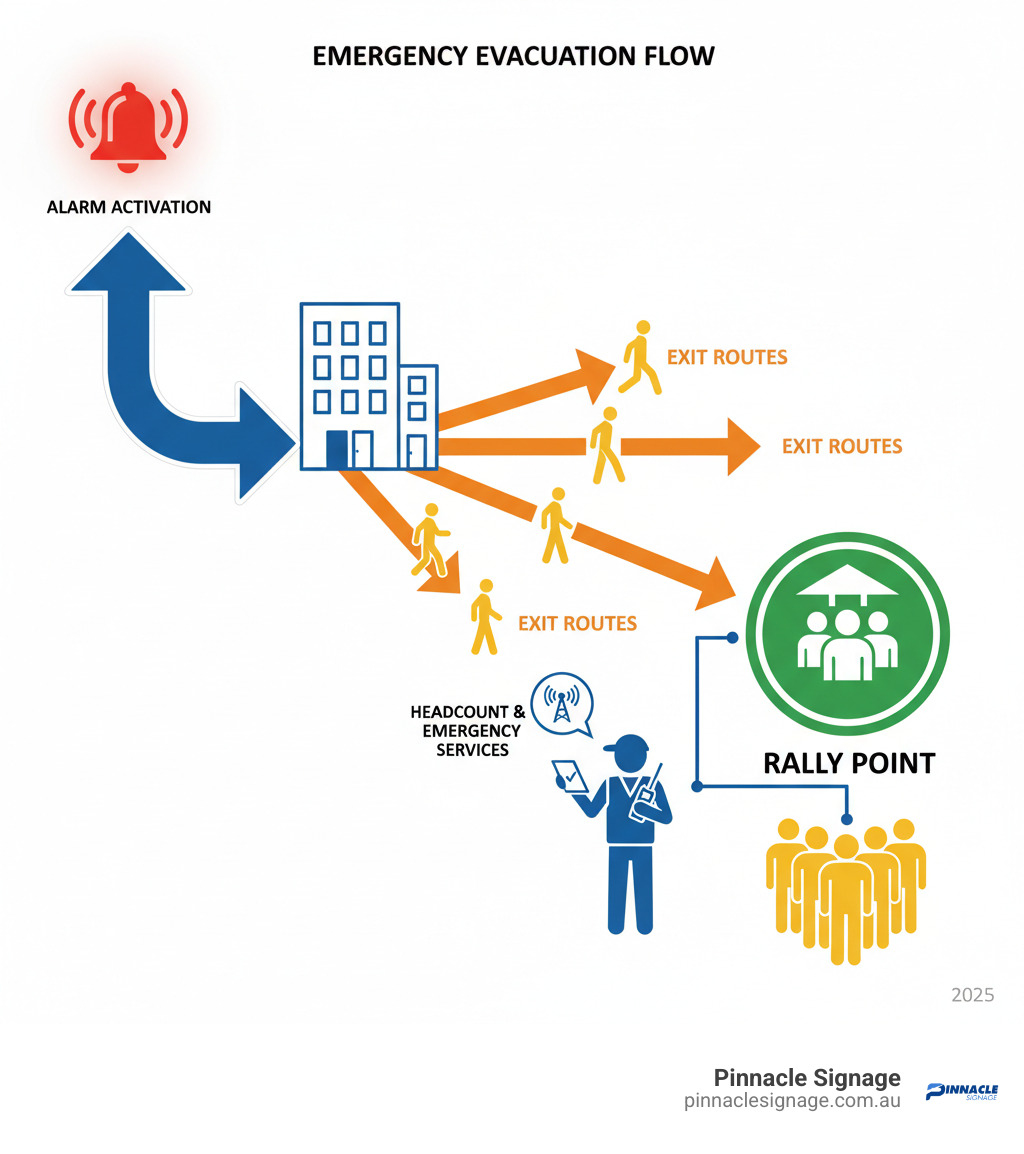
A rally point sign clearly marks the designated location where people should gather during an emergency evacuation. These signs serve three critical functions:
- Direction - They guide evacuees to a safe assembly area away from danger
- Accountability - They establish a central location for headcounts and roll calls
- Coordination - They help emergency services quickly identify where evacuees are gathered
When an emergency strikes, whether it's a fire, chemical spill, or severe weather event, every second counts. Rally point signs eliminate confusion by providing clear, visible markers that everyone can follow. They transform what could be a chaotic evacuation into an organised process where managers can quickly account for all personnel and communicate effectively with emergency responders.
For Australian workplaces, rally point signs aren't just good practice, they're a practical part of meeting your duty of care obligations. Safe Work Australia requires employers to have documented emergency plans, and clearly marked assembly points are a fundamental component of any effective evacuation strategy. Without proper signage, even the best emergency plan can fail when people don't know where to go.
Proper rally point sign placement and quality can make all the difference during an actual emergency. This guide will walk you through everything you need to know about selecting, installing, and maintaining rally point signs for your facility.
Rally point sign terms simplified:
What is a Rally Point Sign and Why is it Crucial for Workplace Safety?
Let's talk about something truly essential for any Australian workplace: the rally point sign. You might also hear it called a muster point or assembly point sign. Whatever the name, its job is simple yet vital: to clearly mark a safe spot where everyone should gather if an emergency means you need to evacuate. Think of it as your team's designated safe zone, bringing order to a situation that could otherwise feel a bit chaotic.
When an emergency strikes, be it a fire, a chemical spill, or even a natural disaster, getting everyone out safely is the first priority. But once you're out, how do you know everyone is out? That's where the rally point sign truly shines. It gives you that one central, designated safe location for a headcount. This means managers can quickly check who's accounted for and who might still need help. This simple step cuts down on confusion, eases panic, and gives emergency services a clear picture of the situation when they arrive. It's a key part of your Emergency Action Plan (EAP) and a basic building block for good Workplace Health and Safety (WHS) practices right across Australia.
Want to dive deeper into the symbols and best practices for these important signs? Have a look at our guide: Workplace safety made simple: Muster point signs and symbols.
The Role of a Rally Point Sign in an Emergency
Picture this: the fire alarm blares, or there's news of a chemical spill. In moments like these, it's easy for panic to creep in. But that's exactly when a clear, easy-to-spot rally point sign becomes your best friend. It's like an anchor, calmly guiding everyone to a safe, pre-arranged spot, well away from any immediate danger. Its clear message and well-known symbols cut through the noise, telling people exactly where to go.
A properly placed rally point does so much more than just point the way. It really helps during an emergency by:
- Reducing panic: Knowing exactly where to go helps calm nerves and gives people a clear focus when things are stressful.
- Ensuring orderly evacuation: It channels everyone to specific spots. This stops people from scattering and makes managing the crowd much easier.
- Facilitating headcounts: Once everyone reaches the rally point, your managers or safety officers can quickly do a headcount. This is crucial for confirming everyone is safe and spotting anyone who might still be in trouble.
- Assisting emergency services: When first responders arrive, they can immediately see where evacuees are gathered. This saves valuable time in getting information and helping anyone who needs it.
Knowing just how important these signs are will really help you fine-tune your emergency response plans. To learn even more, check out our article: Clear and safe: The importance of muster point signage.
Meeting Your WHS Obligations in Australia
Here in Australia, every employer has a serious legal responsibility to provide a safe workplace. It's not just a nice idea, it's a core requirement under our Workplace Health and Safety (WHS) laws. A big part of this is having an emergency action plan that's well-thought-out and clearly communicated. And guess what? Clearly marked rally point signs aren't just 'good to have', they're a practical and essential part of meeting those WHS obligations.
Safe Work Australia, our national expert on WHS, makes it clear: every workplace needs documented emergency plans. These plans must cover how to evacuate for different types of emergencies, and crucially, where everyone should assemble. Without clear and unmistakable rally point signs, even the most brilliant emergency plan might not work when it really counts.
By putting up clear, effective rally point signs, you show a real commitment to your team's safety. These signs also help you meet legal obligations. They prove you've thought about potential risks and put solid plans in place to protect everyone on your site.
Plus, having a good grasp of all types of emergency and evacuation signs is vital for overall safety. Our guide, Don't get lost: The essential guide to emergency and evacuation signs, offers even more helpful details.
Choosing the Right Rally Point Sign for Your Facility
Picking the right rally point sign isn't just about grabbing the first one you see. Your facility has unique needs, and your signage should reflect that. Australian weather can be harsh, from scorching sun to driving rain, and your signs need to handle it all. The layout of your site matters too. A sprawling industrial complex has different requirements than a compact office building.
When you're selecting a rally point sign, think about where it will be placed and what conditions it will face. Will it be exposed to direct sunlight for hours each day? Does it need to be visible from hundreds of metres away across a car park? Will it face coastal salt spray or inland dust storms? These aren't just academic questions. The answers directly impact which materials and features will work best for your situation.
For organisations placing bulk orders, there's good news. Quality doesn't have to break the budget. We focus on delivering premium products with excellent customer service and reliable delivery, ensuring you get the best value for your investment. Whether you're outfitting a single site or managing safety signage across multiple locations, we're here to help you find the right solution.
Our guide, The ultimate guide to safety signs: Your guide to clear and compliant signs, offers broader insights into choosing effective safety signage for your workplace.
Types of Materials and Their Benefits
The material you choose for your rally point sign makes all the difference in how long it lasts and how well it performs when you need it most. We've designed our range around materials that can handle Australian conditions without fading, cracking, or becoming illegible.
Rust-proof aluminium is often the best choice for outdoor assembly signs. It won't corrode in coastal environments or deteriorate in wet conditions, making it ideal for long-term installations. When you pair aluminium with reflective sheeting, you get a sign that remains visible in low light. For areas that need maximum visibility at night or during power outages, higher-class reflective options use advanced prismatic technology to ensure your sign can be seen from considerable distances, regardless of lighting conditions.
Polypropylene (poly) offers excellent versatility for both indoor and outdoor applications. This durable plastic resists UV radiation, moisture, and chemical exposure, making it suitable for industrial environments where spills or harsh cleaning agents might be present. It's also lightweight and easy to clean with just water or mild detergent, which simplifies maintenance.
For applications where flexibility matters, vinyl labels provide a cost-effective solution. These are particularly useful for temporary installations or when you need to apply signage to existing smooth surfaces. Despite their flexibility, they're still UV, water, and chemical resistant, offering good durability for their intended use.
Magnetic signs bring a different advantage. In warehouses or facilities where layouts change regularly, being able to reposition your signage without drilling new holes or leaving permanent marks is invaluable. These signs maintain their durability while offering the flexibility that dynamic environments require.
The key is matching the material to your environment. A sign in a covered walkway doesn't need the same weather resistance as one standing in an exposed car park. Similarly, a sign that needs to be visible during night-time evacuations requires reflective properties that a purely daytime sign doesn't. Think about your specific situation, and the right choice becomes clear.
For signs that demand maximum visibility during emergencies, especially at night, explore our High visibility emergency signs: Fast shipping Australia wide.
Selecting the Correct Size and Design for Your Rally Point Sign
A rally point sign only works if people can actually see it and understand it immediately. This means getting the size and design right is absolutely critical. You need to consider how far away people will be when they're looking for the sign and what else might be competing for their attention.
Size makes a real difference. If your rally point is in a large car park or at the edge of a sprawling campus, a small sign simply won't cut it. People need to be able to spot it from hundreds of metres away, often while they're stressed and moving quickly. We offer signs in a range of standard Australian sizes, such as 300 x 450 mm, 450 x 600 mm, and 600 x 750 mm, precisely because different facilities have different needs. A small office building might only need a modest sign just outside the entrance, while a manufacturing facility with multiple buildings needs something much more substantial.
Clear, universal design is equally important. Most rally point signs feature recognisable symbols showing a group of people gathering together, paired with straightforward text like "RALLY POINT" or "ASSEMBLY POINT". Directional arrows are incredibly helpful, guiding people towards the safe area from multiple approach paths. A double arrow symbol indicates the rally point can be accessed from two directions, which is particularly useful for sites with multiple evacuation routes.
Customisation takes your signage from good to great. While standard signs work well, custom options let you add specific details that make evacuations more organised and efficient. Consider adding zone numbers for large sites where different teams need to gather in different areas. Company logos add authority and help people immediately recognise official signage. Line-up instructions can speed up headcounts considerably. Emergency contact numbers or specific instructions for your site's unique needs can all be incorporated.
This level of detail transforms a simple directional sign into a comprehensive evacuation management tool. When everyone knows not just where to go but also what to do when they get there, the entire emergency response becomes smoother and safer.
Understanding assembly area signs made easy provides additional insights into effective assembly area design.
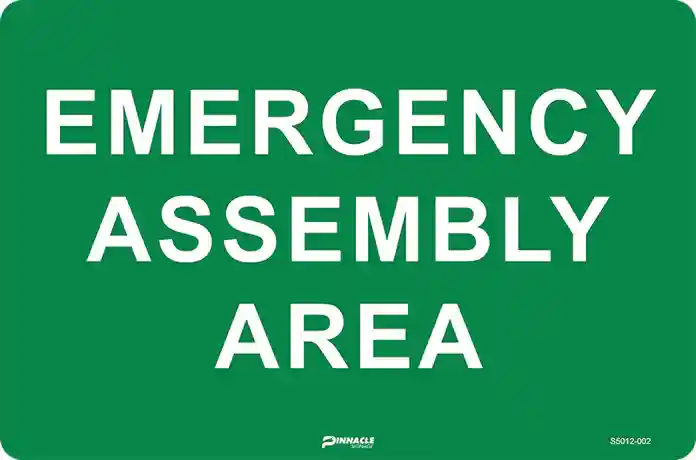
Common rally point sign designs include "Emergency Assembly Area", "Emergency Evacuation Gathering Point", "Evacuation Meeting Point", and "Emergency Muster Area". Signs with directional elements like "Rally Point [Right Arrow]" or "Rally Point [Double Arrow]" help guide people from different areas of your facility. For facilities where power outages are a concern, glow-in-the-dark options provide visibility even in complete darkness.
Best Practices for Installation and Maintenance
Getting your rally point sign right isn't just about buying quality signage, it's about putting it in the right place and keeping it in top condition. A perfectly manufactured sign won't help anyone if it's hidden behind a tree or so faded that no one can read it. Smart installation and regular upkeep are what transform a sign from a box-ticking exercise into a genuine lifesaver during an emergency.
Think of it this way: your rally point sign is like a guide. In a crisis, people need to spot it quickly, understand it instantly, and reach it safely. That only happens when you've thought carefully about where it goes and made sure it stays visible and legible over time.
For a thorough walkthrough of setting up effective assembly points, have a look at Rally points and refuge: Everything you need to know about assembly signs.
Where and How to Install Your Rally Point Sign
Location is everything. Your rally point sign needs to mark a spot that's genuinely safe, not just convenient. Start by choosing an area that's well away from the building or hazard zone. You want open space, clear of potential falling debris, away from vehicle traffic routes, and free from other dangers. There's no point directing everyone to a spot that could become unsafe during the very emergency you're planning for.
Once you've identified the right location, think about visibility. The sign must be clearly seen from all the routes people will take when evacuating. Avoid placing it behind trees, parked vehicles, or structures that might block the view. During an emergency, people might be approaching from different directions, possibly in poor weather or fading light.
Post-mounted signs are often your best option, especially in open areas like car parks or large yards. A sign mounted on a sturdy post creates a prominent landmark that's visible from all angles. We supply everything you need for this, including U-channel posts, round posts, square posts, and complete post kits that make installation straightforward. Wall-mounted signs work well when your rally point is adjacent to a building or fence. Just make sure they're mounted at a height that's easy to spot and read. For fence installations, we have a range of brackets and hardware designed for secure, long-lasting mounting.
Don't skimp on the hardware. Proper mounting equipment ensures your sign stays put through storms, strong winds, and the test of time. We provide all the necessary bolts, nuts, washers, and tamper-resistant options to keep your signage secure. For post-mounted signs in areas where vehicles might be present, consider using special safety posts designed to break or yield on impact, which helps protect both the sign and any colliding vehicles.
Maintaining Your Signage for Long-Term Effectiveness
Even the toughest rally point sign needs a bit of care to keep doing its job. Regular maintenance isn't just good housekeeping, it's a practical part of your workplace health and safety responsibilities. Assembly signs should be checked during your regular facility safety audits, at least once a year, though more frequent inspections are wise for signs in harsh environments.
During these checks, look for fading caused by sunlight and weather. Australian conditions can be tough on outdoor signage, and colours that have lost their vibrancy won't grab attention when it matters most. Check for physical damage like cracks, bends, graffiti, or missing pieces that could make the sign's message unclear or illegible. Also scan the area for obstructions that might have appeared since you last looked. New plant growth, parked vehicles, construction materials, or stacked equipment can all block visibility. If you find vegetation encroaching, trim it back. If other obstructions are present, remove them or consider relocating the sign.
Keeping your signs clean is simple but important. Most of our signs can be washed down with water or a mild detergent, which restores their clarity and ensures the message remains easy to read. It's a small task that makes a real difference.
The bottom line is legibility. If a sign has become damaged beyond repair or so faded that people struggle to read it, replace it immediately. A worn-out sign is worse than no sign at all, it gives a false sense of security while failing to communicate effectively when an emergency strikes.
For more perspective on keeping your emergency signage current and effective, see Sign of the times: Understanding evacuation signs.
Frequently Asked Questions about Rally Point Signs
When it comes to rally point signs, we hear the same questions time and again from business owners and facility managers across Australia. Let's address the most common concerns with straightforward, practical answers that will help you make the right decisions for your site.
Can I customise my rally point sign?
Absolutely, and we genuinely encourage it! While standard rally point signs do their job well, customisation takes your emergency preparedness to the next level, particularly for larger facilities or sites with multiple zones.
Custom rally point signs allow you to add information that's specific to your operation. You might include zone numbers to direct different departments or teams to their designated assembly areas. Company logos help reinforce that the sign is official and part of your site's emergency procedures. Line-up instructions can guide evacuees on how to position themselves for quick, efficient headcounts. Some businesses even add emergency contact details like a site manager's mobile number for immediate communication.
This level of detail transforms a simple gathering point into an organised, efficient system. It reduces confusion when people are stressed, speeds up accountability checks, and integrates seamlessly with your overall emergency action plan. We can create custom signs custom to your unique needs, often at no extra charge, ensuring your evacuation procedures work exactly as intended.
To explore what's possible for your facility, visit our custom signage options page.
What is the difference between a rally point and a muster point?
Here's the straightforward answer: there isn't really a difference. The terms "rally point" and "muster point" are used interchangeably throughout Australian workplaces to describe the same thing, a designated safe area where people gather during an emergency evacuation. Both terms refer to that critical pre-determined location for accountability and coordination.
The important thing isn't which term you choose, it's consistency. Whatever terminology you decide on, make sure it's clearly communicated to everyone on site and used consistently across all your signage, emergency procedures, and staff training. Whether you call it a rally point, a muster point, or even an assembly point, its function remains unchanged: to keep your people safe and accounted for when it matters most.
For a deeper look at this topic, read our article: Muster points explained: Keeping your team safe in emergencies.
How many rally points do I need?
This is one of those questions where the answer genuinely depends on your specific situation. The number of rally point signs you need varies based on several practical factors unique to your facility.
Facility size and layout plays a huge role. A sprawling industrial site with multiple buildings and extensive outdoor areas will naturally need more rally points than a small single-storey office. The number of employees and occupancy matters too. If you have hundreds of people on site during peak hours, you'll need sufficient rally points to accommodate everyone safely without dangerous overcrowding at a single location.
Think about site accessibility as well. Consider the different exit routes people might use and any potential obstructions. Your rally points should be easily reachable from all areas of your premises, with clear paths leading to each one. The nature of potential hazards is another consideration. If your site has different operational zones with varying risks, you might need multiple rally points strategically placed to ensure evacuees move away from specific dangers.
For very large sites, it's common practice to have several designated rally points, often labelled as "Rally Point A", "Rally Point B", and so on. This approach manages the flow of people more effectively and allows for quicker, more accurate headcounts. The decision should always be integrated into your overall emergency plan, ensuring every aspect of your evacuation strategy works together seamlessly.
Find Your Rally Point Signs at Pinnacle Signage and Bunnings
When it comes to protecting your team and meeting your WHS obligations, high-quality rally point signs are absolutely essential. At Pinnacle Signage, we manufacture durable, Australian-made signage products that are built to withstand our harsh environmental conditions and provide clear, unmistakable guidance when lives are on the line.
We understand that every workplace is different. That's why we offer a comprehensive range of standard rally point signs, as well as custom options custom to your specific site requirements. Whether you need zone numbers to manage multiple assembly areas, company logos for instant recognition, or specific line-up instructions to streamline your headcount process, we'll create the perfect solution for your facility. For organisations, groups, and businesses looking to equip their entire operation, we provide scalable bulk ordering solutions with competitive pricing. Our commitment to premium products, excellent customer service, and reliable delivery means you're never compromising on safety.
Here's something that makes getting the right signage even easier: Pinnacle Signage products are now available at Bunnings, both in-store and online across Australia. This partnership means you can access our high-quality safety signage at your local Bunnings or order online for convenient delivery. You can also continue to order directly from our website, giving you the flexibility to choose the purchasing option that works best for you. For bulk orders or custom signage solutions, our team is ready to provide personalised support and competitive quotes.
Ready to strengthen your emergency preparedness? Shop for Muster Point signs directly from our website, or view the Pinnacle Signage range at Bunnings for in-store or online purchasing. If you're ordering in bulk or need custom solutions, contact us for a bulk order quote and our team will be happy to assist you.