

First Aid Sign Boards and How to Use Them
Why Every Australian Workplace Needs a Safety Sign First Aid System
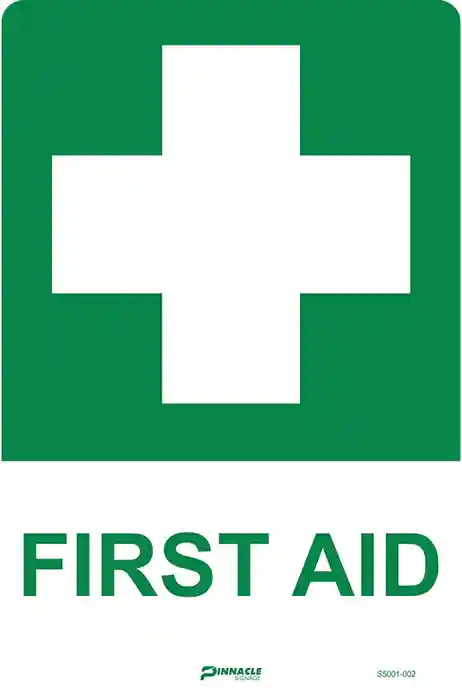
A safety sign first aid board is one of the simplest, most effective tools you can use to protect people in an emergency. When seconds count, a clearly visible sign can mean the difference between someone locating a first aid kit quickly or losing precious time searching for it.
Effective first aid signage incorporates several key elements:
- What they are: Green and white signs that mark the location of first aid kits, stations, eyewash points, AEDs, and emergency showers
- Why they matter: They reduce emergency response time and support your obligations under Australian OHS legislation
- Where to place them: Near first aid kits, in high-risk zones, at eye level, and in any area where verbal direction is not practical
- What standards apply: Australian Standard AS 1319 governs safety sign design, colour, and placement in Australian workplaces
- Who needs them: Any workplace with staff, visitors, or contractors - from small offices to large industrial sites
Australian workplaces are legally required to provide adequate first aid facilities under the OHS Act 2004, and compliant signage is a core part of making those facilities accessible. Without clear signage, even the best-stocked first aid station is harder to find under pressure.
I'm Doug Lindqvist, General Manager of Pinnacle Signage, and my background in the safety and industrial supply space has shown me how often businesses overlook the role of quality safety sign first aid boards until something goes wrong. In this guide, I'll walk you through everything you need to know to implement, place, and maintain first aid signage that keeps your workplace safe and compliant.
Further resources on safety signage:
Understanding the Role of a Safety Sign First Aid System
In the heat of an emergency, panic can set in. Even a seasoned worker might forget exactly where the trauma pack is stored if smoke is filling a room or a colleague has suffered a serious injury. This is where a robust safety sign first aid system becomes your silent partner in emergency response.
Under the OHS Act 2004, employers have a duty to provide a safe working environment. This includes "adequate facilities," which naturally extends to first aid. WorkSafe guidelines emphasise that a risk assessment should determine the number of kits and the types of signs required. For example, a low-risk office might only need a few signs, whereas a high-risk industrial site in East Wagga Wagga will require a much more extensive layout.
Visibility is the primary goal. If a visitor or a new contractor walks onto your site, they should be able to identify the nearest first aid point within seconds. This reduces response time, which is critical for preventing minor injuries from becoming major complications. For a deeper dive into the legalities, check out our A Practical Guide To First Aid Safety Sign Requirements.
Essential Safety Sign First Aid for Kits and Stations
The most common sign you will encounter is the standard "First Aid" sign, featuring a white cross on a green background. However, one size does not fit all. Depending on your facility, you might need:
- Wall Signs: Rigid boards mounted above kits or on doors leading to medical rooms.
- Self-Adhesive Stickers: Perfect for placing directly onto first aid boxes or trauma packs.
- Hard Hat Decals: Often used in construction or mining to identify trained first aid officers on-site.
- Bilingual Options: Crucial for workplaces with a diverse workforce to ensure everyone understands the instructions.
We also utilise InfiniStick technology for our labels. These are engineered for maximum adhesiveness, meaning they won't peel off even when applied to rough surfaces or exposed to extreme temperatures ranging from -20 to 80 degrees Celsius. To see how these fit into your safety plan, read Emergency Ready The Best First Aid Kit Signage For Your Workplace.
Specialised Equipment Indicators
Not all first aid is found in a box. In modern Australian workplaces, we deal with specific hazards that require specialised equipment.
- AED Signs: Automated External Defibrillators are life-savers during cardiac arrests. Because these are often stored in cabinets, a highly visible AED sign is mandatory.
- Eyewash Stations and Emergency Showers: In environments where chemicals are used, these must be marked with clear, green and white signage so an affected worker can find them even with impaired vision.
- First Aid Rooms: Larger facilities often have a dedicated room. This requires a specific "First Aid Room" sign to distinguish it from general office space.
For more technical details on these specific types, see our First Aid AED Sign Complete Guide and our guide on the Eyewash Station Sign.
Material Selection and Durability Standards
When we manufacture signs here in East Wagga Wagga, we consider the harsh Australian environment. A sign that fades in the sun or cracks in the frost is useless. We offer several material options tailored to different needs:
- Polypropylene (Poly): A durable, flexible plastic that is rust-proof and UV stable. It is the "all-rounder" for indoor and outdoor use.
- Metal (Aluminium or Steel): Ideal for high-traffic industrial areas or outdoor perimeters where maximum strength is needed. Our metal signs are a great example of the durability we build into our products.
- Self-Adhesive Vinyl: Best for smooth surfaces, machines, or the kits themselves.
- Photoluminescent (Glow-in-the-dark): These signs are essential for areas that might lose power during an emergency, such as stairwells or internal corridors.
Our signs are designed to withstand significant temperature ranges and are weather-resistant to ensure they remain clear for years. For a look at what's coming in the near future, see our First Aid Green Sign Guide 2026.
Strategic Placement for Maximum Visibility
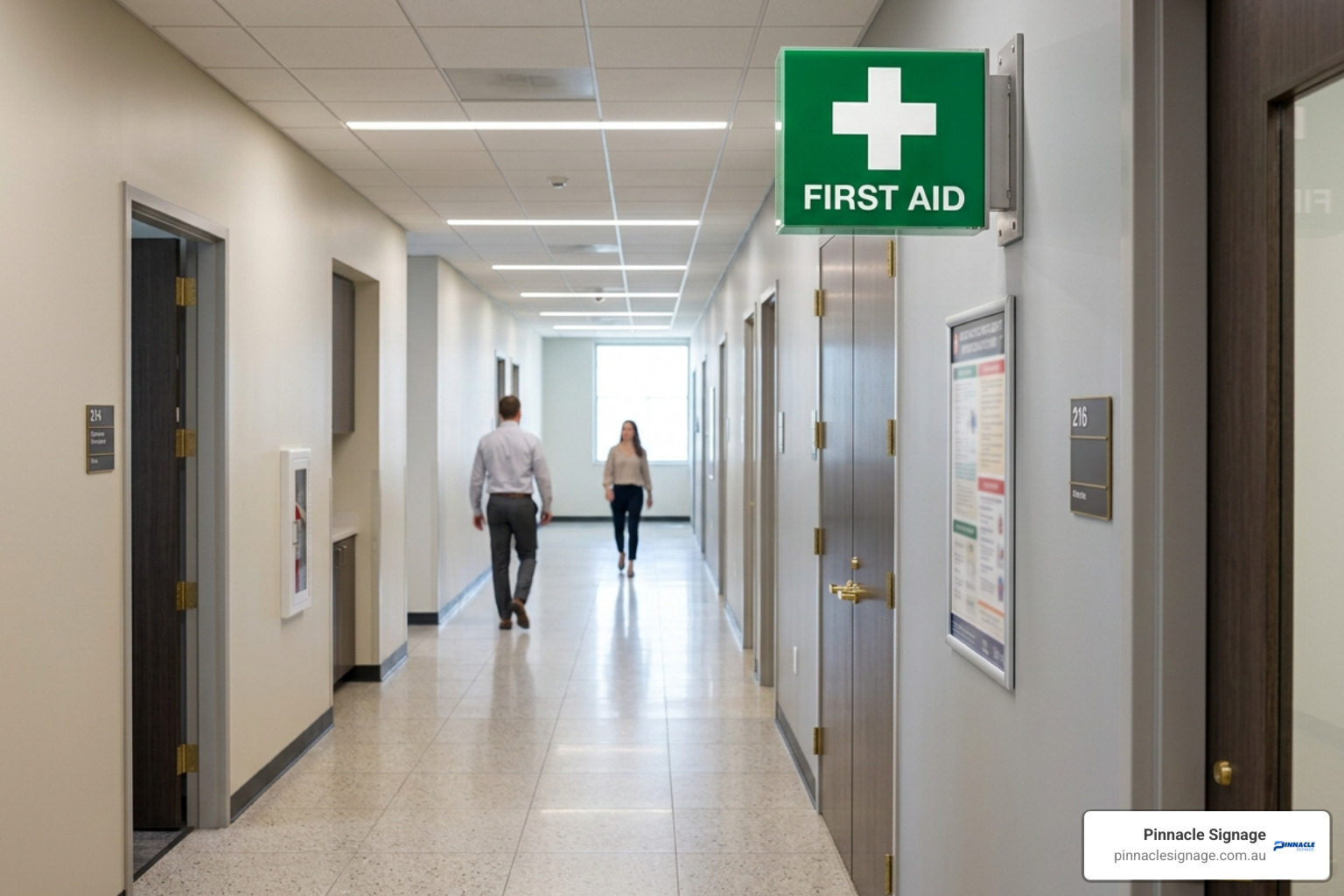
A safety sign first aid board is only as good as its placement. If it is hidden behind a door or placed too high, it loses its effectiveness. Here in the Riverina, we see a lot of agricultural sheds and large warehouses where visibility is often blocked by machinery or stacked pallets.
- Eye Level: Generally, signs should be mounted between 1.5m and 1.8m from the floor.
- Unobstructed View: Ensure that no equipment, doors, or stock will block the sign from view.
- Projecting Signs: In long corridors or large open bays, use 90-degree or 3D projecting signs. These can be seen from multiple directions rather than just head-on.
- High-Risk Zones: Place signs immediately adjacent to the hazard. If you have a chemical mixing area, the eyewash sign needs to be right there, not 20 metres away.
In rural settings, risks are often spread out. An agricultural shed might have a kit at the main entrance and another near the workshop area. Each needs its own clear indicator. For more on this, read An Essential Guide To Choosing The Right First Aid Signage.
Optimising Your Safety Sign First Aid Layout
Think of your signage as a navigation system. You can use directional arrows to point toward the first aid room if it is tucked away in a corner.
- Directional Arrows: "First Aid ->" signs help guide people through complex layouts.
- Exit Paths: Ensure first aid points are located along or near emergency exit paths.
- Assembly Points: It is often wise to have a first aid kit and a corresponding sign at your designated emergency assembly point outside.
- Low-Light Visibility: If your facility operates at night or has windowless rooms, glow-in-the-dark signs are a must. They ensure that even in a total blackout, the path to medical help is lit.
Check out our resource on First Aid Signs Australia Keeping Your Workplace Safe And Compliant for more layout tips.
Complementary Signage and Compliance
A safety sign first aid system does not exist in a vacuum. It should be part of a broader safety ecosystem. For example, if you have a first aid kit near a chemical storage area, you should also have:
- Hazchem Signs: To identify the specific chemicals present.
- Spill Kit Signs: To show where cleanup materials are located.
- Fire Extinguisher Signs: Usually red and white, these mark fire-fighting equipment.
- Prohibition Signs: Red circles with a slash (e.g., No Smoking) to prevent accidents before they happen.
- Mandatory PPE Signs: Blue circles indicating that safety glasses or gloves must be worn.
We also ensure our products align with AS 1428.1 for accessibility, including tactile and Braille options where required. This ensures that all members of the community, including those with vision impairments, can find help. If you need to mark electrical hazards nearby, read Understanding Electrical Safety Signs and Requirements.
Frequently Asked Questions about First Aid Signs
What are the legal requirements for first aid signs in Australia?
In Australia, safety signs must comply with AS 1319. For first aid, this means using a green background with white text or symbols. Employers are required by state-based OHS/WHS laws to provide clearly marked first aid facilities that are accessible to all workers.
Where should I place an AED sign for maximum effectiveness?
AED signs should be placed at the location of the unit, but also at the entrance to the building and in high-traffic areas like lunchrooms or reception desks. If the AED is inside a cabinet, the sign should be mounted above the cabinet at eye level.
Can I use stickers instead of rigid signs for first aid kits?
Yes, stickers are excellent for marking the kits themselves or for use on smooth surfaces like glass doors or metal cabinets. However, for general area identification (like marking a "First Aid Zone" in a warehouse), a larger, rigid poly or metal sign is usually required for better visibility from a distance.
Spot It Fast, Help Faster
At Pinnacle Signage, we take pride in being a local manufacturer based in East Wagga Wagga, NSW. We understand the specific needs of Australian businesses, from the local tradie to large-scale industrial operations. We offer customisable solutions directly through our warehouse.
When you order from us, you get:
- Fast Turnaround: Most orders are dispatched within 48 hours.
- Local Expertise: We know the Australian Standards inside and out.
- Reliable Delivery: Free shipping on orders over $100 AU Wide (exceptions apply).
- Convenient Pickup: If you're local, you can swing by our warehouse in East Wagga Wagga between 8 am and 5 pm, Monday to Friday.
Whether you need a single safety sign first aid board or a complete site-wide safety package, we are here to help. For bulk orders or custom solutions, please Contact our team for custom solutions. Let's work together to make your workplace the safest it can be.