

The Ultimate Guide to Electrical Voltage Sign Symbols
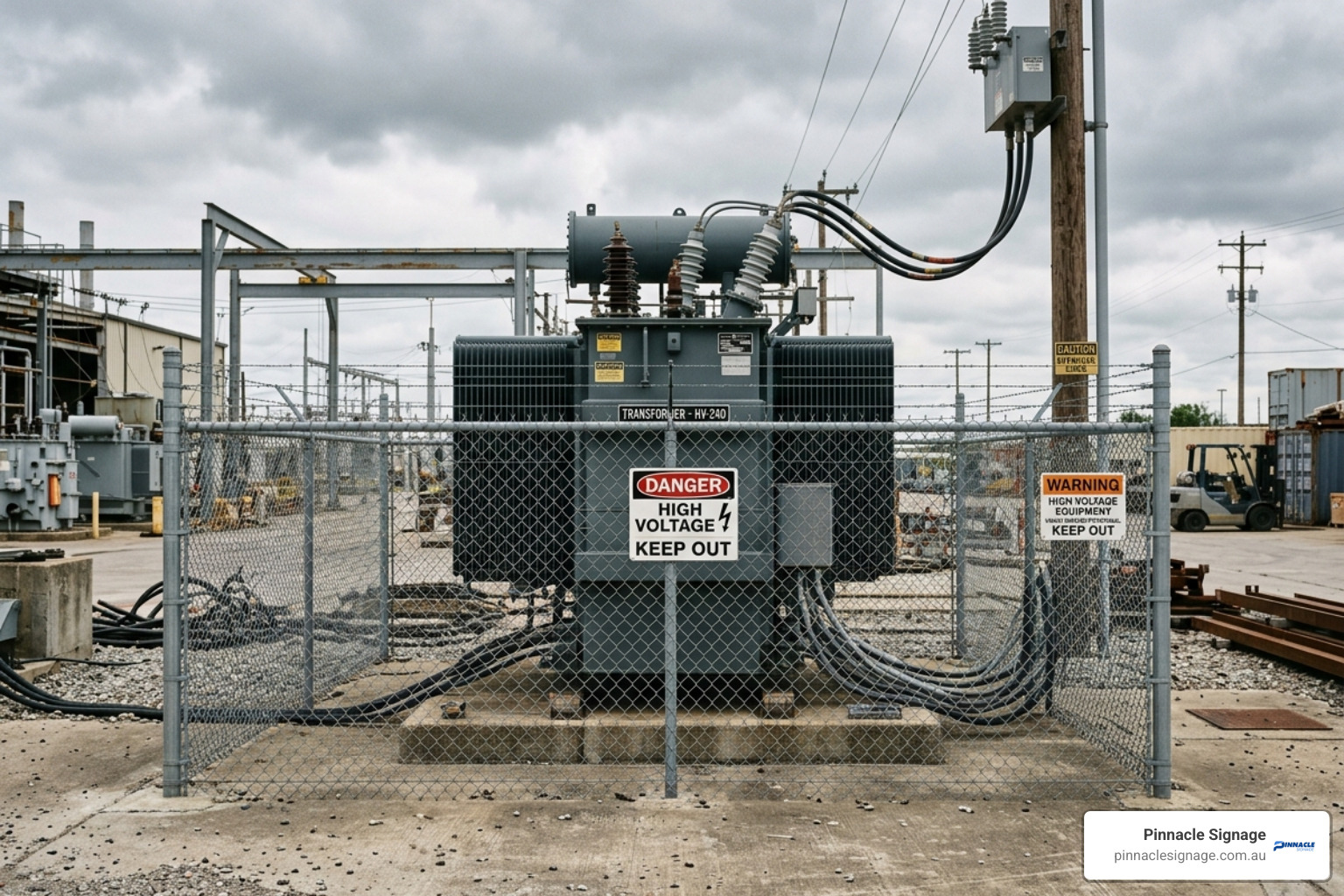
In electrical safety, "high voltage" isn't just a generic term for a powerful battery. It refers to specific electrical pressure thresholds that can overcome the natural resistance of human skin. In many Australian industrial contexts, high voltage is defined as any circuit operating at 1,000 volts AC or 1,500 volts DC.
The risks associated with these levels of energy are extreme. It isn't just about a simple "zap." High voltage hazards include:
- Electric Shock and Electrocution: At high voltages, electricity can jump (arc) through the air to reach a grounded object - like a person standing nearby.
- Arc Flash: This is a phenomenon where electric current leaves its intended path and travels through the air from one conductor to another, or to the ground. The result is a massive explosion of light and heat that can reach temperatures hotter than the surface of the sun.
- Severe Burns: Both the electrical current passing through the body and the thermal energy from an arc flash cause devastating internal and external burns.
- Secondary Injuries: The physical "kick" from a high-voltage shock can throw a worker off a ladder or into moving machinery.
Because these risks are often invisible, Stay Safe And Compliant With These High Voltage Safety Signs act as the first line of defence, providing a constant visual reminder of a hidden danger.
Decoding the High Voltage Warning Sign Meaning
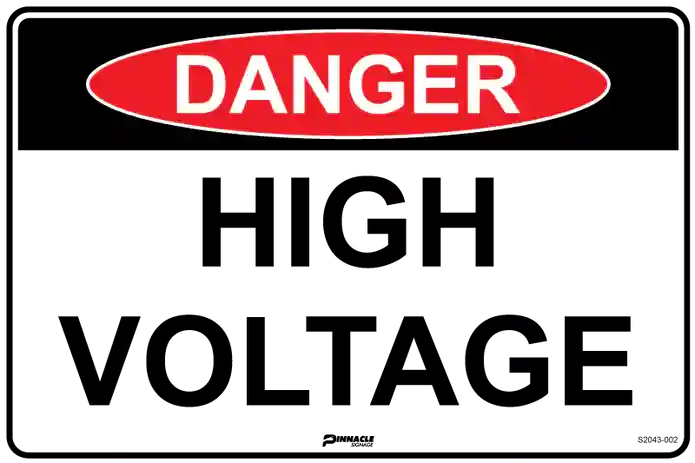
When you see a safety sign, your brain usually processes the image and colour before you even read the words. This is intentional. The high voltage warning sign meaning is built into a standardised visual language designed for instant recognition, even by those who might not speak English as their first language.
A standard high voltage sign typically consists of three main parts:
- The Signal Word: Usually "DANGER" in white letters on a red oval, or "CAUTION" in black on yellow.
- The Symbol: The universal lightning bolt, often encased in a yellow triangle.
- The Message: Concise text such as "High Voltage" or "Danger Keep Out."
For a deeper look at these specific design elements, check out our Danger High Voltage Sign Guide.
Why High Voltage Warning Sign Meaning Differs from Current
A common question we hear in Wagga Wagga is: "Why don't we have 'High Current' signs?" To understand this, we have to look at the physics. Voltage is electrical pressure, while current (amperage) is the flow of electricity.
Think of a static shock from a doorknob. That spark can be thousands of volts, but because the current is measured in tiny microamps, it’s harmless. Conversely, high voltage is what allows electricity to "punch" through insulation or air to reach you. Because high voltage is the force that creates the danger of contact, it is the primary metric used for warning signs.
Standard Symbols and Colours for Electrical Safety
The Electrical Hazard Logo is the most recognised safety symbol in the world. In Australia, we follow specific colour conventions to communicate the level of risk:
- Yellow and Black: Used for "Caution" signs. This indicates a potential hazard that could result in minor to moderate injury.
- Red, Black, and White: Reserved for "Danger" signs. This indicates an immediate hazard that will result in death or serious injury if not avoided.
- The Lightning Bolt: This signifies electrical energy. Sometimes it is paired with a skull and crossbones or a "prohibition" circle (a red circle with a slash) to indicate that entry is strictly forbidden.
Australian Standards and Compliance Requirements
In Australia, the design and use of safety signs are governed by AS 1319-1994 (Safety signs for the occupational environment). This standard ensures that whether you are on a farm in regional NSW or a construction site in Sydney, the signs look the same and mean the same thing.
Following these standards isn't just a "best practice" - it’s a legal necessity. SafeWork Australia and state-based regulators require PCBUs (Persons Conducting a Business or Undertaking) to manage risks, and clear signage is a fundamental part of that risk management. Failure to provide adequate signage can lead to massive legal liability if an accident occurs.
Statistically, electrical accidents account for over 300 workplace deaths annually in some regions, and a single serious injury can cost an employer upwards of $1.2 million in direct and indirect expenses. You can read more about why these standards are so critical in our article, The Shocking Truth Why Electrical Warning Signs Are Non Negotiable.
Understanding High Voltage Warning Sign Meaning for Site Safety
Signs do more than just help you pass an audit; they facilitate a culture of safety. For site managers, signs are a tool for:
- Risk Assessment: Identifying exactly where the hazards are during a walk-through.
- Contractor Safety: Ensuring that outside electricians or plumbers know exactly which panels are live.
- Visitor Awareness: Protecting people who don't have the "on-the-job" experience to recognise a transformer by sight.
By Understanding Hazardous Voltage Signs, everyone on-site can make better decisions about where they walk and what they touch.
Consequences of Non-Compliance
The price of a sign is negligible compared to the price of a fine. In many jurisdictions, citations for missing or faded signage can start at over $15,000 per violation. In Australia, WHS penalties can be even more significant, especially if a court finds "reckless conduct." Beyond the fines, you face:
- Increased insurance premiums.
- Lengthy legal battles.
- The psychological toll on the workforce following a preventable injury.
Our Detailed Guide To Danger High Voltage Sign Requirements explores these compliance factors in depth.
Strategic Placement and Material Selection
A sign is only effective if it is seen. At Pinnacle Signage, we recommend mounting high voltage signs at eye level (typically 1.5 to 1.8 metres). They should be placed at every entry point to a hazardous area, not just inside the room where the hazard is located. If you have an outdoor fenced enclosure, like a substation, signs should be visible from every possible approach.
For smaller components, An Essential Guide To High Voltage Labels can help you identify exactly which switchboards and panels need individual marking.
Material Selection for Industrial Environments
Because many high-voltage installations are outdoors or in harsh industrial settings, the material of the sign matters.
- Metal (Aluminium): Our most durable option. These are perfect for fences, gates, and outdoor walls. They offer excellent UV resistance and won't rust.
- Poly (Polypropylene): A great all-rounder that is flexible and impact-resistant.
- Self-Adhesive Vinyl: Ideal for smooth surfaces like metal control panels or glass doors.
Common Locations Requiring Signage
Where should you be looking to install these signs? Common locations include:
- Substations and Transformers: All gates and perimeter fencing.
- Switchrooms and Electrical Cupboards: On the external door.
- Solar Inverter Stations: Especially in large-scale commercial installs.
- Construction Sites: Near temporary power poles and distribution boards.
For construction specifically, our Pinnacle Metal Danger Sign is a popular choice for perimeter safety.

Frequently Asked Questions about Electrical Signs
What voltage is considered high voltage in Australia?
While definitions vary by industry, most Australian workplaces treat anything above 1,000V AC or 1,500V DC as high voltage. However, safety signs are required for any exposed live parts operating at 50V or more to prevent shock.
Where should high voltage signs be mounted?
They should be mounted at eye level on all entry points to the hazardous area. For outdoor equipment, ensure signs are placed on all four sides of the enclosure or fence to ensure visibility from any direction.
What is the difference between a danger and a caution sign?
A Danger sign (red/black/white) indicates a high-level risk where death or serious injury will occur if the warning is ignored. A Caution sign (yellow/black) indicates a potential hazard that could result in minor to moderate injury. High voltage usually warrants a "Danger" sign.
Stay Safe, Stay Compliant
Understanding the high voltage warning sign meaning is about more than just reading a piece of plastic; it's about respecting the invisible power that runs our modern world. Whether you are managing a mining site in the Outback or a workshop in East Wagga Wagga, the right signage is your most cost-effective safety officer.
At Pinnacle Signage, we take pride in manufacturing high-quality, durable signs right here in New South Wales. We understand the local conditions and the rigours of Australian industrial environments. Our products are designed to stay bright and legible for years, ensuring you remain compliant and your team stays safe.
Ready to secure your site? We offer:
- Fast Dispatch: Most orders are sent within 48 hours.
- Free Shipping: On orders over $100 Australia-wide (exceptions apply).
- Local Pickup: Visit our warehouse in East Wagga Wagga, NSW, Monday to Friday, 8 am to 5 pm.
Don't leave your electrical safety to chance. Contact Pinnacle Signage today to discuss your custom requirements or bulk orders. Stay safe, stay visible, and stay grounded!