

Where to Buy No Pedestrians Signs: Your Ultimate Guide to Safety Signage
Why Clear Pedestrian Signage is Non-Negotiable
A no pedestrians sign is a critical safety tool, creating a clear barrier between people and areas where foot traffic is prohibited. These prohibition signs are mandatory in high-risk environments like construction sites, loading docks, and vehicle-only zones across Australia to prevent serious accidents.
Essential 'No Pedestrians' Sign Information:
- Primary Purpose: Prohibit foot traffic in dangerous areas to prevent accidents.
- Key Locations: Construction sites, loading docks, warehouses, freeways, industrial plants.
- Legal Framework: Must comply with Australian Standard AS 1319 for workplace signage.
- Material Options: Aluminium, polypropylene, vinyl floor graphics, reflective materials.
- Typical Sizes: 450x600mm for standard applications, custom sizes available.
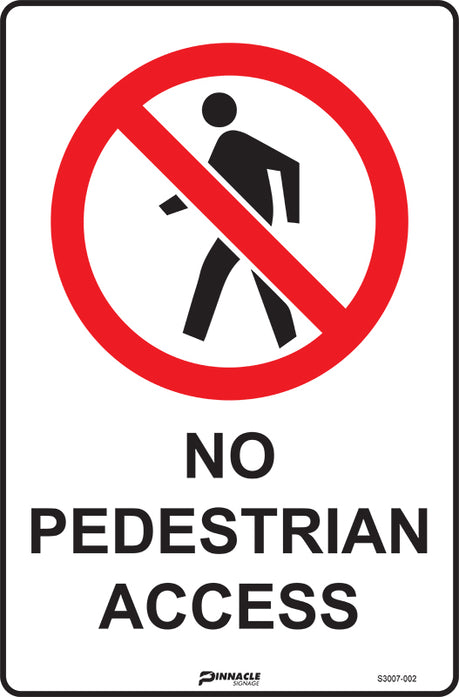
- Design Elements: Red prohibition circle with a pedestrian symbol and clear text.
The universally recognised red circle with a diagonal line instantly communicates prohibited activities, which is essential where pedestrians face risks from vehicles, machinery, or other hazards.
Understanding the difference between sign types is crucial. While warning signs alert people to potential dangers, prohibition signs like the 'no pedestrians' sign legally restrict access. Proper selection, placement, and maintenance of these signs are non-negotiable for effective workplace safety management.
Your Complete Guide to the 'No Pedestrians' Sign
What is a 'No Pedestrians' Sign and Where is it Used?
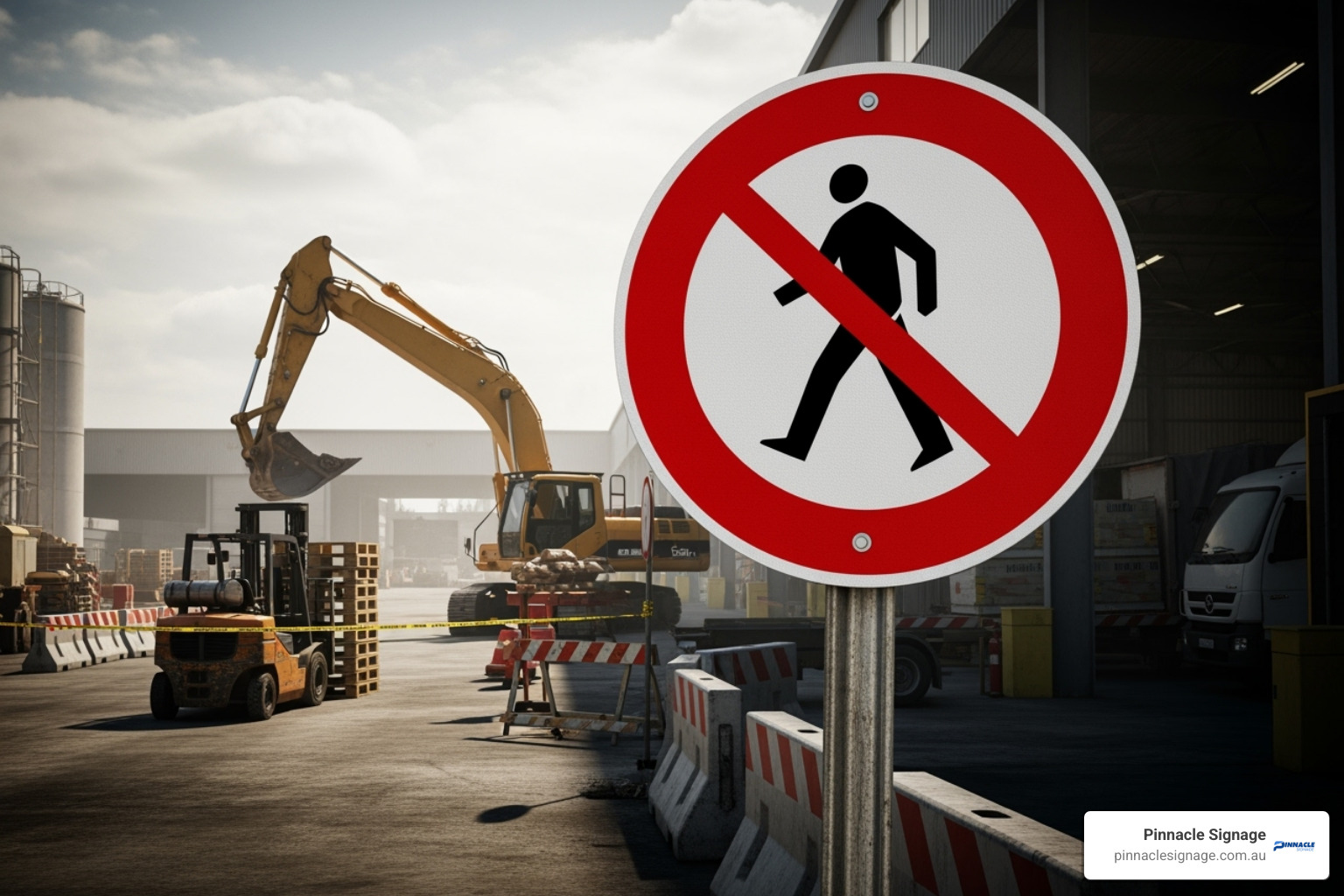
A no pedestrians sign has one critical purpose: to prohibit foot traffic in areas where people could face serious injury or death. These signs are not suggestions; they are essential safety barriers that create clear boundaries between safe walkways and dangerous zones with moving vehicles, heavy machinery, or other hazards.
Common locations for no pedestrians signs include:
- Construction sites: To keep people away from active work zones with heavy equipment and unstable ground.
- Warehouses and distribution centres: To separate foot traffic from forklift operations and busy loading areas.
- Loading docks: To prevent accidents involving constant truck movements and blind spots.
- Industrial plants: Where specialised machinery and hazardous processes make pedestrian access extremely dangerous.
- Freeways and major roads: Used by transport authorities to prevent people from entering high-speed traffic lanes.
- Restricted access areas: To clearly communicate that private property or secure facilities are off-limits.
The sign's simple, universal design ensures the message is immediately understood, making it an invaluable tool for any safety management system.
For more insights into how these signs fit into broader safety strategies, explore our guide on Prohibition Signs in the Workplace and Public Spaces.
Understanding the Different Types of 'No Pedestrians' Signs
Choosing the right no pedestrians sign depends on your environment and compliance needs.
Design Variations All designs follow Australian Standard AS 1319, featuring the recognisable red circle with a diagonal line over a black pictogram of a person. Some signs add text like "NO PEDESTRIAN ACCESS" for extra clarity. Pictogram-only designs are ideal for multilingual environments, while the combination of a symbol and text leaves no room for misinterpretation.
Sign Formats
- Rigid Boards: Made from aluminium or polypropylene, these are perfect for permanent mounting on walls, fences, or posts.
- Floor Graphics: Ideal for warehouses and factory floors, these durable, slip-resistant graphics provide ground-level messaging.
- A-Frame Signs: These portable, double-sided signs are great for temporary hazards or changing work zones.
- Stickers and Labels: Cost-effective vinyl stickers work well on doors, machinery, or smaller restricted areas.
- Bollard Signs: These wrap-around signs maximise visibility in car parks and entryways without taking up extra space.
Material Selection
- Aluminium: The premium choice for outdoor and industrial use, offering exceptional durability and corrosion resistance against harsh Australian weather.
- Polypropylene: A lightweight yet strong and cost-effective alternative for indoor and some outdoor applications.
- Foamex Boards: An economical option for temporary or indoor use.
- Vinyl: Used for stickers, labels, and floor graphics, our industrial-grade vinyl is water, chemical, and UV resistant. Our Superior Mark® Floor Signs are also slip-resistant.
- Reflective Materials: Essential for low-light conditions, we offer various grades of 3M reflective sheeting to ensure your sign is visible day and night.
Our use of super-tough coatings and UV-resistant inks ensures your signs remain clear and vibrant for years. We also offer customisable options to tailor the size, material, and design to your exact needs.
For deeper insights into signage effectiveness, check out our article on Workplace Safety Signs That Speak Louder Than Words.
Australian Standards and Legal Requirements for a no pedestrians sign
Complying with the legal standards for no pedestrians signs is fundamental to your duty of care in protecting people from harm.
The Australian Standard AS 1319:1994 – Safety signs for the occupational environment is the primary guide for safety signage. It ensures signs are consistent and universally understood. The standard focuses on practical outcomes: signs must use the recognisable red circle with a diagonal slash over a black pictogram, be sized correctly for the viewing distance, be placed in a clear line of sight, and be made from durable materials that last. Adhering to AS 1319 is a straightforward way to ensure your signs are effective.
It's also important to understand the legal distinction between sign types. Prohibition signs (like 'no pedestrians') forbid an action. Warning signs (yellow triangle) alert to potential, non-life-threatening hazards, while danger signs (red oval) indicate life-threatening conditions.
Failure to use compliant signage can lead to legal penalties and increased liability in case of an accident. More importantly, it can fail to prevent injuries. Following AS 1319 and Work Health and Safety (WHS) regulations is an investment in both compliance and human wellbeing.
For broader pedestrian safety context, refer to the NSW Government's guidance on pedestrian crossings. Our comprehensive guide to Safety Signs Australia: Your Guide to Clear and Compliant Signs provides additional insights into national requirements.
Choosing the Right Sign for Your Needs
Selecting the right no pedestrians sign involves matching the sign to your specific needs. Consider these key factors:
- Environmental Conditions: Will the sign be indoors or outdoors? Outdoor signs need weather-resistant materials like aluminium, while indoor signs can use polypropylene or Foamex.
- Surface and Mounting: Are you mounting on a wall, fence, or floor? Choose rigid boards for walls, specialised slip-resistant graphics for floors, or flexible A-frames for temporary placements.
- Traffic Levels: High-traffic areas with vehicles or forklifts require industrial-strength solutions, such as heavy-duty vinyl floor signs or robust aluminium boards. Ensure floor signs are certified as slip-resistant.
- Lighting Conditions: For low-light or night-time visibility, choose signs with reflective materials. We offer various grades of 3M reflective sheeting for different viewing distances.
- Installation Duration: For temporary needs like construction zones, portable A-frames or polypropylene signs are ideal. For permanent installations, invest in durable aluminium signs.
- Customisation Needs: Do you require specific sizing, branding, or text? We specialise in custom designs that meet unique operational requirements while maintaining compliance.
A thoughtful approach ensures your sign is effective, compliant, and contributes to a safer workplace.
For additional guidance on restricted area signage, explore our insights on Restricted Means Restricted: Top Picks for Area Safety Signs.
Common Mistakes to Avoid When Using a no pedestrians sign
Effective signage is more than just putting up a sign. Avoid these common pitfalls to ensure your no pedestrians signs actually improve safety:
- Poor Placement: A sign is useless if it's hidden, obscured, or placed too far from the hazard. It must be clearly visible from all approach angles at the point of decision.
- Incorrect Sizing: A sign that is too small for the viewing distance won't be read in time. Follow AS 1319 guidelines for sizing based on viewing distance.
- Wrong Material Choice: Using an indoor-grade sign outdoors will lead to rapid fading and deterioration. Match the material to the environment.
- Ignoring Damaged Signs: Faded, cracked, or dirty signs suggest a poor safety culture and can be unreadable. Inspect signs regularly and replace them when needed.
- Lack of Supporting Measures: A sign is part of a larger safety system. It should be supported by physical barriers, designated walkways, and clear traffic management plans where necessary.
- Using Non-Slip-Resistant Floor Signs: Floor graphics in pedestrian areas must have a certified slip-resistant rating to avoid creating a new hazard.
- Forgetting Maintenance: Signs aren't a "set and forget" solution. Plan for regular inspections and cleaning to maintain their effectiveness over time.
By avoiding these mistakes, you ensure your signs are a reliable part of your safety strategy, not just a compliance checkbox.
For broader site safety insights, explore our The Ultimate Guide to Site Safety Signs.
Find the Right Signage Solution for Your Business
Investing in the correct no pedestrians signs is a direct investment in the safety of your people and the efficiency of your operations. Quality signage that clearly communicates restrictions reduces accidents, lowers risks, and ensures long-term compliance.
At Pinnacle Signage, we manufacture durable signage solutions designed for tough Australian conditions. We understand the challenges faced by businesses on construction sites, in warehouses, and at manufacturing facilities across the country. Our commitment is to produce signs that not only meet but exceed Australian standards, using premium materials and UV-resistant inks to ensure they last.
We offer a comprehensive range of standard signs and fully customisable solutions to fit your specific needs. Whether you need a custom size, unique text, or company branding, our team can create a sign that meets your exact requirements. With fast turnaround times and reliable Australia-wide delivery, getting the right signs for your business is simple.
Don't compromise on safety. Quality no pedestrians signs are an investment in peace of mind for everyone at your workplace.
Ready to improve your workplace safety? Explore our comprehensive range of Prohibition Signage to find standard options, or if you need something specific to your unique situation, contact us for custom signs. Our experienced team is ready to help you create a safer, more compliant environment.
Shipping & Pick Up
For most deliveries within Australia, we use courier services such as FEDEX; please note that couriers cannot deliver to PO Boxes, so provide a valid daytime delivery address. To ensure safe delivery, a signature is required upon receipt. You must be available to accept courier deliveries; re-delivery charges will apply if you are not present. Include a daytime phone number with your shipping details if we need to contact you about your delivery. For items weighing over 50kg, a tailgate delivery is usually required for residential addresses. This service is included in our standard shipping. Alternatively, you can choose to pick up the item from a nearby depot.
Free Shipping
Free shipping is available for orders over $100 AU Wide. Free shipping applies to most items on the site. However, some bulky items additional shipping costs will apply for deliveries to WA, North QLD, NT, TAS, and island areas. Our staff will reach out to you after your order if these charges apply.
Shipping & Production Time
Most items are ready for dispatch or pickup within 2-4 business days of receiving your order and payment confirmation. Delivery times are estimated as follows:
- 1 - 2 days: Sydney, ACT, Melbourne, Brisbane, Gold Coast
- 2 - 4 days: Rest of NSW, Rest of VIC
- 3 - 6 days: SA, North QLD, Perth
- 5 - 9 days: TAS, NT, WA
Pickup
Pickup is available at our warehouse, located at Unit 4/28 Nagle Street, East Wagga Wagga NSW. The warehouse is open from 8am to 5pm Monday through Friday. We are closed on weekends and public holidays.