

Shocking Designs: A Guide to Electrical Hazard Logos
The Anatomy of the Standard Electrical Hazard Logo

The electrical hazard logo is one of the most universally recognised safety symbols in the world: a bold black lightning bolt centred inside a yellow triangle with a black border. Here is a quick reference for what you need to know:
| Element | Detail |
|---|---|
| Shape | Equilateral yellow triangle |
| Symbol | Black lightning bolt (downward pointing) |
| Border | Solid black |
| Standard | AS 1319 |
| Meaning | Presence of electrical hazard - risk of shock, electrocution, or arc flash |
| Signal word pairing | DANGER (high voltage), WARNING (moderate risk), CAUTION (minor risk) |
You will find this logo on everything from electrical panels and switchboards to solar installations, machinery, and construction sites across Australia. It is not just a design choice - it is a regulated symbol with specific rules around colour, size, placement, and the signal word that accompanies it. Getting it right is a compliance issue, not just a visual one.
Understanding how to identify, specify, and implement the right electrical hazard logo is essential for maintaining a safe and compliant facility. In this resource, we explore the visual standards and practical applications required for effective hazard communication.
Simple electrical hazard logo glossary:
When we talk about the standard electrical hazard logo, we are referring to a very specific design defined under Australian Standard AS 1319. This is the "lightning bolt in a triangle" that most people can identify, even if they do not speak the local language. In safety signage, this is called a pictogram, and its job is to transcend language barriers to provide an immediate warning.
The visual psychology behind this logo is fascinating. The use of Safety Yellow (specifically Pantone 109 U) is not accidental. Yellow is the first colour the human eye processes, especially in peripheral vision. When paired with a solid black border and a sharp, downward-pointing lightning bolt, it triggers what we call a "reflexive pause." In under a second, your brain registers "caution" before you even read a single word of text.
To maintain this effectiveness, the logo must adhere to strict formatting. There should be a 5 mm safety margin around the triangle to ensure it stands out from the mounting surface. Swapping these colours or using a "creative" version of the bolt is more than just a compliance error; it dilutes the alert and can mask a lethal hazard. For more details on the specific meanings behind these symbols, you can read our guide on what the danger electric shock risk sign actually means.
Regulatory Frameworks and Australian Standards
In Australia, the "rules of the road" for safety signs are primarily governed by AS 1319. This standard outlines how we categorise hazards and what visual elements must be used to communicate them. SafeWork Australia provides the overarching safety framework, but AS 1319 is where the rubber meets the road for manufacturers like us at Pinnacle Signage.
Under these standards, electrical signs are generally split into two main categories:
- Danger Signs: Used for life-threatening hazards. These feature a red top panel with the word "DANGER" in white letters, often set inside a black enclosure. If someone could be killed by touching a component, it needs a Danger sign.
- Warning or Caution Signs: Used for hazards that are likely to cause injury but are not typically life-threatening. These use the yellow background and the black electrical hazard logo triangle.
The distinction is critical. Using a "Caution" sign on a high-voltage enclosure that carries 33,000 volts is a major compliance failure. Conversely, overusing "Danger" signs for minor static risks can lead to "sign blindness," where workers start ignoring the warnings altogether. For a deeper look at these requirements, check out our detailed guide to danger high voltage sign requirements. You can also explore interactive safety hazard diagrams via SafeWork NSW to see how these symbols fit into a broader site safety plan.
Implementing an Effective Electrical Hazard Logo System
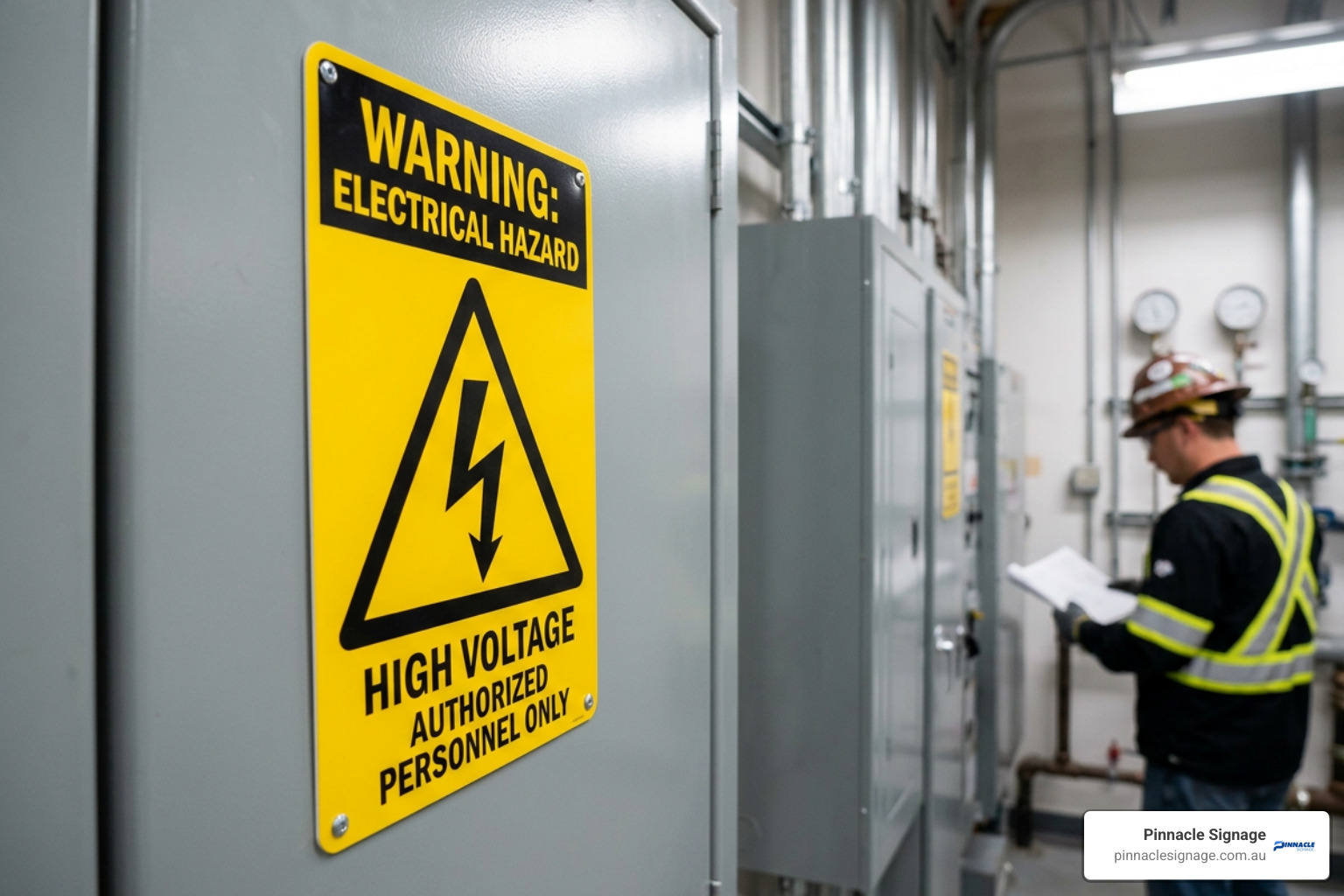
Implementing a signage system is about more than just sticking labels on doors. It requires an audit of the specific risks present on your site. Are you dealing with standard 240V mains, or are there high-voltage transformers? Is there a risk of an arc flash? Are there multiple power sources that need to be isolated before maintenance?
We often see modern facilities requiring specialised signage for:
- Solar Combiner Boxes: These often have DC voltages that remain live even when the main switch is off.
- Robotics Cells: Automated lines often have high-current power feeds and stored energy.
- Overhead Hazards: Marking areas where cranes or tall machinery might come into contact with power lines.
For a comprehensive look at the types of signs available, you can read about staying safe with high voltage safety signs.
Selecting the Correct Electrical Hazard Logo for High Voltage
When the stakes are at their highest, typically defined as 600V and above, the electrical hazard logo must be paired with a "DANGER" signal word. These signs are designed for maximum impact, using the red oval on a black background.
In industrial settings, high voltage is not just a shock risk; it is an electrocution and fire risk. The signage must be large enough to be seen from a safe distance, allowing a worker to recognise the hazard before they enter the "strike zone." If you are looking for specific high-voltage markers, you can search our range of electric shock signage.
Standardising the Electrical Hazard Logo Across Large Facilities
Consistency is the best friend of safety. If every electrical cabinet in your factory looks different, workers have to spend extra time processing the information. By standardising your electrical hazard logo usage, you create a visual language that your team understands instinctively.
A best practice for layout is the "pictogram left, text right" format. Because we read from left to right in Australia, the eye hits the yellow triangle first, getting the "danger" message, and then moves to the text to understand the specific instruction (e.g., "High Voltage - Authorised Personnel Only"). We recommend using Warning signs for moderate risks and Caution signs for minor risks to maintain a clear hierarchy. For more tips on this, see our article on the best electrical hazard warning signs.
Environmental Considerations for Signage Longevity
An illegible sign is as good as no sign at all. In the harsh Australian climate, UV stability is a major concern. If you place a standard paper label on an outdoor solar farm, it will be bleached white within six months.
When specifying your signs, consider the environment:
- Outdoor Use: Look for outdoor-rated polyester or aluminium with UV-stable inks. Materials like 3M SmartShield can protect against fading and even graffiti.
- High-Heat Areas: In engine rooms or near heavy machinery, labels must withstand temperatures up to 80 or 90 degrees Celsius without peeling.
- Chemical Exposure: In laboratories or processing plants, the electrical hazard logo needs to be resistant to wash-downs and chemical splashes.
- Curved Surfaces: For labelling conduits or cylinders, self-adhesive vinyl is the best choice as it conforms to the shape of the surface.
Our essential guide to high voltage labels covers these material choices in more detail.
Maintenance Protocols for Safety Compliance
Safety is a process, not a one-time event. We recommend a monthly inspection of all safety signage. During these walkthroughs, you should check for:
- Legibility: Can the text and the electrical hazard logo be clearly seen?
- Adhesion: Are the corners of the stickers peeling?
- Obstructions: Has someone parked a pallet or a piece of equipment in front of the sign?
- Relevance: Does the sign still accurately reflect the hazard? (e.g., if equipment has been upgraded).
A good rule of thumb for sizing is that the letter height should be at least 1/25th of the viewing distance. If a worker needs to see a sign from 10 metres away, the letters should be at least 400 mm high. For more on maintaining a safe site, read our resource on maintaining electrical safety signs.
Frequently Asked Questions about Electrical Hazard Icons
What is the difference between a lightning bolt in a triangle and a Danger sign?
The lightning bolt in a yellow triangle is a general warning pictogram used to identify the presence of electricity. It tells you "there is power here." A Danger sign is a specific classification under AS 1319 that indicates a hazard is likely to be life-threatening. While they are often used together, the yellow triangle is about awareness, while the red Danger panel is about extreme risk.
How often should I replace my electrical safety labels?
You should replace them as soon as they show signs of degradation. In an indoor, climate-controlled warehouse, a high-quality vinyl label can last 10 to 12 years. However, in an outdoor Australian environment, 5 to 7 years is a more realistic expectation. If the Safety Yellow has turned to a pale lemon colour, it is time for a replacement.
Can I use the same logo for high and low voltage?
The electrical hazard logo (the lightning bolt) is universal, but the sign it sits on must change. For low voltage (like a standard 240V outlet), a "WARNING" or "CAUTION" header is usually appropriate. For high voltage (600V+), you must use the "DANGER" format to comply with Australian safety standards.
Conclusion and Compliance Support
At Pinnacle Signage, we take electrical safety seriously. We manufacture high-quality, durable signage products right here in Australia, ensuring they meet the rigorous demands of local industries. Whether you need a single custom label or a bulk order for a national rollout, we offer customisable options for text, logos, and dimensions to suit your specific needs.
Our products are designed for fast turnaround, with most orders dispatched within 48 hours. We also offer free shipping on orders over $100 (excluding bulky items) across Australia. If you are in the Wagga Wagga area, you can even pick up your order directly from our warehouse at 12-14 Standard Street, East Wagga Wagga NSW.
For those who prefer the convenience of local retail, many of our standard safety signs are available through our partnership with Bunnings. You can find our range in-store or online at the Pinnacle Signage brand page at Bunnings.
Ready to upgrade your site safety?
- Browse our full range of Danger Signage
- Explore Caution and Warning Signs
- Order custom electrical hazard labels
If you have questions about compliance or need a quote for a large project, contact our expert signage team today.