

All About Evacuation Centre Signs
What Are Evacuation Centre Signs and Why Do They Matter?

Evacuation centre signs are a critical part of any emergency preparedness system, guiding people safely from hazard zones to designated shelter and assembly areas during disasters, fires, floods, and other emergencies.
If you need a quick overview of what these signs do and where they're used, here's the short version:
- Evacuation centre signs mark the location of, or route to, an official evacuation or shelter point
- They include directional arrow signs, muster point markers, assembly area signs, shelter signs, and hazard zone indicators
- They are used in community buildings, workplaces, schools, hospitals, coastal areas, and emergency management facilities
- In Australia, they must comply with relevant Australian Standards (such as AS 1319) and use white symbols or text on a green background for emergency information
- They are available in a range of materials, including reflective aluminium, photoluminescent film, and weather-resistant polypropylene, for indoor and outdoor use
- Custom options are available for community buildings, local councils, and emergency management facilities across NSW and nationwide
When an emergency unfolds, people move fast and panic easily. Clear, well-placed signage removes guesswork and can be the difference between an orderly evacuation and dangerous confusion. Whether you manage a community hall in regional NSW, a construction site, or a large commercial facility, having the right signs in the right places is not optional - it is a fundamental part of your emergency management plan.
I'm Doug Lindqvist, General Manager of Pinnacle Signage, an Australian-owned manufacturer based in East Wagga Wagga, NSW, with hands-on experience supplying evacuation centre signs and safety signage to businesses, councils, and emergency management facilities across the country. In this guide, I'll walk you through everything you need to know - from sign types and materials to compliance, placement, and custom solutions for your specific facility.
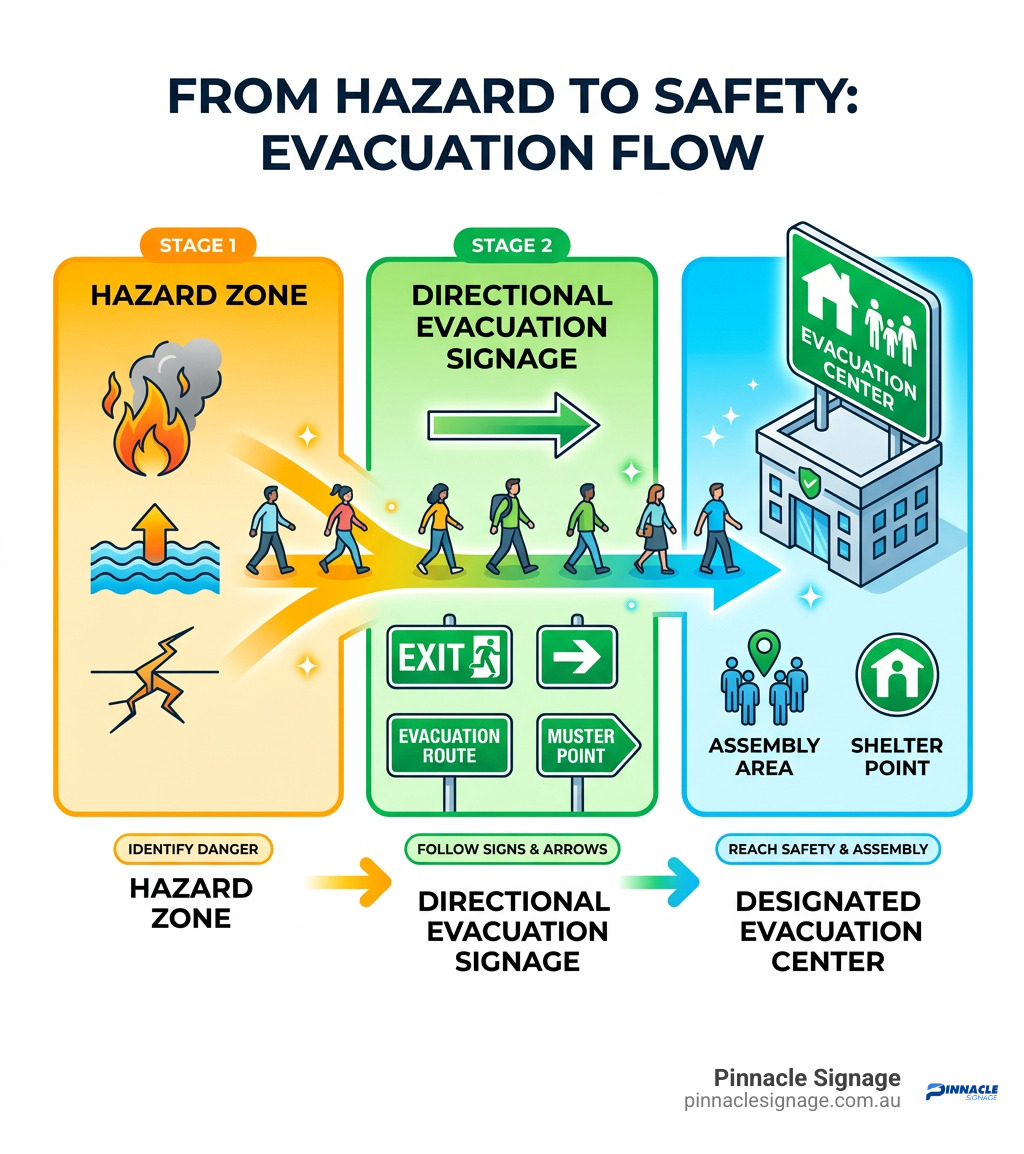
Understanding the Role of Evacuation Centre Signs
In the middle of a crisis, human instinct is to find safety as quickly as possible. However, without clear direction, that instinct can lead to bottlenecks or people heading toward danger instead of away from it. This is where evacuation centre signs serve as silent but vital navigators. They don't just tell you where a building is; they provide a structured path to safety.
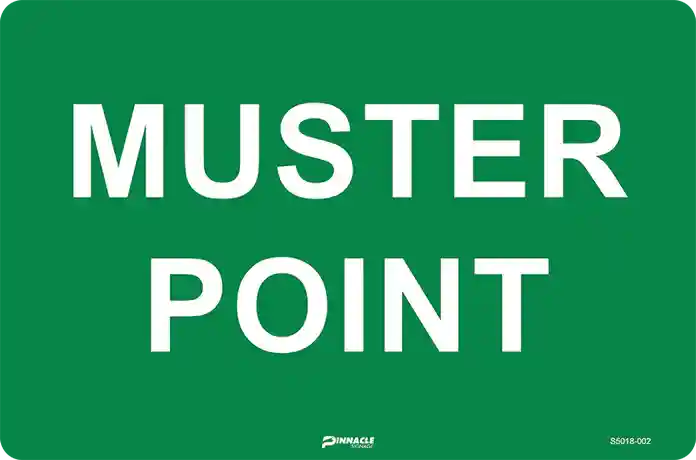
Emergency navigation relies on a hierarchy of signs. It starts with directional arrows that guide movement through corridors or streets and ends at a clearly marked assembly area or shelter. Terms like "muster points" and "assembly points" are often used interchangeably, but they both serve the same purpose: a predetermined safe location where people can be accounted for. For a deeper dive into these specific markers, you can check out our resources on everything you need to know about rally point signs and understanding assembly area signs.
Essential Functions in Crisis Management
The primary goal of any evacuation system is life safety. By providing rapid egress, these signs reduce the time it takes for a building or area to be cleared. Coordination becomes much easier for emergency services when they know exactly where evacuees are gathering. Effective coordination requires a comprehensive guide to evacuation centre signage that accounts for both the internal movement within a facility and the external journey to a regional relief hub.
Types of Evacuation Signage
Not all evacuation centre signs look the same because they perform different roles:
- Exit Signs: The first step in any evacuation is marking the doors that lead out of a danger zone.
- Directional Arrows: These bridge the gap between the exit and the final destination, ensuring people don't get lost in large complexes or unfamiliar streets.
- Shelter Markers: Used for specific threats like severe weather or hazardous material leaks, where staying "in place" in a fortified area is safer than leaving.
- Refuge Areas: Designated spots, often in multi-level buildings, where those with limited mobility can wait for assistance.
- Muster Point Signs: The final destination for a local evacuation. You can read more about how these keep teams safe in our article on muster points explained.
Materials and Visibility for Evacuation Centre Signs
In an emergency, conditions are rarely ideal. There might be smoke, a power outage, or torrential rain. If your evacuation centre signs fade in the sun or become invisible in the dark, they fail when they are needed most. We prioritise using weather-resistant materials that stand up to the harsh Australian climate, especially for signs placed in exposed regional areas of NSW.
Durability is non-negotiable. Whether it is the scorching heat of an inland summer or the salt spray of a coastal town, the material must remain legible. We often recommend aluminium for its rust-free properties and polypropylene for its impact resistance. The importance of muster point signage cannot be overstated, as these signs often live outdoors for years before they are ever "used" in a real event.
Materials for Durable Evacuation Centre Signs
- Reflective Sheeting: Essential for signs that need to be seen by vehicle headlights or flashlights.
- Rust-Free Aluminium: The gold standard for outdoor longevity. It doesn't corrode and handles UV exposure exceptionally well.
- High-Impact Plastic (Polypropylene): A cost-effective, durable option for both indoor and outdoor use.
- Self-Adhesive Vinyl: Great for applying directly to smooth surfaces or as "stickers" for temporary management.
For a practical look at safety sign material performance, focus on key factors like service life, weather resistance, impact strength, and suitability for the installation environment.
Visibility Features for Emergency Conditions
Visibility is about more than just bright colours. Photoluminescent film, often called "glow-in-the-dark," is a lifesaver during blackouts. These materials absorb ambient light and emit a steady glow when the power fails. For outdoor road-facing signs, Class 1 reflective materials ensure that even in heavy rain, the sign "pops" when hit by light. Understanding these luminous evacuation route signs is key to designing a fail-safe system.
Compliance Standards and Placement Strategies
In Australia, safety signage is governed by specific standards to ensure consistency. If every building used different colours for its exit signs, visitors would be confused during a crisis. AS 1319 is the primary standard for safety signs in the occupational environment. It dictates that emergency information signs—including evacuation centre signs—should feature white symbols or text on a green rectangular background.
Placement is just as important as the sign itself. A sign hidden behind a tree or mounted too high to read is useless. Guidelines from NSW Health regarding evacuation centres emphasise that posters and signs must be clearly visible to all occupants, including those with disabilities. For more on the basics, read our essential guide to emergency signs.
Strategic Placement of Evacuation Centre Signs
- Critical Intersections: Place signs at every point where a person has to make a choice about which way to turn.
- Eye-Level Mounting: Generally, signs should be mounted at a height where they are easily seen without straining, typically between 1.5m and 2m from the ground, depending on the setting.
- Unobstructed Paths: Ensure no temporary storage, equipment, or foliage blocks the line of sight to the sign.
- Confirmation Signs: On long paths, place "straight ahead" markers so people know they are still on the right track. Our emergency muster point guidance covers these layout strategies in detail.
Australian Standards for Safety Signage
To remain compliant with Australian workplace requirements, evacuation centre signs must follow specific design cues:
- Colour Palette: Green background with white pictograms or text.
- Pictograms: Standardised symbols (like the "running man") that are universally understood, regardless of language.
- Text Height: Must be sized appropriately for the viewing distance. A sign meant to be read from 20 metres away needs much larger lettering than one in a small office.
- Bilingual Options: In diverse workplaces or community centres, adding a second language can significantly improve safety. Check out our guide on workplace safety symbols for more examples.
Specialised Signage for Regional Hazards
Australia faces unique environmental challenges, and evacuation centre signs must often be tailored to the specific risks of a region. In NSW, this frequently means preparing for bushfires or coastal flooding.
Regional hazard signs are often part of a broader emergency management signing strategy. These signs are designed to be deployed quickly or to remain as permanent fixtures in high-risk zones.
Natural Disaster Response Markers
- Wildfire Routes: Often include specific directional turns (Left/Right) to guide traffic away from fire fronts toward regional hubs.
- Tsunami Hazard Zones: Common in coastal NSW, these signs mark entry and exit from danger zones and point toward high ground.
- Flood Evacuation: Markers that indicate depth or safe routes that remain traversable during heavy rain.
- Storm Shelters: Specifically reinforced areas marked for protection against high winds.
Custom Solutions for Specific Facilities
Community buildings and emergency management facilities often have unique layouts that standard signs don't quite cover. Whether you need a map of a complex or specific instructions for a local registration centre, custom signage options allow you to add logos, specific facility names, and tailored directional info. This is particularly useful for local councils in NSW who need to brand their evacuation centres so residents recognise them as official safe havens.
Installation and Maintenance Best Practices
A sign is only as good as its mounting. In high-wind areas or public spaces, you need hardware that ensures the sign stays put. We offer a variety of sign fixings to suit different surfaces, from fences to dedicated posts.
Mounting Hardware and Accessories
- U-channel and square posts: A common choice for outdoor roadside, entry, and car park signage.
- Post drivers: Used to install posts firmly and safely in soil or compacted ground.
- Nylon ties and bolting sets: Helpful for attaching signs to fences, rails, or mounting brackets.
- Tamper-resistant brackets: A smart option for public spaces where theft or vandalism is a concern.
- Map holders: Clear, durable frames that protect evacuation diagrams and keep them easy to read.
Routine Inspection and Upkeep
Maintenance is a core part of emergency readiness. If a sign fades, gets dirty, or becomes damaged, people may miss critical directions when time matters most.
- Cleaning: Wash signs with mild soap and water. Avoid harsh cleaners that can scratch surfaces or reduce reflectivity.
- Visibility checks: Inspect signs regularly in both daylight and low light to make sure text, symbols, and arrows stay easy to read.
- Damage replacement: Replace signs as soon as they are bent, cracked, faded, or peeling. The goal is simple: your signage should be clear before an emergency happens, not fixed after one.
Frequently Asked Questions about Evacuation Signage
How much do evacuation centre signs typically cost?
The cost of evacuation centre signs varies based on the material (aluminium vs. polypropylene), the size, and whether you require specialised reflective coatings. For general pricing, you can browse our online store. For community facilities or emergency management groups looking to place bulk orders, we offer competitive margins and quantity discounts. Please visit our website for the most up-to-date pricing information.
Where can I order an evacuation centre sign for emergency management facilities?
Pinnacle Signage is a leading manufacturer of these signs, and you can order directly through our website for fast dispatch (usually within 48 hours). Additionally, many of our standard safety products are available at Bunnings Warehouse locations across Australia. You can find our brand page at Bunnings for convenient local pickup or delivery.
Can I get custom evacuation centre signage for community buildings in NSW?
Absolutely. We specialise in customisable signage. Whether you need to add the name of a specific community hall, a local council logo, or unique directional text, we can tailor our designs to your needs. Simply visit our custom search page or contact our team in East Wagga Wagga to discuss your project.
Follow the Signs, Find Safety
Effective evacuation centre signs are more than just pieces of metal or plastic; they are essential tools for saving lives. From the initial exit point to the final muster area, every sign plays a role in reducing panic and ensuring a safe outcome during an emergency.
At Pinnacle Signage, we take pride in being a premier Australian manufacturer. By producing our signs locally in East Wagga Wagga, NSW, we ensure that every product meets the high standards required for our unique environment. Whether you are a site manager looking for a single muster point sign or a local council coordinator outfitting multiple community buildings, we have the expertise and the inventory to help.
Ready to secure your facility? You can search our emergency signage range directly on our site, or view our full safety collection at Bunnings. For custom orders or bulk enquiries, give us a call on 1300 40 45 50 or visit our warehouse for a chat. Stay safe, stay prepared.
Contact Pinnacle Signage:
- Location: East Wagga Wagga, NSW
- Phone: 1300 40 45 50
- Dispatch: Within 48 hours
- Shipping: Free AU Wide over $100 (exceptions apply)