

Muster Up: Understanding Evacuation Assembly Points
Defining the Evacuation Assembly Point and Its Role in Safety
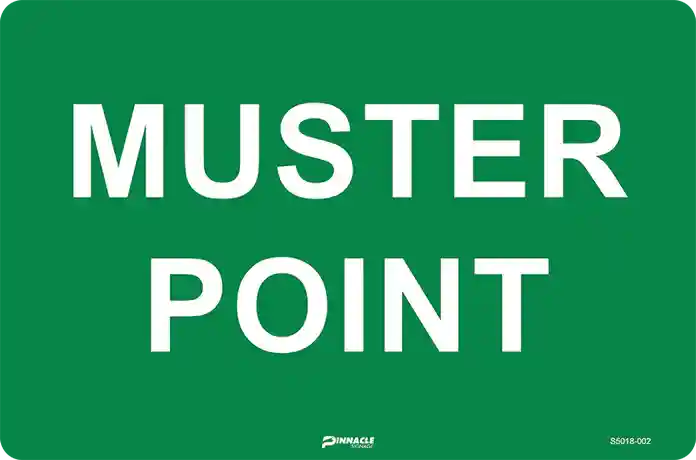
An evacuation assembly point is a pre-designated location where building occupants gather after evacuating during an emergency, such as a fire, gas leak, or chemical spill. It sits at the heart of any effective emergency action plan, giving people a clear, safe place to go and giving wardens a fixed location to confirm everyone is accounted for.
In short:
- An evacuation assembly point is a specific, marked outdoor location where all occupants must gather after leaving a building
- It must be far enough from the building to keep people safe from heat, smoke, falling debris, and emergency vehicle access routes
- It enables a headcount to identify anyone who may still be inside
- It is typically marked with a green and white sign compliant with Australian Standards
- It differs from an "area of refuge," which is an internal safe location used when exiting the building is not possible
A disorganised evacuation doesn't just cause confusion, it can result in serious injury or worse. When people do not know where to go, emergency responders cannot get a clear picture of who is missing. That is why a clearly marked, well-communicated assembly point is not optional. It is a fundamental part of keeping people safe.
I'm Doug Lindqvist, General Manager of Pinnacle Signage, an Australian-owned manufacturer based in East Wagga Wagga, NSW, and my background in the safety and industrial supply space has shown me how often evacuation assembly point signage is overlooked or poorly executed on Australian worksites. In this guide, I'll walk you through everything you need to know - from choosing the right location to selecting compliant, durable signage that holds up in the real world.
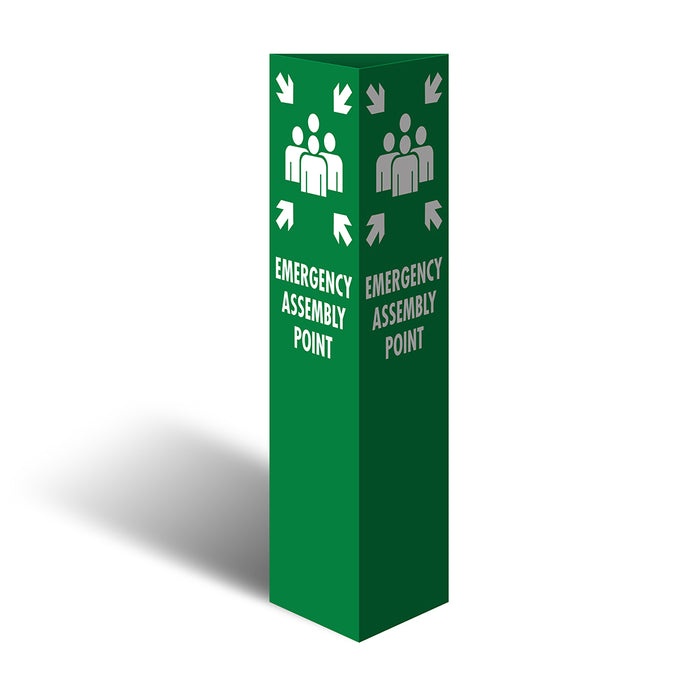
Evacuation assembly point definitions:
In workplace safety, names like "muster point," "assembly area," or "rally point" are often used interchangeably, but they all serve the same vital purpose: life safety. An evacuation assembly point is the finish line of your emergency egress route. It is the destination that ensures your team is out of harm's way.
At Pinnacle Signage, we see these points as the anchor of an Emergency Action Plan. Without a designated spot, people tend to wander, congregate too close to the building, or even try to leave the site in their vehicles, which can block fire trucks and ambulances. By keeping your team safe in emergencies, a proper assembly point allows for a structured roll call, ensuring that if someone is missing, emergency services are notified immediately rather than searching a building for someone who actually went to get coffee.
Understanding assembly area signs made easy starts with recognising that these locations are not just "spots in the car park." They are strategic zones designed to provide a safe environment for potentially traumatised or injured individuals to wait for the "all clear."
Strategic Placement of the Evacuation Assembly Point
Choosing where to put your evacuation assembly point is a science, not a guess. In Australia, we look at several factors to ensure the location is actually safe.
- The 50-Foot and 500-Foot Rule: Generally, a rally point should be at least 15 to 20 metres (roughly 50 feet) away from the building to avoid falling glass or debris. For high-risk facilities or confirmed threats like gas leaks, a primary assembly area might need to be much further away, sometimes up to 150 metres (500 feet) or more.
- Up-Wind Locations: Always consider the prevailing wind direction. You want your team to be upwind of the building so that smoke, fumes, or chemical releases are blown away from them, not toward them.
- Secondary Hazards: Ensure the path to the assembly point doesn't require people to cross busy roads or walk through hazardous industrial zones. You can find more guidance on choosing safe locations through NSW Government resources.
- Emergency Access: Never block the driveway. The assembly point must be clear of the routes used by Fire and Rescue NSW or other emergency responders.
Differentiating Between Muster Points and Areas of Refuge
It is important to understand the hierarchy of safety locations. While an evacuation assembly point is usually outdoors, some scenarios require different solutions.
- Areas of Refuge: These are internal safety zones. In high-rise buildings or during a tornado/severe storm, it might be safer to gather in a reinforced internal room rather than heading outside.
- Muster Points: Often used in industrial or mining settings, these are the primary gathering spots for a specific floor or department before they move to the final assembly area.
- Rally Points: These are often used as "temporary" gathering spots closer to the building (the 50-foot perimeter) used to account for people before moving them to a more distant, permanent assembly area if the threat is confirmed.
To get the full picture, check out our guide on rally points and refuge signs.
Australian Standards for Marking and Signage
In Australia, safety signage isn't a free-for-all. We follow strict guidelines to ensure that a person from Wagga Wagga can walk onto a site in Sydney and immediately recognise where to go.
The primary standard is AS 1319-1994, which covers safety signs for the occupational environment. For emergency information signs, including evacuation assembly point markers, the rule is simple: green and white. This colour coding indicates "emergency information" - things like first aid kits, emergency exits, and muster points.
AS 3745-2010 is another critical standard that focuses on planning for emergencies in facilities. It dictates how evacuation diagrams should look and where they should be placed. When we manufacture muster point signs and symbols, we ensure they meet these crisp, high-visibility requirements.

Essential Signage for Your Evacuation Assembly Point
Outdoor signs in Australia have a tough life. Between the blistering NSW sun and the occasional dust storm, a cheap plastic sign won't last six months before it fades or cracks.
At Pinnacle Signage, we recommend:
- Rust-proof Aluminium: This is the gold standard for durability. It doesn't rust, it's lightweight, and it handles the elements perfectly.
- UV Resistance: We use high-quality inks and coatings to ensure the green stays green and the white stays white, even after years of exposure.
- Reflective Sheeting: If an emergency happens at night or during a power outage, you need that sign to pop when a torch or headlight hits it.
You can find a range of our durable, compliant signs at Pinnacle Signage at Bunnings, including specific First Aid and Emergency signs that are essential for any assembly area.
Visibility and Mounting Requirements
A sign is useless if it's hidden behind a gum tree. In open areas like car parks or paddocks, we recommend post-mounted signs. By elevating the sign on a pole, you create a 360-degree landmark that is visible from a distance, even over the heads of a crowd.
The size of the sign matters, too. A small 300mm sign might work for a doorway, but for a car park assembly point, you often need 600mm or larger to ensure it can be seen from the building's exit. We've written more about this in our article on the importance of muster point signage.
Accountability and Emergency Procedures at the Assembly Area
The sign gets them there, but the procedure keeps them safe. Once everyone has reached the evacuation assembly point, the "accounting" phase begins.
- Evacuation Wardens: These are your designated leaders. One warden for every 20 employees is a good rule of thumb. They are responsible for checking bathrooms and offices on their way out and then managing the crowd at the assembly point.
- Headcounts: Using a staff manifest or a visitor log is essential. In the heat of the moment, you need a physical or digital list to check off names.
- Visitor Logs: Don't forget contractors and guests! A visitor sign-in system is a lifesaver during an evacuation.
- The Buddy System: For employees who may need extra help, a pre-arranged buddy system ensures they are never left behind.
Learn more about the specifics of rally point signs and procedures.
Procedures for Inclusive Evacuation
Safety must be accessible to everyone. Under AS 1428.1, we must consider the needs of those with mobility impairments. This means the route to the evacuation assembly point must be free of stairs (or have ramps) and be wide enough for wheelchairs.
Signage should also be inclusive. This includes tactile and braille elements where appropriate, and ensuring signs are placed at a height that can be read by everyone.

Conducting Effective Drills and Training
A plan is just paper until it's tested. We recommend conducting evacuation drills at least twice a year.
- Simulated Emergencies: Don't just tell people "it's a drill." Use different scenarios (e.g., "Exit B is blocked") to force people to think and find alternative routes.
- Staff Familiarity: New hires should be shown the assembly point on day one.
- Regular Safety Audits: Check your signs! Are they still there? Are they faded? Has a new shed been built in front of them?
For more tips, see our guide on keeping your team safe.
Adapting Plans for Complex Environments
Not every workplace is a single-storey office.
- High-Rise Buildings: Evacuation usually happens floor-by-floor. Assembly points might need to be further away to account for the "shadow" of the building where debris might fall.
- University Campuses: Large sites like the University of Washington (which has 80 points!) or our local TAFE campuses require multiple, numbered assembly points.
- Outdoor Construction Sites: These are ever-changing. The assembly point might need to move as the building grows. Portable, heavy-duty signage is a must here.
Custom Maps and Directional Signage
In complex environments, a single sign isn't enough. You need a "trail of breadcrumbs." This involves:
- Floorplan Diagrams: Posted near every lift and stairwell.
- Egress Routes: Clear arrows pointing the way.
- Zone Numbering: If you have multiple assembly points, they should be clearly numbered (e.g., "Assembly Point 1") so wardens can communicate via radio effectively.
Check out our guide to evacuation centre signage for more on directional planning.
Common Pitfalls in Emergency Planning and How to Avoid Them
Even with the best intentions, mistakes happen. Here are the most common ones we see in East Wagga Wagga and across NSW:
- Obstructions: Using the assembly point as a temporary storage area for pallets or equipment. Keep it clear 24/7.
- Poor Visibility: Mounting signs too low or using colours that blend into the background. Stick to the green and white!
- Inadequate Distance: Placing the point right next to the gas mains or directly under windows.
- Outdated Maps: If you've renovated the office, your evacuation maps are likely wrong. Update them immediately.
Don't let your team get lost during an emergency.
Frequently Asked Questions about Assembly Points
How far should an assembly point be from the building?
Ideally, it should be at least 15 to 20 metres (50 feet) away to avoid falling debris. In high-risk scenarios, 150 metres (500 feet) is safer. It should always be far enough to allow emergency vehicles to pass.
What is the difference between a muster point and a rally point?
A muster point is often a general gathering area for a specific group or department. A rally point is usually a secondary, closer gathering spot used for quick accounting before moving to a more permanent, distant assembly area.
How many evacuation wardens are required for a workplace?
A common standard is one warden for every 20 employees. However, this depends on the complexity of your building and the mobility of your staff.
Safer Assembly Points, Better Evacuations
An evacuation assembly point is more than just a legal requirement; it is a commitment to the safety of every person who walks through your doors. From the strategic selection of a safe, up-wind location to the installation of durable, AS 1319-compliant signage, every detail matters when the alarm sounds.
At Pinnacle Signage, we take pride in being the premier safety signage manufacturer in East Wagga Wagga, NSW. We understand the local conditions and the high standards required for Australian workplaces. Whether you need a single custom muster point sign or a full suite of egress markers for a large campus, we offer premium products with a focus on durability and clarity.
We offer 48-hour dispatch on standard orders and free shipping over $100 Australia-wide (exceptions apply). For our local customers in the Riverina, we also offer warehouse pickup at our East Wagga Wagga facility from Monday to Friday, 8am to 5pm.
Ready to secure your site? Contact Pinnacle Signage today or visit us to discuss your custom safety needs. Let's make sure your team always knows exactly where to gather.